
Is Laguna Niguel the kind of place you grow roots—or just pass through? That question tends to split people cleanly. For some, this Orange County city delivers exactly what they’re chasing: coastal proximity, abundant parks, and a suburban rhythm that feels intentional and calm. For others, the tradeoffs—high housing costs, limited walkable texture, and sparse school infrastructure—create a persistent sense of friction. Understanding how Laguna Niguel feels means understanding who tends to thrive here and who tends to feel restless.
The Emotional Landscape of Laguna Niguel
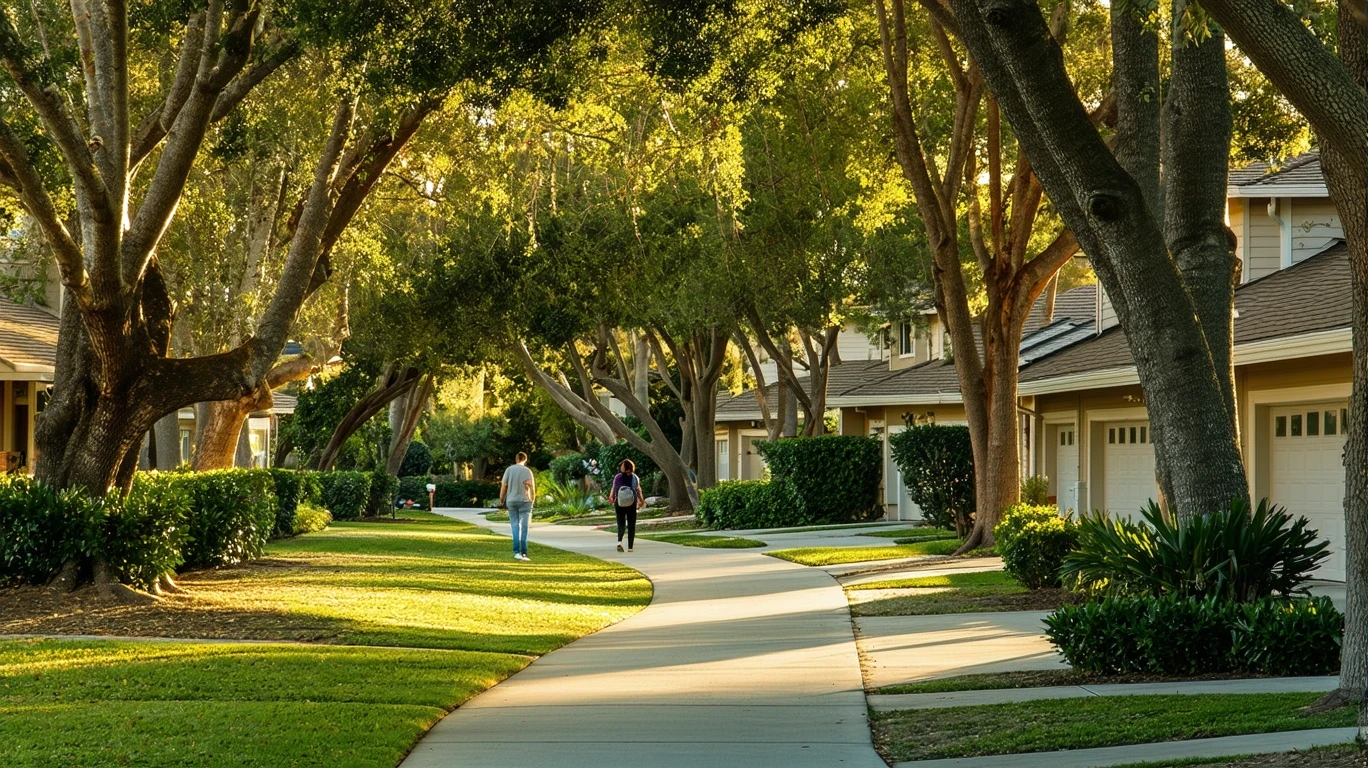
Laguna Niguel occupies an interesting middle ground in Orange County’s suburban sprawl. It’s not the dense, walkable urban core some newcomers expect, nor is it the isolated exurban fringe. Instead, it offers pockets of pedestrian-friendly areas, notable cycling infrastructure, and green space woven throughout—but day-to-day errands still cluster along corridors, requiring intentional planning rather than spontaneous walkability. The city’s outdoor access is genuinely strong: parks are abundant, water features add texture, and the climate invites year-round use. But the infrastructure that supports family life—schools, playgrounds, youth programming—doesn’t match that density, and transit options stop at bus service.
What this creates is a city that rewards people who already have what they need: stable income, reliable transportation, and life stages that don’t hinge on abundant school choice or rail connectivity. For dual-income professionals, retirees, and remote workers, Laguna Niguel often feels like a win. For young families stretching to afford rent, single-income households, or car-light urbanites, the city can feel like a expensive compromise.
What People Are Saying Online
Public discussion around Laguna Niguel tends to circle a few recurring themes: pride in the parks and trails, frustration with housing costs, and a protective instinct around the city’s suburban character. On platforms like Reddit and local Facebook groups, you’ll find residents celebrating the access to outdoor space and the relative calm compared to denser parts of Orange County. But you’ll also find tension around what growth should look like, whether the city is “worth it” financially, and how well it serves families with school-age kids.
“We moved here for the trails and the weather, and that part has been perfect. But the rent takes up so much of our income that we’re always calculating.”
“It’s quiet, clean, and safe. If you want nightlife or walkable coffee shops on every corner, this isn’t it. But if you want space to breathe, it works.”
“I thought Orange County would mean great schools everywhere. Laguna Niguel has some, but they’re not as dense as I expected, and the commute to preferred options adds up.”
The tone is rarely outright negative, but it’s also rarely unqualified enthusiasm. People tend to frame their experience in terms of tradeoffs: what they gained versus what they gave up.
How Local Coverage Frames the City
Local news and community outlets tend to focus on Laguna Niguel through the lens of growth management, amenity development, and neighborhood identity. Coverage doesn’t dwell on crisis or decline—it’s more about evolution and debate. The city is often portrayed as a place trying to balance its established suburban character with pressure for new development and changing demographics.
Recurring topic buckets in local coverage include:
- “Community Debates What Growth Should Look Like”
- “New Trails and Parks Expand Outdoor Access”
- “Residents Weigh Convenience vs Quiet”
- “Housing Costs Shape Who Can Stay, Who Moves On”
- “Schools and Enrollment Patterns Shift Across the City”
The framing is rarely alarmist, but it does reflect an ongoing negotiation: between longtime residents who value the status quo and newcomers who expect more urban texture, between families seeking school density and retirees prioritizing healthcare and parks, between affordability concerns and the reality of coastal California pricing.
Review-Based Public Perception
On platforms like Google Reviews, Yelp, and Nextdoor-style forums, Laguna Niguel earns praise for cleanliness, safety, and outdoor amenities—but also draws criticism for limited spontaneous walkability, high costs, and uneven distribution of services. People who wanted suburban comfort tend to feel satisfied. People who wanted urban convenience or dense family infrastructure tend to feel let down.
Positive sentiment often centers on:
- Well-maintained parks and trails with water features and coastal access nearby
- Quiet, low-crime neighborhoods that feel safe for kids and pets
- Access to routine healthcare (clinics and pharmacies) without needing a hospital locally
- Strong cycling infrastructure and pockets of pedestrian-friendly streets
Critical sentiment often focuses on:
- High rent and home prices that absorb a large share of household income
- Errands requiring intentional planning rather than walkable spontaneity
- Limited school density, requiring longer commutes to preferred options
- Bus-only transit, making car ownership nearly essential
- Newer planned areas feeling sterile or lacking neighborhood character
The divide isn’t about whether Laguna Niguel is “good” or “bad”—it’s about whether your priorities align with what the city actually delivers. If you value outdoor access and can absorb the housing pressure, the city tends to work. If you need dense schools, walkable errands, or rail transit, the friction compounds quickly.
How Laguna Niguel Compares to Nearby Cities
| Dimension | Laguna Niguel | Mission Viejo | San Clemente |
|---|---|---|---|
| Overall Vibe | Suburban calm with strong outdoor access but limited walkable texture | Planned community feel with more family infrastructure and school density | Beach-town character with more walkable downtown but higher coastal premium |
| Housing Pressure | High cost of entry, absorbs large income share | Comparable cost but more perceived value for families | Higher baseline due to beachfront proximity |
| Walkability & Transit | Pockets of walkability, notable bike infrastructure, bus-only transit | Similar suburban texture, car-oriented with some trails | More walkable downtown core, still car-dependent overall |
| Family Fit | Limited school density, strong parks but fewer playgrounds | Stronger family infrastructure, more schools and youth programming | Mixed; beach lifestyle appeal but fewer schools than Mission Viejo |
| Outdoor Access | Abundant parks, trails, and water features | Strong trail network, less water feature presence | Beach access dominates, fewer inland parks |
The comparison reveals Laguna Niguel’s niche: it’s not the most family-dense option (that’s Mission Viejo), nor the most walkable beach town (that’s San Clemente). Instead, it offers a middle path—strong outdoor access and suburban calm at a high but not beachfront price. If you’re a dual-income household or retiree who values parks over schools and can handle corridor-based errands, Laguna Niguel often feels like the right fit. If you’re a young family prioritizing school density or an urbanite expecting walkable spontaneity, Mission Viejo or San Clemente might align better—or you might need to look beyond South Orange County entirely.
Voices from Different Life Stages
“We’re both remote workers, so the commute doesn’t matter. The trails and weather are exactly what we wanted. The rent is brutal, but we’re making it work.”
— Remote professional couple, early 30s
“I retired here for the parks and the climate. I don’t need schools, and the clinics nearby handle everything I need. It’s peaceful without feeling isolated.”
— Retiree, late 60s
“We have two kids, and finding the right school meant driving farther than we expected. The parks are great, but the school situation adds stress we didn’t anticipate.”
— Young family, one income, mid-30s
“I moved from a walkable neighborhood in LA, and the adjustment has been hard. Everything requires a car, and the errands feel like a chore instead of part of the day.”
— Transplant from urban core, late 20s
“It’s expensive, but we knew that coming in. What surprised us was how much we use the bike paths and trails. That part has been better than expected.”
— Dual-income household, no kids, early 40s
“We’re stretching to stay here, and I’m not sure it’s sustainable. The outdoor space is beautiful, but the cost structure doesn’t leave much room for anything else.”
— Single-income family, three kids, late 30s
“I thought Orange County would mean everything close by. Instead, I’m driving to the grocery store, driving to the gym, driving everywhere. It’s fine, but it’s not what I imagined.”
— Newcomer from out of state, mid-20s
Does Laguna Niguel Feel Like a Good Fit?
Laguna Niguel doesn’t try to be everything to everyone, and that clarity helps. It’s a city that works best for people who value outdoor access, can absorb high housing costs, and don’t need dense walkable errands or abundant school infrastructure. If you’re an established professional, a retiree, or a remote worker who prioritizes parks and climate over urban texture, the city tends to deliver on its promises. If you’re a young family on a single income, an urbanite expecting rail transit and spontaneous walkability, or someone stretching financially to stay in Orange County, the friction compounds quickly.
The emotional profile of Laguna Niguel is one of intentional tradeoffs: you pay a premium for suburban calm and outdoor quality, but you give up density, spontaneity, and some of the infrastructure that makes family life easier. The city doesn’t apologize for what it isn’t, and the people who thrive here tend to be the ones who wanted exactly what it offers—and had the income and flexibility to make it work.
If you’re still weighing whether Laguna Niguel aligns with your priorities, exploring what makes life feel tight or understanding the full picture of where money goes each month can help clarify whether the tradeoffs make sense for your household.
How this article was built: In addition to public economic data, this article incorporates location-based experiential signals derived from anonymized geographic patterns—such as access density, walkability, and land-use mix—to reflect how day-to-day living actually feels in Laguna Niguel, CA.
The perspectives shown reflect commonly expressed local sentiment and recurring themes in public discussion, rather than individual accounts.