
A first-time renter in Laguna Niguel looking at a one-bedroom apartment near the town center should expect to budget around $2,736 per month for rent—the city’s median gross rent—plus electricity that can easily reach $90–120 in summer months when coastal heat pushes air conditioning use, and another $60–80 for internet and water. That puts baseline monthly expenses for shelter and essential utilities near $3,000 before groceries, transportation, or discretionary spending. A first-time buyer faces a fundamentally different cost structure: the median home value of $1,052,800 translates to a down payment in the six figures and ongoing property tax exposure that—while predictable year to year—compounds with home value appreciation over time. Both paths carry weight in Laguna Niguel, but the tradeoffs between rent stability and ownership equity play out against a backdrop of coastal Orange County premiums that don’t ease quickly.
The Housing Market in Laguna Niguel Today
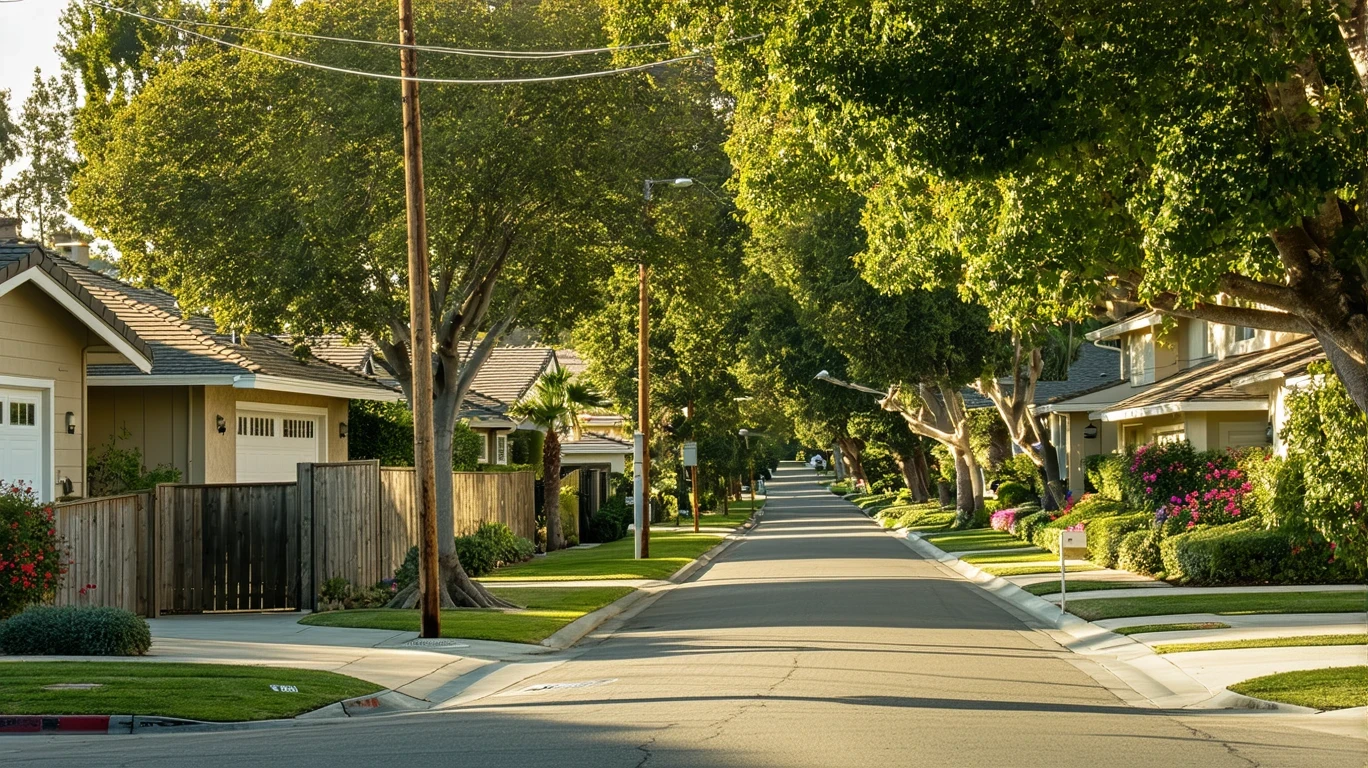
Laguna Niguel’s housing market reflects its position as an established residential community in south Orange County, where proximity to the coast, mature neighborhoods, and access to employment centers in Irvine and Mission Viejo sustain demand. The median home value of $1,052,800 places Laguna Niguel firmly in the upper tier of California markets, driven by single-family homes on hillside lots, planned communities with shared amenities, and a development pattern that favors ownership over high-density rentals. The regional price parity index of 103 confirms that goods and services here cost slightly more than the national baseline, but the housing premium far exceeds that modest adjustment—home values in Laguna Niguel are shaped less by everyday cost-of-living differences and more by land scarcity, school district reputation, and the broader Orange County housing supply constraint.
What newcomers often misunderstand is that Laguna Niguel’s market doesn’t behave like a commuter suburb with volatile swings tied to a single employer or industry cycle. The city’s median household income of $135,822 per year reflects a stable, dual-income professional base, and the unemployment rate of 3.9% signals a labor market with limited slack. This income level supports the housing market but doesn’t make it accessible—even at the median income, a $1,052,800 home requires careful financial planning and substantial savings. The housing stock itself is relatively homogeneous: predominantly single-family detached homes built in planned phases from the 1970s onward, with homeowners’ associations governing many neighborhoods. Rental inventory exists but is comparatively limited, concentrated in apartment complexes along major corridors rather than distributed evenly across residential zones.
Renting in Laguna Niguel
Renting in Laguna Niguel means navigating a market where $2,736 per month is the median gross rent, a figure that reflects both the city’s coastal Orange County location and the relative scarcity of rental units compared to ownership housing. Renters here are more likely to find apartments in complexes along Crown Valley Parkway or near the town center, where density is higher and land use mixes residential and commercial functions. The corridor-clustered pattern of grocery and food establishments—confirmed by infrastructure data showing medium-density access—means that renters in these areas can handle some daily errands on foot or by bike, reducing the need for every trip to require a car. Walkable pockets exist where pedestrian infrastructure is strong, but the overall texture still favors car ownership for flexibility, especially given the bus-only transit service that provides baseline connectivity without the frequency or coverage of rail systems.
Rental pressure in Laguna Niguel doesn’t spike and crash with the same volatility seen in urban cores or college towns; instead, it trends steadily upward, tracking regional demand and the limited pace of new multifamily construction. Renters should expect annual increases at lease renewal, driven not by landlord discretion alone but by the underlying scarcity of units and the opportunity cost of renting versus selling in a high-value ownership market. The advantage of renting here is predictability within a lease term and freedom from property tax exposure, maintenance costs, and HOA governance—but that predictability comes at the cost of equity accumulation and long-term control over housing expenses.
Owning a Home in Laguna Niguel
Owning a home in Laguna Niguel means taking on the $1,052,800 median home value as the starting point, with property taxes in California governed by Proposition 13, which caps the base tax rate and limits annual assessment increases to 2% or the inflation rate, whichever is lower. For an illustrative context, a home purchased at the median value would face an annual property tax bill in the range of $10,500–13,000 before any local assessments or Mello-Roos districts, which are common in planned communities and fund infrastructure, schools, and services. These taxes are predictable year over year but remain tied to the home’s assessed value, meaning that the absolute dollar amount—while stable relative to market swings—is high from the outset and grows incrementally over time.
Many neighborhoods in Laguna Niguel are governed by homeowners’ associations, which manage shared amenities such as pools, parks, landscaping, and sometimes gate access. HOA fees vary widely depending on the community but can range from modest monthly dues to several hundred dollars, with the tradeoff being maintained common areas and enforced aesthetic standards. Ownership here also means responsibility for maintenance and repairs that renters avoid: roofing, HVAC replacement, landscaping, and exterior upkeep in a climate where sun exposure and occasional Santa Ana wind events accelerate wear on paint, seals, and outdoor fixtures. The integrated park density and access to water features—trails, open space, and nearby coastal recreation—add quality of life but don’t reduce the cost of maintaining a home’s structure and systems.
The ownership experience in Laguna Niguel differs from renting not just in monthly cash flow but in control and exposure. Owners gain equity as the mortgage principal pays down and benefit from long-term home value appreciation, but they also absorb the full cost of property tax increases, insurance adjustments, and deferred maintenance. In a city where housing stock is mature and many homes are decades old, systems like water heaters, air conditioning, and roofing reach end-of-life on schedules that don’t align neatly with household budgets, creating lumpy expense patterns that renters never face.
Apartment vs House in Laguna Niguel — Cost Behavior Comparison
| Expense Category | Apartment | House |
|---|---|---|
| Base Housing Cost | Median rent $2,736/month; stable within lease term | Mortgage on $1,052,800 median value; property tax exposure ongoing |
| Cooling (Summer) | Moderate; shared walls reduce heat gain, but southern exposure and inland heat drive AC use | Higher; detached homes absorb more heat, larger square footage increases cooling load |
| Water & Landscaping | Typically included in rent or billed as flat fee; no landscape maintenance responsibility | Billed separately; drought-tolerant landscaping common but irrigation and upkeep required |
| HOA Fees | Rare; apartment complexes manage common areas through rent | Common in planned communities; fees fund pools, parks, gate maintenance |
| Maintenance & Repairs | Landlord responsibility; renter avoids HVAC, roof, appliance replacement costs | Owner responsibility; mature housing stock means aging systems and deferred replacement cycles |
This comparison reflects cost behavior differences driven by Laguna Niguel’s housing stock (planned single-family communities vs. corridor apartments), climate (cooling-dominant with occasional heat events), and governance structures (HOA prevalence in ownership neighborhoods). Categories like heating, snow removal, and flood insurance are omitted because they do not meaningfully differ or apply in this market.
Utilities & Upkeep Differences
Utility exposure in Laguna Niguel is shaped by the city’s inland position within Orange County, where summer heat—often reaching into the 80s and 90s, with occasional spikes above 100°F during Santa Ana wind events—drives air conditioning use from May through October. The electricity rate of 30.29¢/kWh is well above the national average, meaning that cooling a detached single-family home can produce summer bills in the $150–250 range for illustrative context, depending on square footage, insulation quality, and thermostat discipline. Apartments benefit from shared walls and smaller floor plans, which reduce cooling load and keep electricity bills lower, though southern or western exposure can still push usage higher than tenants expect.
Natural gas, priced at $22.96 per thousand cubic feet, plays a minor role in Laguna Niguel’s cost structure. Heating demand is limited to occasional cool mornings in winter, and many homes use gas primarily for water heating and cooking rather than space heating. This is a meaningful difference from climates with extended heating seasons—here, the dominant utility cost driver is electricity for cooling, not gas for warmth.
Maintenance exposure differs sharply between apartments and houses, not because of generic “houses cost more” logic but because of Laguna Niguel’s housing age and climate. Many single-family homes were built in the 1970s, 1980s, and 1990s, meaning that original HVAC systems, water heaters, and roofing materials are reaching or past their expected lifespan. Sun exposure accelerates roof wear, and the dry climate can cause wood trim and exterior paint to crack and fade faster than in humid regions. Homeowners face these replacement cycles individually, while apartment renters are insulated from them entirely. The integrated park access and water features that enhance livability don’t reduce these costs—they’re amenities, not substitutes for home upkeep.
Rent vs Buy: Long-Term Exposure in Laguna Niguel
The structural difference between renting and owning in Laguna Niguel is not primarily about monthly cash flow—it’s about volatility, control, and the allocation of risk over time. Renters face the possibility of annual rent increases, but those increases are bounded by lease terms and the competitive rental market; they also avoid property tax exposure, maintenance surprises, and the opportunity cost of capital tied up in a down payment. Owners gain equity and benefit from Proposition 13’s limits on assessment growth, but they absorb the full cost of property tax bills that start high, insurance premiums that adjust with replacement cost and wildfire risk, and maintenance cycles that don’t smooth out neatly over time.
In Laguna Niguel, where the median home value of $1,052,800 creates a significant entry barrier, the decision to buy is less about affordability in the traditional sense and more about whether a household can sustain the ongoing exposure that ownership entails. Property taxes remain predictable under Proposition 13, but the absolute dollar amount is substantial from day one. Maintenance costs—roof replacement, HVAC upgrades, exterior painting—arrive in lumps rather than monthly installments, and the age of the housing stock means these events are more frequent than in newer developments. Renters avoid this exposure entirely but give up the equity accumulation and long-term price stability that ownership provides in a supply-constrained market.
The long-term calculus also depends on how households use Laguna Niguel’s infrastructure. The corridor-clustered errands pattern and walkable pockets mean that some daily needs are accessible without driving, which reduces transportation costs for both renters and owners—but the bus-only transit and medium-density grocery access still favor car ownership for flexibility. Integrated parks and green space reduce the need to budget for private recreation or travel to access outdoor amenities, a quality-of-life advantage that doesn’t show up in where money goes but affects how housing costs feel over time.
FAQs About Housing Costs in Laguna Niguel
Is renting or buying more affordable in Laguna Niguel?
Neither path is “affordable” in the traditional sense—median rent of $2,736/month and median home values of $1,052,800 both require substantial income. Renting offers predictability within lease terms and avoids property tax and maintenance exposure, while buying builds equity but requires a large down payment and ongoing responsibility for taxes, insurance, and upkeep. The choice depends on whether a household prioritizes flexibility or long-term control.
How do property taxes work for homeowners in Laguna Niguel?
California’s Proposition 13 caps the base property tax rate and limits annual assessment increases to 2% or inflation, whichever is lower. For a home purchased at the median value of $1,052,800, annual property taxes would be in the range of $10,500–13,000 for illustrative context, before any local assessments or Mello-Roos fees. These taxes are predictable year over year but remain high in absolute terms due to the home’s value.
What drives utility costs higher in Laguna Niguel compared to other cities?
Electricity rates of 30.29¢/kWh are well above the national average, and the city’s inland location creates cooling-dominant demand from late spring through early fall. Summer heat—often in the 80s and 90s, with occasional spikes above 100°F—drives air conditioning use, especially in detached single-family homes with larger square footage and sun exposure. Heating demand is minimal, so natural gas plays a smaller role.
Are HOA fees common in Laguna Niguel, and what do they cover?
Many single-family neighborhoods in Laguna Niguel are part of planned communities with homeowners’ associations that manage shared amenities like pools, parks, landscaping, and sometimes gate access. Fees vary widely depending on the community and the level of service provided, but they are a common feature of ownership here and should be factored into long-term cost planning.
How does Laguna Niguel’s housing market compare to nearby Orange County cities?
Laguna Niguel’s median home value of $1,052,800 places it in the upper tier of Orange County markets, reflecting its established neighborhoods, proximity to the coast, and planned community structure. It is less expensive than coastal cities like Laguna Beach but more expensive than inland areas farther from employment centers. The rental market is similarly premium-priced, with limited inventory compared to ownership housing.
Making Housing Choices in Laguna Niguel
Housing costs in Laguna Niguel are shaped by the city’s position in coastal Orange County, where land scarcity, mature neighborhoods, and proximity to employment centers sustain high home values and rents. The median home value of $1,052,800 creates a steep entry barrier for buyers, while the median rent of $2,736/month reflects the limited rental inventory and regional demand. Both paths require substantial income, but they differ fundamentally in risk allocation: renters avoid property tax exposure and maintenance surprises but give up equity and long-term price stability, while owners gain control and wealth accumulation at the cost of ongoing tax bills, insurance adjustments, and lumpy repair cycles tied to aging housing stock.
The city’s infrastructure—corridor-clustered errands, walkable pockets, integrated parks, and bus-only transit—reduces some day-to-day costs by making certain needs accessible without driving, but it doesn’t eliminate the need for a car in most households. Families with children should weigh the limited school density signal against the city’s strong green space access and low unemployment rate, while retirees may find the routine local healthcare (clinics but no hospital) a factor in long-term planning. First-time buyers face the dual challenge of assembling a down payment and sustaining the ongoing costs of ownership in a high-value market, while long-term renters must accept that rent increases will track regional demand without offering equity in return.
Laguna Niguel’s housing market rewards households that can sustain high fixed costs in exchange for stability, quality of life, and access to Orange County’s economic opportunities. The tradeoffs are clear: ownership offers control and equity but demands financial resilience, while renting offers flexibility and predictability but no path to wealth accumulation through housing. Understanding these differences—and how they play out in Laguna Niguel specifically—is the foundation for making a housing choice that fits both current income and long-term goals.
How this article was built: In addition to public economic data, this article incorporates location-based experiential signals derived from anonymized geographic patterns—such as access density, walkability, and land-use mix—to reflect how day-to-day living actually feels in Laguna Niguel, CA.