
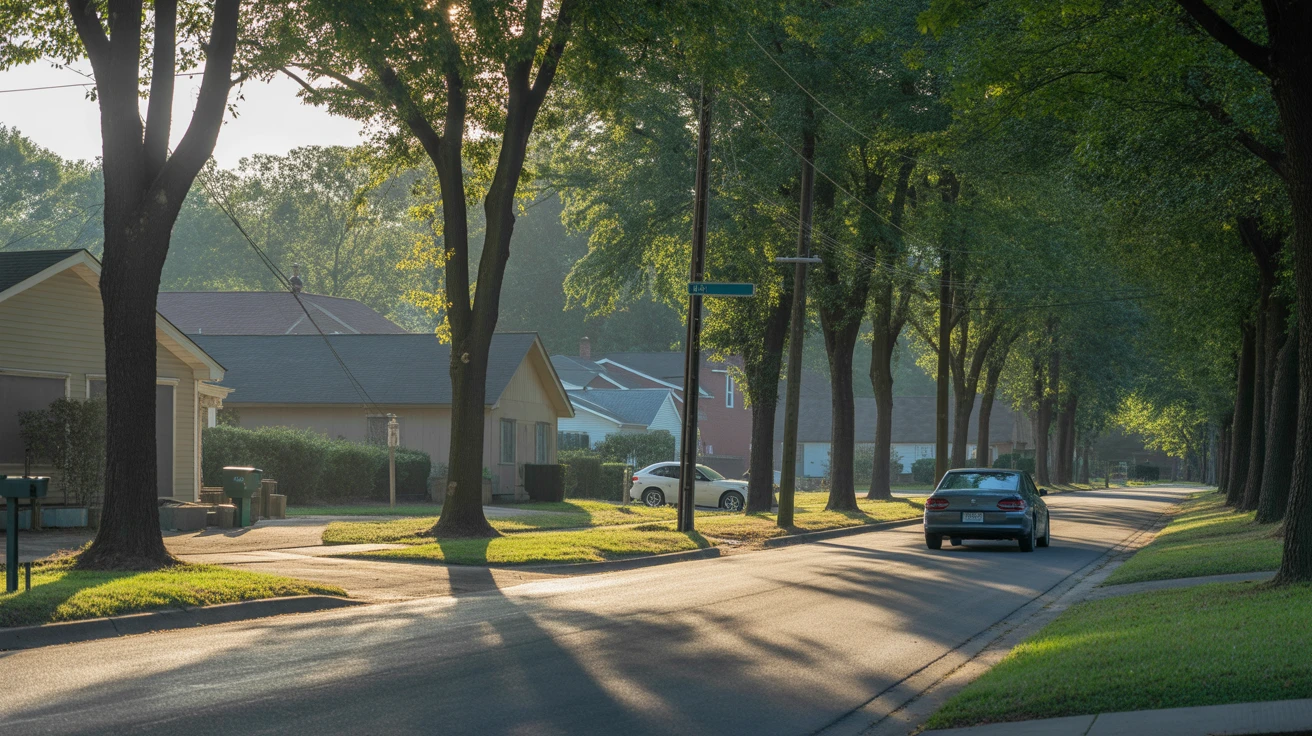
La Vergne and Antioch sit just miles apart in the Nashville metro, share the same utility providers, and pull from the same regional job market—yet the cost experience in each can feel surprisingly different. La Vergne offers documented housing entry points and a low-rise suburban form, while Antioch shows stronger family infrastructure, better park access, and more varied building heights. Both cities rely heavily on cars, both have bus service but no rail, and both feature walkable pockets mixed into otherwise car-oriented layouts. The decision between them in 2026 isn’t about which is cheaper overall—it’s about which cost pressures show up first, which households feel them most, and where trade-offs between space, access, and predictability land.
Families managing school pickups and weekend errands may find Antioch’s playground density and park access reduce friction costs that don’t show up on a lease. Renters comparing apartments will find La Vergne’s documented median rent of $1,603 per month a useful baseline, though Antioch’s housing market remains less transparent in available data. Commuters driving to Nashville face similar gas prices and traffic patterns, but the structure of daily life—how far you drive for groceries, how often you need a second car, how much time goes to logistics—varies more than the price per gallon suggests.
This comparison focuses on where cost pressure concentrates, not how much it adds up to. It’s written for households deciding which city fits their budget structure, time constraints, and tolerance for trade-offs in 2026.
Housing Costs
La Vergne’s median home value sits at $248,300, with median gross rent at $1,603 per month. These figures reflect a market where single-family homes dominate the landscape, building heights stay low, and entry costs are front-loaded but predictable. Renters face a clear monthly obligation with limited volatility, while buyers confront a substantial down payment requirement but gain stability once inside. The housing stock skews toward detached homes rather than apartments, which means renters often compete for a smaller pool of units, and buyers typically purchase more space than they might need immediately.
Antioch’s housing data is less transparent in available sources, making direct numeric comparison impossible. What is clear from experiential signals is that Antioch features more varied building heights—a mix of low-rise and medium-density construction—and both residential and commercial land use woven throughout the city. This suggests a broader range of housing types, from apartments to townhomes to single-family homes, which can create more entry points for renters and first-time buyers. The presence of stronger family infrastructure (schools and playgrounds exceeding density thresholds) also indicates neighborhoods designed to accommodate families, which often correlates with housing stock that includes larger units and more bedrooms.
For renters, La Vergne offers a documented baseline but limited housing variety, meaning flexibility comes at the cost of competing for fewer units. Antioch’s more varied building stock may provide more options, but without transparent rent data, renters must rely on direct market research. For first-time buyers, La Vergne’s $248,300 median home value represents a clear entry barrier—manageable for dual-income households with savings, but steep for single earners or those carrying debt. Antioch’s housing market likely offers similar entry costs given the shared metro context, but the presence of mixed building heights suggests potential for condos or townhomes that lower the cash-to-close threshold.
Housing takeaway: La Vergne concentrates cost pressure at the entry point—high rent or high down payment—but delivers predictability once you’re in. Antioch’s more varied housing stock may offer more entry flexibility, particularly for families seeking space near schools and parks, but the lack of transparent pricing data increases search friction. Renters sensitive to monthly predictability may prefer La Vergne’s documented baseline; buyers prioritizing family infrastructure and park access may find Antioch’s neighborhood structure worth the research effort.
Utilities and Energy Costs
Both La Vergne and Antioch share identical utility rates: electricity at 12.87¢/kWh and natural gas at $11.31/MCF. This reflects their position within the same metro service area, meaning the price per unit of energy is the same. What differs is how much energy households actually use, which depends on housing stock, home age, and household behavior. La Vergne’s low-rise, single-family housing stock tends toward detached homes with more exterior wall exposure, larger square footage, and older construction in some neighborhoods. This increases heating and cooling loads, particularly during Nashville’s hot, humid summers and occasional cold snaps in winter. Antioch’s mixed building heights suggest a broader range of housing types, including attached units and newer construction, which can reduce per-square-foot energy use.
Cooling dominates utility exposure in both cities. Triple-digit summer heat and extended humidity mean air conditioning runs for months, not weeks. Households in larger, older single-family homes—more common in La Vergne’s low-rise landscape—face higher baseline usage than those in newer townhomes or apartments with shared walls. Heating costs are less predictable but still meaningful during winter months, particularly in poorly insulated older homes. Natural gas heating, where available, offers more cost control than electric resistance heat, but not all units have gas service, and renters rarely control which system they inherit.
Household size amplifies these differences. A family of four in a 2,000-square-foot detached home will experience higher cooling costs than a couple in a 1,200-square-foot apartment, even at identical rates. Home age matters more than size for some households: an older home with single-pane windows and minimal insulation can cost significantly more to cool than a newer build with modern HVAC and better envelope performance. Renters in older apartments face similar exposure but lack the ability to upgrade insulation or windows, leaving them vulnerable to seasonal spikes.
Utility takeaway: Both cities face identical energy rates, so cost differences come from housing type and home age, not price per kilowatt-hour. La Vergne’s low-rise, single-family dominance increases exposure for households in larger or older homes. Antioch’s mixed building stock may offer more energy-efficient options, particularly for renters or buyers willing to prioritize newer construction. Families in detached homes should expect higher summer cooling costs in both cities; couples or singles in apartments gain predictability but sacrifice space.
Groceries and Daily Expenses
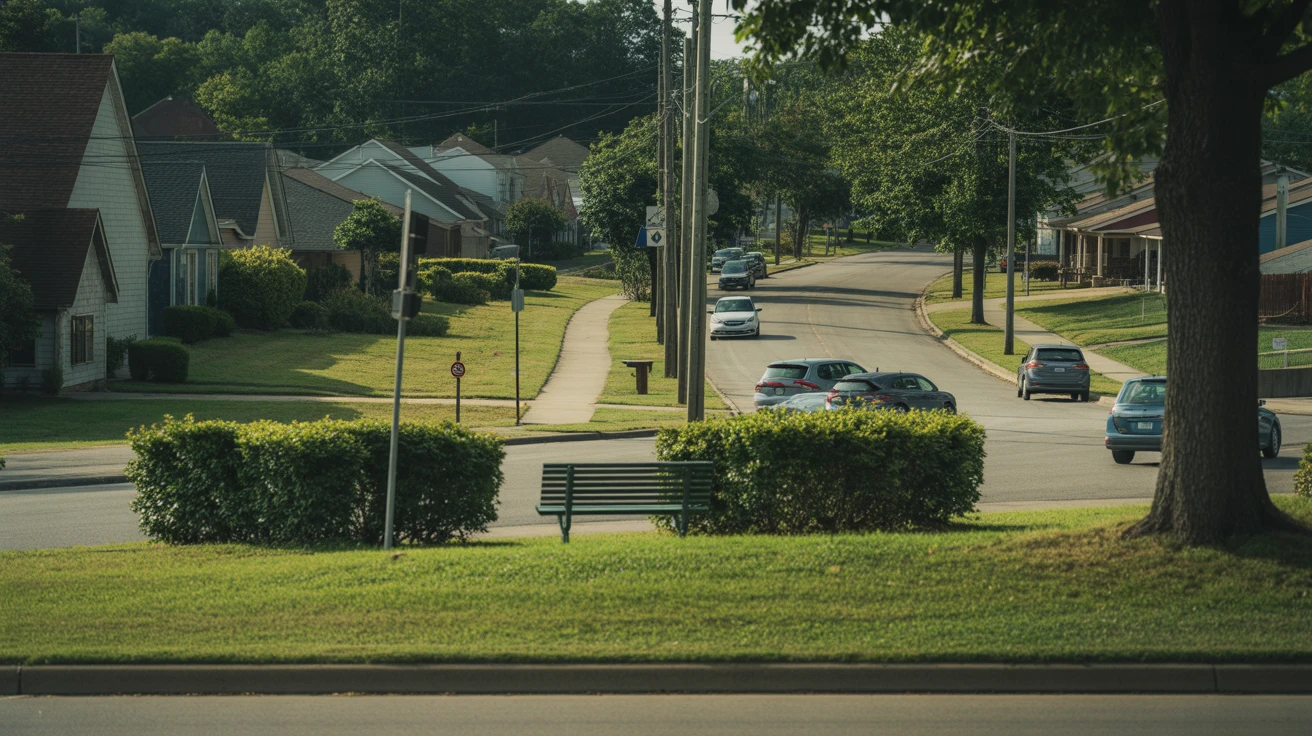
Both La Vergne and Antioch show corridor-clustered food and grocery accessibility, meaning stores and restaurants concentrate along main roads rather than spreading evenly throughout neighborhoods. This creates a pattern where some households drive two minutes to a grocery store, while others drive ten, depending on which side of a corridor they live on. The difference isn’t price—regional grocery chains and big-box stores serve both cities with similar pricing—but convenience, which translates into time cost and the temptation to substitute quick stops for planned trips.
La Vergne’s food density sits in the medium band, with grocery density also in the medium range. This suggests a mix of chain supermarkets, discount grocers, and convenience stores, but not the saturation that lets you walk to multiple options. Antioch shows similar food density but higher grocery density, exceeding the high threshold. This indicates more grocery options per square mile, which can reduce drive time and increase price competition. For households managing weekly shopping trips, this difference is minor. For households making frequent small trips—families with kids, singles buying fresh ingredients, or anyone without much pantry space—Antioch’s denser grocery access reduces friction.
Dining out and convenience spending follow similar patterns. Both cities have chain restaurants, coffee shops, and fast-casual options clustered along commercial corridors. Households sensitive to convenience spending creep—grabbing takeout instead of cooking, stopping for coffee on the way to work—face similar temptation in both cities. The structural difference is that Antioch’s denser grocery access makes it slightly easier to avoid convenience spending by reducing the friction of a quick grocery run. La Vergne’s lower grocery density means households either plan more carefully or default to convenience options when they run out of staples mid-week.
Grocery takeaway: Prices are similar, but access friction differs. Antioch’s higher grocery density reduces drive time and increases flexibility for households making frequent small trips. La Vergne’s medium grocery density works fine for planners but penalizes spontaneous or high-frequency shoppers with extra drive time. Families managing meal planning and bulk shopping will notice little difference; singles or couples relying on fresh ingredients and frequent trips may find Antioch’s denser access reduces both time cost and convenience spending temptation.
Taxes and Fees
Tennessee has no state income tax, so both La Vergne and Antioch avoid that cost category entirely. What remains are property taxes, sales taxes, and local fees—and these operate identically across both cities due to their shared county and metro context. Property taxes in the Nashville metro are assessed at the county level, meaning homeowners in La Vergne and Antioch face the same millage rates and assessment practices. The difference in actual tax bills comes from home values, not tax rates. A $248,300 home in La Vergne generates a predictable annual property tax obligation; a similarly priced home in Antioch would generate the same bill.
Sales taxes also align across both cities, as Tennessee sets a base state rate and counties add local portions. This means groceries, gas, dining out, and retail purchases carry the same tax burden whether you’re shopping in La Vergne or Antioch. The structural impact is that consumption taxes hit harder for households with higher spending volumes—families buying clothes, furniture, and household goods feel the cumulative effect more than singles or couples with lower consumption.
Local fees—trash collection, water, sewer, stormwater—vary by provider and neighborhood rather than by city. Some neighborhoods bundle these into HOA fees; others bill separately. Renters typically see these costs embedded in rent, while homeowners pay them directly. The predictability of these fees depends more on housing type than city: single-family homeowners face separate line items and potential rate increases, while apartment renters see costs absorbed into a fixed monthly rent. HOA fees, where present, can range from minimal (covering only common area maintenance) to substantial (including landscaping, pool access, and trash), and this variation exists within both cities rather than between them.
Tax and fee takeaway: La Vergne and Antioch share identical tax structures, so differences come from home values and housing type, not rates. Homeowners pay property taxes based on assessed value, meaning La Vergne’s documented $248,300 median generates a predictable baseline. Renters avoid direct property tax exposure but absorb it indirectly through rent. Local fees depend more on neighborhood and housing type than city, with single-family homeowners facing more line items and renters enjoying more predictability. Long-term residents planning to stay several years should focus on home value trends and HOA structures rather than city-level tax policy.
Transportation & Commute Reality
La Vergne shows an average commute time of 30 minutes, with 53.0% of workers facing long commutes and only 12.4% working from home. This reflects a car-dependent suburb where most jobs sit outside city limits, typically in Nashville or surrounding metro areas. Antioch lacks documented commute data, but experiential signals show similar car reliance: both cities feature bus-only transit, walkable pockets that don’t extend city-wide, and corridor-clustered errands that require driving for most daily needs. Gas prices sit at $3.59 per gallon in both cities, so the cost per mile is identical—but the number of miles driven per week varies based on commute distance, errand density, and household logistics.
La Vergne’s high long-commute percentage suggests many households drive 45 minutes or more each way, often to Nashville’s core employment centers or industrial zones on the metro’s edges. This creates time cost as much as fuel cost: an hour-plus daily commute reduces schedule flexibility, limits childcare options, and increases wear on vehicles. Antioch’s stronger family infrastructure—schools and playgrounds exceeding density thresholds—suggests neighborhoods designed for families who may prioritize proximity to schools over commute length, though without commute data this remains inference rather than fact.
Transit in both cities is limited to bus service, with no rail access. Walkable pockets exist—both cities show pedestrian-to-road ratios exceeding high thresholds in certain areas—but these pockets don’t eliminate car dependence for most households. Grocery stores, medical clinics, and schools cluster along corridors rather than spreading walkably throughout neighborhoods, meaning even households in walkable pockets typically drive for errands. The practical impact is that most households need at least one car, and dual-income families often need two, regardless of which city they choose.
Cost Structure Comparison
Housing pressure dominates the cost experience in La Vergne, where documented rent and home values create clear entry barriers but predictable ongoing obligations. The $1,603 median rent and $248,300 median home value represent front-loaded costs that, once absorbed, remain relatively stable month to month. Antioch’s housing market is less transparent in available data, but the presence of mixed building heights and stronger family infrastructure suggests a broader range of entry points, particularly for families prioritizing school and park access over documented pricing baselines.
Utilities introduce similar exposure in both cities due to identical energy rates, but La Vergne’s low-rise, single-family housing stock increases consumption for households in larger or older homes. Antioch’s mixed building heights suggest more energy-efficient options, particularly for renters or buyers willing to prioritize newer construction or attached units. The volatility in both cities comes from seasonal cooling loads during extended summer heat, not from rate fluctuations, meaning households in larger detached homes face higher summer bills regardless of city.
Daily living costs—groceries, dining, convenience spending—operate at similar price levels in both cities, but Antioch’s higher grocery density reduces access friction for households making frequent small trips. La Vergne’s medium grocery density works fine for planners but adds drive time for spontaneous or high-frequency shoppers. This difference matters more for singles and couples relying on fresh ingredients than for families doing bulk weekly shopping.
Transportation patterns matter more in La Vergne, where documented long-commute percentages show over half of workers driving 45 minutes or more each way. Antioch lacks commute data, but both cities share car dependence, bus-only transit, and corridor-clustered errands. The cost difference isn’t gas price—it’s identical at $3.59 per gallon—but time cost and vehicle wear from longer daily drives. Households sensitive to commute friction may find Antioch’s stronger family infrastructure and better park access reduce total weekly drive time, even if the commute to work remains similar.
The better choice depends on which costs dominate the household. For renters prioritizing documented baselines and predictable monthly obligations, La Vergne offers transparency. For families sensitive to school and park access, Antioch’s stronger infrastructure may justify the research effort required to navigate less transparent housing data. For households managing long commutes, the difference is less about fuel cost and more about whether proximity to family amenities reduces total weekly drive time.
How the Same Income Feels in La Vergne vs Antioch
Single Adult
Housing becomes the first non-negotiable cost, with La Vergne’s documented $1,603 median rent setting a clear baseline that absorbs a substantial portion of gross monthly income. Flexibility exists in grocery spending and dining out, but only if commute length doesn’t consume too much time or energy. Car dependence in both cities means transportation is fixed, not optional, and long commutes in La Vergne reduce the time available to cook or run errands efficiently. Antioch’s denser grocery access may reduce friction for quick trips, but without documented rent data, singles must navigate the housing market with less pricing transparency.
Dual-Income Couple
Housing costs feel more manageable with two incomes, but the decision shifts to whether to rent or buy and which housing type delivers the best balance of space and predictability. La Vergne’s $248,300 median home value becomes accessible with combined incomes and savings, locking in long-term stability at the cost of a substantial down payment. Utilities in larger single-family homes increase ongoing exposure, particularly during summer cooling season, but couples in newer or smaller units gain more control. Antioch’s mixed building stock may offer more housing type flexibility, but the lack of transparent pricing data increases search time and decision friction.
Family with Kids
School and park access become non-negotiable, and Antioch’s stronger family infrastructure—both schools and playgrounds exceeding density thresholds—reduces the logistical friction that doesn’t show up in rent or mortgage payments. La Vergne’s limited family infrastructure means more drive time for school pickups, weekend activities, and outdoor play, which compounds commute exposure and increases the need for schedule flexibility. Housing costs in both cities skew toward single-family homes, which increases utility exposure for families managing larger square footage and higher cooling loads. Grocery spending becomes less flexible as household size grows, and Antioch’s higher grocery density reduces the time cost of frequent trips for fresh food and household staples.
Decision Matrix: Which City Fits Which Household?
| Decision factor | If you’re sensitive to this… | La Vergne tends to fit when… | Antioch tends to fit when… |
|---|---|---|---|
| Housing entry + space needs | You need transparent pricing and predictable monthly obligations | Documented rent and home values reduce search friction and provide clear baselines | You prioritize housing type variety and are willing to navigate less transparent pricing data |
| Transportation dependence + commute friction | You drive long distances daily and need to minimize total weekly drive time | You accept long commutes as unavoidable and prioritize housing cost predictability over proximity | You value family infrastructure proximity that may reduce non-commute drive time |
| Utility variability + home size exposure | You want to control seasonal cooling costs and avoid large detached homes | You accept higher cooling exposure in exchange for single-family space and low-rise neighborhoods | Mixed building stock offers more energy-efficient attached units and newer construction options |
| Grocery strategy + convenience spending creep | You make frequent small trips and want to minimize drive time to stores | You plan weekly bulk shopping and don’t mind medium grocery density | Higher grocery density reduces friction for spontaneous or high-frequency shopping trips |
| Fees + friction costs (HOA, services, upkeep) | You want to avoid unpredictable line items and prefer embedded costs | Single-family homeownership with separate line items fits your preference for control | You prioritize housing type variety that may include HOA-managed communities with bundled services |
| Time budget (schedule flexibility, errands, logistics) | You need to minimize total time spent on commutes, errands, and family logistics | You tolerate longer total drive time in exchange for housing cost transparency | Stronger family infrastructure and better park access reduce weekly logistical friction |
Lifestyle Fit
Both La Vergne and Antioch feature low-rise to mixed building heights, walkable pockets that don’t extend city-wide, and bus-only transit that serves as a backup rather than a primary commute option. The lifestyle difference comes from infrastructure density and how much time households spend managing logistics. Antioch’s stronger family infrastructure—schools and playgrounds exceeding density thresholds—means families spend less time driving to parks, playgrounds, and school events. La Vergne’s limited family infrastructure increases drive time for these activities, which compounds the 53.0% long-commute percentage and reduces schedule flexibility for parents managing pickups and weekend activities.
Green space access also differs meaningfully. Antioch shows park density in the moderate range, with water features present, suggesting neighborhoods designed with outdoor access in mind. La Vergne’s park density falls below the low threshold, meaning families seeking regular outdoor play often drive to regional parks rather than walking to neighborhood green space. This difference doesn’t show up in monthly budgets but affects how much time families spend in cars and how easily kids can access outdoor play without parental coordination.
Both cities feature mixed residential and commercial land use, meaning some neighborhoods blend homes and businesses along corridors. This creates pockets where errands feel more convenient, but neither city achieves the walkability or transit coverage that eliminates car dependence. Healthcare access is similar in both cities—clinics present, pharmacies available, but no hospital within city limits—meaning serious medical needs require a drive to Nashville or surrounding metro facilities. For households managing chronic conditions or frequent medical appointments, this adds time cost and logistical complexity regardless of which city they choose.
La Vergne unemployment rate: 2.8%
Antioch unemployment rate: 2.9%
Frequently Asked Questions
Is La Vergne or Antioch cheaper for renters in 2026?
La Vergne offers a documented median rent of $1,603 per month, providing a clear baseline for renters comparing costs. Antioch lacks transparent rent data in available sources, making direct comparison difficult. The cost difference for renters depends less on which city is nominally cheaper and more on housing type availability, proximity to work, and whether access to family infrastructure or parks reduces other household expenses like childcare or weekend entertainment.
Which city has lower utility bills, La Vergne or Antioch?
Both cities share identical utility rates—12.87¢/kWh for electricity and $11.31/MCF for natural gas—so the cost per unit is the same. Utility bills differ based on housing type and home age, not city. La Vergne’s low-rise, single-family housing stock tends toward larger homes with more cooling exposure, while Antioch’s mixed building heights suggest more energy-efficient attached units and newer construction. Households in older, larger detached homes will face higher bills in either city; those in newer apartments or townhomes gain more predictability.
Does Antioch or La Vergne have better access to groceries and errands in 2026?
Antioch shows higher grocery density, exceeding the high threshold, which reduces drive time for households making frequent small trips. La Vergne’s grocery density sits in the medium band, which works fine for weekly bulk shopping but adds friction for spontaneous or high-frequency shoppers. Both cities feature corridor-clustered food and grocery options, meaning some neighborhoods enjoy two-minute drives to stores while others face ten-minute trips depending on proximity to commercial corridors.
Which city is better for families with kids, La Vergne or Antioch?
Antioch shows stronger family infrastructure, with both school density and playground density meeting or exceeding thresholds. This reduces the time families spend driving to parks, playgrounds, and school events. La Vergne’s family infrastructure falls below density thresholds, meaning families often drive to regional parks or schools outside immediate neighborhoods. For families prioritizing walkable access to outdoor play and schools, Antioch’s infrastructure reduces logistical friction that doesn’t show up in monthly budgets but affects daily schedule flexibility.
Are commutes longer in La Vergne or Antioch in 2026?
La Vergne shows an average commute time of 30 minutes, with 53.0% of workers facing long commutes of 45 minutes or more. Antioch lacks documented commute data, but both cities share car dependence, bus-only transit, and similar proximity to Nashville employment centers. The commute difference depends more on where you work than which city you live in, but La Vergne’s documented long-commute percentage suggests many households drive substantial distances daily, which increases time cost and vehicle wear beyond fuel expenses.
Conclusion
La Vergne and Antioch share a metro, utility providers, and car-dependent infrastructure, but the cost experience differs in where pressure concentrates and which households feel it most. La Vergne offers documented housing costs—$1,603 median rent, $248,300 median home value—that provide clear baselines and predictable monthly obligations, but limited family infrastructure and lower park density increase logistical friction for families managing school pickups and weekend activities. Antioch’s stronger family infrastructure, higher grocery density, and better green space access reduce time costs that don’t appear in budgets but affect daily schedule flexibility and household stress.
For renters prioritizing transparent pricing and predictable monthly obligations, La Vergne delivers clarity. For families sensitive to school and park proximity, Antioch’s infrastructure may justify navigating less transparent housing data. For dual-income couples managing long commutes, the decision hinges on whether family amenity proximity in Antioch reduces total weekly drive time enough to offset the research effort required to find housing. Neither city is cheaper overall—both concentrate costs differently, and the better fit depends on which pressures your household can absorb and which tradeoffs you’re willing to make in 2026.
How this article was built: In addition to public economic data, this article incorporates location-based experiential signals derived from anonymized geographic patterns—such as access density, walkability, and land-use mix—to reflect how day-to-day living actually feels in La Vergne, TN.