
La Vergne is considered moderately priced in 2026, with a median home value of $248,300 and median rent of $1,603 per month. The value proposition depends on housing entry cost versus car dependence, as commuting and vehicle ownership create recurring exposure that shapes the overall cost structure more than day-to-day prices.
Overall Cost of Living Snapshot
La Vergne sits just southeast of Nashville, operating as a commuter suburb with a regional price parity index of 97—slightly below the national baseline. The cost structure here is shaped by three forces: housing entry barriers, transportation dependence, and moderate utility seasonality. Unlike denser urban cores, the primary expense isn’t rent or groceries—it’s the combined weight of securing housing and maintaining the mobility required to live here.
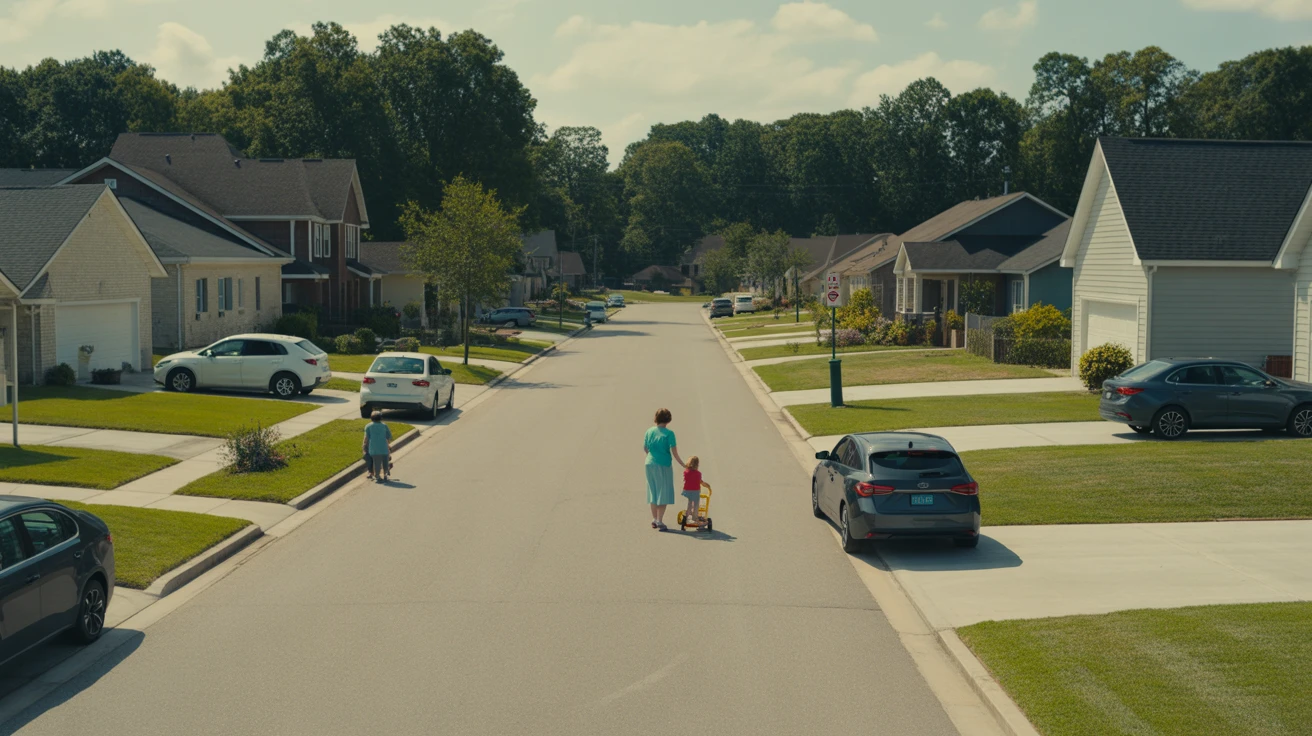
The city’s low-rise, mixed-use character creates pockets of walkability, but the overall mobility texture leans heavily on personal vehicles. Bus service exists, but 53.0% of workers face long commutes, and only 12.4% work from home. This isn’t a place where you can skip car ownership. Grocery and errand access is corridor-clustered rather than broadly distributed, meaning households must plan routes rather than walk to necessities. That planning burden doesn’t show up in price indices, but it drives both time cost and fuel exposure.
Driver verdict: Housing dominates upfront pressure, but transportation creates the largest ongoing exposure. Surprises come from commute intensity, not sticker prices.
Housing Costs (Primary Driver)
At $248,300, the median home value in La Vergne reflects a market oriented toward ownership rather than transient renting. For context, median gross rent is $1,603 per month—a figure that includes utilities in some cases but not universally. Renters face pressure from limited inventory and a housing stock designed for buyers, not tenants. Ownership, meanwhile, requires navigating not just the purchase price but ongoing property taxes, insurance, and maintenance on single-family homes that dominate the built environment.
The renting-versus-owning calculus here tilts toward buying for households planning to stay. Rental stock exists but doesn’t offer the cost stability or unit variety found in larger metro cores. Ownership locks in predictable housing payments (excluding tax and insurance adjustments), while renting exposes households to lease renewals in a market with constrained supply.
Conclusion: La Vergne is a buying-oriented city with rental pressure. Renters should expect fewer options and steeper competition; buyers gain long-term cost control but must absorb upfront and ongoing ownership expenses.
| Housing Type | Cost Anchor | What That Buys You |
|---|---|---|
| Median Home Value | $248,300 | Single-family home, ownership equity, stable monthly housing cost (excluding tax/insurance changes) |
| Median Gross Rent | $1,603/month | Rental unit in constrained market, flexibility but less cost predictability |
Utilities & Energy Risk
Electricity in La Vergne runs 12.87¢ per kWh, and natural gas is priced at $11.31 per MCF (roughly 100 therms). Tennessee’s climate brings extended cooling seasons with high humidity and occasional cold snaps that trigger heating demand. The result is moderate seasonal volatility: summer air conditioning dominates usage, while winter heating (whether electric or gas) creates a secondary spike.
For illustrative context, a household using 1,000 kWh per month would see a baseline electric cost around $129 before fees and taxes during moderate months, with higher usage during peak summer heat. Natural gas users might see costs rise during colder stretches, though the region’s heating season is shorter and less severe than northern climates. The key exposure isn’t the per-unit rate—it’s the intensity and duration of seasonal demand.
Risk classification: Moderate. Utility costs swing with weather but remain manageable with efficiency measures. The bigger risk is underestimating summer cooling loads in a humid, low-rise environment where homes rely heavily on HVAC systems.
Groceries & Daily Costs
Grocery pricing in La Vergne reflects the regional price parity index of 97, landing slightly below national norms. Derived estimates suggest staples like bread ($1.79/lb), chicken ($1.99/lb), and eggs ($2.42/dozen) track close to baseline costs, while items like ground beef ($6.54/lb) and cheese ($4.54/lb) sit in the mid-range. These figures are modeled rather than observed, but they signal that grocery pressure here is moderate—not a primary cost driver, but not negligible either.
The bigger friction comes from access patterns. Food and grocery density sits in the medium band, clustered along corridors rather than distributed evenly. That means households can’t always walk to a store; they drive, plan routes, and consolidate trips. The cost isn’t just what you pay at checkout—it’s the fuel, time, and logistical overhead required to stock a household in a car-dependent layout.
Transportation Reality
Transportation is where La Vergne’s cost structure becomes unavoidable. The average commute is 30 minutes, but 53.0% of workers face long commutes—a reflection of the city’s role as a bedroom community serving Nashville and surrounding employment centers. Only 12.4% of residents work from home, meaning the vast majority depend on personal vehicles for daily mobility.
Gas prices sit at $3.59 per gallon, a manageable rate in isolation but a recurring expense when multiplied across long commutes and errand trips. The pedestrian-to-road ratio is high in pockets, and bus service exists, but the overall mobility texture requires car ownership. There’s no rail transit, and the corridor-clustered layout of groceries and services means even local errands often involve driving.
This isn’t a city where you can reduce transportation tradeoffs by going car-free or relying on transit. Vehicle ownership, fuel, insurance, and maintenance become fixed costs, and commute length determines how much of your day and budget those costs consume.
Cost Exposure Profiles
Cost exposure in La Vergne breaks along three fault lines: housing entry, transportation dependence, and household logistics complexity.
Low-exposure households own their homes (locking in stable housing costs), work locally or from home (minimizing commute fuel and time), and can absorb the planning burden of corridor-clustered errands without friction. For these households, La Vergne offers below-national pricing with suburban space and proximity to Nashville amenities.
High-exposure households rent (facing lease renewal pressure in a constrained market), commute long distances daily (burning fuel and time), and struggle with the logistical overhead of car-dependent errands. Renters with long commutes face compounding costs: rising rent, high fuel consumption, and the time cost of navigating a layout that rewards car ownership and route planning.
The difference isn’t income—it’s structure. Owners with short commutes control their largest expenses. Renters with long commutes face volatility on multiple fronts, with limited ability to reduce exposure through behavior alone.
Top 3 Costs That Surprise Most Newcomers
- Long commutes dominate despite proximity to Nashville. La Vergne sits close to the metro core, but 53.0% of workers face long commutes. The time and fuel cost of daily drives to employment centers often exceeds expectations, especially for households assuming suburban proximity equals short trips.
- Utility seasonality swings harder than daily prices suggest. Electricity rates and gas prices look moderate on paper, but extended cooling seasons in humid heat and occasional winter heating spikes create bill volatility that catches households off guard. The exposure comes from intensity and duration, not the per-unit rate.
- Grocery and errand access requires intentional routing. Food and grocery density sits in the medium band, clustered along corridors rather than walkable from most homes. Newcomers expecting suburban convenience discover they’re planning routes, consolidating trips, and driving for basics—adding fuel cost and time overhead that doesn’t show up in price comparisons.
How this article was built: In addition to public economic data, this article incorporates location-based experiential signals derived from anonymized geographic patterns—such as access density, walkability, and land-use mix—to reflect how day-to-day living actually feels in La Vergne, TN.
Frequently Asked Questions
Is La Vergne more affordable than Nashville in 2026? Yes, directionally. La Vergne’s regional price parity index of 97 and median home value of $248,300 suggest lower housing entry costs than Nashville proper, though the savings come with tradeoffs in commute length and car dependency.
What does a typical cost profile look like in La Vergne? Housing dominates upfront, transportation creates ongoing exposure through long commutes and car dependence, and utilities swing moderately with seasonal cooling and heating demand. Groceries and daily costs remain near national norms but require car-based access.
Do utilities cost more in La Vergne than nearby areas? Rates are moderate—12.87¢/kWh for electricity and $11.31/MCF for natural gas—but the extended cooling season and humidity drive higher usage intensity than milder climates. The cost comes from consumption, not the rate itself.
What costs tend to surprise newcomers in La Vergne? Long commutes (53.0% face extended drives), utility seasonality (summer cooling dominates bills), and the logistical overhead of corridor-clustered errands. The surprises come from structural exposure, not sticker prices.
Are property taxes higher in La Vergne than neighboring cities? Property tax rates vary by jurisdiction and aren’t included in the data feed, but ownership costs in Tennessee generally include property taxes, insurance, and maintenance. Buyers should verify local tax rates and assess total ownership cost beyond the purchase price.
Is La Vergne a good value for renters? Rental inventory is constrained, and the median gross rent of $1,603 per month reflects a market oriented toward ownership. Renters face fewer options and steeper competition, making La Vergne a better value for buyers planning to stay long-term.
How does car dependency affect the overall cost structure? High. With 53.0% of workers facing long commutes, only 12.4% working from home, and corridor-clustered grocery access, car ownership becomes a fixed cost. Fuel, insurance, and maintenance add recurring expenses that shape the budget as much as housing itself.
Can you live in La Vergne without a car? Technically possible with bus service present, but structurally difficult. The pedestrian-to-road ratio is high in pockets, but the overall layout and commute patterns make car ownership the practical default for most households.