
“Kennesaw feels like the kind of place where you get space and good schools, but you’re always in the car. It’s not bad—just very much a suburb that makes you plan your day around errands.”
That tension—between suburban comfort and logistical friction—captures much of what living in Kennesaw feels like. It’s a city where families often feel at home, parks are plentiful, and the schools and playgrounds signal investment in community life. But it’s also a place where spontaneity has limits, where walkability exists in pockets but doesn’t define daily life, and where proximity to Atlanta cuts both ways: access to metro opportunities, but also long commutes and the pressure of a region in constant motion.
Understanding Kennesaw’s vibe means understanding what you’re trading and what you’re gaining. It’s not about whether people are “happy” here in some measurable way—it’s about whether the city’s structure, pace, and tradeoffs align with how you actually want to live.
What Defines the Kennesaw Experience
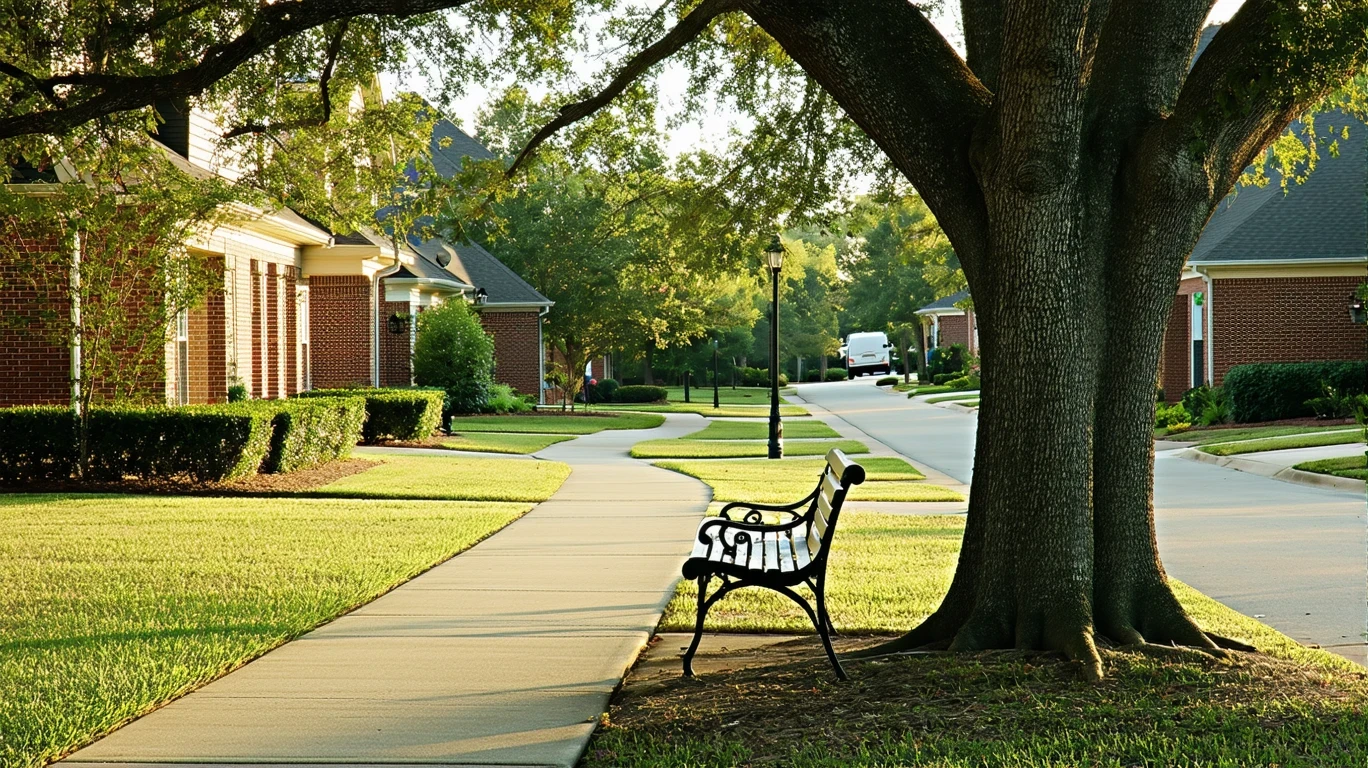
Kennesaw tends to reward people who value suburban predictability, outdoor access, and family-oriented infrastructure. The city offers strong green space availability—park density exceeds typical thresholds, and water features add texture to the landscape. Schools and playgrounds are well-distributed, creating a environment that feels designed with children in mind. For households prioritizing those elements, Kennesaw delivers.
But the city also requires adaptation. Daily errands cluster along corridors rather than spreading evenly across neighborhoods, meaning grocery runs, pharmacy stops, and routine tasks often require intentional trips rather than quick walks. Walkable pockets exist—pedestrian infrastructure in some areas exceeds what you’d expect in a typical suburb—but those areas don’t connect into a continuous network. You can walk within certain zones, but getting between them almost always means driving.
Healthcare access reflects a similar pattern: clinics and pharmacies are present, but there’s no hospital within city limits. For routine care, Kennesaw works. For emergencies or specialized treatment, you’re heading elsewhere.
The commute is another defining feature. With an average of 29 minutes and nearly 45% of workers facing long commutes, many residents are trading distance for space, affordability, or school quality. That tradeoff feels sustainable to some and exhausting to others, depending on how much value they place on time versus the benefits Kennesaw offers in return.
The Conversational Pulse: Social Media in Kennesaw
Online discussion in Kennesaw tends to circle around a few recurring themes: growth, traffic, identity, and the tension between wanting more local amenities and preserving the town’s quieter character. There’s pride in the parks, the schools, and the sense of community, but also frustration with how much of daily life requires a car and how quickly the area is changing.
Typical sentiments include:
“It’s a great place to raise kids—tons of parks, good schools, safe neighborhoods. But if you want to grab coffee or run to the store without driving, you’re out of luck.”
“I love being close to Atlanta without actually being in Atlanta. But the commute is real, and it wears on you after a while.”
“Kennesaw used to feel like a small town. Now it’s just another suburb getting swallowed by growth. Not sure how I feel about that yet.”
The tone is rarely extreme—it’s more reflective than angry, more ambivalent than celebratory. People appreciate what works, acknowledge what doesn’t, and debate whether the direction of change aligns with what originally drew them here.
How Local Coverage Frames the City
Local news and community coverage in Kennesaw tends to focus on growth management, infrastructure adaptation, and the evolving identity of a city caught between its roots and its future. Headlines and story themes often reflect these tensions:
- “New Development Brings Amenities—and Questions About Capacity”
- “Residents Weigh Convenience Against Changing Character”
- “Parks and Green Space Remain Central to City Identity”
- “Commuters Navigate Atlanta Access and Time Tradeoffs”
- “Schools Draw Families, but Housing Pressure Builds”
The framing is rarely alarmist, but it’s not purely promotional either. Coverage tends to acknowledge complexity: growth brings resources but also strain, proximity to Atlanta offers opportunity but demands sacrifice, and the suburban model that attracts families also creates dependencies that not everyone finds comfortable.
What Reviews and Public Perception Reveal
Public reviews—whether on Google, neighborhood platforms, or local forums—tend to split along expectation lines. People who wanted suburban family life with good schools, safe streets, and outdoor space often express satisfaction. People who hoped for walkable errands, spontaneous local culture, or easy access to diverse dining and entertainment often feel let down.
Common praise includes the parks, the family-friendly infrastructure, the relative affordability compared to closer-in Atlanta suburbs, and the sense of community in established neighborhoods. Complaints often focus on car dependency, corridor-based commercial development that feels generic, limited nightlife or cultural texture, and the day-to-day costs of maintaining a suburban lifestyle that assumes two cars, regular driving, and planning around clustered errands.
Newer planned areas tend to rate well for amenities and upkeep but sometimes feel sterile or disconnected. Older pockets offer more character and established trees but may lack the polish or walkability that newer residents expect. The city doesn’t have a single unified identity—it’s a patchwork of different eras and development styles, and your experience depends heavily on where you land.
Kennesaw Compared to Nearby Cities
| Dimension | Kennesaw | Marietta | Acworth |
|---|---|---|---|
| Overall Vibe | Suburban family focus, car-dependent, strong parks | More walkable downtown core, denser, more dining variety | Quieter, lake-oriented, slower pace, fewer amenities |
| Errands & Walkability | Corridor-clustered, walkable pockets but not connected | Better downtown walkability, more mixed-use areas | Very car-dependent, limited commercial density |
| Commute Tradeoff | Moderate distance, time vs space tradeoff | Closer to Atlanta, shorter average commute | Farther out, longer commutes, more space |
| Community Feel | Family-oriented, parks-focused, growth tension | More urban texture, diverse demographics | Small-town feel, tight-knit, less transient |
Kennesaw sits in the middle of a spectrum. Marietta offers more walkable texture and dining variety but comes with higher density and less green space per capita. Acworth offers more quiet and lake access but fewer local amenities and longer commutes. Kennesaw appeals to people who want suburban infrastructure and outdoor access without going too far out, but who are willing to accept car dependency and corridor-based errands as part of the deal.
If you prioritize spontaneous walkable errands and cultural variety, Marietta might feel more aligned. If you want maximum quiet and don’t mind driving for everything, Acworth might fit better. Kennesaw works for people who want the middle ground: family amenities, parks, reasonable commute distance, and acceptance that housing tradeoffs and logistical planning are part of suburban life.
What Locals Are Saying
“We moved here for the schools and the parks, and on that front, Kennesaw delivers. Our kids are outside constantly, and the playgrounds are actually nice. But I do miss being able to walk to get groceries or just wander around a downtown.” — Parent of two, moved from closer-in Atlanta suburb
“The commute is longer than I’d like, but the tradeoff is we got a house with a yard and good schools for way less than we’d pay in Marietta or Smyrna. It’s not perfect, but it works for us.” — Remote worker with hybrid schedule
“Kennesaw feels safe and quiet, which is what we wanted. But it’s also kind of boring if you’re not into the family-and-yard lifestyle. There’s not much to do locally unless you drive somewhere.” — Young professional, renting
“I’ve been here twenty years, and it’s changed a lot. More traffic, more development, less of that small-town feel. But the parks are still great, and the community still shows up for events.” — Long-time resident
“If you don’t have a car, Kennesaw is tough. Everything is spread out, and there’s no real transit. It’s built for people who drive everywhere.” — Renter without vehicle
“We love the green space and the fact that our kids can bike around the neighborhood safely. But yeah, we’re always in the car for errands. It’s just the reality of living here.” — Family with school-age children
“It’s a solid suburb. Not flashy, not walkable, not cheap anymore—but stable, safe, and functional. If that’s what you need, it works.” — Retiree, downsized from larger home
Does Kennesaw Feel Like a Good Fit?
Kennesaw tends to work for people who value suburban infrastructure, outdoor access, and family-oriented amenities more than they value walkable spontaneity or urban texture. It rewards households comfortable with car dependency, corridor-based errands, and commutes that trade time for space. It appeals to families prioritizing schools, parks, and safety, and to people who want proximity to Atlanta without living in the metro core.
It tends to frustrate people who expect walkable daily life, those without reliable transportation, and anyone hoping for local cultural variety or hospital-level healthcare. It’s not built for spontaneous discovery or pedestrian independence—it’s built for planned trips, driving routines, and residential predictability.
The city’s vibe isn’t about excitement or edge. It’s about function, green space, and the tradeoffs that come with suburban structure in a growing metro region. If that aligns with how you want to live, Kennesaw offers a lot. If it doesn’t, the friction will show up quickly—in your commute, your errands, and your sense of what’s missing.
For a clearer picture of how these tradeoffs play out financially, explore income pressure and lifestyle stability in Kennesaw, or dig into what shapes housing costs and availability across different household types.
How this article was built: In addition to public economic data, this article incorporates location-based experiential signals derived from anonymized geographic patterns—such as access density, walkability, and land-use mix—to reflect how day-to-day living actually feels in Kennesaw, GA.
The perspectives shown reflect commonly expressed local sentiment and recurring themes in public discussion, rather than individual accounts.