
Housing decisions in Kennesaw hinge on more than price alone. The city’s suburban structure, integrated parks, and corridor-clustered shopping create distinct cost exposures depending on whether you rent or own—and whether you choose an apartment or a house. Understanding how these formats behave over time, and how Kennesaw’s infrastructure shapes day-to-day logistics, determines whether a housing choice fits or becomes a friction point.
The Housing Market in Kennesaw Today
Kennesaw’s housing market reflects its role as a suburban node within the Atlanta metro, where median home values reach $262,000 and median gross rent sits at $1,673 per month. These figures position the city as moderately accessible relative to income levels—median household income stands at $81,467 per year—but the cost experience depends heavily on housing format and location within the city.
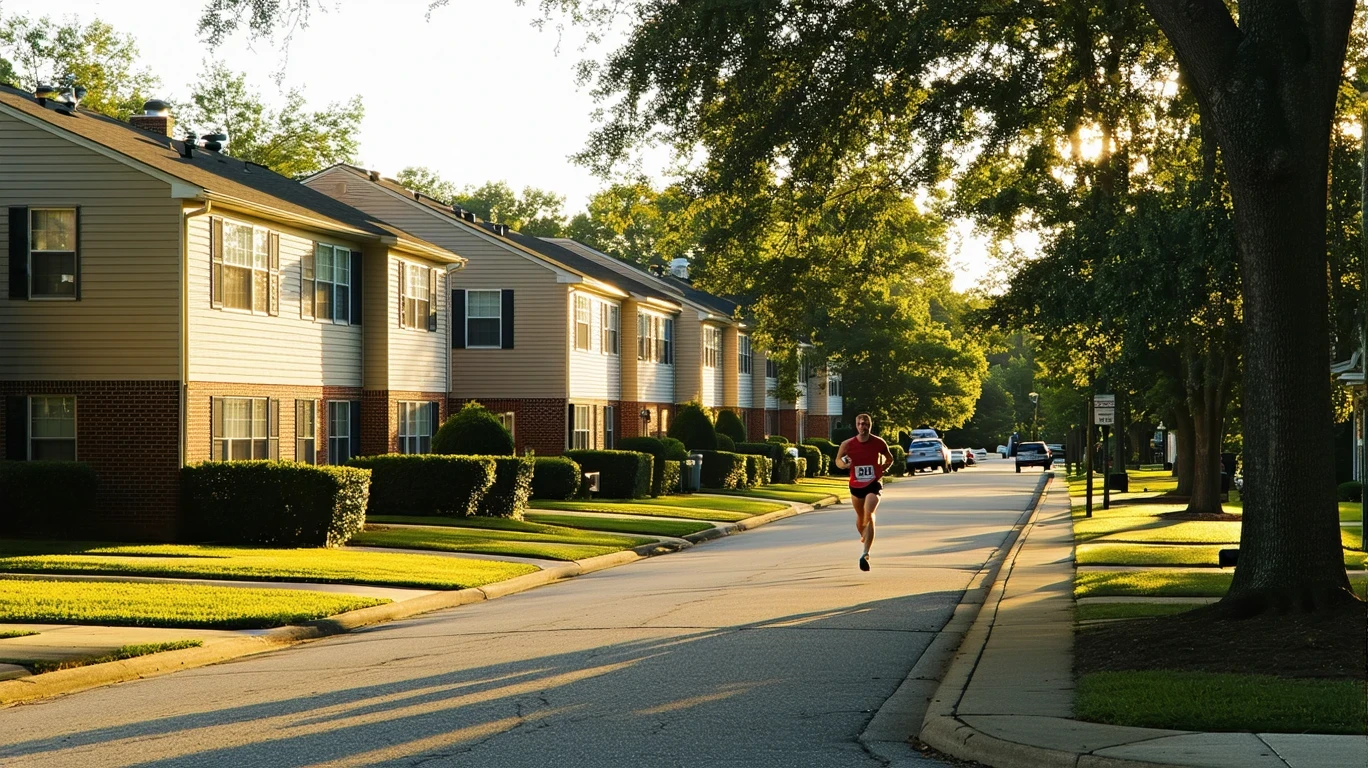
What shapes Kennesaw’s market is its infrastructure pattern: walkable pockets coexist with car-oriented corridors, and while parks and schools are well-distributed, grocery and food options cluster along commercial strips. This means apartment dwellers near those corridors gain errand convenience, while house buyers in residential zones trade proximity for yard space, school access, and outdoor integration. Newcomers often underestimate how much housing format determines daily logistics here, not just monthly cost.
The regional price parity index of 111 signals that Kennesaw’s overall cost structure runs modestly above the national baseline, but housing remains the primary lever. Buyers and renters competing in this market face different volatility profiles: rent can shift annually with lease renewals, while ownership locks in acquisition cost but exposes households to maintenance, tax changes, and utility intensity tied to Kennesaw’s extended cooling season.
Renting in Kennesaw
At $1,673 per month median gross rent, Kennesaw’s rental market reflects moderate pressure rather than extreme scarcity. Rent at this level consumes roughly 25% of median household income, leaving room for other expenses—but that ratio assumes median earnings. Households below that threshold face tighter margins, and those seeking apartments near commercial corridors may encounter higher rents tied to convenience and walkability.
Rental availability in Kennesaw follows the city’s mixed urban form: apartments concentrate near shopping and transit-adjacent corridors, while single-family rentals scatter through residential zones with stronger school and park access. Renters prioritizing errand efficiency benefit from corridor proximity, but those seeking outdoor space and family infrastructure often find better alignment in detached rentals, even if that means more driving for groceries and services.
Lease renewals introduce the primary volatility. Rent can shift with market conditions, and Kennesaw’s position within the Atlanta metro means regional demand influences local pricing. Renters gain flexibility and predictable monthly costs during the lease term, but lose control over future increases and cannot offset rising rent through equity or tax strategies.
Owning a Home in Kennesaw
Median home values of $262,000 position Kennesaw as accessible within the metro context, particularly for households with stable income and down payment capacity. Ownership shifts cost structure entirely: the acquisition price becomes fixed (or predictable under a fixed-rate mortgage), but property taxes, insurance, maintenance, and utilities introduce ongoing exposure that renters avoid.
Property taxes in Georgia vary by county and municipality, and while specific rates for Kennesaw are not provided here, owners should expect annual obligations tied to assessed value. These taxes can rise with reassessments or millage rate changes, creating long-term exposure that differs from rent’s annual reset. Homeowners associations may govern certain neighborhoods, adding monthly or annual fees in exchange for amenities or exterior maintenance—another layer absent from most rental agreements.
Maintenance and repair costs fall entirely on owners. Kennesaw’s climate—marked by hot, humid summers and mild winters—stresses cooling systems, roofing, and exterior finishes. A failing HVAC unit, roof replacement, or plumbing issue can impose four-figure costs with little warning. Renters call a landlord; owners call a contractor and pay the bill. This distinction defines the ownership experience more than any monthly comparison.
Ownership also grants control: you can renovate, landscape, and modify without landlord approval. For households planning to stay in Kennesaw long-term, that control—and the potential for equity accumulation—justifies the maintenance risk. For those uncertain about duration or unwilling to manage repair volatility, renting remains the safer path.
Apartment vs House in Kennesaw — Cost Behavior Comparison
The following table isolates cost categories where apartments and houses diverge meaningfully in Kennesaw. Rows are included only where local conditions—climate, infrastructure, or housing stock—create substantive differences. Categories that behave similarly across formats are omitted.
| Expense Category | Apartment | House |
|---|---|---|
| Cooling Costs | Lower square footage and shared walls reduce cooling load during Kennesaw’s extended summer heat | Larger footprint and detached structure increase exposure; central AC runs longer and harder |
| Heating Costs | Minimal; mild winters require occasional heating, but shared walls buffer cold | Slightly higher due to detached envelope, but still minor compared to cooling exposure |
| Water & Sewer | Often included in rent or billed as flat fee; usage rarely itemized | Billed separately; irrigation, landscaping, and larger household size increase usage |
| Exterior Maintenance | Covered by landlord or HOA; tenant pays nothing directly | Owner responsible for roof, siding, gutters, and yard work; costs unpredictable |
| Yard & Outdoor Access | Limited or none; reliance on Kennesaw’s integrated park system for outdoor activity | Private yard provides immediate outdoor access; supports families and pets without park trips |
| Proximity to Errands | More likely located near corridor-clustered grocery and food options; reduces drive frequency | More likely in residential zones; requires car trips for most errands despite walkable pockets |
Methodology note: This table reflects only categories where Kennesaw’s climate, housing stock, or infrastructure create meaningful cost or logistical differences between apartments and houses. Generic categories (e.g., rent vs mortgage, insurance) are excluded because they vary by contract and household rather than by local conditions. Cooling exposure dominates due to extended summer heat; errand proximity reflects corridor-clustered food and grocery density; yard access ties to Kennesaw’s integrated parks and strong family infrastructure.
Utilities & Upkeep Differences
Utility exposure in Kennesaw is shaped primarily by climate. Electricity rates stand at 14.46¢/kWh, and cooling dominates summer bills. Houses, with larger square footage and detached construction, run air conditioning longer and harder than apartments, where shared walls and smaller footprints reduce load. Natural gas, priced at $15.63/MCF, plays a minor role; Kennesaw’s mild winters require occasional heating, but nothing approaching the intensity of cooling season.
Water and sewer costs differ by housing format and billing structure. Apartment leases often bundle water into rent or charge a flat fee, insulating tenants from usage spikes. Homeowners receive itemized bills and pay for irrigation, landscaping, and larger household consumption. In a climate where lawns require regular watering to stay green, this distinction matters.
Maintenance exposure separates apartments from houses more than any other factor. Apartment tenants call management when something breaks; owners hire contractors and pay out of pocket. Kennesaw’s heat and humidity stress HVAC systems, roofing, and exterior paint. A compressor failure or roof leak can cost thousands, and these events are episodic, not monthly. Houses also require yard work—mowing, trimming, seasonal cleanup—which apartment dwellers avoid entirely.
The upkeep difference is not just financial; it’s logistical. Homeownership in Kennesaw demands time, vendor relationships, and tolerance for repair uncertainty. Renters trade that burden for less control and no equity accumulation. Neither path is universally better; the fit depends on household capacity and priorities.
Rent vs Buy: Long-Term Exposure in Kennesaw
Over time, renting and owning expose households to different risks. Rent resets annually, and while Kennesaw’s cost structure currently supports moderate rent levels, lease renewals can shift with regional demand, landlord strategy, or property upgrades. Renters cannot control these increases, but they also avoid property tax reassessments, insurance premium changes, and the compound effect of deferred maintenance.
Ownership locks in the acquisition cost—either as a cash purchase or a fixed-rate mortgage payment—but property taxes, insurance, and maintenance introduce variability. Taxes can rise with reassessments or millage adjustments. Insurance premiums respond to regional claim patterns, weather events, and replacement cost estimates. Maintenance needs accumulate: roofs age, HVAC systems fail, and water heaters reach end of life. These expenses are not monthly, but they are inevitable, and they do not decrease over time.
The tradeoff is control versus predictability. Renters maintain flexibility and avoid repair risk, but they build no equity and cannot modify their living space. Owners gain stability in housing cost (excluding taxes and insurance), accumulate equity as the mortgage pays down, and can renovate or improve the property. In Kennesaw, where strong family infrastructure and integrated green space support long-term settlement, ownership aligns well with households planning to stay. For those uncertain about duration, career mobility, or repair tolerance, renting remains the lower-risk choice.
Neither path eliminates cost exposure; they simply redistribute it. Renters face lease renewal volatility and landlord decisions. Owners face tax changes, maintenance surprises, and the need to manage contractors. The question is not which costs less over time—that depends on market timing, interest rates, and individual circumstances—but which risk profile fits the household’s capacity and goals.
How this article was built: In addition to public economic data, this article incorporates location-based experiential signals derived from anonymized geographic patterns—such as access density, walkability, and land-use mix—to reflect how day-to-day living actually feels in Kennesaw, GA.
FAQs About Housing Costs in Kennesaw
Is renting or buying more affordable in Kennesaw, GA?
Affordability depends on time horizon and household capacity. Renting at $1,673 per month median provides predictability during the lease term and avoids maintenance risk. Buying at a median home value of $262,000 shifts cost to property taxes, insurance, and upkeep, but builds equity and locks in acquisition cost. Neither is universally cheaper; the fit depends on how long you plan to stay and your tolerance for repair volatility.
How do apartments and houses differ in monthly costs in Kennesaw?
Apartments typically cost less to cool due to smaller size and shared walls, and they avoid exterior maintenance and yard work. Houses incur higher utility bills—especially for cooling during Kennesaw’s extended summer heat—and require ongoing maintenance spending. However, houses provide private outdoor space and align better with family infrastructure, while apartments often sit closer to corridor-clustered errands, reducing drive frequency.
What drives utility costs for homeowners in Kennesaw, GA?
Cooling dominates. Electricity rates of 14.46¢/kWh combine with hot, humid summers to create sustained air conditioning demand. Larger homes with detached construction run systems longer than apartments. Natural gas, at $15.63/MCF, plays a minor role due to mild winters. Water costs rise with irrigation and landscaping needs, particularly for homeowners maintaining lawns.
Does Kennesaw’s infrastructure favor renters or owners?
Kennesaw’s mixed urban form and corridor-clustered errands create different advantages. Renters in apartments near commercial corridors gain proximity to grocery and food options, reducing car dependency for daily errands. Homeowners in residential zones benefit from integrated parks, strong school density, and private yards, but typically drive more for shopping. The infrastructure supports both paths; the fit depends on whether you prioritize errand convenience or outdoor and family amenities.
How does long-term cost exposure differ between renting and owning in Kennesaw?
Renting exposes households to annual lease renewal changes, which can shift with market conditions. Owners face property tax reassessments, insurance premium adjustments, and episodic maintenance costs—roof replacements, HVAC failures, plumbing repairs—that renters avoid. Ownership builds equity and provides cost stability in the acquisition price, but introduces unpredictable repair and tax exposure. Renting offers flexibility and lower short-term risk; owning suits households planning to stay and willing to manage ongoing upkeep.
Making Housing Choices in Kennesaw
Housing costs in Kennesaw are shaped by format, location, and time horizon. Median rent of $1,673 per month and median home values of $262,000 create accessible entry points relative to the metro baseline, but the cost experience diverges sharply depending on whether you rent or own, and whether you choose an apartment or a house.
Renters gain predictability during the lease term and avoid maintenance risk, but face annual renewal volatility and build no equity. Owners lock in acquisition cost and accumulate equity, but absorb property tax changes, insurance adjustments, and repair expenses that renters never see. Apartments reduce utility exposure and eliminate yard work, but limit outdoor access and often sit farther from residential green space. Houses increase cooling costs and maintenance burden, but provide private yards and align with Kennesaw’s strong family infrastructure and integrated parks.
Kennesaw’s infrastructure—walkable pockets, corridor-clustered errands, and well-distributed schools and parks—creates different logistical fits. Apartment dwellers near commercial corridors reduce drive frequency for groceries and services. Homeowners in residential zones rely more on cars for errands but gain immediate access to outdoor space and school proximity. Neither path is universally better; the fit depends on household priorities, duration of stay, and tolerance for cost volatility.
For a broader view of how housing integrates with transportation, utilities, and day-to-day costs, see the related guides on IndexYard. And for households planning a move to Kennesaw, the moving companies guide provides logistical context for the transition.