
You can hit the median household income in Kennesaw and still feel like you’re choosing between a shorter commute and a place with enough space. You can earn well above it and wonder why discretionary money disappears faster than expected. The gap between “making it work” and “living comfortably” isn’t always about the number on your paycheck—it’s about whether your income gives you choices or just covers obligations.
Kennesaw sits in the northern arc of metro Atlanta, where suburban infrastructure meets real commute distance and where housing costs reflect proximity without delivering urban convenience. The median household income here is $81,467 per year, but that figure alone doesn’t explain who feels comfortable and who feels stretched. Comfort depends on how many people share that income, what you expect from daily life, and whether you have margin when costs shift.
This article explains where income pressure shows up in Kennesaw, how the same earnings feel different depending on household composition, and what separates financial survival from actual comfort. It won’t tell you a magic number—it will help you judge whether your income and expectations align with how this place actually works.
What “Living Comfortably” Means in Kennesaw
Comfortable living in Kennesaw doesn’t mean luxury—it means your income covers essentials without forcing you to constantly optimize, defer, or stress over timing. It means you can absorb a higher-than-expected utility bill in August without reworking your month. It means you have some control over the housing-versus-commute tradeoff instead of just taking whatever fits the budget.
Kennesaw’s context shapes what comfort requires. Median gross rent is $1,673 per month, and median home values sit at $262,000. Both figures reflect a market where space costs real money but doesn’t come with the walkable convenience that reduces other expenses. Food and grocery options cluster along commercial corridors rather than spreading evenly across neighborhoods, which means running errands requires a car, planning, and time. Nearly half of workers here—44.6%—have what counts as a long commute, and only 12.7% work from home, so transportation isn’t optional for most households.
Climate adds another layer. Kennesaw experiences long, hot, humid summers where air conditioning isn’t a luxury—it’s a necessity. Electricity rates run 14.46¢ per kWh, and cooling costs dominate warm-weather months. Comfort means you’re not choosing between keeping the house livable and paying other bills.
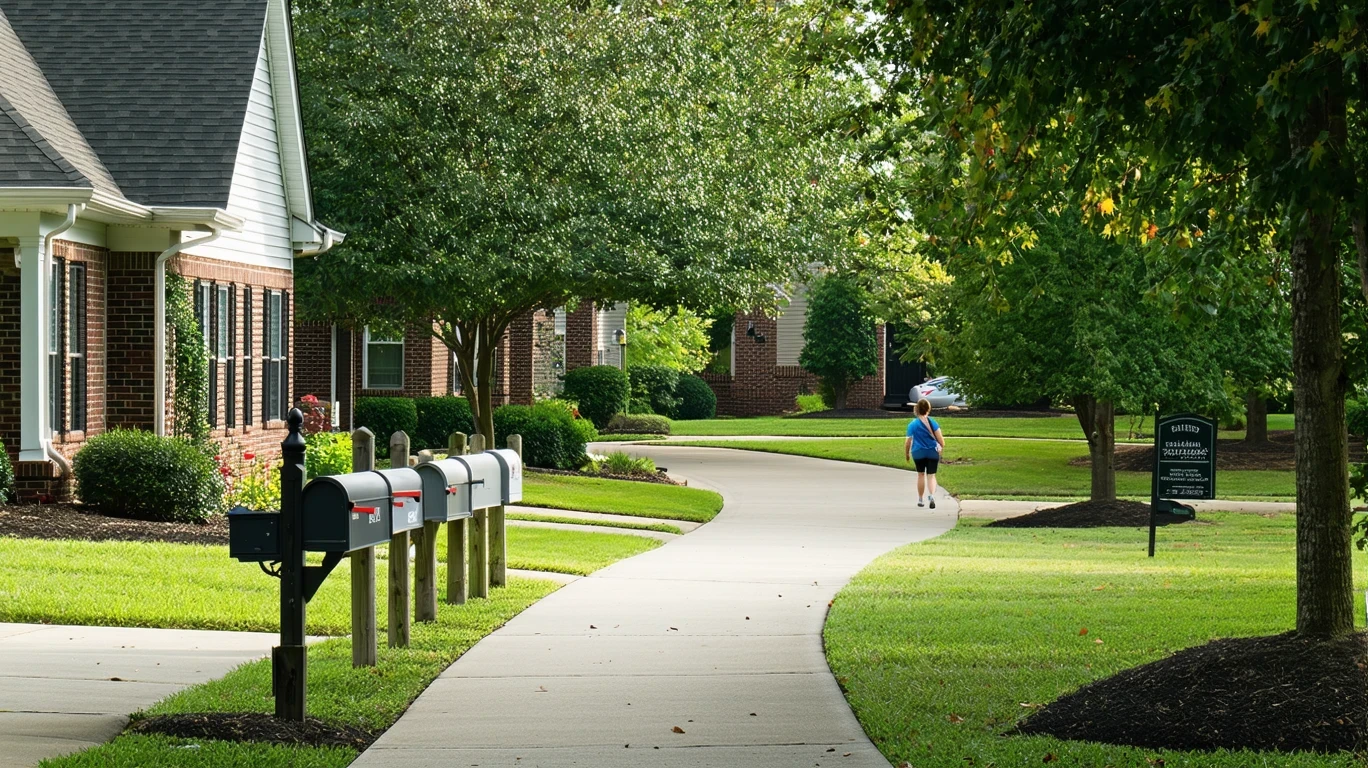
The city offers strong family infrastructure—schools and playgrounds are well-distributed, and park density exceeds typical suburban thresholds. Green space is integrated into the layout, and there’s a mix of residential and commercial land use that supports some walkability in pockets. But these assets don’t eliminate the baseline costs of getting around, staying cool, or securing housing. Comfort here means your income gives you enough slack to enjoy what Kennesaw offers without constantly managing what it costs.
Where Income Pressure Shows Up First
Income pressure in Kennesaw doesn’t announce itself with one massive bill—it builds through the interaction of housing, transportation, utilities, and time. The first squeeze most households feel is the rent-versus-location decision. At $1,673 per month for median rent, you’re allocating a significant share of gross income before anything else gets paid. For a household earning the median, that’s roughly 25% of gross monthly income on rent alone—manageable on paper, but only if transportation, utilities, and food costs don’t compound unpredictably.
Transportation pressure follows close behind. Kennesaw’s layout means most people drive most of the time. Errands don’t happen on foot—they require planning and fuel. With gas prices at $3.71 per gallon and a typical commute stretching 29 minutes one way, the cost isn’t just at the pump—it’s in the time you lose and the wear on your vehicle. Nearly half of workers here face long commutes, and for many, that means either accepting the time cost or paying more for housing closer to work. Either way, you’re spending something.
Utilities add seasonal volatility. Cooling a home through a Georgia summer isn’t a minor line item, and electricity rates here aren’t particularly low. Households without margin feel this in July and August when usage spikes. Heating costs stay modest most of the year, but the summer months create a predictable pressure point that tighter budgets can’t ignore.
For families, the pressure shifts slightly. Kennesaw’s strong school and playground infrastructure reduces some friction—you’re not paying extra to access decent family amenities, and the integrated green space supports a livable environment for kids. But family households also face higher space needs, which pushes housing costs up, and often require two commutes, two vehicles, and two sets of transportation expenses. The infrastructure helps, but it doesn’t eliminate the financial load of running a household with children.
The common thread is that cost structure here rewards households with flexibility. If you can absorb a bad utility month, adjust your commute, or choose housing without being forced into the cheapest option, Kennesaw works well. If you can’t, the costs don’t break you—but they don’t leave much room to breathe either.
How the Same Income Feels Different by Household
A single adult earning the median household income in Kennesaw experiences a very different financial reality than a couple or a family bringing in the same total. The number might be identical, but the pressure, flexibility, and comfort level shift dramatically based on how many people share that income and what demands they face.
Single adults often feel the rent burden most acutely. At $1,673 per month, median rent represents a large share of solo earnings, and there’s no second income to split fixed costs. Transportation becomes a limiting factor—not just the expense, but the time. A 29-minute commute each way eats into personal time, and because errands cluster along corridors rather than within walking distance, every grocery run or errand requires a car and planning. Single adults with median income can make it work, but there’s limited slack for surprises, and discretionary spending requires discipline. Comfort, in this scenario, depends on whether you’re willing to accept those tradeoffs or whether they feel like constant compromise.
Couples without children experience the same costs with more breathing room. Splitting rent, utilities, and transportation reduces per-person pressure significantly. Dual incomes create margin for absorbing seasonal utility swings, handling car maintenance, or choosing a better-located apartment without financial stress. Kennesaw’s integrated green space and walkable pockets become lifestyle assets rather than irrelevant details—couples can enjoy the parks, the mixed-use areas, and the overall environment without those features being overshadowed by cost anxiety. The same income that feels tight for a single adult often feels comfortable for a couple, assuming both are working.
Families face a different equation entirely. Kennesaw’s strong family infrastructure—well-distributed schools, accessible playgrounds, high park density—reduces some of the logistical and financial friction that families encounter in less-equipped suburbs. You’re not paying premiums to access decent schools or driving long distances to find a park. But families also need more space, which pushes housing costs above the median. They often require two vehicles, two commutes, and higher utility usage. Childcare, food, and activity costs layer on top of the baseline. A household income at the median can support a family here, but it requires careful management and leaves little room for error. Comfort for families typically requires income above the median—not because Kennesaw is unusually expensive, but because the baseline needs are higher and the margin for volatility is smaller.
The key insight is that income pressure isn’t just about the total—it’s about how many people depend on it, what fixed costs they face, and whether there’s flexibility when something costs more than expected. Households at similar income levels often experience very different pressure depending on composition, and that difference determines whether Kennesaw feels comfortable or just workable.
The Comfort Threshold (Qualitative)
There’s a point where income stops dictating every decision and starts enabling choices. You’re not just covering rent, transportation, and utilities—you’re choosing where to live based on preference rather than necessity, absorbing an unexpected expense without panic, and saving without sacrificing basics. That’s the comfort threshold, and it’s not a single number—it’s the point where financial margin becomes routine rather than rare.
In Kennesaw, crossing that threshold means you can handle the rent-versus-commute tradeoff without being forced into the longest drive or the smallest space. It means a high utility month in summer doesn’t require cutting something else. It means transportation costs—gas, maintenance, time—are predictable expenses rather than sources of stress. For families, it means the strong school and park infrastructure feels like an asset you can enjoy rather than a feature you’re barely managing to access.
Households below this threshold aren’t struggling in an acute sense—they’re working, paying bills, and getting by. But they’re also constantly aware of costs, making tradeoffs, and deferring wants because there’s no slack. Households above the threshold have room to make decisions based on quality of life rather than pure economics. They can take advantage of Kennesaw’s green space, its pockets of walkability, and its family-friendly layout without those benefits being overshadowed by financial tightness.
The threshold isn’t about hitting a specific income figure—it’s about reaching a point where your earnings consistently exceed your fixed obligations by enough that volatility doesn’t destabilize your month. For single adults, that typically requires income above the median. For couples, the median often suffices if both are working. For families, it usually requires meaningfully more, because the baseline costs and space needs are higher.
What separates comfort from survival in Kennesaw is whether your income gives you control. If you’re reacting to costs, you’re below the threshold. If you’re choosing among options, you’ve crossed it.
Why Online Cost Calculators Get Kennesaw Wrong
Most cost-of-living calculators will tell you what it “costs” to live in Kennesaw by adding up median rent, estimated utilities, transportation, and food, then spitting out a total. The number might be technically accurate, but it’s also misleading—because it doesn’t explain how those costs interact, where the pressure actually lands, or why two households with the same income feel completely different levels of financial stress.
Calculators treat expenses as static line items. They assume you’ll pay median rent, drive a predictable number of miles, and use a fixed amount of electricity. But in Kennesaw, the reality is more textured. Rent at $1,673 per month might get you a place with a short commute or a place with more space—but rarely both. Transportation costs depend not just on gas prices but on whether you’re commuting 15 minutes or 45, and whether your errands require constant driving because nothing is walkable from where you live. Utility costs swing with the season, and summer months in a hot, humid climate create spikes that averages don’t capture.
Calculators also ignore the lifestyle assumptions baked into the costs. Kennesaw’s layout—where food and grocery options cluster along corridors and most daily needs require a car—means transportation isn’t just a commute expense. It’s also the cost of living somewhere that doesn’t let you walk to the store. The strong family infrastructure and integrated parks are real assets, but they don’t reduce your rent or eliminate the need for two vehicles if you have kids. A calculator might show Kennesaw as “affordable” compared to closer-in Atlanta neighborhoods, but it won’t tell you that the affordability comes with tradeoffs in convenience and time.
People feel surprised after moving because the totals don’t prepare them for the texture. A monthly budget might add up on paper, but if there’s no margin for a high utility month, an unexpected car repair, or a rent increase, the budget isn’t actually working—it’s just holding together until something shifts. Calculators don’t distinguish between “making the numbers fit” and “living comfortably,” and that distinction is what determines whether Kennesaw feels like a good fit or a constant squeeze.
The lesson isn’t that calculators are useless—it’s that they answer the wrong question. They tell you what things cost in aggregate, but they don’t tell you how those costs will feel, where the pressure will show up first, or whether your income gives you the flexibility to handle Kennesaw’s specific demands. If you want to know whether you’ll be comfortable here, the total matters less than whether you have margin when the details don’t go as planned.
How to Judge Whether Your Income Fits Kennesaw
Instead of asking “Is my income enough for Kennesaw?” ask yourself whether your income and expectations align with how this place actually works. The questions below won’t give you a pass/fail score, but they will clarify whether Kennesaw’s cost structure and lifestyle demands match what you’re prepared to handle.
How sensitive are you to housing tradeoffs? Rent here sits at $1,673 per month for the median, and that figure comes with choices: proximity to work, space, neighborhood quality. If you need to minimize rent to make your budget work, you’ll likely be accepting a longer commute or a smaller place. If you have flexibility, you can optimize for what matters most. Households that feel comfortable in Kennesaw are usually the ones who can afford to choose rather than just accept the cheapest option.
Can you absorb seasonal utility swings? Summers in Kennesaw are hot and humid, and cooling costs spike during the warmest months. Electricity rates run 14.46¢ per kWh, and usage during peak season can push bills higher than winter months. If a $50 or $75 swing in your utility bill would force you to cut something else, that’s a sign your margin is thin. Comfort means those swings are annoying, not destabilizing.
Is time or money your limiting factor? Kennesaw’s layout rewards people who can trade time for money or vice versa. If you’re willing to commute longer, you can find cheaper housing. If you want to minimize drive time, you’ll pay more to live closer to work or in a more convenient location. Nearly half of workers here face long commutes, and errands require a car because daily needs cluster along corridors rather than within walking distance. If you value time highly and have limited patience for driving, Kennesaw’s structure will feel more expensive than the rent alone suggests. If you’re comfortable with a car-dependent routine and don’t mind the commute, the costs are more manageable.
How much flexibility do you expect month to month? Kennesaw works well for households with financial margin—the ability to handle an unexpected expense, adjust to a rent increase, or cover a higher-than-expected utility or transportation cost without reworking the entire budget. If you’re operating with minimal slack, the baseline costs here aren’t necessarily prohibitive, but the lack of buffer makes every surprise feel larger. Comfort isn’t just about covering the averages—it’s about having room when the averages don’t hold.
Do you have dependents, and does your income reflect that? Families benefit from Kennesaw’s strong school and playground infrastructure, high park density, and overall family-friendly layout. But families also face higher housing costs (more space needed), higher transportation costs (often two vehicles, two commutes), and additional expenses that single adults and couples don’t carry. If your household income is at or near the median and you’re supporting children, you’ll feel more pressure than a couple earning the same amount. Comfort for families here typically requires income above the median, not because Kennesaw is unusually expensive, but because the baseline needs are higher.
These questions won’t produce a number, but they will help you assess whether your financial reality aligns with Kennesaw’s demands. If your answers suggest tight margins, limited flexibility, or mismatched expectations, that’s not a judgment—it’s useful information. Kennesaw can work well for many households, but only when income, expectations, and lifestyle needs actually fit the place.
How Day-to-Day Living Actually Feels in Kennesaw
Understanding costs in Kennesaw isn’t just about rent and gas prices—it’s about how the physical layout and infrastructure shape your daily routine, and whether that routine aligns with your income and time budget.
Kennesaw’s street network shows a higher ratio of pedestrian paths to roads in certain areas, creating pockets where walking is viable for short trips or recreation. But food and grocery options don’t spread evenly—they concentrate along commercial corridors. That means even in neighborhoods with sidewalks, most errands still require a car. You’re not walking to the grocery store or grabbing takeout on foot unless you’ve specifically chosen housing near one of those corridors, and those locations typically come at a rent premium.
For families, the layout offers real advantages. Schools and playgrounds are well-distributed, and park density is high enough that green space feels integrated rather than distant. Both residential and commercial land use appear throughout the city, which supports a mix of housing and services rather than rigid separation. This makes Kennesaw more livable for households with children compared to purely residential suburbs where every activity requires a drive. But it doesn’t eliminate the need for a vehicle—it just reduces the number of trips where you’re driving long distances.
Healthcare access is local but limited. Clinics and pharmacies are present, which handles routine needs, but there’s no hospital within city limits. For non-emergency care, that’s fine. For anything more serious, you’re driving elsewhere, and that’s a factor worth considering if medical access is a priority.
The building profile is mixed—neither uniformly low-rise nor notably vertical—which reflects a suburban form that’s denser than sprawling subdivisions but not urban. This affects how close services are, how much you drive, and ultimately how much time and fuel your daily routine consumes. If you’re used to urban density where errands happen on foot, Kennesaw will feel car-dependent. If you’re used to rural or exurban layouts where everything requires a 20-minute drive, Kennesaw will feel relatively convenient.
The practical implication is that your transportation costs aren’t just about commuting to work—they’re about how your housing location, daily errands, and the city’s layout interact. Households that feel comfortable here are usually the ones who’ve chosen housing that minimizes friction (either by proximity to work, to services, or both) and who have enough income that the driving, the time, and the fuel costs don’t dominate their financial or personal bandwidth. Households stretched thin often find that the layout adds hidden costs—not in dramatic expenses, but in constant small inefficiencies that add up over time.
FAQs About Living Comfortably in Kennesaw
Is the median household income enough to live comfortably in Kennesaw?
It depends entirely on household composition. For a couple with two incomes and no children, the median household income of $81,467 per year often provides enough margin to handle rent, transportation, utilities, and discretionary spending without constant stress. For a single adult, that same income feels tighter—rent at $1,673 per month takes a larger share, and there’s less flexibility for surprises. For families, the median typically isn’t enough for comfort unless spending is carefully managed, because space needs, transportation costs, and dependent-related expenses push the baseline higher. Comfort isn’t about hitting a specific number—it’s about whether your income consistently exceeds your fixed obligations by enough to absorb volatility.
What’s the biggest cost surprise people encounter after moving to Kennesaw?
Transportation time and expense. Many people underestimate how much driving is required—not just for commuting, but for errands, groceries, and daily needs. Kennesaw’s layout clusters services along corridors rather than distributing them evenly, so even neighborhoods with sidewalks don’t support a car-free routine. With 44.6% of workers facing long commutes and gas at $3.71 per gallon, the combined cost of fuel, vehicle wear, and time adds up faster than expected. The second surprise is summer utility costs—cooling a home through Georgia’s hot, humid months creates seasonal spikes that tighter budgets feel acutely.
Can you live in Kennesaw without a car?
Not practically. While some pockets of the city have pedestrian infrastructure and mixed land use, food and grocery options are corridor-clustered, and most jobs aren’t within walking distance of most housing. Public transit is limited, and only 12.7% of workers are able to work from home. For the vast majority of residents, a car isn’t optional—it’s the primary tool for commuting, errands, and accessing services. Households considering Kennesaw should budget for at least one vehicle, and families often need two.
How does Kennesaw compare to other Atlanta suburbs for families?
Kennesaw offers strong family infrastructure—schools and playgrounds are well-distributed, park density is high, and green space is integrated into the layout. This makes it more family-friendly than many outer suburbs where amenities are sparse or require long drives. However, it’s farther from central Atlanta than closer-in options, which means longer commutes for parents working downtown or in midtown. The tradeoff is typically space and school access versus commute time and proximity to urban services. Families who prioritize good local amenities and are willing to accept the commute often find Kennesaw a strong fit. Those who need shorter commutes or more urban convenience may feel the distance.
Does living comfortably in Kennesaw require owning a home, or can renters feel comfortable too?
Renters can absolutely feel comfortable in Kennesaw if their income provides margin beyond the $1,673 per month median rent. Comfort as a renter depends on whether you can absorb rent increases, handle utility and transportation costs without stress, and still have discretionary income. Homeownership introduces different pressures—maintenance, property taxes, insurance—but it also provides stability against rent volatility. Neither path is inherently more comfortable; it depends on whether your income and financial priorities align with the costs and tradeoffs of each. Renters with strong income and flexibility often feel just as comfortable as homeowners, especially if they value mobility or aren’t ready for the long-term commitment of ownership.
Kennesaw can work well for households with the right income and expectations—but comfort here isn’t guaranteed by earnings alone. It depends on whether your income gives you flexibility when costs shift, whether you can handle the transportation and time demands of a car-dependent layout, and whether the tradeoffs between housing, commute, and convenience align with what you’re willing to accept. The city offers real strengths—strong family infrastructure, integrated green space, and a livable suburban form—but those assets don’t eliminate the baseline costs of rent, utilities, and getting around. If your income provides margin and your expectations match reality, Kennesaw delivers a solid quality of life. If you’re operating with thin slack or expecting urban convenience at suburban prices, the gaps will show up quickly.
How this article was built: In addition to public economic data, this article incorporates location-based experiential signals derived from anonymized geographic patterns—such as access density, walkability, and land-use mix—to reflect how day-to-day living actually feels in Kennesaw, GA.