
When Maya started looking for off-campus housing during her sophomore year at a Dallas-area university, she kept hearing the same advice: look beyond the campus zip code. A friend mentioned Irving—twenty minutes by rail, rent hundreds lower than near-campus apartments, and actual space to study without three roommates in a two-bedroom. She visited on a Saturday, walked through a complex near the Orange Line station, and signed a lease two weeks later. That decision saved her over $400 a month compared to staying near campus, but it also meant learning a new rhythm: planning grocery runs, understanding when the train ran late, and figuring out which coffee shops had the Wi-Fi and outlets she needed between classes. Student living in Irving isn’t the classic college-town experience—it’s a calculated tradeoff that rewards students who value affordability and space over walking to class in five minutes.
Irving sits in the heart of the Dallas-Fort Worth metro, a sprawling suburban city that functions more as a commuter hub than a traditional college town. It doesn’t have the dense campus districts or pedestrian-only streets you’d find in places built around a single university. What it does offer is rail transit access, a more manageable cost structure than Dallas proper, and neighborhoods where residential and commercial uses mix enough to support daily errands without constant driving. For students attending University of Dallas, Dallas College campuses, or any of the larger universities in the metro, Irving represents a middle path: lower rent and more breathing room, but with the logistics of suburban life and the need to commute intentionally.
Why Students Choose Irving
Irving’s appeal to college students comes down to cost arbitrage and connectivity. The city’s median gross rent is $1,423 per month, but students sharing apartments or renting studios in older complexes often find options well below that figure—sometimes in the $700–$900 range for a shared two-bedroom, depending on location and condition. That’s a meaningful difference when compared to the $1,200+ individual rents common in neighborhoods adjacent to major Dallas campuses. Irving also benefits from the DART Orange Line, which runs through the city and connects directly to downtown Dallas and beyond, making campus commutes feasible without a car for students willing to plan around the schedule.
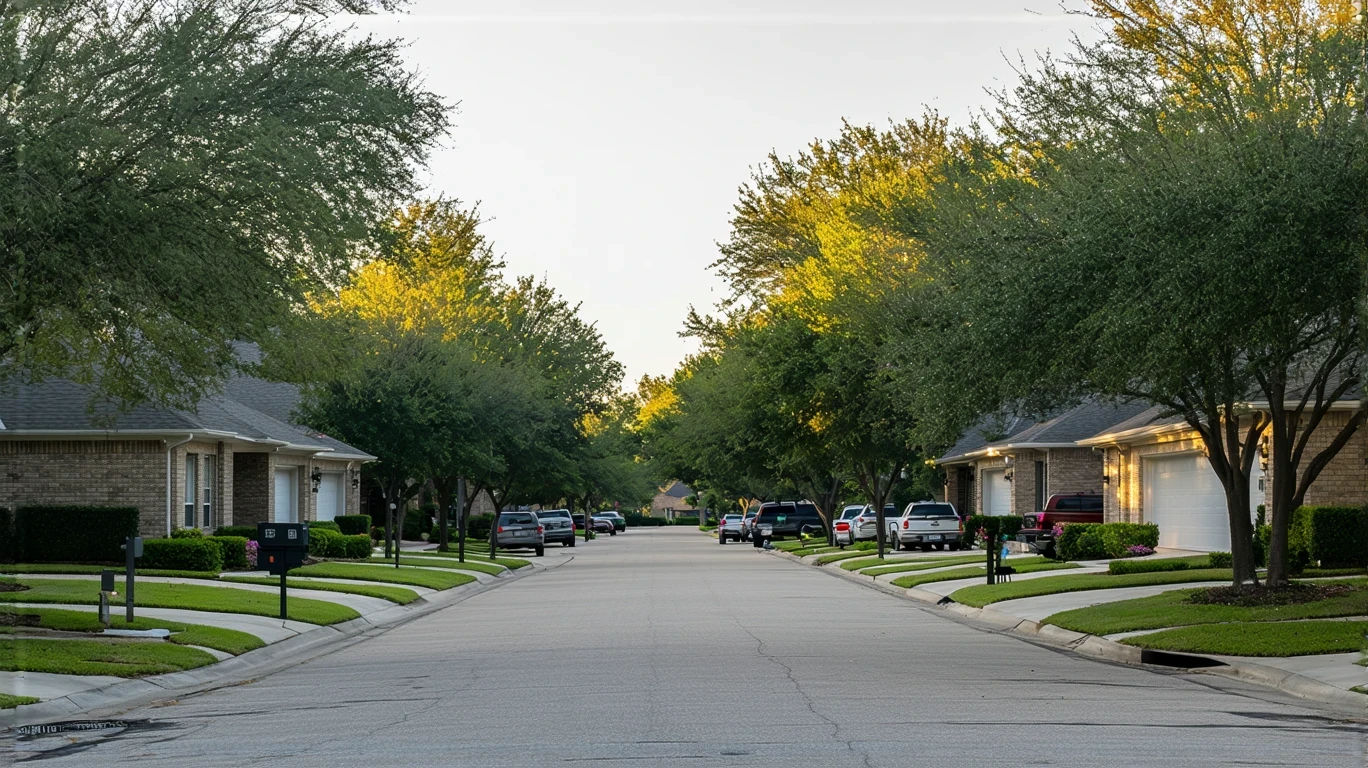
The city’s mixed urban form—a blend of low-rise and mid-rise buildings with both residential and commercial land use—means students can find pockets where errands and daily needs cluster along corridors. Food and grocery density sits in the medium band, so while you won’t have five coffee shops on every block, you also won’t face food deserts. Pedestrian infrastructure exists in higher ratios relative to roads in certain areas, creating walkable pockets that support some car-free living, though full independence from a vehicle remains difficult for most students. Bike infrastructure appears in limited areas, enough for short trips but not a comprehensive network.
On a student-friendliness scale of 100, Irving scores around 68. That reflects its strengths—affordability relative to the metro, rail access, and functional infrastructure—balanced against its limitations: it’s not a campus town, social scenes require seeking out, and car dependency persists for anyone wanting full access to the region’s opportunities. Students who thrive here tend to be self-directed commuters, often graduate students or upperclassmen who’ve outgrown dorm life and prioritize budget and space over being steps from campus.
Housing Options for Students
Irving doesn’t have purpose-built student housing complexes in the way college towns do—no high-rise towers with built-in study lounges and semester leases marketed directly to freshmen. Instead, the off-campus rental market dominates, with students competing in the same pool as young professionals and families. That means standard twelve-month leases, typical security deposits (often one month’s rent), and the need to find roommates independently or through university housing boards and social media groups rather than through a centralized student housing office.
For students sharing space, a two-bedroom apartment in an older complex might run $1,200–$1,500 total, splitting to $600–$750 per person before utilities. Newer complexes closer to transit or major corridors can push $1,600–$1,900 for two bedrooms, raising per-person costs but often including amenities like in-unit laundry and updated kitchens. Studio apartments, appealing to graduate students or those prioritizing privacy, typically start around $900–$1,100 in less central areas and climb toward $1,300+ near rail stations or popular commercial districts. Proximity to the Orange Line often commands a premium, but the tradeoff is reduced transportation costs and time savings for campus commuters.
Lease terms follow standard residential norms: twelve months, with some landlords offering month-to-month options after the initial term at a higher rate. Deposits usually equal one month’s rent, and some complexes require proof of income or a co-signer, which can complicate matters for students without employment history. Roommate-finding resources tend to be informal—university Facebook groups, Craigslist, or word-of-mouth—rather than institutionalized matching services. Students need to be proactive and comfortable navigating standard rental processes, including credit checks and application fees.
Getting Around: Transportation and Campus Access
Transportation defines much of the student experience in Irving. The city’s rail transit presence—specifically the DART Orange Line—gives students a direct connection to downtown Dallas and access to universities along or near the rail corridor. For someone attending a campus in central Dallas, the train becomes the primary commute tool, eliminating parking costs and the stress of traffic. However, the train doesn’t solve every mobility need. Grocery runs, late-night social outings, and errands off the main corridors still often require a car or ride-sharing, especially given that food and grocery establishments cluster along corridors rather than distributing evenly across neighborhoods.
DART offers reduced fares for students at participating institutions, cutting monthly pass costs and making rail commuting more budget-friendly. A standard monthly pass runs around $96, but student discounts can bring that closer to $48–$60 depending on the university’s agreement with DART. For students living near a station and attending a campus on the line, this becomes one of the most cost-effective transportation solutions in the metro. The average commute in Irving is 23 minutes, which aligns well with rail travel times to central Dallas, though students should account for wait times, transfers, and the walk or bus connection from the station to campus.
Biking infrastructure exists in some pockets, with bike-to-road ratios in the medium band, meaning dedicated lanes or paths appear but don’t form a comprehensive network. Students comfortable with cycling can use bikes for short trips—apartment to grocery store, apartment to train station—but shouldn’t expect protected routes for longer commutes. Walking safety varies by neighborhood; areas with higher pedestrian-to-road ratios support foot traffic better, but students should evaluate specific blocks and times of day, especially for evening returns from campus or social outings.
For students with cars, parking availability at apartments is generally adequate—most complexes include at least one assigned or open spot per unit—but campus parking costs and availability become the bigger friction point. Gas prices in Irving currently sit at $3.61 per gallon, and a typical student commute of 25 miles round trip at 25 MPG translates to roughly one gallon per day, or about $18 per week in fuel alone before maintenance and insurance. Ride-sharing fills gaps for late nights or off-route errands, with typical Uber or Lyft trips within Irving running $8–$15 and trips to Dallas campuses or entertainment districts climbing to $20–$30 depending on distance and surge pricing.
Student Cost of Living
Understanding what it actually costs to live as a student in Irving requires breaking down the monthly budget into categories and recognizing that lifestyle choices—cooking versus eating out, driving versus taking the train, going out frequently versus staying in—create wide variation. A frugal student sharing an apartment, cooking most meals, using public transit, and limiting entertainment can operate on roughly $1,100–$1,300 per month. A moderate lifestyle—some dining out, occasional ride-shares, a car for errands, regular social outings—pushes that to $1,500–$1,800. A comfortable budget with a solo apartment, frequent dining out, a car with insurance, and active social life can easily reach $2,200–$2,600 or more.
Food costs form a major variable. Groceries for a student cooking at home typically run $200–$300 per month, depending on dietary preferences and shopping habits. Derived estimates based on regional price parity suggest ground beef at $6.94/lb, chicken at $2.11/lb, eggs at $2.58/dozen, and milk at $4.15/half-gallon—these are modeled figures adjusted for the area, not observed prices, but they provide context for planning. Dining out frequently or relying on campus meal plans (if available) can double or triple food costs, with casual restaurant meals averaging $12–$18 and fast-casual options around $8–$12. Many students find a hybrid approach works best: cooking staples at home and budgeting $100–$150 monthly for eating out or campus food.
Textbooks and course materials remain a significant expense, often $300–$600 per semester depending on major and course load, which translates to roughly $50–$100 per month when averaged across the year. Entertainment and personal expenses vary widely—streaming subscriptions, gym memberships, coffee shop study sessions, concerts, and social outings can add $100–$300 monthly depending on habits. Part-time job opportunities in Irving include retail, food service, tutoring, and gig economy work, with typical wages for students ranging from Texas minimum wage ($7.25/hour, though many employers pay above this) to $12–$15/hour for skilled or specialized roles. The local unemployment rate of 4.1% suggests a reasonably healthy job market, though competition for flexible, student-friendly hours can be intense.
Monthly Student Budget in Irving
Here’s what a typical monthly student budget might look like in Irving, comparing shared housing with solo living scenarios:
| Expense Category | Shared Housing (Frugal) | Shared Housing (Moderate) | Solo Living (Comfortable) |
|---|---|---|---|
| Rent | $650 | $750 | $1,100 |
| Utilities (electric, internet, water) | $60 | $75 | $120 |
| Groceries | $220 | $280 | $320 |
| Dining Out | $50 | $120 | $200 |
| Transportation (transit pass or gas) | $50 | $100 | $180 |
| Textbooks/Supplies (averaged monthly) | $50 | $75 | $100 |
| Entertainment | $40 | $100 | $200 |
| Personal Care | $30 | $50 | $80 |
| Miscellaneous | $50 | $100 | $150 |
| Total | $1,200 | $1,650 | $2,450 |
Estimates based on average student spending patterns and local costs; individual expenses vary based on lifestyle, roommate arrangements, and campus proximity. Figures are illustrative and exclude tuition, fees, and health insurance.
Student-Friendly Amenities and Services
Irving’s amenity landscape requires students to be intentional about where they go and when. Study spaces outside the home or campus library include local coffee shops—chains like Starbucks and local spots scattered along commercial corridors—that offer Wi-Fi and outlets, though seating competition during peak hours can be high. Public libraries in Irving provide quieter alternatives with reliable internet and longer hours, serving as backup study zones when apartments feel too cramped or distracting. Parks with medium-density green space and water features offer outdoor study or break options, especially during milder months, though summer heat limits their appeal for extended sessions.
Fitness options include apartment complex gyms (quality varies widely), budget chains like Planet Fitness, and municipal recreation centers that offer day passes or affordable memberships. Recreational activities lean toward individual or informal group options—running trails, pickup basketball, cycling—rather than organized intramural leagues unless tied to a specific university. Student organizations and campus social life remain anchored to the universities students attend rather than Irving itself, meaning social infrastructure requires commuting back to campus or seeking out metro-wide events rather than hyperlocal college-town traditions.
Healthcare access in Irving includes clinics and pharmacies but no major hospital within the immediate city limits, meaning students rely on urgent care centers for non-emergency needs and travel to nearby facilities for more serious medical attention. Many universities offer student health centers on campus, which become the primary care option for enrolled students. Mental health resources similarly tie to campus counseling services, though some students access community providers or telehealth options depending on insurance coverage. Student discounts at local businesses exist but aren’t as ubiquitous as in traditional college towns—students should ask explicitly and carry student IDs, as discounts often aren’t advertised.
Part-time job opportunities cluster in retail, food service, tutoring, and gig economy work. National chains, local restaurants, and delivery platforms provide flexible scheduling, though wages and hours vary. Some students find on-campus employment through their universities, which can offer better alignment with academic schedules and federal work-study eligibility. The broader metro area expands options significantly, especially for students with cars or willing to navigate transit to Dallas or other nearby cities for internships or higher-paying part-time roles.
Social Scene and Nightlife
Irving’s social scene for students lacks the density and spontaneity of a traditional college town. There’s no main drag lined with student bars, no neighborhood where everyone from campus congregates on weekends, no deep bench of venues hosting live music or themed nights aimed at the 18–22 demographic. Instead, students piece together social lives from campus events, metro-wide outings, and smaller gatherings in apartments or parks. For students whose universities have active campus social calendars—student organizations, intramural sports, Greek life, concerts, and lectures—the bulk of structured social interaction happens there, with Irving serving as the place to sleep and study rather than the center of social gravity.
Local nightlife in Irving includes chain restaurants with bar areas, a few standalone bars and lounges, and entertainment complexes like the Toyota Music Factory, which hosts concerts and events that draw crowds from across the metro. These venues cater to a broad age range rather than specifically to college students, so the vibe skews older and less campus-centric than what you’d find in a university district. Students under 21 face the usual limitations—many venues are 21+ after certain hours, and alcohol-focused nightlife remains inaccessible until legal drinking age. For those seeking more vibrant or diverse nightlife, Dallas proper offers deeper options, but that requires transit planning or ride-sharing costs.
Cultural activities—museums, theaters, festivals—exist more at the metro level than the Irving city level. Students interested in concerts, art exhibitions, or major sporting events typically travel to Dallas or Fort Worth, using Irving as a more affordable home base. Dating and social networking happen primarily through campus connections, apps, and mutual friends rather than organic encounters in a dense student neighborhood. Students who thrive socially in Irving tend to be those who actively build and maintain networks, who don’t rely on proximity to create social opportunities, and who view their college experience as distributed across the metro rather than contained in a single walkable district.
Safety and Practical Considerations
Safety in Irving varies by neighborhood, time of day, and specific location, much like any mid-sized suburban city. Students should research specific apartment complexes and surrounding blocks, read reviews, and visit at different times to gauge comfort levels. Campus safety measures—escort services, emergency call boxes, campus police—remain tied to the universities students attend rather than Irving itself, so off-campus students need to take personal responsibility for route planning, lighting awareness, and late-night transportation choices. Using ride-sharing for late returns from campus or social outings reduces risk compared to walking alone or waiting for transit in isolated areas.
Emergency services in Irving include police, fire, and EMS with standard response protocols, and the city’s clinics and urgent care centers handle non-emergency medical needs. Students should know the location of the nearest urgent care and have a plan for reaching a hospital if needed, whether that’s a personal vehicle, a trusted friend, or ride-sharing. Academic support services—tutoring, writing centers, advising—remain campus-based, so students living in Irving need to build those resources into their commute schedules rather than accessing them on a drop-in basis between classes.
Internship and career services access similarly ties to university campuses, though Irving’s location within the DFW metro provides proximity to major employers in finance, healthcare, logistics, and technology. Students with cars or comfortable navigating transit can access a broad job market, though competition is regional rather than localized. The practical reality of living in Irving as a student means planning ahead—knowing train schedules, budgeting for ride-shares, keeping a stocked pantry to avoid last-minute grocery runs, and building routines that account for commute time and logistical friction. Students who adapt to this rhythm often find the cost savings and space worth the tradeoffs; those who struggle with planning or crave spontaneous access to campus and social scenes may find Irving isolating.
FAQs About Student Life in Irving
What’s the average cost of student living in Irving?
For a student sharing an apartment and living moderately, expect $1,500–$1,800 per month covering rent, utilities, food, transportation, and personal expenses. Frugal students can operate closer to $1,200, while those living solo or with more active social lives may reach $2,200–$2,600. These figures exclude tuition, fees, and health insurance.
How safe is it for students to live off-campus in Irving?
Safety varies by neighborhood. Research specific complexes, visit at different times, and read tenant reviews. Use ride-sharing for late-night returns, stay aware of surroundings, and choose well-lit routes. Irving is a typical suburban city—neither exceptionally dangerous nor uniquely safe—requiring standard urban awareness and planning.
Are there good part-time job opportunities for students?
Yes, though competition exists. Retail, food service, tutoring, and gig economy work provide flexible options, with wages typically ranging from $10–$15/hour. The local unemployment rate of 4.1% suggests a reasonably healthy job market. Students with cars or willing to commute can access broader metro opportunities, including internships and higher-paying roles.
What’s the social scene like for college students in Irving?
Irving isn’t a traditional college town, so social life centers more on campus events and metro-wide outings than hyperlocal student districts. Students need to be proactive—joining campus organizations, traveling to Dallas for nightlife, hosting gatherings—rather than relying on spontaneous proximity to peers. It works well for self-directed students but can feel isolating for those expecting dense campus-town immersion.
Making the Decision: Is Irving Right for Your College Years?
Irving offers a specific value proposition for college students: lower rent and more space than Dallas core, rail access to major campuses, and functional suburban infrastructure—all in exchange for commute planning, car dependency for full access, and a social scene that requires intentional effort rather than ambient proximity. Students who thrive here tend to be upperclassmen or graduate students who’ve outgrown dorm life, who prioritize budget and quiet over walking to class, and who view their college experience as distributed across the metro rather than contained in a single neighborhood. For commuters attending Dallas-area universities, Irving can cut housing pressure significantly while maintaining reasonable access via rail.
The tradeoffs are real. You won’t walk to campus in five minutes. You won’t stumble into impromptu gatherings on your block. You’ll need to plan grocery runs, understand train schedules, and likely keep a car or budget for ride-sharing to access the full range of social and practical opportunities the metro offers. But in return, you’ll likely save several hundred dollars a month, have more space to study and live, and avoid the intensity and noise of dense campus districts. For students comfortable with suburban logistics and focused on balancing day-to-day costs with academic goals, Irving delivers solid value.
Before committing, visit Irving at different times—morning commute, midday errands, weekend evening—and map your specific campus route. Test the train if that’s your plan, drive the route if you’ll have a car, and walk the neighborhood around potential apartments to gauge comfort and access. Talk to current students living off-campus in the area, ask about their routines and frustrations, and be honest about your own tolerance for planning and logistics. Irving works well for the right student, but it’s not a one-size-fits-all solution. If you value affordability, space, and metro connectivity over traditional college-town immersion, it’s worth serious consideration. If you need to be steps from campus and surrounded by student energy, look closer to your university’s core.
How this article was built: In addition to public economic data, this article incorporates location-based experiential signals derived from anonymized geographic patterns—such as access density, walkability, and land-use mix—to reflect how day-to-day living actually feels in Irving, TX.