
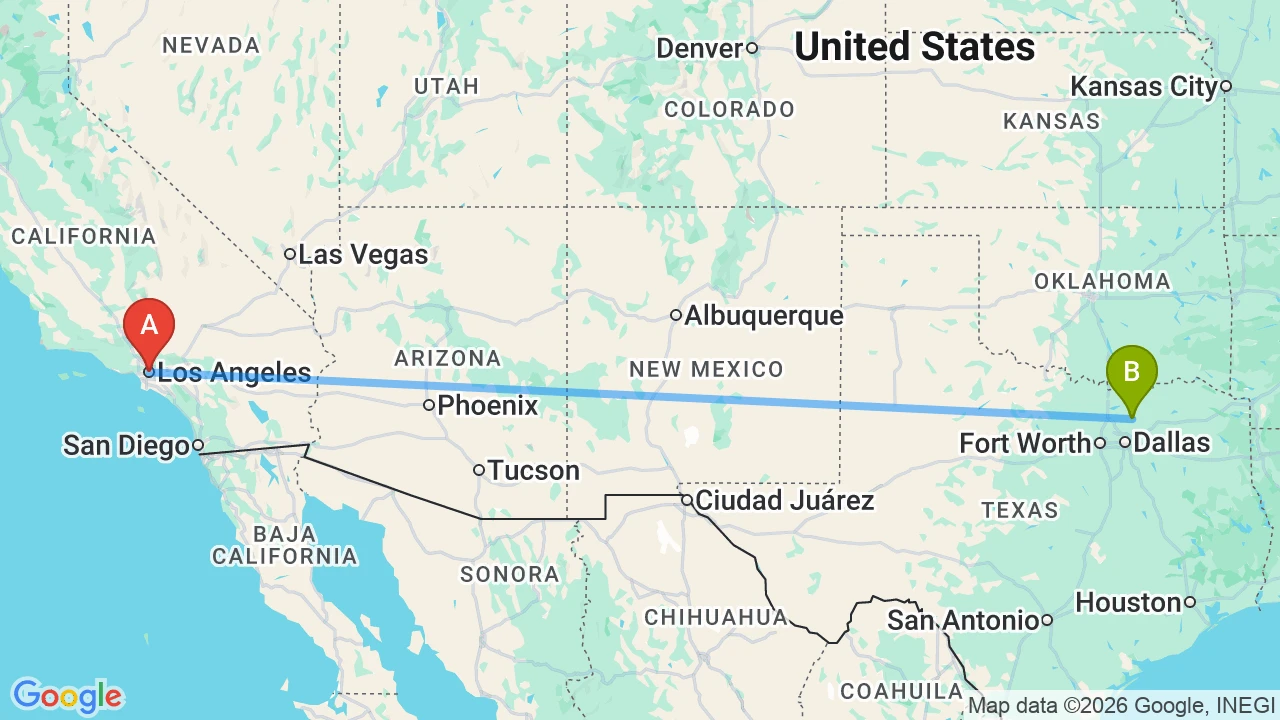
The move from Los Angeles to McKinney represents one of the more dramatic relocations within the U.S.—not just in distance, but in how daily costs, rhythms, and household logistics reconfigure. People make this move for many reasons: lower housing entry barriers, job transfers within the Dallas metro, family ties, or simply exhaustion with California’s cost pressure. But the shift isn’t just about swapping one price tag for another. It’s about where costs concentrate, how much control you gain over certain expenses, and what new frictions emerge in exchange.
This guide explains how cost behavior, lifestyle patterns, and day-to-day exposure tend to change when relocating from Los Angeles, CA to McKinney, TX in 2026. It does not calculate total budgets, declare a financial winner, or predict savings. Instead, it helps you understand where pressure moves—and for whom that movement feels like relief or new tension.
Where Cost Pressure Shifts
In Los Angeles, cost pressure is dominated by housing. The median home value sits at $822,600, and median gross rent reaches $1,791 per month. For renters and aspiring buyers alike, housing is the overwhelming budget anchor—often consuming well beyond the traditional 30% affordability threshold for median earners making $76,244 per year. Utilities, groceries, and transportation add layers of expense, but they rarely compete with housing for attention.
McKinney flips that equation. The median home value is $400,400—less than half of Los Angeles—and median rent is $1,740 per month, only slightly lower in absolute terms but dramatically lower relative to local income. McKinney’s median household income is $113,286 per year, meaning housing costs consume a much smaller share of earnings for most households. The entry barrier to ownership drops sharply, and renters gain breathing room.
But cost relief in one category often means exposure in others. McKinney’s regional price parity index is 118 compared to Los Angeles’s 103, reflecting higher costs for many non-housing goods and services when adjusted for regional baselines. Groceries, for example, show this pattern clearly. In McKinney, bread runs around $2.13/lb, cheese $5.64/lb, and ground beef $7.91/lb—all higher than Los Angeles equivalents of $1.86/lb, $4.93/lb, and $6.90/lb respectively. (Derived estimate based on national baseline adjusted by regional price parity; not an observed local price.)
Transportation costs also shift in character. Los Angeles gas prices average $5.84/gal, while McKinney’s sit at $3.67/gal—a substantial drop. But McKinney’s suburban form and lack of robust transit infrastructure mean most households drive more frequently, over longer distances, and with less flexibility to avoid car dependence. The savings per gallon can be offset by increased mileage, insurance costs, and vehicle wear.
Utilities present another inversion. Electricity in McKinney costs 15.69¢/kWh, roughly half of Los Angeles’s 30.29¢/kWh. Natural gas follows a similar pattern: $16.51/MCF in McKinney versus $22.96/MCF in Los Angeles. However, McKinney’s hot, humid summers and occasional winter cold snaps drive higher consumption. Air conditioning dominates summer bills, and heating—though less intense than in colder climates—still adds seasonal spikes. The lower rate provides cushion, but the usage intensity is real.
The unemployment rate in McKinney is 3.8%, compared to 5.7% in Los Angeles, signaling a tighter labor market and potentially more stable employment conditions. But job availability and wage structure vary widely by industry, and not all sectors offer the same depth in McKinney as they do in the sprawling Los Angeles economy.
Housing & Neighborhood Patterns
Housing in Los Angeles is a high-stakes, low-flexibility market. Whether renting or buying, most households face limited inventory, intense competition, and little room to negotiate. Renters often contend with annual increases, restrictive lease terms, and neighborhoods where affordability and access rarely align. Buyers confront bidding wars, cash offers, and down payment requirements that can take years to accumulate.
McKinney’s housing market operates differently. The lower median home value opens ownership to households who would remain renters indefinitely in Los Angeles. Suburban neighborhoods dominate, with single-family homes, planned communities, and homeowners’ associations shaping the landscape. HOAs are common and often bundle services like landscaping, amenity access, and exterior maintenance—but they also add recurring fees and governance constraints that some movers find intrusive.
Rental dynamics in McKinney are less rigid than in Los Angeles, but the market still favors landlords in desirable areas. Rent levels are only marginally lower in absolute terms, and relative to local income, they’re far more manageable. However, McKinney’s rental stock skews toward larger units and single-family homes, which can mean higher baseline costs for renters who don’t need extra space.
Neighborhood form in McKinney affects daily costs in subtle but persistent ways. Most areas are car-dependent, with food and grocery options concentrated along commercial corridors rather than distributed within walking distance. Park access is present, with water features adding to outdoor appeal, but the infrastructure for walking errands or relying on transit is limited. Families with school-age children may find school and playground density lower than expected, requiring more driving for activities and supervision.
In contrast, Los Angeles—despite its car-centric reputation—offers pockets of walkability, transit access, and mixed-use neighborhoods where errands, dining, and services cluster within shorter distances. McKinney’s suburban texture trades that convenience for space, privacy, and lower housing entry costs.
Lifestyle & Daily Rhythms
Daily life in Los Angeles is shaped by density, traffic, and the constant negotiation of time versus access. Commutes are long—averaging 31 minutes—and over half of workers (52.1%) face commutes that stretch well beyond that. Only 13.1% work from home, meaning most Angelenos spend significant time navigating congestion, whether by car, bus, or rail. The city’s transit network exists but varies widely in coverage and reliability, leaving many households car-dependent despite high gas prices and parking costs.
McKinney operates at a different tempo. The city functions as a commuter suburb within the Dallas metro, and while specific commute data isn’t available, the regional pattern is clear: most residents drive, often to jobs in Plano, Frisco, or Dallas proper. Commutes can be long, but they’re typically highway-based rather than stop-and-go urban gridlock. The trade is time for predictability—less variability, but not necessarily less distance.
How this article was built: In addition to public economic data, this article incorporates location-based experiential signals derived from anonymized geographic patterns—such as access density, walkability, and land-use mix—to reflect how day-to-day living actually feels in McKinney, TX.
McKinney’s infrastructure reflects moderate pedestrian and cycling presence, with some mixed-use development but limited transit options beyond local bus service. Errands cluster along commercial corridors, meaning most trips require a car. Grocery stores, pharmacies, and restaurants are accessible, but not within walking distance for most households. This pattern increases transportation frequency and makes car ownership effectively mandatory for most families.
Climate exposure shifts dramatically. Los Angeles offers mild, dry conditions year-round, with minimal heating or cooling demands for much of the year. McKinney’s climate is more volatile: hot, humid summers that push air conditioning systems hard, and occasional winter cold that requires heating. The intensity and duration of cooling season far exceed what most Los Angeles residents experience, even those accustomed to inland valleys. Humidity adds to the discomfort, making outdoor activity less appealing during peak summer months.
Healthcare access in McKinney centers on clinics and pharmacies, with hospital services requiring travel to nearby cities within the Dallas metro. Los Angeles offers denser healthcare infrastructure, including major medical centers and specialist networks within shorter distances. For households with chronic conditions or complex care needs, this shift can add logistical friction.
Relocation Logistics & Practical Friction
The physical move from Los Angeles to McKinney spans roughly 1,400 miles, typically requiring professional movers, multi-day transit, and careful coordination of utilities, leases, and vehicle transport. Costs vary widely based on household size, belongings, and timing, but the distance alone adds complexity that shorter relocations avoid.
Timing matters. Summer moves align with school schedules but coincide with McKinney’s most intense heat and Los Angeles’s peak moving season, when demand for movers and rental trucks peaks. Spring and fall offer milder weather and potentially lower moving costs, but housing inventory and lease availability fluctuate throughout the year.
What surprises many movers is the shift in daily logistics. In Los Angeles, despite traffic and sprawl, many households develop routines that minimize driving through careful neighborhood selection or transit use. McKinney’s suburban form makes that optimization harder. Grocery runs, school drop-offs, errands, and social activities all require driving, often over greater cumulative distances than expected. The time spent in the car may not increase dramatically, but the necessity of driving does.
Another common adjustment: the role of homeowners’ associations. Many McKinney neighborhoods operate under HOA governance, which can feel restrictive to movers accustomed to the relative anonymity of Los Angeles apartment living or older single-family neighborhoods. Rules around landscaping, exterior modifications, and parking are common, and fees—while often bundled with amenities—add a recurring cost layer that renters and some California homeowners haven’t navigated before.
Social and cultural adjustment also plays a role. McKinney is a growing suburb with a strong family orientation and a slower, more insular pace than Los Angeles. The density of cultural institutions, entertainment options, and spontaneous social opportunities is lower. For some, that’s a relief. For others—especially younger professionals, creatives, or those who value urban density—it can feel isolating.
Frequently Asked Questions
- Does McKinney, TX feel more or less expensive than Los Angeles, CA?
- McKinney feels dramatically less expensive for housing—both entry costs and ongoing obligations—but more expensive in categories like groceries and some services. The shift isn’t about total cost reduction; it’s about where costs concentrate. Households who struggled with housing in Los Angeles often find relief in McKinney, while those who managed housing but valued low transportation or utility costs may feel new pressure. The experience depends heavily on income, household size, and lifestyle priorities.
- How do housing markets differ between Los Angeles and McKinney?
- Los Angeles housing is defined by scarcity, competition, and high entry barriers, with limited flexibility for renters and buyers alike. McKinney offers lower home values, more inventory, and easier access to ownership, but the market skews suburban with HOA governance and car-dependent neighborhoods. Renters in McKinney face slightly lower costs but fewer dense, walkable options. Buyers gain affordability but trade urban access for suburban form.
- What feels different about daily life after moving from Los Angeles to McKinney?
- Daily life in McKinney is quieter, slower, and more car-dependent. Errands require driving, transit isn’t a viable option for most, and the density of social and cultural opportunities is lower. Climate exposure shifts from mild and dry to hot, humid summers and occasional winter cold. For families seeking space, stability, and lower housing pressure, the change feels positive. For those who value walkability, spontaneity, and urban density, it can feel isolating.
- When does the move from Los Angeles to McKinney tend to feel easiest?
- Moves aligned with school schedules (late spring or summer) simplify transitions for families, but summer also brings intense heat and higher moving costs. Spring and fall offer milder weather and potentially lower demand for movers, though housing inventory and lease timing vary. The easiest transitions tend to occur when households have secured housing, employment, and a clear understanding of McKinney’s suburban logistics before arrival.
- What are the most common challenges when adjusting to McKinney after Los Angeles?
- Car dependence surprises many movers, even those accustomed to driving in Los Angeles. The necessity—not just convenience—of driving for every errand, activity, and social event adds friction. Climate adjustment is another common challenge, especially the intensity and duration of summer heat and humidity. Social and cultural adjustment also matters: McKinney’s suburban, family-oriented pace feels isolating to some, especially younger professionals or those who valued Los Angeles’s density and spontaneity.
- Who does this move work best for, and who might struggle?
- This move works best for families seeking homeownership, space, and lower housing pressure, especially those with stable remote work or jobs within the Dallas metro. Higher earners who felt squeezed by Los Angeles housing costs often find relief. The move is harder for renters who don’t plan to buy, younger professionals who value urban density and nightlife, and households without reliable vehicles. Those who rely on transit, walkability, or frequent access to cultural institutions may feel the loss acutely.
Conclusion
The move from Los Angeles to McKinney isn’t a simple cost swap. It’s a fundamental shift in where expenses concentrate, how daily life unfolds, and what tradeoffs households navigate. Housing pressure drops sharply, opening ownership and freeing up income for other priorities. But car dependence becomes mandatory, climate exposure intensifies, and the suburban texture replaces urban density with space and quiet.
For families, remote workers, and higher earners exhausted by California’s housing market, McKinney offers tangible relief and a different quality of life. For renters, younger professionals, and those who value walkability and cultural access, the move may feel like trading one set of pressures for another—less acute, but more pervasive.
The question isn’t whether McKinney is cheaper. It’s whether the shift in cost behavior, daily rhythms, and household logistics aligns with your priorities. Understanding where pressure moves—and for whom—is the first step in making that decision with clarity.
For more detailed breakdowns of McKinney’s cost drivers, explore the McKinney cost of living hub and the Dallas metro overview.
How this article was built: In addition to public economic data, this article incorporates location-based experiential signals derived from anonymized geographic patterns—such as access density, walkability, and land-use mix—to reflect how day-to-day living actually feels in McKinney, TX.