
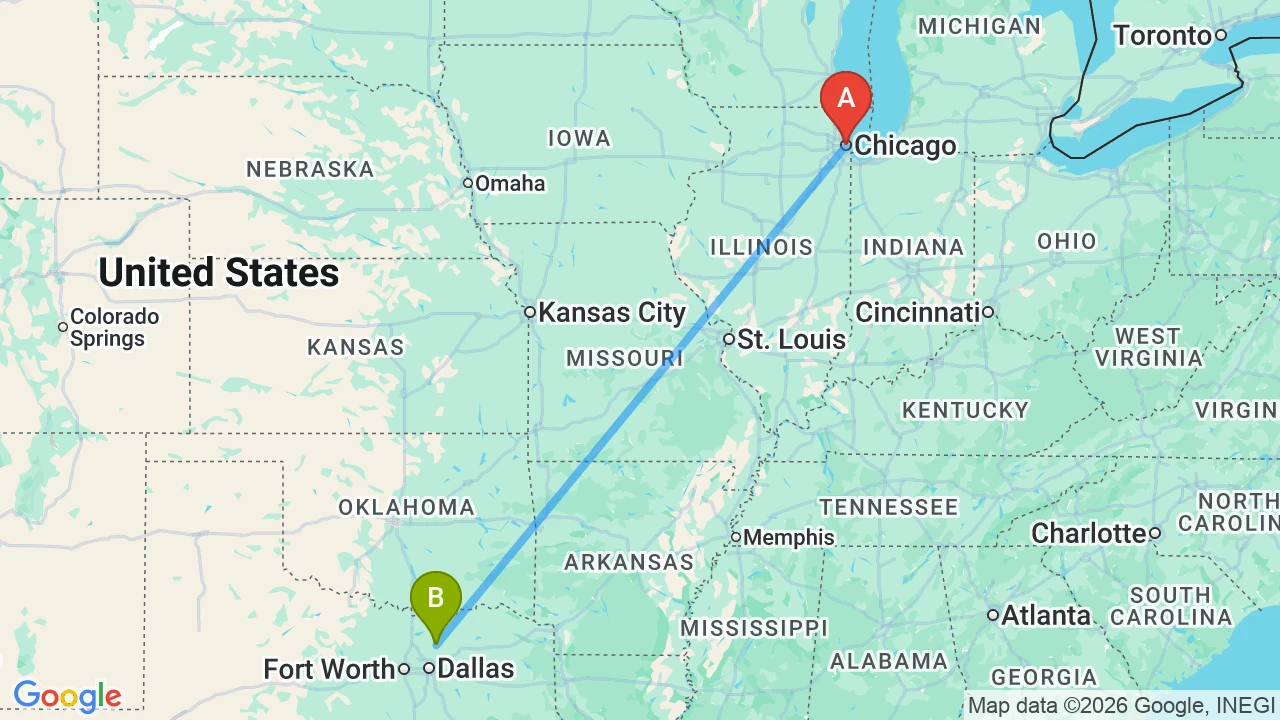
Introduction: Why Chicago to McKinney?
The move from Chicago, IL to McKinney, TX represents one of the more dramatic relocations within the U.S.—not just in distance, but in how daily life is structured. People consider this move for several reasons: lower housing entry barriers, a different tax environment, warmer climate, and often a job opportunity in the Dallas metro area. What changes isn’t just the price tags, but where cost pressure concentrates and how households manage day-to-day logistics.
This guide explains how costs behave differently between these two cities, where friction increases or decreases, and which household types tend to adapt most easily. This is not about declaring McKinney “cheaper” or “better”—it’s about understanding where your budget, routines, and expectations will need to adjust.
We focus on cost behavior and lifestyle structure, not total budgets or savings predictions. The goal is clarity about tradeoffs, not a financial verdict.
Cost Pressure Shifts: Where Money Shows Up Differently
The most immediate difference between Chicago and McKinney is housing entry cost. Chicago’s median home value sits at $304,500, while McKinney’s reaches $400,400. For renters, Chicago’s median gross rent is $1,314 per month compared to McKinney’s $1,740 per month. This surprises many movers who expect Texas to feel universally more affordable—McKinney is a higher-income suburb within the Dallas metro, and housing reflects that positioning.
However, income context matters significantly. McKinney’s median household income is $113,286 per year, substantially higher than Chicago’s $71,673 per year. This suggests McKinney’s housing market is calibrated to a different income band, and households moving without a corresponding income increase may feel more housing pressure, not less.
Ongoing cost behavior diverges in important ways. Chicago’s regional price parity index is 112, while McKinney’s is 118, indicating that general goods and services cost slightly more in McKinney relative to the national baseline. Grocery costs reflect this: derived estimates show bread at $2.02/lb in Chicago versus $2.13/lb in McKinney; ground beef at $7.51/lb versus $7.91/lb; and milk at $4.56/half-gallon versus $4.80/half-gallon. (Derived estimate based on national baseline adjusted by regional price parity; not an observed local price.) These differences are modest but consistent across categories, meaning weekly grocery runs tend to cost slightly more in McKinney.
Transportation costs shift in both directions. Gas prices favor McKinney at $3.67/gal compared to Chicago’s $4.31/gal, which helps offset some of the increased driving most households experience after the move. Chicago’s average commute is 34 minutes, with 59.7% of workers facing long commutes and only 14.6% working from home. McKinney lacks specific commute data in the feed, but its suburban structure and position within the Dallas metro typically mean longer drives for those commuting into Dallas or other employment centers.
Utility costs require careful attention. Electricity rates are similar—16.36¢/kWh in Chicago versus 15.69¢/kWh in McKinney—but usage patterns differ dramatically due to climate. McKinney’s extended cooling season and triple-digit summer heat mean air conditioning dominates summer utility bills in ways Chicago households rarely experience. Natural gas pricing also diverges significantly: $9.65/MCF in Chicago versus $16.51/MCF in McKinney, though heating needs are far less intense in McKinney’s milder winters.
The unemployment rate is lower in McKinney at 3.8% compared to Chicago’s 5.4%, suggesting a tighter labor market and potentially more job stability for those already employed, though this varies significantly by industry and role.
Housing & Neighborhood Patterns: Entry vs. Ongoing Obligations
Chicago offers a wider spectrum of housing types and price points, from high-rise rentals near the Loop to single-family homes in neighborhood pockets. McKinney’s housing stock skews heavily toward single-family homes in planned developments, with fewer walkable, mixed-use neighborhoods. This structural difference affects not just purchase price but ongoing obligations: homeowners associations are common in McKinney and often bundle services that Chicago residents might handle individually or not at all.
For renters, McKinney’s higher median rent reflects both newer construction and the suburb’s positioning as a destination for higher-income households. Rental inventory is less diverse than Chicago’s, with fewer older, lower-cost units available. Renters moving from Chicago’s more varied stock may find fewer options at the lower end of the market.
Ownership dynamics also shift. McKinney’s higher home values require larger down payments and higher monthly mortgage obligations, even as Texas’s lack of state income tax provides some offset. Property taxes in Texas are notably higher than Illinois in many cases, and McKinney is no exception—these taxes fund local services and schools, and they represent a significant ongoing cost that doesn’t decrease as the mortgage is paid down.
Neighborhood form matters for daily costs. Chicago’s walkable pockets, substantial pedestrian infrastructure, and high-density food and grocery access mean many households can manage errands without driving. McKinney’s moderate pedestrian infrastructure and corridor-clustered food access mean most households drive for most errands, increasing transportation frequency and vehicle wear even if per-gallon costs are lower.
How this article was built: In addition to public economic data, this article incorporates location-based experiential signals derived from anonymized geographic patterns—such as access density, walkability, and land-use mix—to reflect how day-to-day living actually feels in McKinney, TX.
Lifestyle & Daily Rhythms: Pace, Access, and Car Dependence
Daily life in Chicago often revolves around transit access, neighborhood walkability, and vertical density. Many residents rely on the CTA’s rail and bus network, walk to grocery stores and restaurants, and experience the city’s mixed-use neighborhoods where residential and commercial activity coexist. McKinney operates on a fundamentally different model: most households depend on cars for nearly all trips, errands are planned around driving routes, and daily rhythms are shaped by suburban infrastructure.
This shift affects time, convenience, and cost. Chicago households may spend more on transit passes or parking but less on vehicle maintenance and fuel. McKinney households typically own more vehicles, drive more miles, and plan errands in consolidated trips to minimize driving frequency. The tradeoff isn’t simply “cheaper” or “more expensive”—it’s a different structure of access and obligation.
Climate exposure also changes significantly. Chicago’s long, cold winters and humid summers create distinct seasonal cost patterns, with heating dominating winter utility bills and cooling playing a secondary role in summer. McKinney’s extended cooling season and triple-digit summer heat mean air conditioning runs for months, often driving summer utility bills higher than winter heating costs. Households accustomed to Chicago’s climate may underestimate how much cooling costs in a Texas summer, particularly in larger single-family homes common in McKinney.
Outdoor access shifts as well. Chicago’s integrated park density and water features provide substantial green space within walking distance for many residents. McKinney’s park density is present but more dispersed, and accessing outdoor spaces typically requires driving. Families with young children may notice this difference acutely, as spontaneous park visits become less frequent when they require a car trip.
Healthcare access also differs in structure. Chicago’s hospital and clinic density supports routine and emergency care within close proximity for most residents. McKinney has clinics and pharmacies present, but hospital access may require driving into neighboring areas or Dallas proper, adding time and complexity for households managing chronic conditions or frequent medical appointments.
Relocation Logistics & Practical Friction
The physical move from Chicago to McKinney spans roughly 1,000 miles, typically requiring professional movers or a multi-day drive. Timing matters: summer moves coincide with McKinney’s most intense heat, which can complicate unpacking and settling in, while winter moves avoid the worst weather in both cities. Spring and fall offer the most temperate conditions but may align with higher moving costs due to demand.
Routine changes extend beyond housing and commute. Chicago’s transit infrastructure means many residents don’t drive daily; McKinney’s car-dependent structure requires reliable vehicles for all household members who work or manage errands. Households moving without sufficient vehicles may face immediate pressure to purchase or lease additional cars, adding upfront and ongoing costs.
Access to familiar retailers and services shifts as well. Chicago’s density supports a wide range of grocery stores, restaurants, and specialty shops within short distances. McKinney’s corridor-clustered food access means households often drive to larger shopping centers where national chains dominate. This isn’t necessarily more expensive per item, but it changes shopping frequency, trip planning, and the ability to comparison-shop easily.
School and family infrastructure also requires attention. McKinney’s school density is below low thresholds, and playground density is similarly limited compared to Chicago’s moderate family infrastructure. Families with school-age children should research specific school districts and extracurricular access carefully, as proximity and quality vary significantly across McKinney’s neighborhoods.
Social and community adjustment takes time. Chicago’s density and transit access support spontaneous social interaction and neighborhood familiarity; McKinney’s suburban structure often requires more intentional effort to build community connections. Households who thrive on walkable, transit-rich environments may feel isolated initially, while those seeking quieter, car-oriented suburbs may find McKinney’s pace more comfortable.
Frequently Asked Questions
- Does McKinney feel more or less expensive than Chicago?
- McKinney’s cost pressure concentrates differently than Chicago’s. Housing entry costs are higher in McKinney, both for renters and buyers, and general goods cost slightly more due to regional price parity. However, McKinney’s higher median household income suggests the market is calibrated to a different income band. Households moving without a corresponding income increase may feel more pressure, while those with higher incomes may find the tradeoffs manageable. Transportation costs per gallon are lower, but most households drive significantly more, which can offset fuel savings.
- How do housing markets differ between Chicago and McKinney?
- Chicago offers a wider range of housing types, from high-rise rentals to single-family homes, with more varied price points and neighborhood structures. McKinney’s market skews toward single-family homes in planned developments, with higher median values and rents. Ownership in McKinney often includes HOA fees and higher property taxes, while Chicago’s housing stock includes more older, lower-cost options. Renters moving from Chicago may find fewer affordable units in McKinney, and buyers should expect higher entry costs despite Texas’s lack of state income tax.
- What feels different about daily life after moving from Chicago to McKinney?
- The most immediate shift is car dependence. Chicago’s transit and walkability support many errands without driving; McKinney requires a car for nearly all trips. Climate also changes significantly—McKinney’s extended cooling season and summer heat create different utility patterns and outdoor routines. Social rhythms shift as well: Chicago’s density supports spontaneous interaction, while McKinney’s suburban structure requires more intentional planning for social connection and errands. Families may notice differences in school and playground access, requiring more research and driving to reach activities.
- When does the move from Chicago to McKinney feel easiest?
- Spring and fall offer the most temperate weather in both cities, making the physical move and initial settling-in period more comfortable. Summer moves coincide with McKinney’s most intense heat, which can complicate unpacking and adjustment, while winter moves avoid harsh Chicago weather but may still feel abrupt for households unaccustomed to Texas winters. Timing around school calendars matters for families, and aligning the move with a job start date can reduce financial pressure during the transition.
- What surprises people most about moving from Chicago to McKinney?
- Many movers underestimate how much driving increases and how that affects vehicle costs, time, and daily planning. Summer cooling costs also surprise households used to Chicago’s milder summers. Housing costs—both entry and ongoing—often feel higher than expected, particularly for those who assumed Texas would be universally cheaper. Social adjustment takes longer than anticipated for households who relied on Chicago’s walkability and transit for spontaneous interaction. Finally, the lack of nearby hospital access and dispersed family infrastructure can create friction for households with young children or medical needs.
- Who does this move work best for?
- This move tends to work well for higher-income households relocating for job opportunities in the Dallas metro, particularly those who value newer housing, planned communities, and car-oriented suburbs. Families seeking strong school districts and willing to research specific neighborhoods may find McKinney appealing. Households comfortable with driving for most errands and managing extended cooling seasons adapt more easily. The move is more challenging for renters without significant income increases, households who rely on transit or walkability, and those who underestimate the shift in daily logistics and climate exposure. Singles and couples used to Chicago’s density and spontaneous access may feel isolated without intentional community-building effort.
Conclusion: Tradeoffs, Not Totals
The move from Chicago to McKinney isn’t a simple cost reduction or lifestyle upgrade—it’s a fundamental shift in how daily life is structured and where financial pressure concentrates. McKinney’s higher housing costs, increased car dependence, and extended cooling season create different obligations than Chicago’s transit access, walkable neighborhoods, and varied housing stock. Households moving with higher incomes and a preference for suburban, car-oriented living may find McKinney’s tradeoffs manageable or even preferable. Those expecting across-the-board cost relief or underestimating the shift in daily logistics may struggle.
The key is understanding where your household’s priorities align with each city’s structure. If proximity, walkability, and transit matter deeply, Chicago’s model supports those needs despite higher density and cold winters. If newer housing, planned communities, and car-based access feel more comfortable, McKinney offers that structure—but at a higher entry cost and with different ongoing obligations.
For deeper exploration of how costs behave in each city individually, see the Chicago living guide and the McKinney living guide on IndexYard. Both hubs provide category-level breakdowns, household scenarios, and decision-oriented context to help you plan with confidence.