
Is Hollywood the kind of place you grow roots—or just pass through? That question cuts to the heart of what makes this South Florida city feel different to different people. Tucked between Fort Lauderdale and Miami, Hollywood offers a coastal lifestyle with urban texture, but the experience depends heavily on what you’re optimizing for: beach access, walkability, commute tolerance, or family logistics. The vibe here isn’t uniform—it’s layered, with pockets of pedestrian-friendly streets and rail connectivity sitting alongside car-dependent corridors and longer-than-expected drive times. For some, that mix feels like the best of both worlds. For others, it’s a compromise that wears thin.
The Emotional Landscape of Hollywood
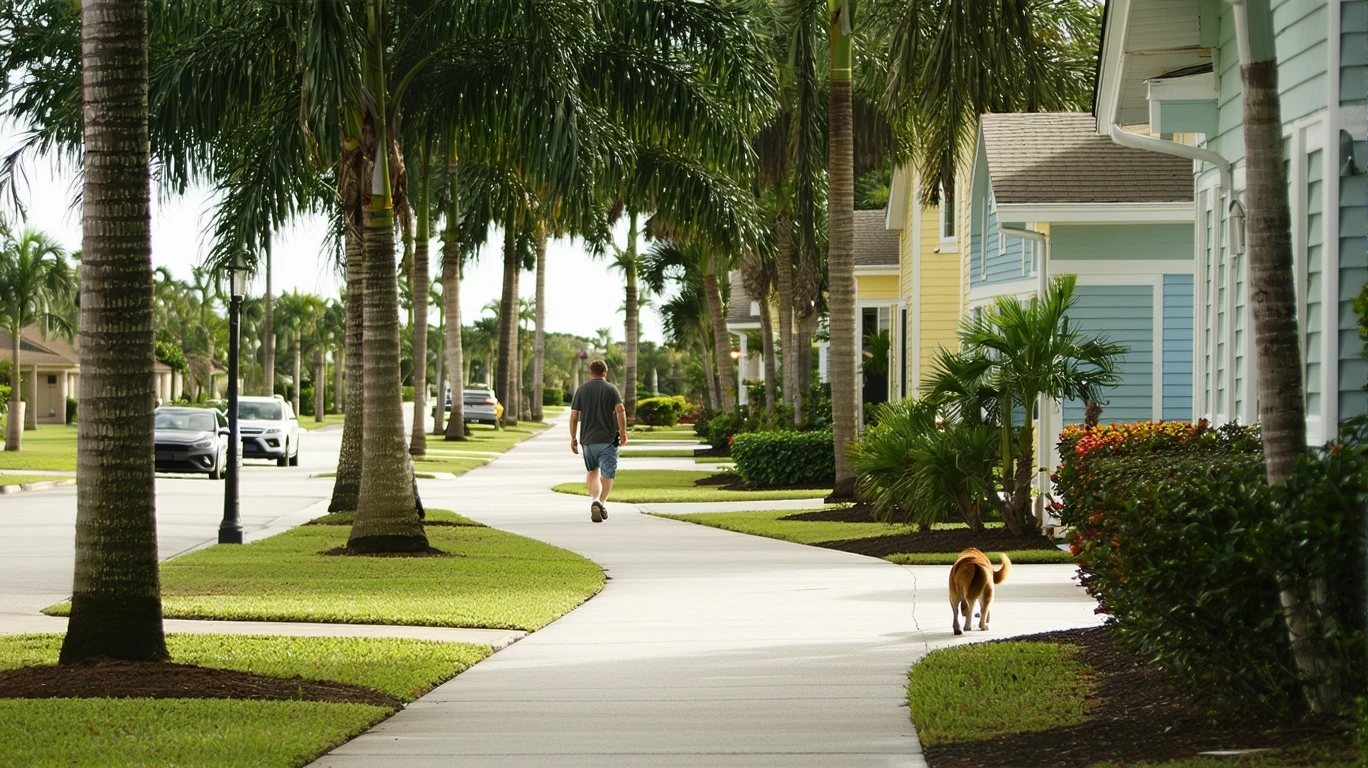
Hollywood tends to reward people who value coastal proximity and are willing to navigate tradeoffs in exchange for it. The city’s structure reflects a more vertical urban form with mixed residential and commercial land use, meaning you’ll find mid-rise buildings, street-level retail, and neighborhoods that feel more layered than sprawling. There’s rail transit here, which is a meaningful differentiator in a region where car dependency is the norm, and the pedestrian-to-road ratio in certain areas supports a walkable lifestyle—at least in pockets. Parks are plentiful, and water features are woven into the landscape, creating a sense of outdoor access that feels integrated rather than tacked on.
But the city doesn’t make everything easy. Errands tend to cluster along corridors rather than spreading evenly across neighborhoods, so convenience depends on where you live. Grocery density is high, but food establishment access is more moderate, meaning some residents feel like they have plenty of options while others feel like they’re always driving to the same few spots. Family infrastructure is present but not abundant—schools meet moderate density thresholds, but playgrounds fall below what many parents expect. And while the average commute is around 30 minutes, nearly half of workers face longer drives, a friction point that shapes daily mood more than people anticipate.
The people who feel at home here tend to be those who prioritize lifestyle texture over logistical perfection: beach access, walkable evenings, transit options, and a sense of place that feels more urban than suburban. The people who feel restless are often those who expected seamless convenience, shorter commutes, or more family-oriented infrastructure without the need to plan around gaps.
What People Are Talking About Online
In Hollywood’s online spaces—neighborhood Facebook groups, local Reddit threads, and community-focused social media—the tone is a mix of pride, pragmatism, and occasional frustration. Coastal identity runs strong, with residents frequently celebrating beach access, boardwalk culture, and the feeling of living somewhere that “doesn’t feel like the rest of South Florida.” There’s also a recurring thread of protectiveness: people who’ve been here a while tend to bristle at comparisons to Fort Lauderdale or Miami, insisting Hollywood has its own character.
“It’s not as flashy as Miami, and it’s not as polished as Fort Lauderdale, but that’s kind of the point. You get the beach without the scene.”
At the same time, there’s a steady undercurrent of logistical complaint. Traffic, parking, and the uneven distribution of walkability come up often, especially from people who moved here expecting a more pedestrian-friendly experience citywide. Newer residents sometimes express surprise at how car-dependent daily life can feel outside of a few core areas, while long-timers tend to frame it as “just how it is.”
“You can walk to dinner and the beach in some neighborhoods, but try running errands without a car and you’ll feel it.”
There’s also a thread of ambivalence about growth and change. Some residents welcome new development and amenities; others worry about losing the laid-back, less-commercialized feel that drew them here in the first place. The conversation isn’t hostile, but it’s not fully settled either.
How Local Coverage Frames the City
Local news and community coverage in Hollywood tend to focus on a few recurring themes: coastal identity, development tension, and the city’s position within the broader metro. Stories often frame Hollywood as a place in transition—neither fully suburban nor fully urban, neither sleepy nor frenetic. Coverage reflects a city negotiating what it wants to become while holding onto what it’s been.
Typical framing includes:
- “Boardwalk Revitalization Efforts Continue as City Balances Tourism and Resident Needs”
- “New Mixed-Use Development Sparks Debate Over Density and Character”
- “Transit Expansion Brings Opportunity and Questions About Traffic Flow”
- “Residents Weigh Beach Access Against Rising Coastal Living Costs”
- “Hollywood’s Identity: Coastal Charm or Urban Corridor?”
The tone is rarely celebratory or alarmist—it’s more observational, reflecting a community that’s aware of its own contradictions. There’s pride in the beach, concern about affordability, curiosity about transit, and ongoing negotiation about what “progress” should look like here.
Review-Based Perception: What Gets Praised and What Gets Criticized
On platforms like Google Reviews, Yelp, and Nextdoor-style community boards, Hollywood’s public perception splits along expectation lines. People who wanted a coastal lifestyle with urban texture tend to leave positive reviews; people who expected seamless suburban convenience or big-city walkability tend to leave mixed or mildly critical ones.
Common praise centers on:
- Beach and boardwalk access that feels less touristy than neighboring cities
- Pockets of walkable streets with local restaurants and shops
- Presence of rail transit as a viable alternative to driving for some trips
- Parks, green space, and water features that feel integrated into daily life
- A sense of place that feels distinct and less generic than newer developments
Common complaints focus on:
- Uneven walkability—some areas feel pedestrian-friendly, others feel stranded without a car
- Errands that require driving to specific corridors rather than being neighborhood-accessible
- Traffic congestion and longer-than-expected commute times
- Limited playground and family recreation infrastructure compared to suburban alternatives
- Parking challenges in denser, more walkable areas
Neighborhood variation matters here. Newer planned sections tend to feel more car-dependent and less textured, while older pockets near the beach and downtown offer more walkability and character but come with parking and density tradeoffs. Families with young children sometimes feel caught between wanting the lifestyle benefits and needing more kid-focused infrastructure. Remote workers and retirees tend to express higher satisfaction, especially if they’re not commuting daily and can take advantage of the outdoor and transit amenities.
How Hollywood Compares to Nearby Cities
| Aspect | Hollywood | Fort Lauderdale | Pembroke Pines |
|---|---|---|---|
| Overall Vibe | Coastal with urban pockets, layered and transitional | More polished, tourist-oriented, denser downtown | Suburban, family-focused, car-dependent |
| Walkability | Strong in pockets, uneven citywide | Higher in core areas, more consistent downtown | Limited, designed for driving |
| Transit Access | Rail present, meaningful option | Rail and bus, more extensive network | Minimal, car-centric |
| Beach Access | Integrated, less commercialized feel | Central, more tourist-heavy | Inland, requires drive |
| Family Infrastructure | Moderate, schools present, playgrounds limited | Urban family amenities, less suburban feel | Abundant, designed for families |
| Commute Tolerance | Moderate to long for many workers | Shorter for downtown jobs, variable elsewhere | Longer, but expected in suburban context |
Hollywood sits between Fort Lauderdale’s urban polish and Pembroke Pines’ suburban predictability. If you want a more walkable, transit-accessible lifestyle with beach proximity and don’t mind navigating uneven infrastructure, Hollywood offers something Fort Lauderdale charges more for and Pembroke Pines doesn’t provide. If you need consistent walkability everywhere or abundant family recreation spaces, Fort Lauderdale’s core or Pembroke Pines’ suburban design might feel more aligned. If you’re optimizing for commute brevity and don’t care about transit or beach access, Pembroke Pines or inland Fort Lauderdale might reduce daily friction. Hollywood works best for people who value lifestyle texture and are willing to plan around logistical gaps.
Voices from Hollywood Residents
“We moved here for the beach and the boardwalk, and that part has been everything we hoped for. But running errands feels more scattered than we expected—we’re still driving to the same grocery store and Target every week.”
— Young professional couple, renting near downtown
“I love that I can take the train to work a few days a week. It’s not perfect, but it’s a real option, and that matters when you’re trying to avoid sitting in traffic every single day.”
— Commuter working in Fort Lauderdale
“The parks here are great, and we use them all the time. But we wish there were more playgrounds closer to home—we end up driving to the same couple of spots because the others are too far or too small.”
— Family with two young children
“It’s not as walkable as we thought it would be. Our neighborhood is fine for evening strolls, but if we need anything, we’re in the car. It’s better than pure suburbia, but it’s not a walkable city.”
— Newcomer from a northern metro
“I’ve been here for 20 years, and I still think it’s the best balance in South Florida. You get the beach without the Miami chaos, and you’re close enough to everything without being in the middle of it.”
— Long-time local, homeowner
“The commute is longer than I’d like, but I accepted that tradeoff when we moved here. The lifestyle benefits make up for it most days, but on bad traffic days, I question the choice.”
— Remote worker with occasional office days
“If you don’t need a ton of kid infrastructure and you like being near the water, this place is hard to beat. But if you’re comparing it to a planned suburb with splash pads and tot lots everywhere, it’s a different calculation.”
— Retiree, moved from inland Florida
Does Hollywood Feel Like a Good Fit?
Hollywood doesn’t offer a single, simple answer to the question of fit—it offers a set of tradeoffs that feel rewarding to some and limiting to others. The city works well for people who prioritize coastal access, appreciate pockets of walkability and transit options, and value a sense of place that feels more layered than generic. It tends to frustrate people who expect logistical ease across the board, abundant family recreation infrastructure, or short commutes without compromise.
The emotional experience here is shaped by structure: rail transit exists and matters, pedestrian infrastructure is strong in some areas but uneven citywide, errands cluster along corridors rather than spreading evenly, and parks are plentiful but playgrounds are sparse. If those patterns align with how you want to live—and if you’re willing to plan around the gaps—Hollywood can feel like a place worth staying. If they don’t, the friction accumulates quickly.
Understanding where money goes each month, what drives housing pressure, and how lifestyle needs play out in practice can help clarify whether the tradeoffs here match your priorities—or whether a neighboring city might reduce daily friction.
How this article was built: In addition to public economic data, this article incorporates location-based experiential signals derived from anonymized geographic patterns—such as access density, walkability, and land-use mix—to reflect how day-to-day living actually feels in Hollywood, FL.
The perspectives shown reflect commonly expressed local sentiment and recurring themes in public discussion, rather than individual accounts.