
Monthly Expense Reality: Needs vs. Wants in Hollywood
| Category | Need | Want |
|---|---|---|
| Housing | Shelter within commute range | Space, location choice, walkability access |
| Cooling | Functional AC through summer months | Comfort without bill anxiety |
| Transportation | Getting to work reliably | Choosing time over cost, or vice versa |
| Errands | Access to groceries and services | Convenience without route planning |
| Discretionary | None | Dining, entertainment, savings buffer |
The gap between these columns is where income pressure lives.
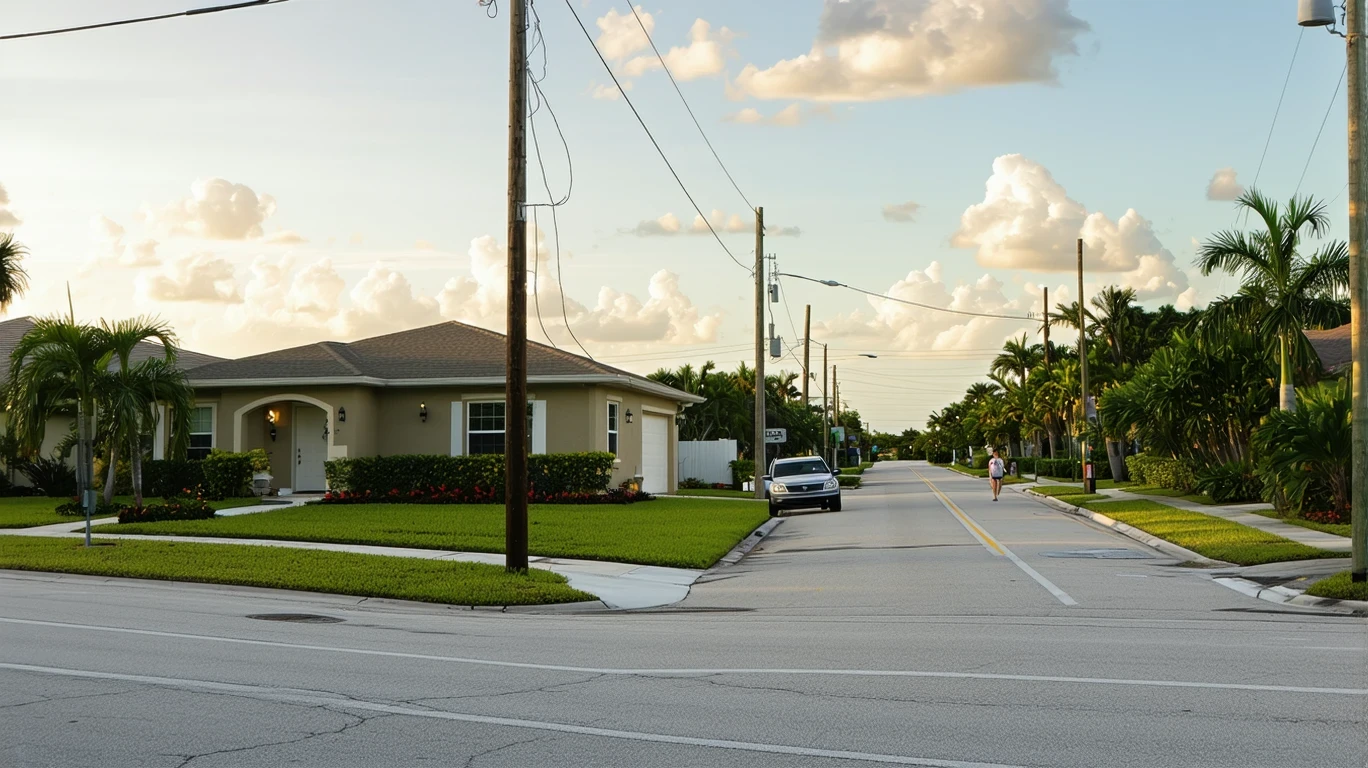
What “Living Comfortably” Means in Hollywood
Comfort in Hollywood isn’t about luxury—it’s about margin. It’s the difference between making rent and choosing where you live. Between running the AC and worrying about the bill. Between getting to work and having control over how you get there.
In a coastal Florida city where the median household income sits at $61,958 per year and the median rent reaches $1,463 per month, comfort means having enough income left after housing to absorb the realities of extended heat, commute variability, and the logistics of daily life. It means your paycheck covers needs without eliminating wants.
Expectations matter here. Hollywood offers pockets of walkability, rail transit access, and a more vertical urban form than many Florida suburbs—but those features don’t distribute evenly across the city. Some neighborhoods cluster amenities along corridors; others require deliberate planning for errands. The city’s structure creates different experiences depending on where you land and how much choice your income affords.
Comfortable living here means you’re not just surviving the costs—you’re navigating them without constant recalibration.
Where Income Pressure Shows Up First
Housing dominates the pressure landscape. With a median home value of $345,300 and rent at $1,463, the cost of shelter in Hollywood claims a substantial share of gross monthly income before other expenses enter the picture. For households near or below the median income, this leaves limited room for variability elsewhere.
Utility exposure follows closely. Hollywood’s extended cooling season—driven by heat and humidity that persist well beyond summer—means air conditioning isn’t optional. Electricity rates of 15.02¢ per kWh translate into bills that spike during the hottest months and remain elevated longer than in temperate climates. Households without margin feel this volatility immediately.
Transportation costs layer on next. The average commute runs 30 minutes, and nearly half of workers face longer trips. With only 12% working from home, most residents must budget for fuel at $3.43 per gallon, vehicle maintenance, and the time cost of getting to work. Rail transit exists and offers an alternative for some routes, but its utility depends heavily on where you live and work relative to the line.
For families, the pressure intensifies. School density sits in the medium range, and playground infrastructure remains limited. This means parents often navigate tradeoffs between housing location, school access, and the logistics of getting children to activities. The corridor-clustered layout of errands—where grocery stores and services concentrate along specific routes rather than distributing evenly—adds planning overhead that single adults and couples can absorb more easily.
How the Same Income Feels Different by Household
Households at similar income levels often experience very different pressure depending on size, structure, and daily logistics.
Single adults face a lower absolute housing cost floor but carry the full weight of rent, utilities, and transportation alone. For those living in Hollywood’s walkable pockets or near rail lines, some expenses—particularly transportation—can be reduced or controlled. But access to those neighborhoods often comes at a premium, and the choice between location convenience and housing cost becomes a defining tradeoff. Discretionary income, when it exists, tends to be more available here than in larger households, but the baseline is higher.
Couples without children gain the ability to share fixed costs, which creates meaningful breathing room. Dual incomes—assuming both partners work—allow for greater housing choice, faster recovery from unexpected expenses, and more flexibility in commute arrangements. The more vertical urban form and mixed land use in parts of Hollywood offer these households lifestyle options that align well with two-person logistics. Utility bills still swing with the season, but the burden splits.
Families encounter compounding pressure. Larger housing needs amplify costs. The corridor-clustered errands structure—where food and services concentrate rather than scatter—means more driving, more planning, and more time. School access exists but isn’t uniformly distributed, and limited playground density means parents often travel for recreational infrastructure. The same income that provides comfort for a couple can feel stretched thin when children enter the equation, especially if only one adult works or if childcare costs layer on top of everything else.
The city’s layout rewards households that can choose where they live. Those without that choice navigate more friction.
The Comfort Threshold (Qualitative)
Comfort begins when income stops dictating every decision.
It’s the point where you can absorb a high utility bill in August without cutting elsewhere. Where you can choose a place to live based on commute time or neighborhood character, not just rent. Where an unexpected car repair doesn’t cascade into housing insecurity.
In Hollywood, this threshold isn’t a number—it’s a set of conditions. It arrives when:
- Your housing cost allows for choice, not just availability
- Seasonal utility swings feel manageable, not destabilizing
- You control the time-versus-money tradeoff in your commute
- Errands and logistics don’t require constant optimization
- Discretionary spending exists as a category, not an aspiration
For some households, this threshold sits just above the median income. For others—particularly families or single-income households—it requires significantly more. The gap between need and want widens or narrows based on household size, work location, and how much friction the city’s layout introduces into daily life.
Comfort isn’t universal. It’s contextual, and in Hollywood, context includes heat, commute patterns, and whether your income buys you proximity to the places you need to be.
Why Online Cost Calculators Get Hollywood Wrong
Most cost-of-living calculators reduce Hollywood to a set of averages: median rent, typical utilities, standard transportation. They produce a total, imply a required income, and move on.
But totals don’t explain why two households at the same income level experience such different financial pressure. They don’t capture the difference between living near a rail line and driving everywhere. Between landing in a walkable pocket and navigating corridor-clustered errands. Between absorbing a summer utility spike and scrambling to cover it.
Calculators assume uniform access and uniform behavior. Hollywood doesn’t work that way. The city’s mixed urban form—more vertical in some areas, low-rise in others—creates pockets of convenience that don’t appear in aggregate data. The presence of rail transit matters intensely for some commutes and not at all for others. Grocery density exceeds typical thresholds, but the distribution along corridors means access depends on where you live, not just whether stores exist.
People feel surprised after moving because they optimized for a number instead of a structure. They budgeted for rent but not for the time cost of errands. They accounted for transportation but not for the variability of cooling costs across a long, hot season. They assumed proximity they didn’t get.
The calculators aren’t wrong—they’re incomplete. They can’t tell you how your day will feel, only what your month might cost.
How to Judge Whether Your Income Fits Hollywood
Instead of asking “Is my income enough?”, ask these:
How sensitive are you to housing tradeoffs?
If you need space, school access, and a specific neighborhood, your income requirement rises. If you can prioritize location over size, or accept a longer commute for lower rent, you gain flexibility. Hollywood offers options, but choice costs more than availability.
Can you absorb seasonal utility swings?
Cooling costs don’t stay flat. If a summer spike in your electricity bill would force cuts elsewhere, you’re operating without the margin that defines comfort here. If you can weather that variability, the extended season becomes manageable.
Is time or money your limiting factor?
Hollywood’s rail transit and walkable pockets let some households trade car dependency for time and proximity. But access to those areas often comes at a rent premium. If your income supports that tradeoff, you gain control. If not, you’ll spend more time driving and planning.
How much logistics friction can you tolerate?
Errands here cluster along corridors rather than distributing evenly. For single adults or couples, this means occasional route planning. For families—especially those managing school, activities, and shopping—it means more driving and more coordination. If your household can’t absorb that overhead, the city’s layout will feel harder than the costs suggest.
Do you need discretionary margin, or can you operate lean?
Comfort requires space between income and essential expenses. If your budget has no room for dining out, entertainment, or an emergency fund, you’re not living comfortably—you’re covering costs. Hollywood works better for households with margin than for those running at capacity.
Your income doesn’t need to hit a magic number. It needs to support the version of life you’re trying to build here.
FAQs About Living Comfortably in Hollywood
Is the median household income enough to live comfortably in Hollywood?
For some households, yes. For others, no. A couple without children, both working, can often find comfort near the median income—especially if they prioritize location and control transportation costs. A family with children, or a single adult carrying full housing and utility costs alone, will feel more pressure at that level. Comfort depends on household size, structure, and how much friction the city’s layout introduces into your day.
Does living near rail transit actually reduce costs?
It can, but it depends on your commute and housing tradeoffs. Rail access exists in Hollywood and offers a real alternative to driving for some routes. If your work and daily destinations align with the line, you can reduce fuel and vehicle costs. But neighborhoods near transit often command higher rent, so the savings shift rather than disappear. The benefit is control, not necessarily a lower total.
How much do utilities really vary by season?
Significantly. Hollywood’s extended cooling season means air conditioning runs longer and harder than in temperate climates. Electricity rates of 15.02¢ per kWh combine with high usage during peak heat to produce bills that spike in summer and stay elevated into fall. Households without margin feel this as financial pressure. Those with discretionary income experience it as a known, manageable cost.
Do families need more income than the median to feel comfortable here?
Usually, yes. Families face compounding costs: larger housing, higher utility usage, school and activity logistics, and the planning burden of corridor-clustered errands. Playground infrastructure is limited, and school density sits in the medium range, so location tradeoffs matter more. The same income that provides comfort for a couple often feels stretched when children and their needs enter the picture.
What’s the biggest mistake people make when evaluating whether they can afford Hollywood?
Focusing on whether they can cover the costs instead of whether they can navigate the structure. Rent, utilities, and transportation are predictable in theory, but Hollywood’s mixed layout—walkable pockets, corridor-clustered errands, variable transit utility—creates friction that income alone doesn’t solve. People underestimate the time cost, the planning overhead, and the premium required to access the parts of the city that reduce those burdens. Affordability isn’t just about the total—it’s about the tradeoffs you’re willing to make.
How this article was built: In addition to public economic data, this article incorporates location-based experiential signals derived from anonymized geographic patterns—such as access density, walkability, and land-use mix—to reflect how day-to-day living actually feels in Hollywood, FL.
The Bottom Line
Hollywood can work well for some households—but only if expectations match reality.
The city offers real advantages: rail transit access, pockets of walkability, a more vertical urban form, and integrated green space. But those features don’t distribute evenly, and access to them often requires income above the median. The extended cooling season, corridor-clustered errands, and commute patterns create friction that some households absorb easily and others navigate constantly.
Comfort here isn’t about hitting a number. It’s about having enough margin to choose where you live, absorb seasonal swings, control your commute, and manage daily logistics without constant optimization. If your income supports that, Hollywood offers a livable, dynamic environment. If it doesn’t, the gap between needs and wants will define your experience more than the city’s amenities.
Know what you’re trading, and know what you need beyond the rent check. That clarity matters more than any income threshold.