
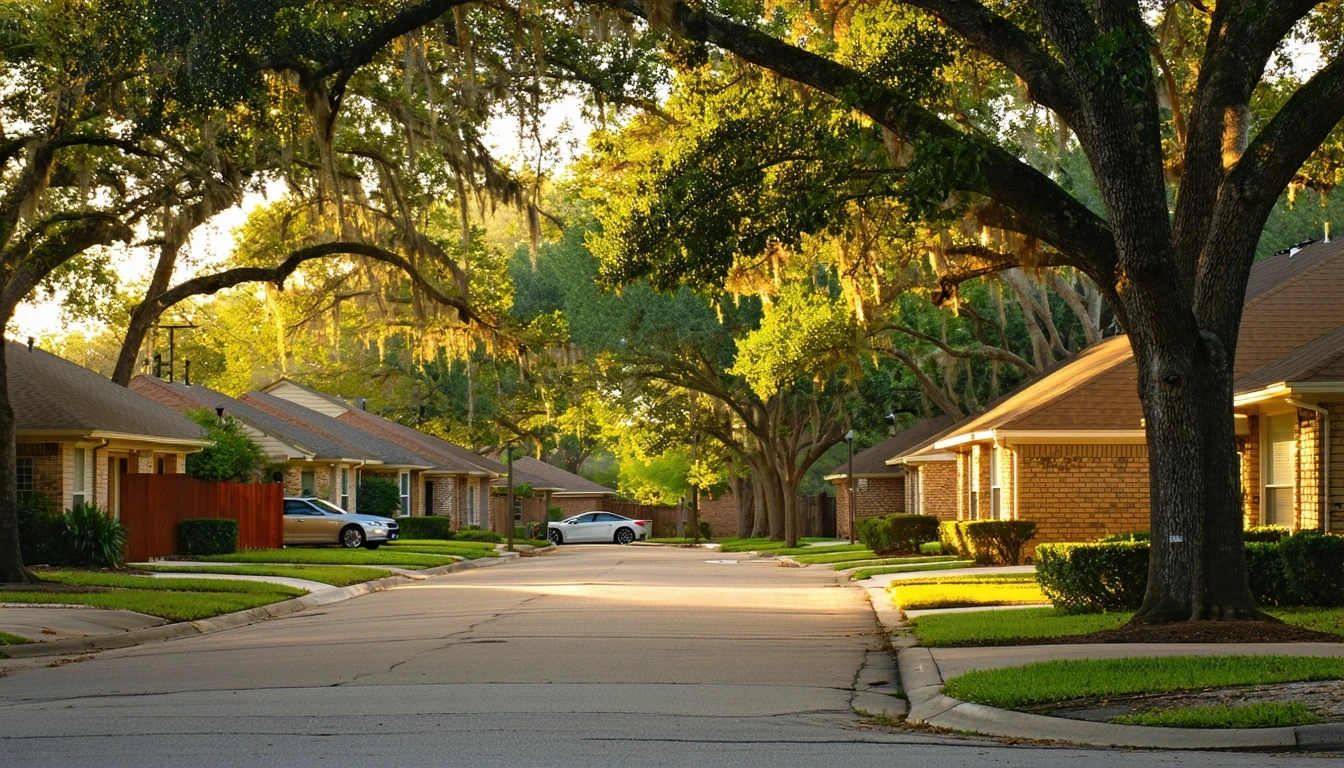
Apartment vs House in Irving — Monthly Cost Comparison
Illustrative context only; figures reflect typical patterns, not guaranteed costs. Actual expenses vary by property age, size, location, and lease terms.
| Expense Category | Apartment | House |
|---|---|---|
| Base Housing Cost | $1,423/month median rent | Mortgage varies by down payment and rate (not estimated here) |
| Cooling (Summer Peak) | ~$157/month (illustrative: 1,000 kWh × 15.69¢, before fees) | Significantly higher; older or larger homes may see double or more depending on insulation and square footage |
| Maintenance Responsibility | Landlord handles HVAC, roof, exterior | Owner bears full cost of repairs, HVAC replacement, roof, and storm damage |
| Location Flexibility | High impact: corridor-clustered errands mean proximity to grocery/food corridors reduces trip frequency and planning burden | Fixed: location choice locks in commute, errands access, and school assignment for years |
Why these categories? Irving’s triple-digit summer heat makes cooling the dominant utility expense, and the gap between apartment and house exposure is substantial due to square footage and building age. Corridor-clustered grocery and food access—evidenced by medium-density establishment patterns—means that where you live within Irving directly affects how often you drive for daily errands. Maintenance exposure differs sharply because Irving’s heat, occasional severe storms, and suburban housing stock create ongoing repair and replacement costs that renters avoid entirely. Categories like heating and snow removal were omitted because they don’t meaningfully vary in this climate.
The Housing Market in Irving Today
Irving sits in the Dallas–Fort Worth metro, functioning as both a commuter suburb and a regional employment center. The median home value of $259,500 reflects a market shaped by proximity to DFW Airport, corporate campuses, and rail transit access. This is not a low-cost exurban fringe, nor is it an inner-ring premium neighborhood. Instead, Irving occupies a middle position: accessible to renters and first-time buyers who prioritize transit connectivity, but still requiring careful location choices within the city to minimize car dependency and errands friction.
What newcomers often misunderstand is that Irving’s housing stock varies significantly by corridor. Mixed building heights and the presence of both residential and commercial land use mean that some neighborhoods offer walkable pockets with higher pedestrian infrastructure density, while others remain car-oriented. Rail service is present, which changes the cost calculus for renters and buyers near stations, but the broader city still reflects suburban infrastructure patterns. Median household income of $76,686 per year provides context: homeownership at $259,500 is within reach for dual-income households with stable employment, but the decision hinges on tolerance for maintenance exposure and property tax volatility, neither of which renters face directly.
Renting in Irving
Median gross rent of $1,423 per month positions Irving’s rental market in the moderate range for the DFW metro. Renters here are paying for flexibility, predictable monthly costs, and freedom from maintenance risk. The rental experience in Irving is heavily influenced by location within the city. Corridor-clustered food and grocery establishments—detected through medium-density patterns—mean that renters near commercial corridors can handle daily errands with shorter, more frequent trips, while those in purely residential pockets face longer drives and more planning overhead.
Rail transit presence matters significantly for renters. Those near stations can reduce or eliminate car dependency for commuting, which lowers transportation costs and changes the overall budget structure. Renters farther from transit corridors face the same fuel, insurance, and maintenance costs as homeowners, but without the offsetting benefit of building equity. The rental market does not insulate tenants from Irving’s cooling-season utility exposure—electricity at 15.69¢/kWh still drives summer bills upward—but it does shield them from HVAC replacement costs, roof repairs, and storm damage, all of which are the landlord’s responsibility.
Rental availability and lease renewal pressure vary by neighborhood age and proximity to employment centers. Renters should expect that location choice within Irving is not neutral: it directly affects commute time, errands logistics, and access to the infrastructure that makes daily life less car-dependent.
Owning a Home in Irving
Buying a home in Irving at the median value of $259,500 shifts the cost structure entirely. The mortgage payment may be comparable to or even lower than rent in some cases, but ownership introduces exposure to property taxes, insurance, maintenance, and long-term capital risk that renters never encounter. Irving’s suburban infrastructure and climate create specific ownership burdens: triple-digit summer heat accelerates HVAC wear, occasional severe storms can damage roofs and exteriors, and the mixed age of the housing stock means that older homes may require significant systems upgrades within the first few years of ownership.
Property tax rates are not provided in the data, but Texas relies heavily on property taxes to fund local services, and owners should expect annual increases tied to appraisal cycles. Unlike rent, which can be negotiated or escaped by moving, property tax exposure is persistent and rises with home values. Homeowners also face insurance costs that reflect storm risk and replacement value, both of which are higher in North Texas than in many other regions.
Ownership does offer control and stability. Buyers can choose their location within Irving strategically, prioritizing proximity to rail stations, walkable pockets, or commercial corridors to minimize transportation and errands costs over time. Families benefit from locking in school assignments and neighborhood continuity, which is difficult to achieve through renting. But ownership is a long-term commitment, and the cost behavior is fundamentally different: instead of a single predictable monthly rent payment, owners manage a portfolio of volatile, semi-independent expenses that require cash reserves and planning.
Utilities & Upkeep Differences
Irving’s climate drives a sharp distinction between apartment and house utility costs. Electricity at 15.69¢/kWh is the primary expense, and cooling dominates from late spring through early fall. For illustrative context, a typical apartment using 1,000 kWh per month in summer would see a bill around $157 before fees and taxes. Houses, especially older or larger single-family homes, often consume significantly more due to greater square footage, older insulation, and less efficient HVAC systems. It is not uncommon for house cooling costs to double or exceed apartment costs during peak months.
Natural gas at $19.31/MCF is present but plays a minor role. Irving’s mild winters mean heating exposure is low, and gas is more relevant for water heating and cooking than for climate control. This is a meaningful difference from northern climates, where heating can rival or exceed cooling costs. Here, the cost structure is lopsided: summer electricity is the dominant variable, and houses bear far more exposure than apartments.
Maintenance and upkeep differences are equally significant. Apartment renters are insulated from HVAC replacement, roof repairs, and exterior maintenance. Homeowners are not. In Irving’s heat and storm environment, HVAC systems wear faster, roofs age more quickly under UV exposure, and exteriors require periodic repair after hail or wind events. These are not annual costs, but they are inevitable, and they require cash reserves that renters do not need to maintain. The mixed building height character and varied housing stock mean that maintenance exposure varies widely depending on the age and construction quality of the home purchased.
Rent vs Buy: Long-Term Exposure in Irving
The decision to rent or buy in Irving is not primarily a question of monthly payment size—it is a question of cost predictability, control, and risk tolerance. Renters face lease renewal volatility and the possibility of displacement, but they avoid property tax increases, insurance adjustments, and major systems failures. Owners gain stability and control, but they accept exposure to multiple independent cost streams that can rise at different rates and require large, irregular outlays.
Over time, renters maintain flexibility. If a neighborhood’s errands accessibility declines, or if a job change makes the commute untenable, renters can relocate without transaction costs. Owners are locked in. If property taxes rise faster than income, or if a major repair coincides with an economic disruption, owners must absorb the cost or sell—often at a loss if the timing is poor.
Irving’s rail transit and walkable pockets create a meaningful distinction within the ownership market. Buyers who prioritize proximity to transit and commercial corridors can reduce long-term transportation and errands costs, which partially offsets the higher upfront cost of ownership. Buyers in car-dependent areas face ongoing fuel, maintenance, and vehicle replacement costs that compound over time. Renters near transit can achieve similar transportation savings without the capital commitment.
The long-term cost behavior of ownership in Irving is shaped by Texas’s reliance on property taxes, the region’s storm and heat exposure, and the variability of the housing stock. Ownership is not inherently cheaper or more expensive than renting—it is structurally different, and the fit depends on household income stability, tolerance for volatility, and the ability to maintain cash reserves for irregular but inevitable expenses.
How this article was built: In addition to public economic data, this article incorporates location-based experiential signals derived from anonymized geographic patterns—such as access density, walkability, and land-use mix—to reflect how day-to-day living actually feels in Irving, TX.
FAQs About Housing Costs in Irving
Is renting or buying cheaper in Irving, TX?
Neither is universally cheaper. Renting at the median of $1,423/month offers predictability and avoids maintenance, tax, and insurance exposure. Buying at $259,500 may result in comparable or lower monthly housing costs initially, but ownership introduces volatile, irregular expenses—property taxes, insurance, HVAC replacement, roof repairs—that renters never face. The question is not which costs less, but which cost structure fits your income stability and risk tolerance.
How much do utilities cost in a house vs an apartment in Irving?
Cooling costs dominate due to Irving’s triple-digit summer heat. For illustrative context, an apartment using 1,000 kWh per month at 15.69¢/kWh would see a bill around $157 before fees. Houses typically consume significantly more electricity due to larger square footage and older insulation, often doubling apartment costs during peak summer months. Heating costs are minimal in Irving’s mild winters, so the utility gap between apartments and houses is driven almost entirely by air conditioning.
Does location within Irving affect housing costs?
Yes, significantly. Irving’s food and grocery establishments are corridor-clustered, meaning proximity to commercial corridors reduces errands trip frequency and planning burden. Rail transit is present, so renters and buyers near stations can reduce or eliminate car dependency, lowering transportation costs. Walkable pockets with higher pedestrian infrastructure exist in parts of the city, but much of Irving remains car-oriented. Location choice within Irving directly affects commute time, errands logistics, and long-term transportation exposure.
What maintenance costs should homeowners expect in Irving?
Irving’s heat and storm exposure accelerate HVAC wear, roof aging, and exterior damage. HVAC systems may require replacement every 10–15 years, roofs degrade faster under UV exposure, and hail or wind events can necessitate repairs. These are not annual costs, but they are inevitable and require cash reserves. Apartment renters avoid these entirely, as landlords bear the responsibility. Homeowners must budget for irregular but significant outlays that renters never encounter.
How does Irving’s housing market compare to the rest of the Dallas–Fort Worth metro?
Irving occupies a middle position: more affordable than inner-ring Dallas neighborhoods, but more expensive than exurban fringe areas. The median home value of $259,500 reflects proximity to DFW Airport, corporate employment centers, and rail transit access. Irving is not a low-cost outlier, nor is it a premium market. It attracts renters and buyers who prioritize transit connectivity and regional access over either maximum affordability or urban walkability.
Making Housing Choices in Irving
Housing costs in Irving are shaped by the city’s position in the DFW metro, its suburban infrastructure, and its climate. Renters at $1,423/month gain flexibility and avoid maintenance, tax, and insurance volatility, but they remain exposed to lease renewal pressure and displacement risk. Buyers at $259,500 gain control and stability, but they accept exposure to property taxes, storm and heat-driven maintenance costs, and the long-term capital risk of homeownership in a market tied to regional economic cycles.
The decision is not about which option costs less—it is about which cost structure aligns with your household’s income stability, risk tolerance, and long-term plans. Renters near rail stations and commercial corridors can minimize transportation and errands costs without capital commitment. Buyers who prioritize location within Irving can reduce long-term logistics friction, but they must maintain cash reserves for the irregular, inevitable expenses that ownership entails.
Irving’s housing market rewards careful location choice. Walkable pockets, rail access, and corridor-clustered errands infrastructure exist, but they are not evenly distributed. Whether renting or buying, the neighborhood you choose within Irving will shape your monthly budget, your transportation exposure, and your day-to-day logistics for years. For a broader view of how housing fits into Irving’s overall expense structure, see the cost of living overview. If you’re planning a move to Irving, the moving companies guide provides practical guidance on logistics and costs.