
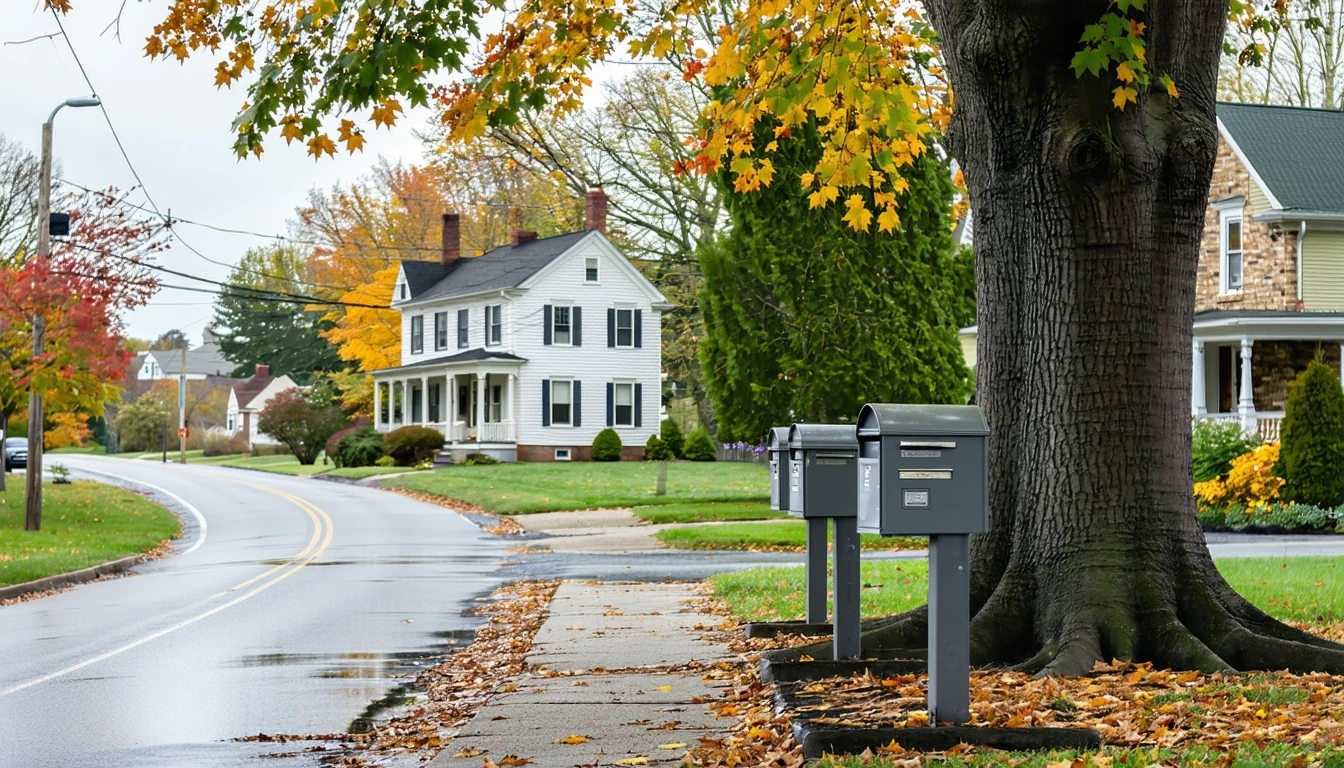
Media’s median home value sits at $397,800 while Chester’s stands at $80,800—a structural difference that shapes every dimension of household cost pressure in these two Delaware County communities. Both cities offer rail access to Philadelphia and share the same regional economy, but the way costs show up, concentrate, and flex differs sharply depending on whether a household prioritizes walkable daily errands or lower housing entry barriers. In 2026, choosing between Media and Chester isn’t about finding the cheaper option overall; it’s about matching cost structure to the specific pressures a household can absorb, avoid, or control.
Media and Chester sit within the same metro area, share similar unemployment rates (3.5%), and both benefit from rail transit connections. Yet their experiential infrastructure—how easy it is to walk to groceries, how much car dependence daily life requires, and where food and services cluster—creates fundamentally different cost experiences. Families drawn to Media’s walkable pockets and broadly accessible errands face higher housing entry costs but gain friction reduction in transportation and time. Households drawn to Chester’s lower housing threshold trade some walkability for corridor-clustered access and moderate car reliance, shifting cost pressure from entry barrier to ongoing transportation and planning complexity.
This comparison explains where cost pressure concentrates in each city, which households feel those differences most acutely, and how the same gross income can feel stable in one place and tight in the other—without declaring a universal winner or computing total cost of living.
Housing Costs
Media’s median home value of $397,800 represents a substantial entry barrier compared to Chester’s $80,800, creating a structural divide in how housing costs behave for owners and renters alike. For prospective buyers, Media’s housing market demands significantly higher down payments, larger monthly mortgage obligations, and greater exposure to property tax assessments tied to higher valuations. Chester’s lower home values reduce the initial capital required to enter homeownership, shifting cost pressure from front-loaded entry barriers to ongoing maintenance, insurance, and potential renovation needs in older housing stock. Renters experience a parallel divide: Media’s median gross rent of $1,389 per month reflects tighter housing supply and higher demand in walkable neighborhoods, while Chester’s $996 per month median rent offers more immediate affordability but may come with trade-offs in unit condition, building age, or proximity to high-density errands.
The housing cost difference between these cities isn’t just about price—it’s about what type of cost pressure dominates. In Media, housing costs are front-loaded and predictable: higher entry, higher monthly obligations, but access to newer construction, lower utility volatility, and walkable infrastructure that reduces transportation friction. In Chester, housing costs are lower at entry but introduce more variability over time: older homes may require more frequent repairs, heating and cooling costs may be less predictable in aging building stock, and the moderate car dependence created by corridor-clustered errands adds indirect costs that don’t show up in rent or mortgage statements. Single adults and couples prioritizing walkability and errands convenience may find Media’s higher housing costs offset by reduced transportation needs and time savings. Families managing tighter budgets or prioritizing space over walkability may find Chester’s lower entry threshold creates more flexibility for other household expenses, even if it requires more planning around errands and commutes.
First-time buyers face distinct trade-offs in each city. Media’s higher home values require larger savings for down payments and closing costs, but the investment buys into a market with strong family infrastructure, high school and playground density, and integrated green space access. Chester’s lower home values make ownership accessible sooner, but buyers must weigh the potential for higher ongoing maintenance costs and the need for reliable transportation to access broadly distributed services. Renters in Media gain proximity to high-density food and grocery options, reducing reliance on bulk shopping trips and large storage needs. Renters in Chester benefit from lower monthly obligations but may need to budget for more frequent driving, larger grocery hauls, and the time cost of reaching services clustered along specific corridors rather than dispersed throughout neighborhoods.
| Housing Type | Media | Chester |
|---|---|---|
| Median Home Value | $397,800 | $80,800 |
| Median Gross Rent | $1,389/month | $996/month |
| Entry Barrier Character | High capital requirement, predictable ongoing costs | Low capital requirement, variable ongoing exposure |
| Housing Stock Age | Mix of older and newer construction | Predominantly older housing stock |
Housing takeaway: Households with higher incomes or accumulated savings who prioritize walkability, errands density, and predictable ongoing costs will find Media’s housing structure aligns with those priorities despite the higher entry threshold. Households prioritizing lower initial capital outlay, willing to manage moderate car dependence, and comfortable with potential variability in maintenance and utility costs will find Chester’s housing market offers earlier access to ownership and more budget flexibility for non-housing expenses. The decision hinges on whether a household is more exposed to entry barriers or ongoing unpredictability—not which city is cheaper in total.
Utilities and Energy Costs
Electricity rates in Media and Chester are nearly identical—20.19¢/kWh in Media and 20.17¢/kWh in Chester—but natural gas pricing diverges slightly, with Media at $14.21/MCF and Chester at $15.31/MCF. These rate differences matter less than how housing stock, building age, and household size interact with seasonal heating and cooling demands. Media’s mix of older and newer construction creates variability in insulation quality and HVAC efficiency, but households in newer builds or recently renovated units benefit from lower baseline usage and more predictable monthly bills. Chester’s predominantly older housing stock introduces greater exposure to heating costs during winter months, as aging windows, insulation gaps, and older furnace systems drive higher natural gas consumption even when rates are only moderately higher than Media’s.
Cooling costs in both cities follow similar seasonal patterns—summers in southeastern Pennsylvania require consistent air conditioning—but the efficiency of the housing unit determines whether that demand translates into moderate or volatile monthly bills. Single adults and couples in smaller apartments face lower absolute utility costs in both cities, but those in Chester’s older rental stock may see sharper seasonal swings as less efficient cooling systems work harder to maintain comfort. Families in larger single-family homes experience more pronounced utility exposure in both cities, but Media’s access to newer construction and higher prevalence of energy-efficient upgrades (programmable thermostats, better insulation, newer HVAC systems) can flatten seasonal peaks. Chester households in older homes face higher heating exposure during cold months, and the combination of older building stock and slightly higher natural gas rates compounds that pressure for families managing larger square footage.
Utility cost predictability also depends on household routines and flexibility. Households with consistent schedules can optimize usage around off-peak hours or manage thermostat settings more tightly, reducing volatility regardless of city. Households with variable schedules, remote work arrangements, or young children at home face less control over when heating and cooling systems run, making building efficiency the primary determinant of cost stability. In Media, access to newer construction or recently updated units provides a structural advantage in managing that exposure. In Chester, households in older housing stock must weigh whether lower rent or mortgage costs offset the potential for higher and less predictable utility bills, particularly during extreme weather months.
Utility takeaway: Households prioritizing predictable utility costs and lower seasonal volatility will find Media’s mix of housing stock—and access to newer, more efficient units—reduces exposure even when electricity and gas rates are similar. Households in Chester benefit from lower housing entry costs but should anticipate greater utility variability, especially in older homes during heating season. The primary difference is not rate structure but building efficiency and the degree of control a household has over when and how energy is consumed. Families in larger homes and those with less schedule flexibility face more pronounced utility exposure in Chester’s older housing stock, while smaller households and those in newer Media units experience flatter, more manageable bills year-round.
Groceries and Daily Expenses
Media’s broadly accessible food and grocery infrastructure—driven by high food density and high grocery density per experiential signals—means households can reach multiple grocery options, specialty stores, and everyday essentials within walkable or short-drive distances. This access reduces the need for bulk shopping trips, lowers the friction cost of forgetting an item, and creates more flexibility in how households manage weekly food budgets. Chester’s corridor-clustered errands accessibility concentrates grocery and food options along specific routes rather than dispersed throughout neighborhoods, requiring more intentional trip planning and greater reliance on a vehicle to access the full range of grocery price points. The structural difference isn’t about grocery prices themselves—both cities fall within the same regional price parity zone—but about how access density shapes shopping behavior, convenience spending, and the time cost of running errands.
Single adults and couples in Media benefit from the ability to make smaller, more frequent grocery runs without needing to plan around car availability or dedicate weekend hours to bulk shopping. The density of food establishments also supports more flexibility in dining out, grabbing coffee, or picking up prepared meals, which can feel like a convenience rather than a budget leak when options are within walking distance. In Chester, the corridor-clustered model means households need to batch errands more deliberately, plan grocery trips around driving routes, and may face fewer immediate options for last-minute needs. This structure favors households comfortable with weekly or bi-weekly bulk shopping and those who already rely on a car for commuting, as the marginal cost of adding grocery stops to existing driving routines is lower.
Families managing larger grocery volumes experience the access difference more acutely. In Media, the ability to split shopping across multiple nearby stores—discount grocers for staples, specialty markets for specific items—gives families more control over where they allocate their food budget. In Chester, families may need to choose between convenience (shopping at the nearest accessible store) and price optimization (driving farther to access discount options), and that trade-off introduces either higher grocery costs or higher time and transportation costs. Households sensitive to convenience spending creep—frequent coffee runs, takeout meals, impulse purchases—may find Media’s walkable food density either a benefit (easy access without driving) or a risk (more temptation to spend). Chester’s lower density of immediate food options naturally limits convenience spending opportunities, which can help households stick to planned budgets but requires more discipline around meal planning and pantry management.
Grocery and daily expenses takeaway: Households that value errands flexibility, walkable access to multiple grocery options, and the ability to make smaller, more frequent shopping trips will find Media’s broadly accessible food infrastructure reduces friction and time cost, even if it introduces more opportunities for convenience spending. Households comfortable with batching errands, planning weekly grocery trips, and relying on a car for access will find Chester’s corridor-clustered model workable and may benefit from fewer impulse-spending opportunities. The cost pressure difference is less about grocery prices and more about whether a household’s routines, schedule flexibility, and transportation access align with dense, walkable options or planned, car-dependent errands.
Taxes and Fees
Property taxes in both Media and Chester are driven by Delaware County assessment structures, but the magnitude of exposure differs sharply due to home values. Media’s median home value of $397,800 results in higher absolute property tax bills compared to Chester’s $80,800 median, even when millage rates are similar. For homeowners, this means Media’s property tax obligations are front-loaded and ongoing, creating a predictable but substantial annual cost that scales with home value. Chester’s lower home values translate to lower property tax bills in absolute terms, reducing the annual cash outlay required to maintain homeownership but offering less insulation from percentage-based rate increases if municipal budgets tighten.
Renters in both cities experience property taxes indirectly, as landlords pass through a portion of those costs in monthly rent. Media’s higher property tax base contributes to the $1,389 median gross rent, while Chester’s lower tax exposure supports the $996 median rent. The structural difference is that Media renters pay for predictability and access—higher rent reflects not just property taxes but also proximity to walkable infrastructure, high-density errands, and integrated green space. Chester renters benefit from lower monthly obligations but may face less predictable rent increases if landlords adjust for rising maintenance costs, utility expenses, or localized tax changes in older housing stock.
Local fees—trash collection, water and sewer charges, parking permits, and municipal services—vary by neighborhood and housing type in both cities, but the prevalence of single-family homes in Media’s walkable pockets may introduce HOA fees or special assessments for shared infrastructure like sidewalks, street lighting, or landscaping. Chester’s housing stock, with more older single-family homes and fewer planned developments, tends to have lower HOA prevalence but may see higher individual costs for services like water, sewer, or stormwater management as aging infrastructure requires more frequent maintenance. Households planning to stay several years should weigh whether Media’s higher but more predictable tax and fee structure aligns with long-term budget stability, or whether Chester’s lower baseline costs—despite potential variability—offer more flexibility for other financial priorities.
Taxes and fees takeaway: Homeowners in Media face higher property tax exposure due to elevated home values, but that cost is predictable and tied to access to walkable infrastructure and high-quality public amenities. Homeowners in Chester benefit from lower property tax bills in absolute terms, though they remain exposed to percentage-based rate changes and potential fee increases tied to aging infrastructure. Renters in Media pay higher monthly rent that reflects embedded property taxes and premium access, while renters in Chester enjoy lower baseline costs but may face less predictability in how landlords pass through rising expenses. Long-term residents and homeowners prioritizing budget stability will find Media’s structure more predictable; recent movers and cost-sensitive renters may find Chester’s lower entry costs create more short-term flexibility.
Transportation & Commute Reality
Both Media and Chester offer rail transit access, providing a structural advantage for commuters heading into Philadelphia or other regional job centers. The presence of rail service in both cities means households can reduce car dependence for work-related travel, but the degree to which that option feels practical depends on how daily errands, walkability, and local infrastructure support car-free or car-light living. Media’s walkable pockets and high pedestrian-to-road ratio create an environment where households can realistically manage many daily tasks—groceries, errands, school drop-offs—without needing a vehicle, making rail commuting a more viable primary transportation mode. Chester’s mixed pedestrian infrastructure and corridor-clustered errands accessibility mean that while rail transit is available, most households will still rely on a car for non-commute trips, limiting the cost-saving potential of going car-free.
Gas prices reinforce this structural difference. Media’s gas price of $4.16/gal and Chester’s $3.13/gal reflect localized pricing variations, but the real cost impact depends on how much driving a household does beyond commuting. In Media, households that can walk to groceries, schools, and parks reduce their weekly mileage significantly, meaning the higher per-gallon cost affects a smaller total fuel budget. In Chester, households navigating corridor-clustered errands and moderate car dependence drive more frequently for daily needs, so the lower gas price provides partial relief but doesn’t eliminate the baseline transportation cost. Single adults and couples who commute via rail and live in Media’s walkable areas may own a car but use it sparingly, keeping fuel costs low despite higher per-gallon pricing. Families in Chester who rely on a car for school runs, grocery trips, and weekend errands will drive more total miles, making the lower gas price more meaningful but still leaving transportation as a larger share of household costs.
The time cost of commuting and errands also differs between the cities. Media’s rail access combined with walkable daily infrastructure means households can reduce the number of car-dependent errands, compress errand time, and avoid the friction of needing to plan every trip around vehicle availability. Chester’s rail access supports work commutes, but the need to drive for most other errands adds time, planning complexity, and wear-and-tear costs that don’t show up in fuel prices alone. Households with flexible schedules or remote work arrangements may find Chester’s lower housing costs and moderate car reliance manageable, while households juggling rigid work hours, childcare logistics, and tight schedules may find Media’s walkable infrastructure reduces daily friction enough to justify higher housing and gas costs.
Transportation takeaway: Households prioritizing reduced car dependence, walkable errands, and the ability to use rail transit as a primary commute mode will find Media’s infrastructure supports that lifestyle despite higher gas prices, because total miles driven remain lower. Households comfortable with moderate car reliance, willing to plan errands around driving routes, and seeking lower baseline transportation costs will find Chester’s lower gas prices and rail access workable, though transportation will remain a larger and less flexible part of the household budget. The decision hinges on whether a household values time savings and reduced driving friction over lower per-gallon fuel costs.
Cost Structure Comparison
Housing pressure dominates the cost experience in both cities, but the nature of that pressure differs fundamentally. Media’s higher home values and rents create a steep entry barrier and ongoing monthly obligation, but that cost buys access to walkable infrastructure, broadly accessible errands, and integrated green space that reduce friction in daily life. Chester’s lower housing costs make entry easier and monthly obligations lighter, but households trade some of that savings for moderate car dependence, corridor-clustered errands, and potential variability in utility and maintenance costs tied to older housing stock. For renters and first-time buyers, the question is whether absorbing higher housing costs upfront reduces enough downstream friction—transportation, time, convenience—to justify the difference. For families managing tight budgets, Chester’s lower entry threshold may create more flexibility for childcare, savings, or discretionary spending, even if it requires more planning around errands and commutes.
Utilities introduce more volatility in Chester than in Media, not because of rate differences but because of building age and efficiency. Media’s mix of newer and renovated housing stock provides more households with predictable, flatter utility bills, while Chester’s older housing stock creates sharper seasonal swings in heating and cooling costs. Families in larger homes feel this difference most acutely, as older insulation, windows, and HVAC systems amplify exposure during extreme weather months. Single adults and couples in smaller units experience less absolute cost but may still notice greater month-to-month variability in Chester compared to Media’s more efficient building stock.
Daily living costs—groceries, errands, convenience spending—shift depending on access density and household routines. Media’s broadly accessible food and grocery infrastructure reduces the time cost of running errands and supports more flexible shopping habits, but also creates more opportunities for convenience spending if households aren’t disciplined. Chester’s corridor-clustered model requires more intentional trip planning and batching, which can help control impulse spending but adds time and transportation costs for families managing frequent grocery runs or last-minute needs. Households with predictable schedules and the ability to batch errands weekly may find Chester’s structure manageable and even beneficial for budget discipline. Households with variable schedules, young children, or less tolerance for errands friction will find Media’s walkable density reduces daily stress and planning burden.
Transportation patterns matter more in Chester than in Media, even though both cities have rail access. Media’s walkable pockets and high pedestrian infrastructure density mean households can realistically reduce car dependence for daily errands, making rail commuting a more viable primary mode and keeping total transportation costs lower despite higher gas prices. Chester’s moderate car dependence and corridor-clustered errands mean most households will drive regularly for non-commute trips, so transportation remains a larger, less flexible part of the budget even with lower gas prices. The difference is less about commute distance and more about how much driving daily life requires beyond getting to work.
Decision framing: Households sensitive to housing entry barriers but willing to absorb higher ongoing costs for walkability and errands convenience may prefer Media, where the cost structure is front-loaded but predictable. Households sensitive to monthly cash flow, comfortable with moderate car dependence, and prioritizing lower baseline housing costs may prefer Chester, where the cost structure is lighter upfront but introduces more variability in utilities, transportation, and time. For families, the difference is less about total cost and more about whether daily logistics—school runs, grocery trips, errands—are easier to manage with walkable density or more affordable with lower housing obligations and planned car use.
How the Same Income Feels in Media vs Chester
Single Adult
Housing becomes the first non-negotiable cost, and in Media that means absorbing $1,389 in median rent or a mortgage tied to a $397,800 home value, leaving less room for discretionary spending but gaining walkable access to groceries and errands that reduce transportation needs. In Chester, $996 median rent or a mortgage on an $80,800 home frees up more monthly cash flow, but that flexibility depends on owning a car and budgeting for fuel, insurance, and the time cost of driving to corridor-clustered services. A single adult working remotely or commuting via rail may find Media’s walkable infrastructure eliminates enough friction to justify the higher housing cost, while someone prioritizing savings or discretionary spending may find Chester’s lower baseline obligations create more financial breathing room despite needing a car.
Dual-Income Couple
Housing costs still dominate, but two incomes create more capacity to absorb Media’s higher rent or mortgage without sacrificing other priorities like dining out, travel, or retirement contributions. Flexibility emerges in how the couple manages transportation—if both can commute via rail and rely on walkable errands, car ownership becomes optional or single-vehicle, reducing insurance and maintenance costs. In Chester, lower housing costs allow the couple to allocate more toward savings or lifestyle spending, but the need for at least one reliable vehicle—and likely two if both work outside the home—shifts some of that flexibility back into transportation and fuel costs. The role of commute friction becomes critical: couples with flexible schedules or remote work may find Chester’s lower housing costs outweigh the moderate car dependence, while couples juggling rigid work hours and tight schedules may find Media’s walkable density reduces daily stress enough to justify the higher rent.
Family with Kids
Housing, childcare, and transportation become the three non-negotiable costs, and the way they interact determines how much flexibility remains for everything else. In Media, higher housing costs are offset by walkable access to schools, playgrounds, and groceries, reducing the need for constant driving and creating more time for family routines without the friction of planning every errand around car availability. In Chester, lower housing costs free up budget space for childcare or extracurriculars, but families must manage moderate car dependence for school runs, grocery trips, and accessing services clustered along corridors rather than dispersed throughout neighborhoods. The time cost of driving becomes more pronounced for families with multiple children, tight schedules, or less flexibility in work hours, making Media’s walkable infrastructure a meaningful friction reducer even at higher housing costs. Families prioritizing lower monthly obligations and comfortable with planned, car-dependent logistics may find Chester’s structure offers more financial flexibility for non-housing priorities, while families prioritizing time savings and reduced daily complexity may find Media’s higher costs justified by the reduction in errands friction and transportation planning burden.
Decision Matrix: Which City Fits Which Household?
| Decision factor | If you’re sensitive to this… | Media tends to fit when… | Chester tends to fit when… |
|---|---|---|---|
| Housing entry + space needs | Down payment size, monthly mortgage or rent obligation, access to newer construction | You can absorb higher entry costs for predictable ongoing expenses and walkable access | You prioritize lower entry barrier and are comfortable with potential variability in older housing stock |
| Transportation dependence + commute friction | Car ownership costs, fuel budget, time spent driving for errands | You want to minimize car dependence and can use rail plus walkable errands for most needs | You already own a car and can batch errands efficiently around driving routes |
| Utility variability + home size exposure | Seasonal bill swings, heating and cooling predictability, building efficiency | You value flatter, more predictable utility costs and access to newer or renovated units | You can manage seasonal variability and are comfortable with older housing stock |
| Grocery strategy + convenience spending creep | Errands frequency, access to multiple price points, impulse spending control | You benefit from walkable, high-density grocery access and can manage convenience temptation | You prefer batching weekly trips and benefit from fewer immediate spending opportunities |
| Fees + friction costs (HOA, services, upkeep) | Predictability of annual costs, property tax exposure, maintenance obligations | You can absorb higher property taxes for predictable, bundled services and walkable infrastructure | You prioritize lower baseline fees and are comfortable managing variable maintenance needs |
| Time budget (schedule flexibility, errands, logistics) | Daily planning burden, ability to walk vs drive, coordination of household tasks | You value reduced friction in daily errands and benefit from walkable access to schools and services | You have schedule flexibility and can plan errands around car-dependent routines without stress |
Lifestyle Fit
Media’s walkable pockets, integrated green space, and high density of schools and playgrounds create an environment where families can manage daily routines—school drop-offs, park visits, grocery runs—without needing to drive for every task. The pedestrian infrastructure supports a lifestyle where errands feel less like planned expeditions and more like natural extensions of the day, reducing the mental load of coordinating transportation and schedules. Chester’s mixed pedestrian infrastructure and corridor-clustered services mean that while rail transit connects residents to regional job centers, most daily errands require a car, and families must plan trips more deliberately around driving routes. Both cities offer strong family infrastructure per experiential signals, but the difference in walkability and errands density shapes how much time and friction households experience in managing everyday logistics.
Recreation and outdoor access are similarly strong in both cities—Media and Chester both show integrated green space with high park density—but the way residents access those spaces differs. In Media, parks and outdoor areas are woven into walkable neighborhoods, making it easier for families to visit playgrounds or green spaces on foot as part of daily routines. In Chester, parks are present and accessible, but reaching them may require short drives depending on neighborhood location, adding a small but cumulative time cost for families with young children or those seeking frequent outdoor access. Both cities benefit from water features and well-distributed park infrastructure, so the lifestyle difference is less about availability and more about the friction involved in accessing those amenities regularly.
Cultural and community character in both cities reflect their Delaware County roots, with local events, farmers markets, and neighborhood gatherings shaping social life. Media’s walkable downtown and higher density of food establishments create more opportunities for spontaneous social outings—coffee shops, casual dining, community events—while Chester’s corridor-clustered commercial areas concentrate social and dining options along specific routes, requiring more intentional planning but also fostering tight-knit neighborhood communities. Households that value spontaneous, walkable social opportunities may find Media’s infrastructure supports that lifestyle more naturally, while households comfortable with planned social outings and car-dependent access may find Chester’s community character equally engaging with less daily friction around housing costs.
Media’s median household income sits at $85,951 per year, reflecting a community with higher earning capacity and correspondingly higher housing costs. Chester’s median household income of $39,193 per year aligns with its lower housing entry barrier and more variable cost structure. Both cities share a 3.5% unemployment rate, indicating similar regional economic stability, but the income and housing alignment in each city shapes which households find the cost structure manageable versus stretched.
Frequently Asked Questions
How do housing costs in Media vs Chester affect first-time buyers in 2026?
Media’s median home value of $397,800 requires significantly higher down payments and monthly mortgage obligations compared to Chester’s $80,800 median, making Chester more accessible for first-time buyers with limited savings. However, Media’s higher