
It’s Sunday evening in Irving, and you’re mapping out the week’s meals. Chicken and rice twice, a ground beef stir-fry, sandwiches for lunch, eggs and toast most mornings. You know what you need. The question isn’t what to buy—it’s where to buy it, and whether the bill at checkout will feel reasonable or tight. That tension between the cart you need and the price you’ll pay defines grocery pressure here, and it varies more by store choice and household size than many people expect.
Grocery costs in Irving sit slightly above the national baseline, reflecting the city’s position within the Dallas metro’s broader cost structure. For a household earning near the city’s median income of $76,686 per year, that pressure is manageable but not invisible. For families stretching a tighter budget or shopping for three or four people instead of one, the same set of staples can feel significantly heavier. This article explains how grocery prices actually function in Irving—what drives the pressure, who feels it most, and how store strategy and shopping habits shape the experience.
How Grocery Costs Feel in Irving
Irving’s grocery price environment reflects a regional price parity index of 103, meaning costs run about 3% above the national average. That’s not extreme, but it’s enough to notice when you’re buying for a family or managing a fixed income. A single professional might absorb the difference without adjusting behavior. A household of four buying the same items every week will feel it accumulate, especially if they’re not strategic about where they shop.
The pressure isn’t uniform across the city. Grocery and food establishment density sits in the medium band, with options concentrated along commercial corridors rather than evenly distributed across all neighborhoods. That clustering means access and convenience vary depending on where you live. Some residents can walk to a nearby grocer and make smaller, more frequent trips. Others drive farther and consolidate shopping into weekly hauls, which changes how price differences compound and how much food waste factors into real costs.
Who notices grocery costs most? Singles and young professionals feel it as a percentage of discretionary income—it’s one of the few regular expenses they can control day-to-day, so even modest swings in checkout totals register. Families feel it in absolute terms: buying for three or four people means every per-pound price difference gets multiplied across the cart. Cost-sensitive households—those earning below the city’s median—face the tightest margin, where a $15 or $20 weekly variance determines whether the budget holds or bends.
Grocery Price Signals (Illustrative)
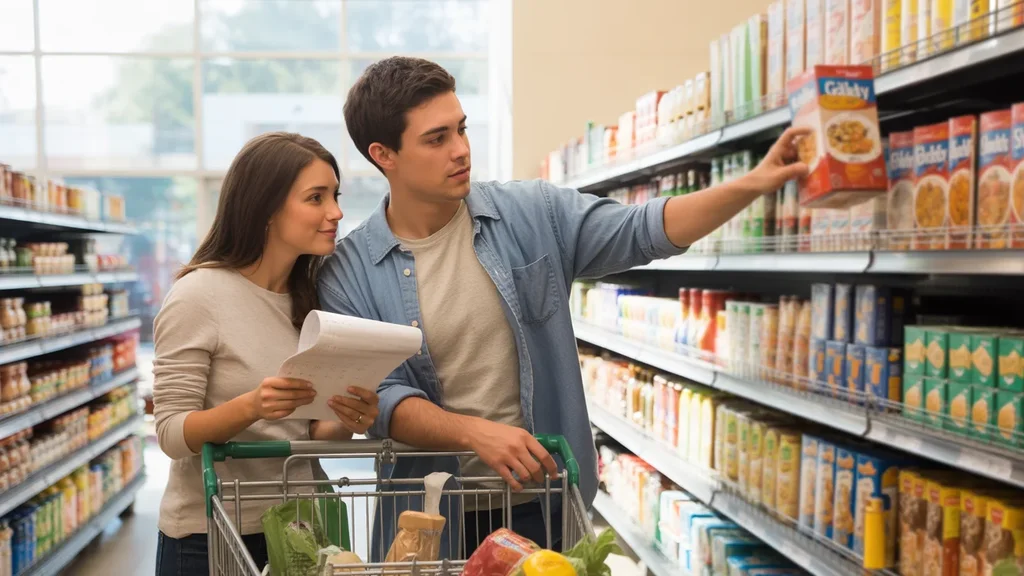
These prices illustrate how staple items tend to compare locally—not a full shopping list. They’re derived from regional adjustments and reflect relative positioning, not store-specific or week-specific accuracy. Use them to understand the texture of grocery costs in Irving, not to simulate a receipt.
| Item | Price |
|---|---|
| Bread | $1.91/lb |
| Cheese | $4.82/lb |
| Chicken | $2.11/lb |
| Eggs | $2.58/dozen |
| Ground Beef | $6.94/lb |
| Milk | $4.15/half-gallon |
| Rice | $1.11/lb |
Ground beef stands out as the highest per-pound cost here, which matters for households building meals around protein. Chicken offers a more economical alternative, and rice remains one of the most cost-efficient staples by volume. Eggs and milk sit in the middle—affordable per unit, but purchased frequently enough that small price differences add up over time. Cheese, often a secondary ingredient, can quietly inflate costs when recipes call for it regularly.
These prices don’t tell you what you’ll spend—they tell you how items compare and where substitution or volume strategy might ease pressure. A family that shifts from ground beef to chicken twice a week, or buys rice in larger quantities, can reduce weekly totals without eliminating foods they rely on. The goal isn’t perfection; it’s understanding which levers exist and how much they move the outcome.
Store Choice & Price Sensitivity
Grocery costs in Irving vary more by store tier than by a single citywide average. The same cart of staples can differ significantly depending on whether you’re shopping at a discount grocer, a mid-tier chain, or a premium market. That spread matters most for households buying the same items week after week, where even a 10–15% difference per trip compounds quickly over a month.
Discount tier stores offer the lowest baseline prices, often through store brands, bulk packaging, and limited selection. For cost-sensitive households or families buying high volumes, this tier provides the most control. The tradeoff is convenience: fewer locations, longer checkout lines, and less variety in specialty or prepared items. If you’re prioritizing price over speed, this is where pressure eases most.
Mid-tier chains balance price and convenience. They’re more widely distributed across Irving, which reduces drive time and makes smaller, more frequent trips practical. Prices run higher than discount stores but lower than premium markets, and the selection includes both national brands and store alternatives. For households earning near or above the median income, this tier often becomes the default—close enough to home, varied enough in stock, and predictable enough in cost.
Premium grocers emphasize quality, variety, and prepared options. Prices reflect that positioning: organic produce, specialty cuts, and ready-to-eat meals all carry markups. For singles or dual-income professionals prioritizing time over cost, the convenience can justify the expense. For families or budget-focused households, the same cart here can feel prohibitively expensive compared to other options.
Store choice isn’t just about price per item—it’s about access, trip frequency, and waste. A household that can walk to a mid-tier grocer and buy fresh ingredients twice a week may waste less food than one that drives farther to a discount store and buys in bulk. Conversely, a family with reliable transportation and storage space can extract significant savings by consolidating trips and buying larger quantities at lower per-unit costs. The right strategy depends on household size, income flexibility, and how [where money goes](/irving-tx/monthly-budget/) across all categories, not just groceries.
What Drives Grocery Pressure Here
Grocery costs in Irving don’t exist in isolation—they interact with income, household composition, and the city’s physical layout in ways that amplify or soften the pressure depending on your situation. The regional price parity index of 103 sets a baseline slightly above the national average, but how that baseline feels depends on what you’re earning and how many people you’re feeding.
For a household near Irving’s median income of $76,686 per year, grocery costs represent a manageable share of monthly expenses, though not one that disappears into the background. Singles and couples without children have more flexibility to absorb week-to-week price swings or trade up for convenience. Families with children face a different calculus: feeding three or four people means every per-pound price difference scales across the cart, and the weekly total becomes a more rigid line item in the monthly budget. For households earning below the median, grocery costs tighten further, leaving less room for premium tiers, prepared foods, or last-minute fill-in trips.
The city’s corridor-clustered grocery access also shapes how costs accumulate. Not all neighborhoods have equal proximity to discount-tier stores, which means some households face a choice: drive farther to save on price, or shop closer and pay more per item. That tradeoff between time and money plays out differently depending on work schedules, vehicle access, and whether you’re buying for one person or four. Walkable pockets in parts of Irving allow some residents to make smaller, more frequent trips, which can reduce food waste and let them respond to sales or price changes more fluidly. Others rely on weekly bulk runs, where the upfront cost is higher but per-unit savings justify the approach.
Seasonality also influences grocery pressure, though the effect is more behavioral than numeric. Produce prices shift with growing seasons, and holiday periods bring both sales and demand spikes. Households that plan around those rhythms—buying root vegetables in fall, stocking pantry staples during discount windows—can smooth costs over time. Those shopping week-to-week without a seasonal lens may see more variability in what the same cart costs from one month to the next.
Practical Ways People Manage Grocery Costs
Managing grocery costs in Irving isn’t about cutting out foods you rely on—it’s about adjusting where, when, and how you shop to reduce pressure without sacrificing nutrition or variety. The strategies that work best depend on household size, schedule flexibility, and how much control you want over week-to-week spending.
- Shop by store tier intentionally. If you’re buying the same staples every week, shifting even half your cart to a discount-tier grocer can ease pressure without requiring a full store switch. Reserve mid-tier or premium trips for specialty items or convenience fills.
- Buy high-volume staples in bulk. Rice, pasta, canned goods, and frozen proteins cost less per unit when purchased in larger quantities. This works best for families or households with storage space and predictable consumption patterns.
- Plan meals around proteins and produce on sale. Flexibility in what you cook—choosing chicken one week and ground beef the next based on price—lets you respond to discounts rather than paying full price for a fixed menu.
- Use store brands for staples. Bread, dairy, canned vegetables, and grains often perform identically to national brands at lower price points. Switching even a few items per trip reduces totals without changing what you eat.
- Make smaller, more frequent trips if you’re near a grocer. Buying only what you’ll use in the next few days reduces waste and lets you adjust to price changes or sales more fluidly. This works best in walkable areas or for households with flexible schedules.
- Track per-unit prices, not package prices. A larger package isn’t always cheaper per pound or per ounce. Comparing unit costs across sizes and brands reveals where bulk actually saves money and where it doesn’t.
- Limit prepared and convenience foods to intentional purchases. Pre-cut vegetables, ready-to-eat meals, and grab-and-go items carry significant markups. Using them selectively—when time is genuinely constrained—keeps them from quietly inflating weekly totals.
None of these strategies require extreme couponing or dietary overhaul. They’re about recognizing which variables you control and adjusting them in ways that match your household’s priorities. A single professional might prioritize time and shop mid-tier for convenience. A family of four might split trips between discount and mid-tier stores to balance cost and variety. A cost-sensitive household might plan meals entirely around sale cycles and bulk staples. The right approach depends on what you’re optimizing for—time, cost, or flexibility—and how much margin exists in your broader budget.
Groceries vs Eating Out (Directional)
The tradeoff between cooking at home and eating out isn’t just about preference—it’s about cost structure, time pressure, and how much flexibility exists in your monthly budget. Groceries represent a lower per-meal cost but require planning, preparation, and cleanup. Dining out eliminates that labor but introduces a price premium that compounds quickly if it becomes routine rather than occasional.
For singles and young professionals, eating out a few times a week can feel manageable, especially when work schedules or social plans make cooking impractical. The cost per meal is higher, but the absolute weekly difference may not strain the budget if income supports it. For families, the math shifts: feeding three or four people at a restaurant multiplies the per-person cost in ways that make frequent dining out unsustainable for most households. A meal that costs $8 per person to cook at home might run $15–$20 per person at a casual restaurant, and that gap widens with kids or dietary preferences that limit menu options.
The real decision point isn’t whether to cook or eat out—it’s how often dining out happens and whether it’s planned or reactive. A household that budgets for two restaurant meals per week and cooks the rest can control the expense. One that eats out whenever cooking feels inconvenient will see costs climb unpredictably, especially if those meals replace groceries that were already purchased and then go unused. Food waste from buying groceries you don’t cook adds hidden cost to the dining-out habit, making the effective price difference even larger.
Irving’s mixed land use and corridor-clustered dining options mean restaurant access varies by neighborhood, just as grocery access does. Some residents live near enough to casual dining spots that eating out becomes a frequent convenience. Others would need to drive, which adds friction and makes home cooking the default. That geographic variability shapes how the tradeoff plays out in practice, not just in theory.
FAQs About Grocery Costs in Irving (2026)
Is it cheaper to shop in bulk in Irving? Bulk purchasing reduces per-unit costs for staples like rice, pasta, canned goods, and frozen proteins, but only if you have storage space and will actually use what you buy before it spoils. For families or households with predictable consumption, bulk buying at discount-tier stores can ease weekly pressure without requiring frequent trips.
Which stores in Irving are best for low prices? Discount-tier grocers offer the lowest baseline prices, especially for store-brand staples and high-volume items. Mid-tier chains balance cost and convenience, with wider distribution across the city. Premium markets emphasize quality and variety but carry higher markups. The best choice depends on whether you’re optimizing for price, proximity, or selection.
How much more do organic items cost in Irving? Organic produce, dairy, and proteins typically carry a noticeable premium over conventional equivalents, though the exact difference varies by item and store tier. For households prioritizing organic options, shopping sales and buying seasonal produce can help manage the added cost without eliminating those choices entirely.
How do grocery costs for two adults in Irving tend to compare to nearby cities? Irving’s regional price parity index of 103 places it slightly above the national average, consistent with the broader Dallas metro area. Costs feel similar to other mid-sized suburbs in the region, though store access and tier availability can create localized differences even within the metro.
How do households in Irving think about grocery spending when cooking at home? Most households treat groceries as a controllable expense—one where store choice, meal planning, and substitution strategies can reduce pressure without cutting out foods they rely on. Families and cost-sensitive households tend to plan more rigorously, while singles and higher-income earners may prioritize convenience and variety over strict cost minimization.
Does shopping more frequently reduce grocery costs? Frequent smaller trips can reduce food waste and let you respond to sales or price changes, but only if you live near a grocer and have schedule flexibility. For households that need to drive farther or consolidate errands, weekly bulk trips often prove more practical, even if per-trip costs are higher.
Are store brands in Irving comparable to national brands? For most staples—bread, dairy, canned goods, grains—store brands perform nearly identically to national equivalents at lower price points. Switching even a few items per trip can reduce totals without changing what you eat or how you cook.
How Groceries Fit Into the Cost of Living in Irving
Grocery costs in Irving represent one piece of a broader financial structure, and understanding how they interact with housing, utilities, and transportation determines whether the city feels affordable or tight for your household. For most families, housing dominates monthly expenses, followed by transportation and utilities. Groceries sit below those categories in absolute dollars, but they’re one of the few costs you can adjust week-to-week through behavior and strategy.
That flexibility matters most when other expenses—rent, mortgage, commute costs—are fixed or rising. A household that can reduce grocery spending by shopping strategically or shifting store tiers gains margin elsewhere in the budget, which can absorb unexpected costs or create room for savings. Conversely, a household that treats groceries as a passive expense—shopping wherever is closest, buying without a plan—may find that weekly totals creep upward in ways that tighten discretionary income over time.
For a complete picture of where money goes each month in Irving, including how groceries fit alongside housing, utilities, transportation, and other recurring costs, the Monthly Budget article provides the full breakdown. That’s where you’ll see how grocery pressure interacts with income, household size, and the city’s broader cost structure to determine whether your budget holds or bends.
The goal here isn’t to minimize grocery spending at all costs—it’s to understand how the levers work, which households feel pressure most, and where intentional choices create control. Irving’s grocery environment offers options across price tiers and access patterns, but navigating it effectively requires knowing what you’re optimizing for and how much flexibility exists in your broader financial picture. If you’re moving to Irving or re-evaluating how you shop, start with store tier strategy, meal planning around high-volume staples, and realistic assessment of how much time and transportation access you have. Those variables shape grocery costs more than any single price point, and adjusting them gives you the clearest path to a sustainable, predictable food budget.
How this article was built: In addition to public economic data, this article incorporates location-based experiential signals derived from anonymized geographic patterns—such as access density, walkability, and land-use mix—to reflect how day-to-day living actually feels in Irving, TX.