
Deciding whether to rent or buy in Hollywood means understanding more than list prices and lease terms—it means recognizing how coastal Florida’s climate, mixed urban form, and evolving infrastructure shape what you’ll actually pay and manage over time. Hollywood’s housing market sits at the intersection of South Florida’s development pressure and the practical realities of living in a place where summer heat, storm exposure, and neighborhood walkability all influence your monthly obligations and long-term risk.
This article breaks down what drives expenses in Hollywood’s housing market, explaining how rent, ownership, utilities, and upkeep behave differently depending on what you choose and where you live. Whether you’re weighing a lease renewal or considering your first purchase, the goal is to clarify which costs you control, which ones you inherit, and how Hollywood’s particular conditions change the math.
The Housing Market in Hollywood Today
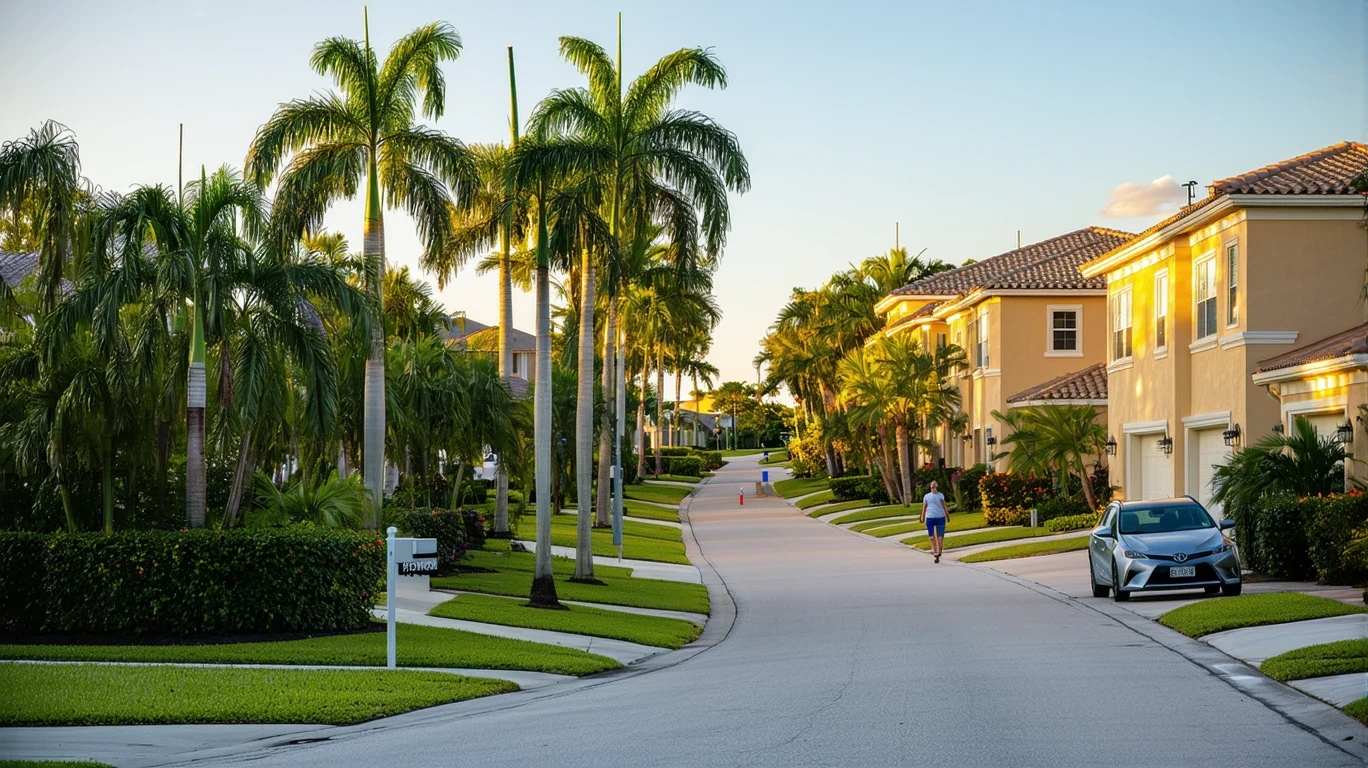
Hollywood’s housing market reflects its position as an established coastal city within the Miami-Fort Lauderdale metro, where development has layered single-family neighborhoods alongside denser, more vertical building clusters. The median home value stands at $345,300, while median gross rent reaches $1,463 per month. These figures place Hollywood in the middle tier of South Florida pricing—more accessible than Miami Beach or downtown Fort Lauderdale, but shaped by the same regional pressures: limited buildable land, coastal insurance costs, and steady migration into the metro.
What newcomers often misunderstand is how much Hollywood’s housing experience varies by neighborhood form. Parts of the city feature walkable pockets with high pedestrian-to-road ratios and rail transit access, creating urban-style living that reduces car dependency. Other areas remain car-oriented, with single-family homes on larger lots and errands requiring short drives. This mixed character means housing costs don’t just reflect square footage—they reflect access, infrastructure, and the daily friction of getting around.
The regional price parity index of 103 indicates costs run slightly above the national baseline, driven primarily by housing and the premium attached to coastal proximity. The unemployment rate of 3.2% signals a stable local economy, but median household income of $61,958 per year means many households face meaningful tradeoffs between housing quality, location, and financial flexibility.
Renting in Hollywood
Renting in Hollywood offers predictability in a market where ownership exposes you to Florida’s volatile insurance landscape and storm-related maintenance risk. At $1,463 per month for median gross rent, you’re paying for shelter and transferring the burden of roof repairs, hurricane shutters, and air conditioning replacement to a landlord. In a coastal city where summer heat dominates and storm seasons bring real exposure, that transfer has tangible value.
Rental availability varies by neighborhood form. The more vertical building character in parts of Hollywood means multifamily housing stock is substantial, creating competitive pressure that can stabilize rent in denser areas. Corridor-clustered errands and rail transit access make some rental neighborhoods functionally car-light, reducing your transportation burden and allowing you to prioritize walkable convenience over garage space.
Renters face less control over long-term cost trajectory—lease renewals can reset pricing to match regional trends—but they avoid the compounding exposure that comes with property taxes, insurance premiums, and deferred maintenance. For households prioritizing flexibility or unwilling to absorb climate-related repair risk, renting remains the lower-volatility path in Hollywood’s market.
Owning a Home in Hollywood
Ownership in Hollywood means taking on the median home value of $345,300 as your entry point, but it also means inheriting the full spectrum of coastal Florida homeownership exposure. Property taxes, homeowners insurance, and maintenance costs all behave differently here than in non-coastal or temperate markets, and each one carries the potential for sharp increases over time.
Property taxes in Florida are shaped by Save Our Homes assessment caps for primary residents, which limit annual increases on homesteaded properties but allow reassessment at sale. This creates a bifurcated market: long-term owners enjoy predictable tax bills, while new buyers face higher assessments. Insurance costs, meanwhile, reflect hurricane risk and have grown volatile in recent years as carriers exit the state or reprice policies. These aren’t one-time adjustments—they’re recurring exposures that compound over the life of ownership.
Maintenance in Hollywood is dominated by air conditioning load and storm preparation. Cooling systems run nearly year-round in South Florida’s heat and humidity, and replacement costs are substantial. Roofs, windows, and exterior finishes face accelerated wear from sun, salt air, and storm exposure. Ownership transfers all of this from landlord to household, and the timing is unpredictable.
What ownership provides is control and stability in housing form. You choose the neighborhood, the layout, and the level of walkability or car access that fits your household. You’re insulated from lease non-renewals and rent resets. But you’re also locked into Hollywood’s climate and regulatory environment, and your cost exposure grows with every year you hold the property.
Apartment vs House in Hollywood — Cost Behavior Comparison
| Expense Category | Apartment | House |
|---|---|---|
| Cooling Load | Shared walls and smaller square footage reduce air conditioning burden; central systems or window units sized for compact space | Standalone structure with greater envelope exposure; larger square footage and higher ceilings increase cooling demand substantially in South Florida heat |
| Storm Preparation | Building management typically handles shutter installation, roof inspection, and exterior securing; tenant responsibility limited to interior and contents | Owner responsible for all storm prep including shutters, roof integrity, drainage, and exterior securing; deferred maintenance increases vulnerability |
| Exterior Maintenance | Landlord or HOA absorbs roof replacement, exterior paint, and structural repairs; tenant insulated from timing and cost | Owner bears full cost and timing risk for roof, siding, windows, and foundation; salt air and UV exposure accelerate wear cycles |
| Parking & Access | Assigned or shared parking; walkable pockets and rail access reduce car dependency for some buildings in denser areas | Private driveway and garage; typically located in car-oriented neighborhoods requiring vehicle for most errands |
Methodology note: This comparison isolates expense categories where Hollywood’s coastal climate, storm exposure, and mixed urban form create meaningful differences in cost behavior. Categories omitted (e.g., water, trash) either don’t vary significantly by housing type in this market or lack sufficient local data to justify differentiation. Differences shown reflect structural exposure, not household-specific usage.
Utilities & Upkeep Differences
Utility and maintenance exposure in Hollywood is driven overwhelmingly by cooling demand and storm resilience. Electricity rates stand at 15.02¢/kWh, and air conditioning dominates summer bills in both apartments and houses—but the magnitude differs sharply. Houses with larger square footage, standalone construction, and greater envelope exposure face substantially higher cooling costs than apartments with shared walls and compact layouts. This isn’t a minor difference; it’s a structural cost gap that persists year-round in South Florida’s extended cooling season.
Natural gas, priced at $23.62/MCF, plays almost no role in Hollywood’s housing costs. Heating demand is negligible, and most homes rely on electric systems for water heating and cooking. This simplifies the utility picture but concentrates exposure on a single commodity: electricity. Households that can’t control cooling load—whether through insulation, shading, or behavioral adjustment—face sustained high bills with limited alternatives.
Upkeep differences are similarly climate-driven. Apartments transfer roof, exterior, and HVAC replacement costs to landlords or HOA reserves, insulating tenants from the timing and volatility of these expenses. Homeowners absorb the full burden, and in Hollywood’s heat and salt air environment, replacement cycles arrive faster than in temperate climates. Deferred maintenance doesn’t just reduce comfort—it increases vulnerability during storm season, when roof integrity and drainage capacity become urgent.
Rent vs Buy: Long-Term Exposure in Hollywood
The long-term difference between renting vs. owning in Hollywood isn’t about which one costs less—it’s about which risks you’re willing to carry and which forms of control matter most to your household.
Renting keeps your cost structure simpler and transfers the largest sources of volatility—insurance, storm damage, and major system replacement—to someone else. Your rent can reset at lease renewal, but you’re insulated from the compounding exposure that comes with property tax reassessments, insurance market exits, and the unpredictable timing of roof or HVAC failure. In a coastal market where climate risk is rising, that insulation has real value, especially for households that prioritize flexibility or lack the reserves to absorb large, sudden expenses.
Ownership locks in your housing form and eliminates the risk of lease non-renewal, but it also locks in your exposure to Hollywood’s regulatory and environmental conditions. Property taxes can rise at sale and again over time as assessments adjust. Insurance premiums have grown volatile as Florida’s market contracts, and there’s no ceiling on how high they can go. Maintenance costs aren’t predictable—they arrive when systems fail, and in South Florida’s climate, failure rates are higher and replacement costs steeper than in less demanding environments.
What ownership provides is control over your living environment and the ability to benefit from neighborhood stability without the risk of displacement. If you’re planning to stay in Hollywood for many years and have the financial capacity to absorb cost shocks, ownership can offer stability in housing form even as the cost components shift. But if your timeline is uncertain or your reserves are thin, renting keeps your exposure bounded and your options open.
FAQs About Housing Costs in Hollywood
Is it cheaper to rent or buy in Hollywood, FL?
Neither path is universally cheaper—it depends on your timeline and risk tolerance. Renting at $1,463 per month transfers climate-related maintenance and insurance volatility to the landlord, keeping your costs more predictable. Buying at a median home value of $345,300 gives you control and eliminates rent resets, but exposes you to property taxes, insurance increases, and storm-related repair costs that compound over time. The decision hinges on whether you value predictability or control, and whether you can absorb the cost shocks that come with coastal homeownership.
How does Hollywood’s climate affect housing costs?
Hollywood’s heat, humidity, and hurricane exposure drive up both utility and maintenance costs. Air conditioning runs nearly year-round, making electricity the dominant utility expense. Storm preparation, roof integrity, and exterior durability all face accelerated wear from sun, salt air, and weather events. Renters transfer most of this risk to landlords; owners absorb it directly, and the timing is unpredictable.
What makes Hollywood’s housing market different from other South Florida cities?
Hollywood sits between Miami’s premium pricing and Fort Lauderdale’s density, offering a mix of walkable pockets with rail access and car-oriented single-family neighborhoods. The median home value of $345,300 is more accessible than coastal Miami but still reflects South Florida’s insurance and development pressures. The city’s mixed urban form means housing costs vary significantly by neighborhood—walkability, transit access, and building type all influence what you pay and how you live.
Do walkable neighborhoods in Hollywood cost more?
Walkable pockets with high pedestrian-to-road ratios and rail transit access often command a premium in rent or purchase price, but they also reduce transportation costs by lowering car dependency. The tradeoff depends on your household: if you can rely on transit and corridor-clustered errands, the premium may be offset by lower fuel, maintenance, and parking expenses. If you still need a car for work or family logistics, the premium becomes an added cost without full offset.
How much should I budget for utilities in a Hollywood apartment vs a house?
Electricity at 15.02¢/kWh is the primary utility cost, and cooling load dominates. Apartments with shared walls and compact layouts face lower bills than standalone houses with greater square footage and envelope exposure. The difference is structural and sustained—houses in Hollywood’s heat will consistently cost more to cool, and the gap widens in summer months. Without specific usage data, expect cooling to be the single largest variable expense in either housing type, but more intense in houses.
Making Housing Choices in Hollywood
Housing costs in Hollywood are shaped by coastal Florida’s climate realities, the city’s mixed urban form, and the tradeoff between predictability and control. Renting offers lower volatility and transfers storm-related risk to landlords, making it the safer choice for households with shorter timelines or limited reserves. Ownership provides stability in housing form and eliminates displacement risk, but it also exposes you to the compounding costs of property taxes, insurance, and maintenance in a market where all three can shift unpredictably.
The city’s walkable pockets, rail transit, and corridor-clustered errands create neighborhoods where car dependency drops and daily logistics simplify, but these areas often carry a premium. Whether that premium makes sense depends on how much you value reduced transportation friction and whether your household can actually function car-light in South Florida’s sprawling metro.
Ultimately, the right housing choice in Hollywood depends on how you weigh risk, control, and flexibility. If you’re prepared to absorb cost shocks and plan to stay long enough to benefit from housing stability, ownership can work. If you value predictability and want to avoid the exposure that comes with coastal homeownership, renting keeps your obligations bounded and your options open. Either way, understanding how Hollywood’s particular conditions shape cost behavior is what turns housing decisions from guesswork into strategy.
How this article was built: In addition to public economic data, this article incorporates location-based experiential signals derived from anonymized geographic patterns—such as access density, walkability, and land-use mix—to reflect how day-to-day living actually feels in Hollywood, FL.