
Lewisville is considered moderately priced in 2026, with median home values at $328,300 and rent at $1,455 per month. The value proposition depends on housing entry cost versus car dependence, with transportation exposure varying sharply based on commute length and rail access.
Over the last five years, cost of living trends across North Texas suburbs have shifted dramatically: housing appreciation has outpaced income growth, utility volatility has increased due to grid strain and extreme heat cycles, and transportation costs have become a defining exposure for households without access to transit corridors. Lewisville sits squarely in this regional pattern, with a regional price parity index of 118—meaning the overall cost structure runs about 18% above the national baseline. But that aggregate number obscures the real story: cost pressure here is unevenly distributed across categories, and the dominant driver isn’t groceries or day-to-day spending—it’s the combination of housing entry barriers and the structural need for reliable vehicle access in a place where walkable infrastructure exists only in pockets.
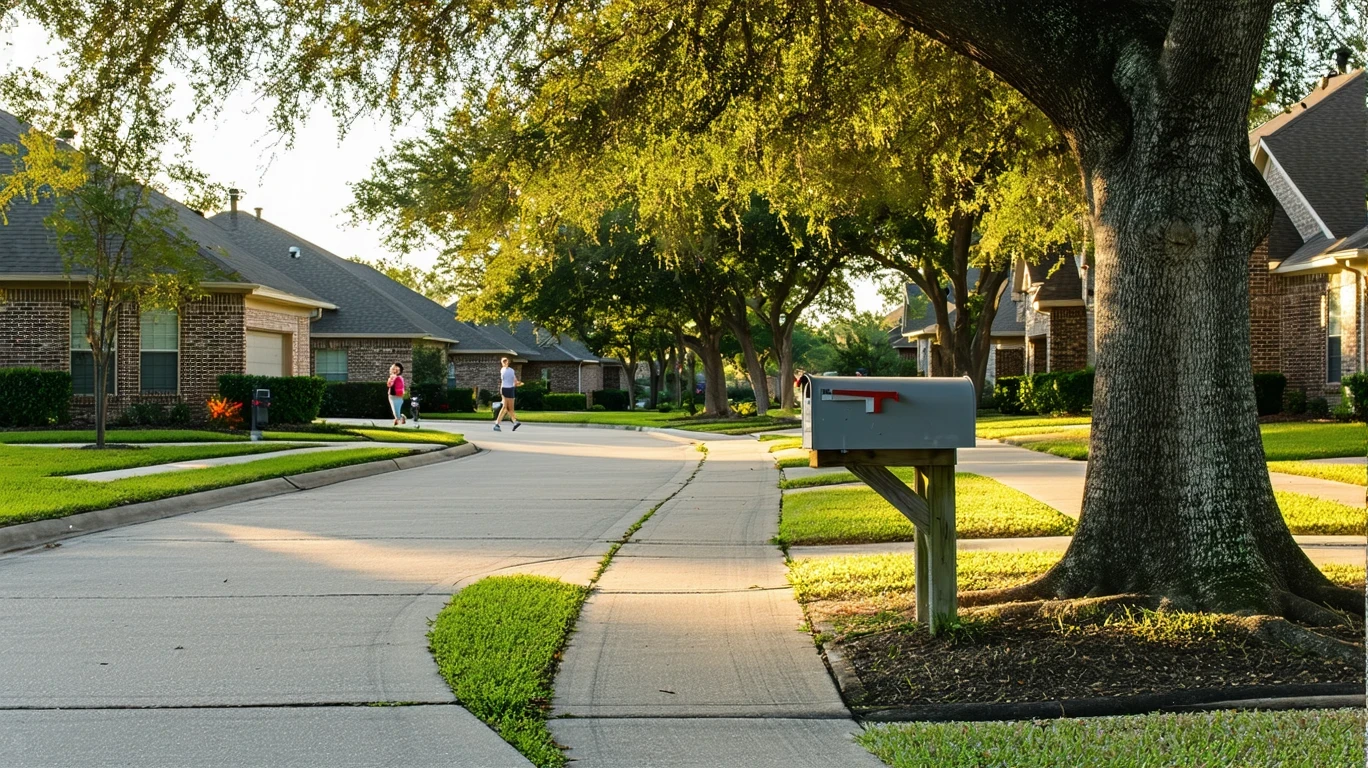
Overall Cost of Living Snapshot
Lewisville’s cost structure is shaped by three forces: moderate housing prices that favor ownership over renting, seasonal utility swings driven by extended cooling demands, and transportation exposure that hinges entirely on whether your household can tap into rail transit or must rely on daily driving. The regional price parity index of 118 reflects higher-than-average costs, but the index alone doesn’t explain where financial pressure concentrates. Housing dominates upfront decision-making, but transportation determines ongoing monthly volatility for most households.
The city’s infrastructure reveals a hybrid character: pedestrian-to-road ratios exceed high thresholds in certain areas, rail service is present, and food and grocery options cluster along corridors rather than spreading evenly across neighborhoods. This means access friction varies sharply by location within the city. For households near transit nodes or within walkable pockets, day-to-day errands and commuting can function without constant vehicle dependence. For those in car-oriented zones, transportation becomes a recurring fixed cost with meaningful exposure to fuel price swings and maintenance cycles.
Driver verdict: Housing entry cost dominates the initial affordability question, but transportation structure—whether you can live near rail, work locally, or must drive long distances daily—determines whether ongoing costs remain predictable or escalate unpredictably. Surprises come from utility seasonality during triple-digit summer heat and from underestimating the financial and logistical burden of vehicle dependency in areas outside walkable or transit-served pockets.
Housing Costs (Primary Driver)
With a median home value of $328,300 and median rent of $1,455 per month, Lewisville presents a clear ownership tilt. Renting delivers flexibility and eliminates property tax exposure, but at $1,455 monthly, renters face ongoing rent renewal risk without building equity. Ownership at $328,300 requires navigating down payments, closing costs, and property tax obligations, but it locks in principal and interest payments and shifts long-term risk from landlords to homeowners. For households planning to stay multiple years, ownership typically reduces per-month housing exposure once the entry hurdle is cleared.
The city’s mixed building heights and presence of both residential and commercial land use suggest a range of housing types, from single-family detached homes to smaller multifamily units. This variety supports different entry points, but the rental stock appears limited relative to for-sale inventory, which explains why rent doesn’t drop proportionally below ownership-equivalent costs. Lewisville functions as a ownership-favoring market with a secondary rental tier, not a transitional city where renting and buying costs converge.
| Housing Type | Cost Anchor | What That Buys You |
|---|---|---|
| Renting | $1,455/month median | Flexibility, no tax or maintenance exposure, but no equity and renewal risk |
| Buying | $328,300 median value | Equity accumulation, fixed principal/interest, but upfront costs and tax/insurance/maintenance responsibility |
Conclusion: Lewisville is a buying market for households with down payment capacity and multi-year timelines. Renting works for short-term stays or income uncertainty, but it doesn’t offer a long-term cost advantage.
Utilities & Energy Risk
Electricity in Lewisville is priced at 15.69¢ per kWh, and natural gas runs $16.51 per MCF (roughly 100 therms). These are baseline rates, not bills—actual monthly costs depend on usage, which swings sharply with season. Lewisville’s extended cooling season, driven by triple-digit summer heat, pushes air conditioning into the primary energy expense for most of the year. Heating demand exists but remains secondary compared to the sustained cooling load from late spring through early fall.
Electricity costs are the dominant utility exposure. Homes with older HVAC systems, poor insulation, or large square footage face meaningfully higher bills during peak summer months. Natural gas price volatility matters more for water heating and occasional winter heating, but it’s not the primary swing factor. The risk here isn’t the per-unit price—it’s the volume of usage required to maintain livable indoor temperatures across a long, hot season.
Risk classification: Moderate to major, depending on home efficiency and square footage. Utility costs are predictable in direction (summer peaks) but vary widely in magnitude based on housing stock age and insulation quality.
Groceries & Daily Costs
Grocery pricing in Lewisville reflects the regional price parity index of 118, meaning food costs run modestly above the national baseline. The city’s food and grocery infrastructure clusters along corridors, with density in the medium band—enough options to avoid food deserts, but not the saturation that drives competitive pricing or eliminates travel friction. For households near these corridors, grocery access functions smoothly. For those in residential pockets farther from commercial nodes, grocery runs require intentional trips rather than convenient detours.
Day-to-day costs—groceries, household goods, personal care—don’t dominate financial pressure the way housing or transportation do, but they contribute steady background expense. The corridor-clustered pattern means some households enjoy short, walkable access to stores, while others must drive and plan around fewer nearby options. This doesn’t create a cost crisis, but it does add logistical friction and time cost for households without convenient access.
Transportation Reality
Transportation exposure in Lewisville splits sharply based on proximity to rail transit and commute patterns. The average commute is 25 minutes, and rail service is present, but only 4.7% of workers operate from home, and 37.1% face long commutes. Gas prices sit at $3.82 per gallon, which becomes a recurring cost anchor for households dependent on daily driving.
For those living near rail stations or working locally, transportation costs remain contained—transit fares and occasional driving replace the need for constant vehicle use. For households in car-oriented areas or commuting outside the city, transportation becomes a fixed monthly exposure: fuel, insurance, maintenance, and depreciation stack into a recurring burden that rivals or exceeds housing costs for some profiles. The presence of rail transit is a structural advantage, but it only benefits households who can organize their lives around it. Everyone else absorbs full vehicle dependency.
Lewisville’s pedestrian infrastructure shows pockets of walkability, with pedestrian-to-road ratios exceeding high thresholds in some areas and bike infrastructure present in limited zones. This supports errands and local trips for households in those pockets, reducing the need to drive for every small task. But the overall texture remains car-oriented outside these zones, meaning most households still need at least one reliable vehicle to function.
Cost Exposure Profiles
Cost exposure in Lewisville concentrates in three areas: housing entry, transportation dependence, and utility seasonality. The weight of each depends on household structure and location within the city.
Low-exposure situation: A homeowner in a walkable pocket near rail transit, working locally or using transit for commuting, living in a well-insulated home with efficient HVAC. Housing costs are locked in after the initial purchase. Transportation is minimal—occasional driving, transit passes, bike trips for errands. Utilities remain predictable and manageable due to home efficiency. This profile enjoys stable, contained costs with limited volatility.
High-exposure situation: A renter in a car-oriented area, commuting 30+ minutes daily by vehicle, living in an older, less-efficient unit. Rent is subject to annual renewal increases. Transportation costs are high and recurring—fuel at $3.82/gallon, insurance, maintenance, and vehicle depreciation. Utilities swing unpredictably during summer due to poor insulation and aging cooling systems. This profile faces compounding volatility across multiple categories with limited control.
The difference isn’t income—it’s structural positioning. Proximity to transit, home efficiency, and commute length determine whether costs stay predictable or spiral into recurring exposure. Lewisville rewards households who can access its infrastructure advantages and penalizes those who can’t.
How this article was built: In addition to public economic data, this article incorporates location-based experiential signals derived from anonymized geographic patterns—such as access density, walkability, and land-use mix—to reflect how day-to-day living actually feels in Lewisville, TX.
Frequently Asked Questions
Is Lewisville more affordable than nearby Dallas in 2026? Lewisville’s median home value of $328,300 and rent of $1,455 per month tend to run lower than core Dallas neighborhoods, but transportation costs can offset housing savings if your commute requires daily driving into the metro. The affordability advantage depends on where you work and whether you can use rail transit.
What does a typical cost profile look like in Lewisville? Housing dominates upfront costs, transportation becomes the primary recurring variable, and utilities spike during the extended summer cooling season. Households near transit with efficient homes face the lowest ongoing exposure, while car-dependent renters in older units face compounding volatility.
Do utilities cost more in Lewisville than nearby areas? Electricity at 15.69¢/kWh sits near the regional average, but total utility costs depend more on home efficiency and cooling season length than on per-unit rates. Lewisville’s extended heat exposure means summer bills can climb significantly in older or poorly insulated homes.
What costs tend to surprise newcomers in Lewisville? Transportation exposure surprises households who underestimate the need for reliable vehicles outside transit corridors, and summer utility bills catch renters off guard in older units without efficient cooling systems. The gap between rent and ownership costs also surprises those expecting rental savings.
Are property taxes higher in Lewisville than in nearby suburbs? Property tax rates vary across North Texas municipalities, and Lewisville’s rate is influenced by local school district funding and municipal services. Buyers should verify current tax rates and exemptions during the purchase process, as taxes add meaningfully to monthly ownership costs.
Can you live in Lewisville without a car? It’s possible in walkable pockets near rail transit, especially if you work along the rail line or locally. But most of the city remains car-oriented, and households outside these areas will find daily life difficult without at least one vehicle.
How does Lewisville compare to other Dallas-area suburbs for cost of living? Lewisville tends to offer moderate housing costs relative to closer-in suburbs, but the tradeoff often involves longer commutes or greater car dependency. The presence of rail transit distinguishes it from purely car-dependent outer suburbs, but only if your household can organize around that access.
Is Lewisville a good value for families? Playground density is high, but school density falls below thresholds, meaning families may face longer school commutes or limited nearby options. The value depends on whether your household prioritizes outdoor recreation access and can navigate school placement logistics.