
It’s Sunday evening in Oviedo, and you’re mapping out the week’s meals. Chicken and rice Monday, ground beef tacos Wednesday, a simple pasta night Friday. You’ve written the list—bread, eggs, milk, cheese, a pound of chicken, ground beef, rice—and now you’re deciding where to shop. That decision, more than the list itself, often determines how much pressure you’ll feel at checkout. In Oviedo, grocery costs don’t follow a single average experience. They vary significantly by store tier, household size, and how intentionally you plan. The city’s food prices reflect a regional cost structure that runs notably above the national baseline, but the impact depends heavily on where and how you shop.
Understanding grocery costs here means recognizing that Oviedo sits within a higher-cost regional price environment. The Bureau of Economic Analysis regional price parity index for the area stands at 123, compared to an implied national baseline of 100. That elevation touches every aisle—dairy, protein, produce, pantry staples—creating a consistent upward pressure that households manage through store selection, bulk strategies, and meal discipline. For families earning near the city’s median household income of $116,764 per year, groceries represent a manageable but noticeable line item. For singles, smaller households, or anyone shopping without a plan, the pressure compounds quickly.
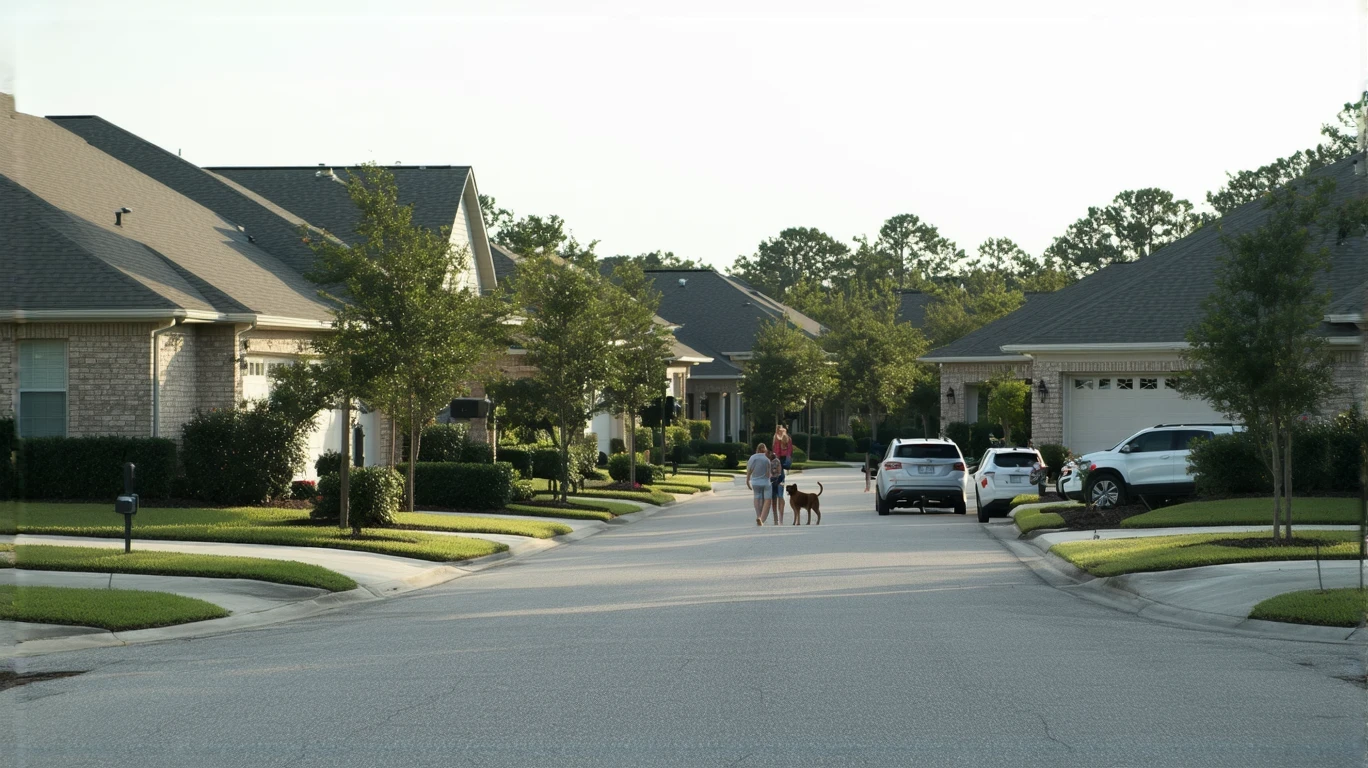
How Grocery Costs Feel in Oviedo
Grocery prices in Oviedo feel elevated compared to much of the country, but the experience varies widely depending on where you shop and how much flexibility your income provides. The regional price structure affects all food categories uniformly, so there’s no single “cheap aisle” that escapes the baseline. What changes is how much that baseline matters to your household. For higher earners, the difference between a $3.50 gallon of milk and a $2.80 gallon elsewhere might register as background noise. For budget-constrained households, that 70-cent gap across ten staple items becomes a weekly decision point.
Household size amplifies sensitivity. A single person buying a half-gallon of milk, a dozen eggs, and a loaf of bread faces higher per-unit costs and less ability to spread fixed shopping trips across volume. A family of four buying in larger quantities can access per-pound efficiencies, but total spending scales quickly when every category—protein, dairy, grains—starts from an elevated baseline. The city’s median income provides a meaningful buffer for many, but it doesn’t eliminate the need to think about store choice and planning. Grocery costs in Oviedo reward intentionality.
The city’s food retail landscape clusters along commercial corridors rather than distributing evenly across neighborhoods. Grocery density is high where stores are present, creating competitive environments with multiple tier options in proximity. But access quality depends on where you live. Some households enjoy walkable or short-drive access to discount, mid-tier, and premium options. Others face longer trips or fewer choices, which adds friction and reduces the practical ability to shop strategically. That geographic unevenness means “grocery costs in Oviedo” isn’t a single number—it’s a range shaped by location, mobility, and household logistics.
Grocery Price Signals (Illustrative)
These prices illustrate how staple items tend to compare locally—not a full shopping list. They reflect a regional price environment elevated above the national baseline and serve as reference points for understanding relative cost pressure, not checkout-accurate totals.
| Item | Price |
|---|---|
| Bread (per pound) | $2.22/lb |
| Cheese (per pound) | $5.88/lb |
| Chicken (per pound) | $2.50/lb |
| Eggs (per dozen) | $2.89/dozen |
| Ground beef (per pound) | $8.24/lb |
| Milk (per half-gallon) | $5.00/half-gallon |
| Rice (per pound) | $1.30/lb |
Derived estimate based on national baseline adjusted by regional price parity; not an observed local price.
Ground beef at over $8 per pound and milk at $5 per half-gallon anchor the higher end of the spectrum. Chicken and rice remain comparatively accessible, but even those categories reflect the regional elevation. Cheese, eggs, and bread fall in the middle, where small differences in store tier or promotion timing can shift weekly spending noticeably. These aren’t prices you’d see on every shelf in every store—they’re illustrative signals of the cost structure households navigate when planning meals and comparing options.
Store Choice & Price Sensitivity
In Oviedo, grocery price pressure varies more by store tier than by any single average. Discount-tier grocers—no-frills formats focused on private label and high-volume staples—offer the lowest baseline. Mid-tier chains provide broader selection, frequent promotions, and loyalty programs that soften costs for regular shoppers. Premium-tier stores emphasize organic, specialty, and prepared options, with corresponding price premiums that can run 20–40% above discount formats for comparable items. The city’s high grocery density in commercial corridors means many households have access to all three tiers within a reasonable drive, but proximity and convenience don’t always align.
Store tier choice becomes a primary cost lever. A household committed to discount-tier shopping and willing to plan around limited selection can hold food costs significantly below what the same cart would cost at a premium grocer. Mid-tier stores split the difference, offering enough variety and convenience to reduce planning friction while keeping costs closer to the lower end when promotions and store brands are used strategically. For budget-constrained households, the difference between tiers isn’t marginal—it’s the gap between tight and unmanageable.
The corridor-clustered retail pattern creates uneven access. Households near major commercial intersections enjoy short trips and multiple options, making it easy to compare prices or split shopping across stores. Those farther from clusters face longer drives, higher fuel costs, and less flexibility to chase deals. That geographic friction doesn’t just add time—it reduces the practical ability to manage grocery costs through store choice, turning what could be a behavioral lever into a structural constraint. Where you live in Oviedo affects not just how far you drive, but how much control you have over what you spend.
What Drives Grocery Pressure Here
The primary driver of grocery cost pressure in Oviedo is the regional price parity index of 123, which elevates the baseline for all food categories relative to the national average. This isn’t a temporary spike or a single-category anomaly—it’s a structural feature of the local cost environment that affects dairy, protein, produce, and packaged goods uniformly. Households can’t avoid it by switching categories; they manage it by switching stores, buying in bulk, or adjusting meal complexity.
Income interaction determines how much that baseline matters. At the city’s median household income of $116,764 per year, grocery costs represent a smaller share of total spending than they would in lower-income areas. That provides breathing room for occasional premium purchases, convenience items, or less aggressive deal-chasing. But income doesn’t eliminate sensitivity—it shifts the threshold at which households feel pressure. A family earning $80,000 feels the elevated baseline immediately. A family earning $130,000 notices it when shopping carelessly or feeding a larger household.
Household size amplifies the effect. A single person might spend $60–$80 per week on groceries and absorb the regional premium as a fixed cost. A family of four buying proteins, fresh produce, dairy, and snacks in volume sees that same premium multiply across every trip. The per-person cost may look reasonable, but the absolute weekly total climbs quickly when the baseline is elevated and the cart is full. Larger households also face less flexibility to substitute or skip categories, which reduces their ability to manage costs through meal adjustments.
Seasonal variability plays a smaller role in Oviedo than in colder climates, where heating costs and winter produce premiums create sharp swings. Florida’s long growing season moderates some produce price spikes, but it doesn’t eliminate them. Summer heat and hurricane season can disrupt supply chains and push prices higher temporarily. Holiday demand—Thanksgiving, Christmas, summer grilling season—creates predictable but short-lived pressure. These fluctuations don’t define the cost structure, but they add volatility that households notice when planning around fixed budgets.
Practical Ways People Manage Grocery Costs
Households in Oviedo manage grocery costs primarily through store selection and planning discipline. Shopping at discount-tier grocers for staples—rice, beans, canned goods, frozen vegetables—and reserving mid-tier or premium stores for specific fresh items or promotions reduces baseline spending without eliminating variety. Splitting trips across stores adds time but creates control, especially for households with flexible schedules and proximity to multiple options.
Buying in bulk works when storage and usage align. A family that cooks at home regularly can buy chicken, ground beef, or cheese in larger quantities and freeze portions, spreading the per-pound cost across weeks. A single person or couple without freezer space or predictable meal routines may find bulk purchases lead to waste, which erases any per-unit savings. Bulk strategies reward consistency and planning, not just willingness to buy more at once.
Meal planning around sales and seasonal availability reduces both cost and decision fatigue. Checking weekly circulars, building meals around promoted proteins, and avoiding mid-week impulse trips keeps spending predictable. Households that plan meals in advance also waste less, which matters more in a higher-cost environment where every discarded item represents elevated baseline spending. The discipline isn’t about extreme couponing—it’s about knowing what you’ll cook before you shop and sticking to that list.
Private label and store brands offer meaningful savings without requiring sacrifice in quality for most staple categories. Discount and mid-tier grocers often price their store-brand items 15–30% below national brands for comparable products—pasta, canned tomatoes, dairy, frozen vegetables. Premium stores also carry private labels, though the gap narrows and the positioning shifts toward organic or specialty rather than value. For households managing tight budgets, defaulting to store brands across pantry staples creates consistent savings that compound over months.
Groceries vs Eating Out (Directional)
The tradeoff between cooking at home and eating out in Oviedo depends on time, convenience, and how much the elevated grocery baseline affects your household. Cooking at home consistently costs less per meal than restaurant dining, but the gap narrows when grocery prices are elevated and meal prep time is scarce. A household that plans meals, shops strategically, and cooks in batches maintains a clear cost advantage. A household that shops without a list, buys convenience items, and discards unused ingredients may find the per-meal cost approaches casual dining, especially when factoring in time and effort.
Restaurant pricing in Oviedo reflects the same regional cost structure that affects groceries. Labor, rent, and food input costs all run above national averages, which pushes menu prices higher. Fast-casual and sit-down dining aren’t budget-neutral alternatives to cooking—they’re higher-cost options that make sense for convenience, variety, or time constraints, not cost savings. The decision isn’t whether eating out is cheaper (it isn’t), but whether the convenience and time savings justify the premium for your household’s income and schedule.
Households that cook most meals at home and reserve dining out for weekends or special occasions maintain the clearest cost advantage. Those that rely on takeout or delivery multiple times per week see food costs rise quickly, especially when delivery fees, tips, and markups layer onto already-elevated menu prices. The grocery-versus-dining tradeoff in Oviedo rewards planning and consistency, not spontaneity.
FAQs About Grocery Costs in Oviedo (2026)
Is it cheaper to shop in bulk in Oviedo? Bulk shopping reduces per-unit costs when you have storage space and consistent usage patterns. Families that cook at home regularly and can freeze proteins or pantry staples see meaningful savings. Singles or smaller households without freezer capacity may find bulk purchases lead to waste, which erases the per-pound advantage.
Which stores in Oviedo are best for low prices? Discount-tier grocers focused on private label and high-volume staples offer the lowest baseline costs. Mid-tier chains provide broader selection and frequent promotions that soften costs for regular shoppers. Store choice is the primary lever for managing grocery spending, and proximity to multiple tiers creates flexibility for households willing to split trips.
How much more do organic items cost in Oviedo? Organic and specialty items typically carry premiums above conventional equivalents, with the gap widening at premium-tier stores. The regional price elevation affects both conventional and organic categories, so the baseline is higher across the board. Households prioritizing organic should expect to budget accordingly and consider discount-tier organic lines where available.
How do grocery costs for two adults in Oviedo tend to compare to nearby cities? Oviedo sits within a regional price environment elevated above the national baseline, which affects all food categories uniformly. Nearby cities within the same metro area share similar cost structures, though specific store availability and competitive dynamics vary by location. Comparing grocery costs across cities requires looking at both baseline prices and access to discount-tier options.
How do households in Oviedo think about grocery spending when cooking at home? Households that cook at home regularly view groceries as a controllable cost category where planning, store choice, and bulk buying create meaningful savings. The elevated regional baseline makes strategic shopping more important, not less. Families that plan meals around sales, default to store brands, and avoid waste maintain predictable spending even in a higher-cost environment.
Does Oviedo’s climate affect grocery costs? Florida’s long growing season moderates some produce price spikes compared to colder climates, but it doesn’t eliminate seasonal variability. Summer heat and hurricane season can disrupt supply chains temporarily, and holiday demand creates predictable short-term pressure. Climate affects availability and volatility more than baseline costs.
How does household size affect grocery cost pressure in Oviedo? Larger households face higher absolute spending because the elevated regional baseline multiplies across every category and every trip. Per-person costs may look reasonable, but total weekly spending climbs quickly when feeding four or more. Smaller households face less volume pressure but higher per-unit costs and less ability to leverage bulk discounts, which creates different but still noticeable sensitivity.
How Groceries Fit Into the Cost of Living in Oviedo
Grocery costs in Oviedo represent a noticeable but secondary cost pressure compared to housing and utilities. The regional price elevation affects food spending consistently, but the absolute dollar impact remains smaller than what most households spend on rent, mortgage payments, or cooling a home through Florida’s extended summer heat. Groceries are a category where behavior and planning create control—store choice, meal discipline, and bulk buying all reduce costs without requiring major lifestyle changes. Housing and utilities, by contrast, are largely fixed once you’ve chosen where to live and how much space you occupy.
That doesn’t mean grocery costs are trivial. For budget-constrained households, the combination of elevated baseline prices and limited access to discount-tier stores can push weekly spending into uncomfortable territory. For families with multiple children, the volume effect compounds quickly, turning a manageable per-person cost into a significant monthly line item. But even in those cases, groceries remain more flexible than housing. You can’t negotiate your rent down by 15%, but you can reduce grocery spending by that much through intentional store selection and planning.
The city’s median household income of $116,764 per year provides meaningful breathing room for many residents, allowing grocery costs to remain a background concern rather than a primary stressor. But income alone doesn’t eliminate the need for strategy. Higher earners who shop carelessly or rely heavily on premium stores and prepared foods can still see grocery spending drift into uncomfortable territory. Lower earners or single-income families feel the pressure more immediately and have less margin for error.
For a complete picture of how groceries fit into your household’s total spending—and how they interact with housing, transportation, and utilities—see the Monthly Spending in Oviedo: The Real Pressure Points article. That breakdown shows where money actually goes each month and which categories create the most pressure for different household types. Groceries are one piece of a larger cost structure, and understanding the full picture helps you make better decisions about where to prioritize savings and where to accept costs as fixed.
Managing grocery costs in Oviedo comes down to recognizing the regional baseline, choosing stores intentionally, and planning meals before you shop. The elevated price environment is real, but it’s not unmanageable. Households that treat grocery shopping as a strategic activity rather than a spontaneous errand maintain control and predictability, even when the baseline is higher than they’d prefer.
How this article was built: In addition to public economic data, this article incorporates location-based experiential signals derived from anonymized geographic patterns—such as access density, walkability, and land-use mix—to reflect how day-to-day living actually feels in Oviedo, FL.