
Is Kirkland the kind of place you grow roots—or just pass through? For many, the answer hinges on whether you value polished comfort and outdoor access over spontaneity and grit. Kirkland sits along the eastern shore of Lake Washington, a suburb that has grown into its own identity while remaining tethered to Seattle’s gravitational pull. The city attracts people who can afford a premium for green space, waterfront trails, and a sense of order—but it also quietly selects out those who crave unpredictability, nightlife, or the kind of walkable urbanism where errands don’t require planning. Understanding Kirkland’s vibe means understanding its tradeoffs: what feels rewarding here, what feels limiting, and who tends to feel at home versus restless.
The Emotional Landscape of Kirkland
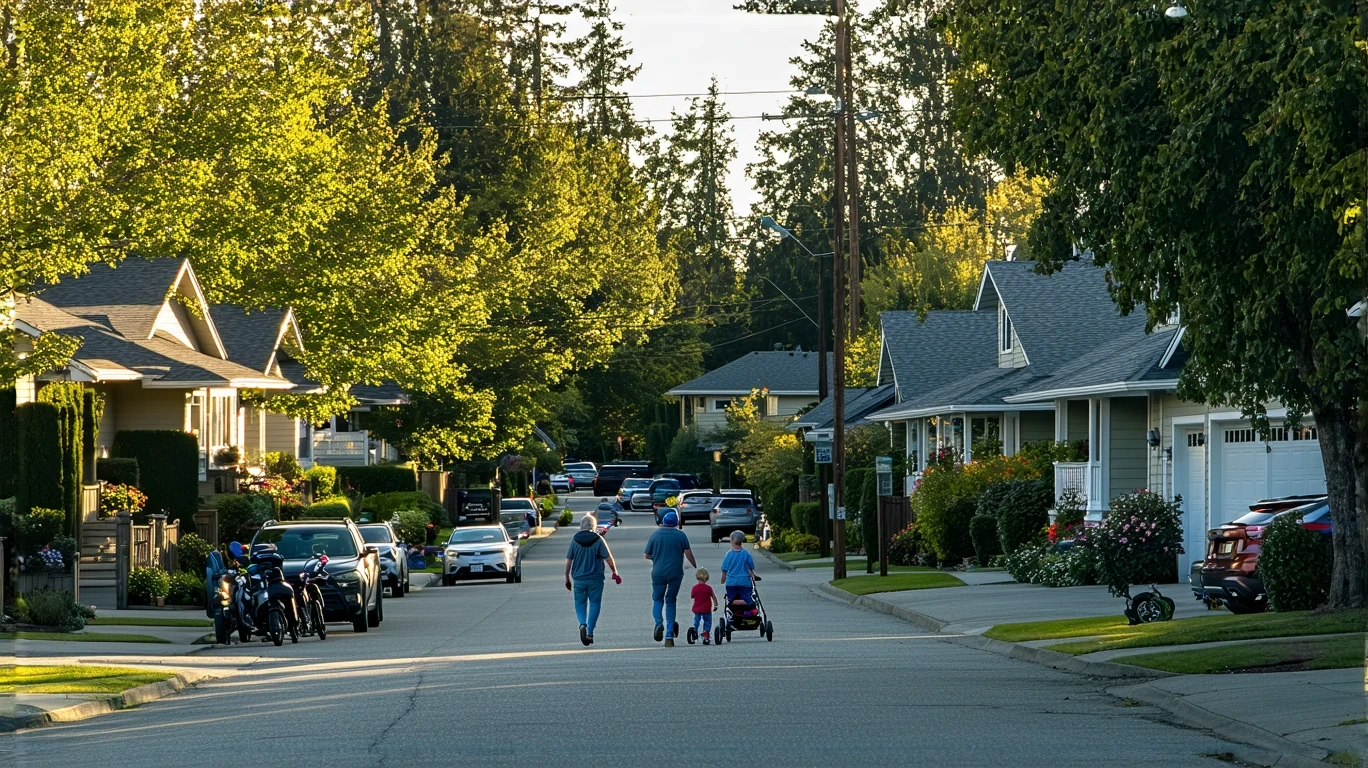
Kirkland’s overall tone is one of cultivated calm. Parks are woven throughout the city, waterfront access feels integrated rather than exclusive, and the streetscape in certain pockets supports walking and biking in ways that surprise newcomers expecting pure car dependency. But this isn’t a city that rewards improvisation. Food and grocery options cluster along commercial corridors rather than distributing evenly across neighborhoods, which means even residents in walkable areas often default to driving for weekly errands. Transit exists—bus service is present and functional—but without rail, the city remains oriented around car ownership, even for those who’d prefer otherwise.
The people who tend to feel “this fits me” in Kirkland are often established professionals, families with school-age children, and outdoor enthusiasts who prioritize trail access and park density over cultural texture. The city’s high median income and home values create a selection effect: those who stay tend to be those who can afford to stay, and the resulting community reflects that economic filter. Long-time residents often express pride in the city’s evolution from sleepy lakeside town to polished suburb, while newcomers describe it as a place that feels safe, green, and predictable—sometimes to a fault.
The people who tend to feel friction are renters navigating housing pressure, young professionals seeking spontaneity, and transit-dependent households who find the bus-only system limiting. The city’s walkable pockets are real, but they don’t eliminate the need for a car. Errands, healthcare appointments, and social plans still require driving for most residents, and that gap between “walkable in theory” and “car-free in practice” can feel frustrating for those who moved here hoping to reduce their dependence on vehicles.
Social Media Buzz in Kirkland
Online discussion about Kirkland tends to revolve around a few recurring themes: the cost of entry, the quality of parks and trails, the tension between growth and character, and the city’s relationship to Seattle. On platforms like Reddit and local Facebook groups, residents describe Kirkland as a place that rewards those who can afford it but doesn’t offer much to those still climbing the ladder. The tone is often protective—people who’ve invested in the city defend its quiet, its greenery, and its family-friendliness—but there’s also a thread of self-awareness about what’s missing.
“It’s beautiful here, but it’s not cheap, and it’s not exciting. If you want a place to raise kids and go for a run by the water, it’s hard to beat. If you want a place where things happen after 9 p.m., you’re going to be disappointed.”
“I love that I can bike to the waterfront and actually feel safe doing it. But I still drive to the grocery store, and I still drive to meet friends in Seattle. It’s not as walkable as people think.”
“Kirkland feels like it’s trying to be both a suburb and a small city, and it ends up being neither. The downtown area is nice, but it’s not a destination. The neighborhoods are quiet, but they’re not affordable.”
The emotional tone is rarely angry—more often, it’s wistful or resigned. People appreciate what Kirkland offers, but they’re also aware of what it costs and what it lacks.
Local News Tone
Local coverage of Kirkland tends to frame the city through the lens of growth, identity, and infrastructure. Headlines and story angles often reflect ongoing debates about what the city should become as it continues to evolve:
- “Waterfront Development Sparks Debate Over Public Access”
- “New Retail Arrives as Kirkland Balances Growth and Character”
- “Residents Weigh Density vs Quiet in Zoning Discussions”
- “Parks and Trails Expansion Continues Amid Budget Conversations”
- “Transit Advocates Push for Better Connections to Seattle”
The framing is rarely confrontational. Instead, it reflects a community negotiating change—one that values what it has but isn’t entirely sure how to preserve it while accommodating new residents, new development, and new expectations. The tone suggests a city in transition, still figuring out its identity relative to the larger metro area.
Review-Based Public Perception
On platforms like Google Reviews, Yelp, and Nextdoor, Kirkland earns consistent praise for its parks, waterfront access, and overall sense of safety. Families describe it as a place where kids can bike to school and play outside without constant supervision. Outdoor enthusiasts highlight the trail network and proximity to Lake Washington. Retirees appreciate the quiet and the greenery.
But the complaints are just as revealing. Renters describe feeling priced out or temporary, unable to imagine staying long-term. Young professionals note the lack of nightlife, the early closing times, and the sense that the city empties out after work hours. Those who moved from denser urban areas describe frustration with the corridor-based errands model—where walkability exists in pockets but doesn’t extend to daily logistics. And transit-dependent residents describe the bus system as functional but limiting, especially for off-peak or cross-town trips.
Neighborhood variation matters, though it’s often described in broad strokes: newer planned areas feel more uniform and car-oriented, while older pockets near the waterfront offer more texture and walkability. But even in the most walkable areas, the city’s structure still assumes car ownership for most households.
Comparison to Nearby Cities
| Dimension | Kirkland | Bellevue | Redmond |
|---|---|---|---|
| Overall Vibe | Polished suburban calm with waterfront charm | Urban-suburban hybrid with corporate energy | Tech-oriented, family-friendly, still evolving |
| Walkability | Walkable pockets, car still essential | Downtown walkable, neighborhoods less so | Improving but still car-dependent |
| Green Space | Highly integrated, waterfront access strong | Present but more scattered | Growing, trail network expanding |
| Nightlife/Culture | Limited, quiets down early | More dining and entertainment options | Minimal, family-focused |
| Transit | Bus service only | Light rail access, better connectivity | Bus service, future light rail planned |
Kirkland, Bellevue, and Redmond all sit on the Eastside, but they offer different emotional experiences. Bellevue feels more urban and connected, with light rail access and a denser downtown core. It attracts people who want proximity to jobs, dining, and transit without fully committing to Seattle. Redmond skews younger and more tech-focused, with a family-friendly vibe and a sense of ongoing transformation. Kirkland sits somewhere in between—less corporate than Bellevue, more established than Redmond, and more oriented toward outdoor lifestyle than either.
If you prioritize waterfront access and integrated parks, Kirkland tends to win. If you need transit flexibility or a more urban rhythm, Bellevue offers more. If you’re looking for a tech-centric community with room to grow, Redmond might feel like a better fit. None of these cities are cheap, but they select for different priorities.
What Locals Are Saying
“We moved here from Seattle when our kids were little, and it’s been great for that phase of life. The parks are everywhere, the schools are solid, and it feels safe. But I do miss the energy of the city sometimes.”
“I rent here because I work nearby, but I don’t see myself staying long-term. The cost doesn’t make sense unless you’re buying, and even then, you’re paying a premium for… what, exactly? It’s nice, but it’s not that nice.”
“Kirkland is perfect if you like being outside. I run along the waterfront almost every day, and it never gets old. But if you’re looking for things to do indoors, or after dark, you’re going to be driving to Seattle a lot.”
“I appreciate the bike infrastructure here—it’s better than I expected for a suburb. But I still drive for groceries, I still drive to meet friends, and I still drive to get to the light rail. It’s not as car-free as I hoped.”
“The vibe here is… pleasant. Maybe too pleasant? Everything is clean, everything is green, everyone is polite. Sometimes I miss a little grit, a little surprise. It feels like a place where nothing bad happens, but also nothing unexpected happens.”
“We’ve been here for fifteen years, and we’ve watched it change. It used to feel like a small town. Now it feels like a suburb trying to be a city. I’m not sure it knows what it wants to be.”
“If you can afford it, and you value calm over chaos, Kirkland is hard to beat. But that’s a big ‘if.’”
Does Kirkland Feel Like a Good Fit?
Kirkland doesn’t ask you to choose between suburban comfort and outdoor access—it offers both, woven together in a way that feels intentional and well-maintained. The city’s integrated parks, waterfront trails, and walkable pockets create a lifestyle that rewards those who prioritize green space and a sense of order. For families, outdoor enthusiasts, and established professionals who can afford the entry cost, Kirkland often feels like exactly what they were looking for.
But the city also selects out certain experiences. If you need transit flexibility, Kirkland’s bus-only system will feel limiting. If you crave spontaneity, nightlife, or cultural texture, the city’s polished calm may feel stifling. If you’re navigating day-to-day costs on a tighter budget, the premium for living here may not align with what you’re getting in return. And if you moved here hoping to live car-free, the corridor-clustered errands model and lack of rail transit will likely require adjusting expectations.
Kirkland works best for people who know what they’re trading and feel good about it. It’s a place that rewards rootedness over experimentation, stability over surprise, and outdoor lifestyle over urban energy. If that alignment feels right, the city delivers on its promises. If it doesn’t, the friction will show up quickly—not in dramatic ways, but in the quiet accumulation of small compromises that eventually add up to “this isn’t quite it.”
To explore how these tradeoffs play out financially, check out quality of life factors and what it takes to feel comfortable here.
How this article was built: In addition to public economic data, this article incorporates location-based experiential signals derived from anonymized geographic patterns—such as access density, walkability, and land-use mix—to reflect how day-to-day living actually feels in Kirkland, WA.
The perspectives shown reflect commonly expressed local sentiment and recurring themes in public discussion, rather than individual accounts.