
Kirkland sits on the eastern shore of Lake Washington, a short commute from Seattle’s tech corridor and a world apart in feel. The city’s housing market reflects that duality: proximity to high-paying jobs drives demand, while parks, walkable pockets, and mixed-use corridors create a suburban lifestyle with urban conveniences. For newcomers weighing rent against ownership, understanding how Kirkland’s housing costs behave—not just what they cost today—is essential to making a decision that holds up over time.
This article explains the structure of housing expenses in Kirkland, the tradeoffs between renting and owning, and how local conditions shape cost exposure for different household types.
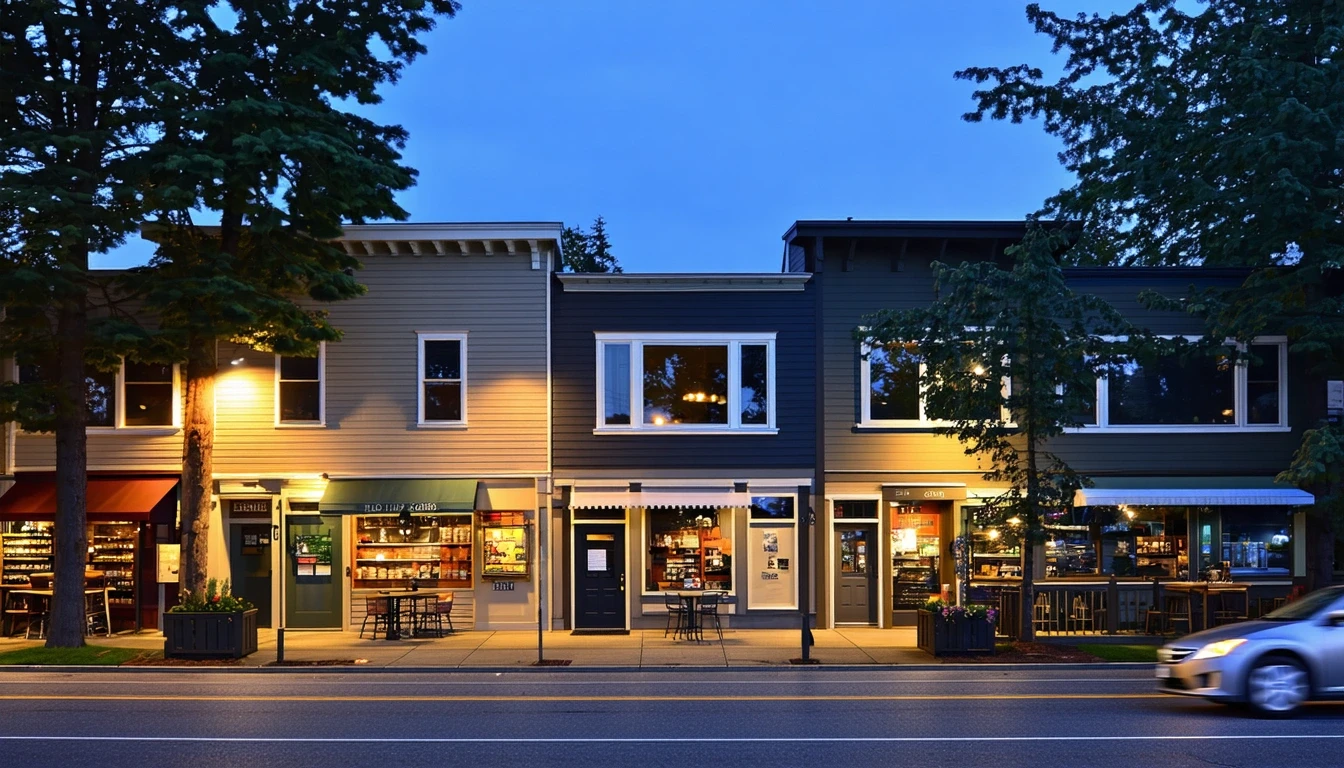
The Housing Market in Kirkland Today
Kirkland’s housing market is shaped by three forces: Seattle metro employment, Lake Washington geography, and a residential fabric that blends low-rise neighborhoods with mixed-height corridors. The median home value stands at $937,700, a figure that reflects both location premium and the region’s broader cost structure. The Bureau of Economic Analysis regional price parity index for the area is 151, meaning the overall cost of living here runs roughly 51% above the national average.
What newcomers often misunderstand is that Kirkland’s housing pressure isn’t uniform. Walkable pockets near parks and commercial corridors command premiums, while areas farther from Lake Washington or transit routes offer relative relief. The city’s experiential texture—high pedestrian-to-road ratios, notable cycling infrastructure, and integrated green space—makes certain neighborhoods feel less car-dependent, which in turn affects how households value proximity and convenience.
Median household income in Kirkland is $135,608 per year, and the unemployment rate sits at 4.1%, both indicators of a stable, high-earning employment base. But income alone doesn’t determine housing fit. The gap between what people earn and what housing costs is narrower here than in many suburbs, and that compression changes the rent-versus-buy calculus in ways that aren’t immediately obvious.
Renting in Kirkland
Median gross rent in Kirkland is $2,250 per month. That figure includes rent and tenant-paid utilities, but it doesn’t capture the full variation across unit types, locations, or lease terms. Renters near downtown Kirkland or along corridors with high food and grocery density tend to pay more, but they also gain walkable access to errands and transit, reducing car dependency and associated costs.
Rental availability in Kirkland reflects the city’s mixed building character. Apartments cluster along commercial corridors, while single-family rentals are less common and typically reserved for families willing to pay premiums for yard space and school access. Renters who prioritize proximity to parks—and Kirkland’s park density exceeds high thresholds—often find that location drives rent more than square footage.
One dynamic renters should anticipate: lease renewals in the Seattle metro tend to reflect regional demand, not just individual building performance. When tech hiring accelerates or remote work policies shift, rental pressure can intensify quickly. Renters gain flexibility and predictability within a lease term, but they sacrifice control over long-term cost trajectory.
Owning a Home in Kirkland
At a median home value of $937,700, ownership in Kirkland requires substantial upfront capital and exposes buyers to ongoing costs that renters avoid: property taxes, maintenance, insurance, and in some cases, homeowner association fees. While property tax rates aren’t specified in available data, Washington State’s tax structure relies heavily on property taxes to fund schools and local services, meaning ownership costs extend well beyond the purchase price.
Ownership in Kirkland also means navigating the city’s governance and land-use patterns. Mixed residential and commercial land use is present throughout the city, and neighborhoods with higher pedestrian infrastructure and park access often see stronger demand, which can drive both purchase prices and tax assessments over time. Buyers should expect that homes near integrated green space or walkable corridors will carry premiums, but those premiums reflect structural amenities that don’t depreciate.
Maintenance exposure in Kirkland is shaped by the region’s climate—mild, wet winters and dry summers—which favors certain building materials and stresses others. Roof and siding maintenance, drainage systems, and landscaping all require periodic attention, and costs vary depending on building age and lot characteristics. Ownership transfers these responsibilities entirely to the homeowner, along with the discretion to defer or prioritize them.
Apartment vs House in Kirkland — Cost Behavior Comparison
| Expense Category | Apartment | House |
|---|---|---|
| Base Housing Cost | Median gross rent $2,250/month includes utilities | Ownership at median $937,700 plus property tax, insurance, maintenance |
| Heating & Cooling | Lower exposure; shared walls reduce heating demand in mild winters | Higher exposure; standalone structure and larger square footage increase heating and cooling loads |
| Water & Drainage | Typically included in rent or billed as flat fee | Owner-paid; drainage maintenance critical in wet-season months |
| Exterior Maintenance | Landlord responsibility; no cost or control | Owner responsibility; roof, siding, and landscaping require periodic investment |
| Access to Parks & Walkability | Corridor-clustered apartments near transit and errands reduce car dependency | Houses in walkable pockets near parks offer integrated green space but may require car for regional commutes |
| Long-Term Cost Predictability | Rent renewals reflect metro-wide demand; limited control | Property tax and maintenance vary with market and building age; more control, more volatility |
Why these categories? Kirkland’s mild, wet climate makes drainage and exterior maintenance more relevant than in arid or extreme-cold regions. The city’s walkable pockets and integrated parks create location-based cost tradeoffs that differ meaningfully between apartments (often corridor-clustered) and houses (often in low-rise neighborhoods). Categories like HOA fees or specific tax rates are omitted because data isn’t available, and generic comparisons (e.g., “houses have more space”) don’t reflect Kirkland’s particular housing texture.
Utilities & Upkeep Differences
Utility exposure in Kirkland is shaped by the Pacific Northwest’s temperate climate. Winters are cool and wet, but rarely freezing; summers are dry and warm, but extended heat waves are uncommon. Heating dominates winter utility bills, while cooling costs remain modest compared to regions with long, hot summers. Electricity rates stand at 13.81¢/kWh, and natural gas is priced at $17.38 per thousand cubic feet (MCF).
For apartment renters, heating costs are often lower due to shared walls and smaller square footage. Many apartment buildings in Kirkland include water and sewer in rent, shifting those costs to the landlord and simplifying monthly budgeting. Renters in older buildings may face higher heating costs if insulation is poor, but they don’t control upgrade decisions.
Homeowners face broader exposure. Standalone houses lose heat more readily than apartments, and larger square footage increases both heating and cooling loads. Natural gas heating is common in the region, and winter bills rise with usage, though the mild climate keeps seasonal swings moderate. Homeowners also pay directly for water, sewer, drainage, and garbage services, and they’re responsible for maintaining systems that renters never see: furnaces, water heaters, sump pumps, and irrigation.
Maintenance in Kirkland is less about weathering extremes and more about managing moisture. Wet winters stress roofs, gutters, and siding, and deferred maintenance can lead to rot or mold. Landscaping costs vary with lot size and vegetation type, but the region’s year-round growing season means yard work doesn’t pause in winter. Homeowners in neighborhoods with mature trees gain shade and aesthetic value but also face leaf management and occasional tree maintenance.
Rent vs Buy: Long-Term Exposure in Kirkland
The decision between renting and buying in Kirkland isn’t primarily about monthly cost—it’s about control, volatility, and how housing expenses behave as circumstances change.
Renters gain short-term predictability. A lease fixes costs for a year, and tenants can walk away when the term ends. But that predictability is shallow: lease renewals reflect regional demand, and renters have no control over whether landlords raise rent, sell the property, or shift rental policies. In a metro area with strong employment growth and limited housing supply, rental costs can move quickly, and renters absorb that volatility directly.
Owners gain long-term control but accept broader exposure. A fixed-rate mortgage locks in the largest component of housing cost, but property taxes, insurance, and maintenance all vary over time. Taxes can rise with assessments, insurance costs shift with regional risk and claim history, and maintenance demands grow as buildings age. Owners also face transaction costs when they move—selling a home involves agent fees, closing costs, and timing risk—which makes ownership less flexible than renting in the short term.
In Kirkland specifically, ownership exposure is shaped by the city’s position in the Seattle metro. Demand for housing near high-paying jobs and quality-of-life amenities—walkable neighborhoods, integrated parks, strong schools—tends to be persistent, which supports long-term value but also means property taxes and insurance reflect that demand. Owners who stay in place for many years benefit from cost stability in the mortgage component, but they must manage the variability in everything else.
Renters who prioritize flexibility, dislike maintenance risk, or expect to relocate within a few years often find that renting aligns better with their circumstances, even if monthly rent exceeds what a mortgage payment might be. Owners who value control, plan to stay long-term, and have the financial capacity to handle maintenance and tax variability tend to find that ownership reduces exposure to rental market swings, even though it introduces other risks.
FAQs About Housing Costs in Kirkland
What drives the high home prices in Kirkland, WA?
Kirkland’s median home value of $937,700 reflects proximity to Seattle’s employment centers, limited housing supply near Lake Washington, and demand for neighborhoods with walkable infrastructure and integrated parks. The regional price parity index of 151 shows that the broader Seattle metro runs well above national cost averages, and Kirkland’s location premium compounds that baseline.
Is renting or buying more common in Kirkland?
Ownership is more common in Kirkland’s low-rise neighborhoods, while renting dominates along commercial corridors where apartments cluster. Renters tend to prioritize proximity to transit and errands, while owners often seek single-family homes near parks and schools. The choice depends less on what’s “normal” and more on how long someone plans to stay and how much control they want over housing costs.
How do utility costs differ between apartments and houses in Kirkland?
Apartments typically have lower heating costs due to shared walls and smaller square footage, and many include water and sewer in rent. Houses face higher heating and cooling exposure, and owners pay separately for water, drainage, and garbage. Kirkland’s mild, wet climate makes heating the dominant utility expense in winter, but cooling costs remain modest compared to hotter regions.
What should renters in Kirkland expect when their lease renews?
Lease renewals in Kirkland reflect Seattle metro demand, not just building-level conditions. When employment growth is strong or housing supply is tight, landlords often raise rents at renewal. Renters gain predictability within a lease term but have limited control over long-term cost trajectory, especially in high-demand corridors near transit and parks.
Does Kirkland’s walkability reduce the need for a car?
Kirkland has walkable pockets with high pedestrian-to-road ratios, notable bike infrastructure, and corridor-clustered grocery and food options. Households living in these areas can reduce car dependency for daily errands. However, the city has bus service only—no rail transit—so regional commutes to Seattle or Bellevue still favor car ownership for many residents. Walkability reduces transportation costs but doesn’t eliminate them.
Making Housing Choices in Kirkland
Housing costs in Kirkland are high, but they’re not uniform. The city’s proximity to Seattle, its integrated parks, and its walkable corridors create pockets of value that don’t show up in median figures. Renters who choose apartments near transit and errands can reduce car dependency and gain flexibility, but they sacrifice long-term cost control. Owners who buy in neighborhoods with strong pedestrian infrastructure and green space pay premiums upfront but gain stability in the largest component of housing cost and control over maintenance and improvements.
The decision between renting and buying isn’t about which is cheaper—it’s about which cost structure fits your timeline, risk tolerance, and priorities. Kirkland rewards households that understand how location, building type, and infrastructure shape not just what you pay, but how predictably and controllably those costs behave over time.
How this article was built: In addition to public economic data, this article incorporates location-based experiential signals derived from anonymized geographic patterns—such as access density, walkability, and land-use mix—to reflect how day-to-day living actually feels in Kirkland, WA.