
How much is enough to feel at ease? In Kirkland, the answer depends less on hitting a specific number and more on understanding how income pressure actually shows up—and whether your household can absorb it without constant recalculation.
This isn’t about building a budget or hitting a calculator-generated target. It’s about recognizing where comfort begins, where tradeoffs end, and whether your expectations match the financial reality of living here.
What “Living Comfortably” Means in Kirkland
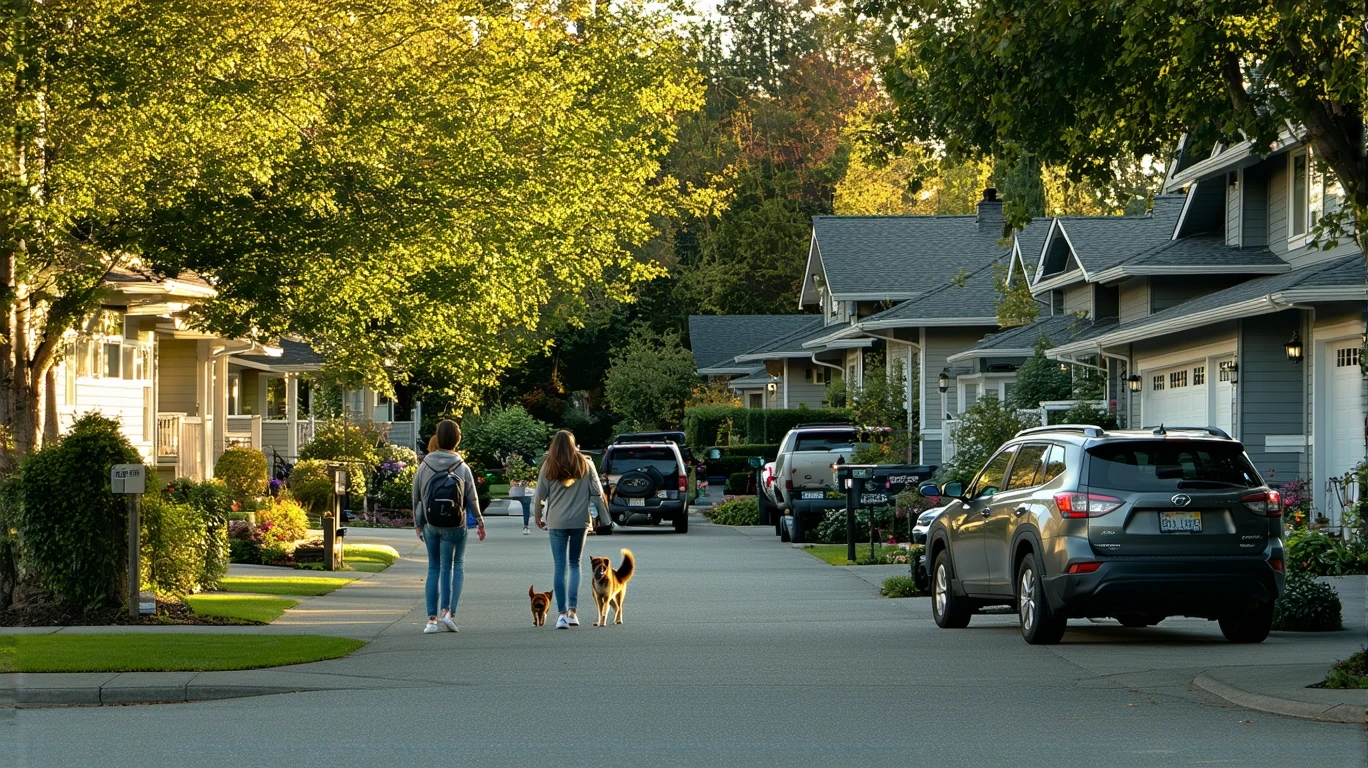
Comfort in Kirkland doesn’t mean luxury. It means housing that fits your household without forcing you into a location you didn’t choose. It means utility bills that swing seasonally but don’t dictate behavior. It means transportation that offers choice rather than locking you into one mode. It means discretionary spending exists, even if modest.
For many households, comfort also means access to the things that make daily life easier: parks within walking distance, errands that don’t require elaborate planning, and healthcare that’s available locally for routine needs. Kirkland delivers some of these more reliably than others.
The city’s park density is high, and water features are woven throughout the area, giving outdoor-oriented households strong access to green space. Walkable infrastructure exists in pockets, and bike-to-road ratios exceed typical suburban levels, meaning some residents can reduce car dependence if their home and work align with those corridors. But transit is bus-only, which limits flexibility compared to rail-served areas, and food and grocery options cluster along corridors rather than distributing evenly, so planning matters more than proximity.
What comfort doesn’t mean: eliminating tradeoffs entirely, living without seasonal cost swings, or assuming your income will feel the same here as it did elsewhere.
Where Income Pressure Shows Up First
In Kirkland, financial pressure begins with housing. The median home value sits at $937,700, and the median gross rent is $2,250 per month. For renters, that figure represents the starting point before utilities, parking, or any lease-specific fees. For buyers, the home value translates into mortgage payments, property taxes, insurance, and maintenance—all of which scale with the price of entry.
Housing cost doesn’t just claim a large share of income—it often determines where you live within the city, which in turn shapes your transportation needs, errands accessibility, and time flexibility. If you’re priced into a less walkable pocket or farther from a bus line, car dependency increases, and so does fuel exposure.
Kirkland’s regional price parity index is 151, meaning the overall cost of goods and services runs about 51% above the national baseline. That premium touches groceries, services, dining, and household goods, creating a steady background cost that doesn’t announce itself in any single transaction but compounds across the month.
Utilities add seasonal volatility. Electricity costs 13.81¢ per kWh, and natural gas runs $17.38 per MCF. Kirkland’s climate brings mild, damp winters and warm, dry summers, so heating demand is moderate but cooling needs can stretch into extended periods. Households that rely heavily on air conditioning during the warmer months or heat during the cooler stretches will see noticeable swings, especially in homes with older insulation or less efficient systems.
Transportation pressure varies by household structure and work location. Gas prices sit at $5.37 per gallon, which means commuters face meaningful fuel costs if driving is the primary option. For households where both adults commute by car, or where work locations don’t align with bus routes, transportation can rival or exceed utility costs. Conversely, households that can use the city’s walkable pockets, bike infrastructure, or bus service see lower direct costs but may trade money for time or convenience.
For families, pressure intensifies around space, schools, and healthcare. School density falls in the medium band, and playground density is low, so access to family-oriented amenities varies by neighborhood. There’s no hospital in Kirkland, meaning specialized or urgent care requires travel, which adds both time and logistical complexity when health needs arise.
How the Same Income Feels Different by Household
Households at similar income levels often experience very different pressure depending on size, structure, and daily logistics.
Single adults face housing cost as the dominant pressure point. A $2,250 median rent doesn’t shrink for one person, so it claims a larger share of solo income than it would for a couple or family splitting the load. On the upside, single adults often have more location flexibility—choosing a walkable pocket near a bus line can reduce or eliminate car costs, and errands for one are easier to batch along a corridor. Utility costs are lower in smaller spaces, and discretionary spending is less constrained by dependents. Comfort arrives when housing no longer forces compromise on location or quality, and when monthly costs stabilize enough that saving becomes routine rather than aspirational.
Couples without children benefit from dual income, which eases housing pressure and creates more room for transportation choices, dining, and discretionary spending. But if both partners commute by car, fuel costs double, and if work locations don’t align with transit or walkable areas, car dependency becomes the default. Couples also face higher utility costs than single adults, especially in larger homes or if both are home during peak hours. Comfort for couples often hinges on whether both incomes are stable and whether transportation and housing align with lifestyle expectations rather than forcing daily compromise.
Families experience the most complex pressure. Housing costs rise with the need for more space, and location decisions must account for school access, park proximity, and healthcare availability. Kirkland’s moderate school density and low playground density mean families may need to prioritize neighborhoods carefully or accept longer travel times for activities. The absence of a local hospital adds logistical friction when health needs go beyond routine care. Families also face higher utility costs due to larger homes and more occupants, and transportation often defaults to car dependency even in areas with bike or walk infrastructure, simply due to the complexity of moving multiple people with different schedules. Comfort for families emerges when housing, schools, and healthcare align without constant tradeoffs, and when income covers both predictable and unexpected costs without monthly stress.
How this article was built: In addition to public economic data, this article incorporates location-based experiential signals derived from anonymized geographic patterns—such as access density, walkability, and land-use mix—to reflect how day-to-day living actually feels in Kirkland, WA.
The Comfort Threshold (Qualitative)
Comfort doesn’t arrive at a single income figure. It arrives when a household can absorb Kirkland’s cost structure without constant recalibration—when housing fits without forcing location compromise, when utility swings don’t alter behavior, when transportation offers choice rather than locking you into one mode, and when discretionary spending becomes possible without monthly negotiation.
For some households, that threshold is lower because they align well with the city’s structure: they live in a walkable pocket, use the bus, prioritize parks and outdoor access, and don’t need a car for daily errands. For others, the threshold is higher because their needs—space, specialized healthcare, school access, or commute flexibility—require more income to meet without stress.
The transition point isn’t about eliminating tradeoffs entirely. It’s about moving from a state where every cost decision carries weight to one where most months proceed without financial friction, and where unexpected expenses don’t cascade into larger problems.
Why Online Cost Calculators Get Kirkland Wrong
Most cost-of-living calculators produce a single number: the income required to “live comfortably” in Kirkland. That number is almost always misleading, not because the math is wrong, but because it flattens the city into a generic average and ignores the structural forces that actually shape financial pressure.
Calculators assume uniform housing costs, but Kirkland’s housing market varies significantly by neighborhood, and where you live determines your transportation needs, errands accessibility, and time flexibility. They assume average utility usage, but actual costs depend on home efficiency, household size, and behavior during seasonal extremes. They assume a standard commute, but Kirkland’s transit is bus-only, and whether you can use it depends entirely on where you live and work.
Most importantly, calculators ignore the interaction between costs. A household that saves on transportation by living in a walkable area may pay more for housing in that location. A family that prioritizes school access may face longer commutes or higher fuel costs. A couple that reduces utility costs by choosing a smaller, efficient home may sacrifice space or storage.
The result is a number that feels authoritative but doesn’t reflect how real households experience the city. People feel surprised after moving not because the total was wrong, but because the cost structure didn’t match their assumptions about how daily life would actually work.
How to Judge Whether Your Income Fits Kirkland
Instead of asking “Is my income enough?” ask whether your income and lifestyle expectations align with how Kirkland actually functions.
How sensitive are you to housing tradeoffs? If you need a specific type of home in a specific neighborhood, and that need is non-negotiable, your income requirement will be higher. If you’re willing to prioritize location over size, or accept a longer commute for lower rent, you’ll have more flexibility.
Can you absorb seasonal utility swings? If a $50 or $100 monthly increase during peak cooling or heating months would alter your behavior or create stress, you’re operating closer to the edge than you might prefer. Comfort means those swings are noticeable but not disruptive.
Is time or money your limiting factor? Kirkland offers ways to reduce transportation costs—bus service, bike infrastructure, walkable pockets—but they often require more time or planning than driving. If your schedule is tight or your work location doesn’t align with transit, you’ll default to a car, and fuel costs at $5.37 per gallon will add up quickly.
How much flexibility do you expect month to month? If you expect discretionary income for dining, entertainment, travel, or savings without monthly recalculation, your income needs to cover Kirkland’s high regional price parity and still leave room. If you’re comfortable with tighter margins and active cost management, you can operate on less.
Do your household needs align with what Kirkland offers? If you prioritize outdoor access, park density, and a moderate climate, Kirkland delivers well. If you need specialized healthcare locally, rail transit, or high playground density for young children, you’ll face more friction and potentially higher costs to compensate.
FAQs About Living Comfortably in Kirkland
Does the median household income in Kirkland mean most people are comfortable?
The median household income is $135,608 per year. That figure represents the midpoint—half of households earn more, half earn less. It doesn’t tell you whether those households feel comfortable, because comfort depends on household size, housing costs, debt, transportation needs, and lifestyle expectations. A couple earning that amount will experience it very differently than a family of four, and a household with no car payment or student loans will feel more flexibility than one carrying both.
Can you live comfortably in Kirkland without a car?
It depends on where you live and work. Kirkland has walkable pockets, notable bike infrastructure, and bus service, so some residents can reduce or eliminate car dependency if their home and work align with those options. But transit is bus-only, which limits schedule flexibility, and errands cluster along corridors rather than distributing evenly, so planning becomes more important. If your work location, household structure, or daily logistics don’t align with those options, a car becomes necessary, and fuel costs at $5.37 per gallon will add up quickly.
How much does housing really affect comfort in Kirkland?
Housing is the primary cost driver and the primary determinant of financial pressure. At a median gross rent of $2,250 per month or a median home value of $937,700, housing claims a large share of income for most households. But housing cost also shapes everything else: where you live determines your transportation needs, errands accessibility, school options, and time flexibility. A household that stretches to afford housing in a preferred location may have less room for other costs. A household that accepts a less convenient location may save on rent but spend more on transportation or time.
What income level makes Kirkland feel easy instead of tight?
There’s no single number, because “easy” depends on household size, lifestyle expectations, and how well your needs align with the city’s structure. For a single adult in a walkable area with modest discretionary expectations, ease might arrive at a lower income than for a family needing space, school access, and two cars. Ease generally means housing doesn’t force compromise, utility swings don’t alter behavior, transportation offers choice, and discretionary spending happens without monthly recalculation. For most households, that requires income well above the costs themselves, because comfort includes margin, not just coverage.
Are there parts of Kirkland where income goes further?
Yes, but the tradeoffs are structural, not just financial. Areas with lower housing costs may be less walkable, farther from bus lines, or require longer commutes, which shifts spending from rent to transportation and time. Areas with better errands accessibility or transit access often command higher rents. The goal isn’t to find the cheapest option—it’s to find the option where your income, needs, and daily logistics align without constant friction.
Kirkland can work well for some households—but only if expectations match reality. Comfort here isn’t about hitting a number. It’s about understanding where pressure shows up, how your household absorbs it, and whether the tradeoffs feel sustainable or exhausting.