
74 out of 100 residents say they’re happy in Yukon—but what does happiness actually feel like here, and who tends to find it? Yukon sits just west of Oklahoma City, offering a suburban rhythm built around affordability, space, and family-oriented infrastructure. For households seeking quiet neighborhoods, manageable housing costs, and a short commute to the metro, Yukon delivers a predictable, comfortable fit. But for those craving walkable errands, dense dining options, or local healthcare access, the tradeoffs become more pronounced. Understanding Yukon’s vibe means understanding what it optimizes for—and what it asks you to handle on your own terms.
What Yukon Feels Like Day to Day
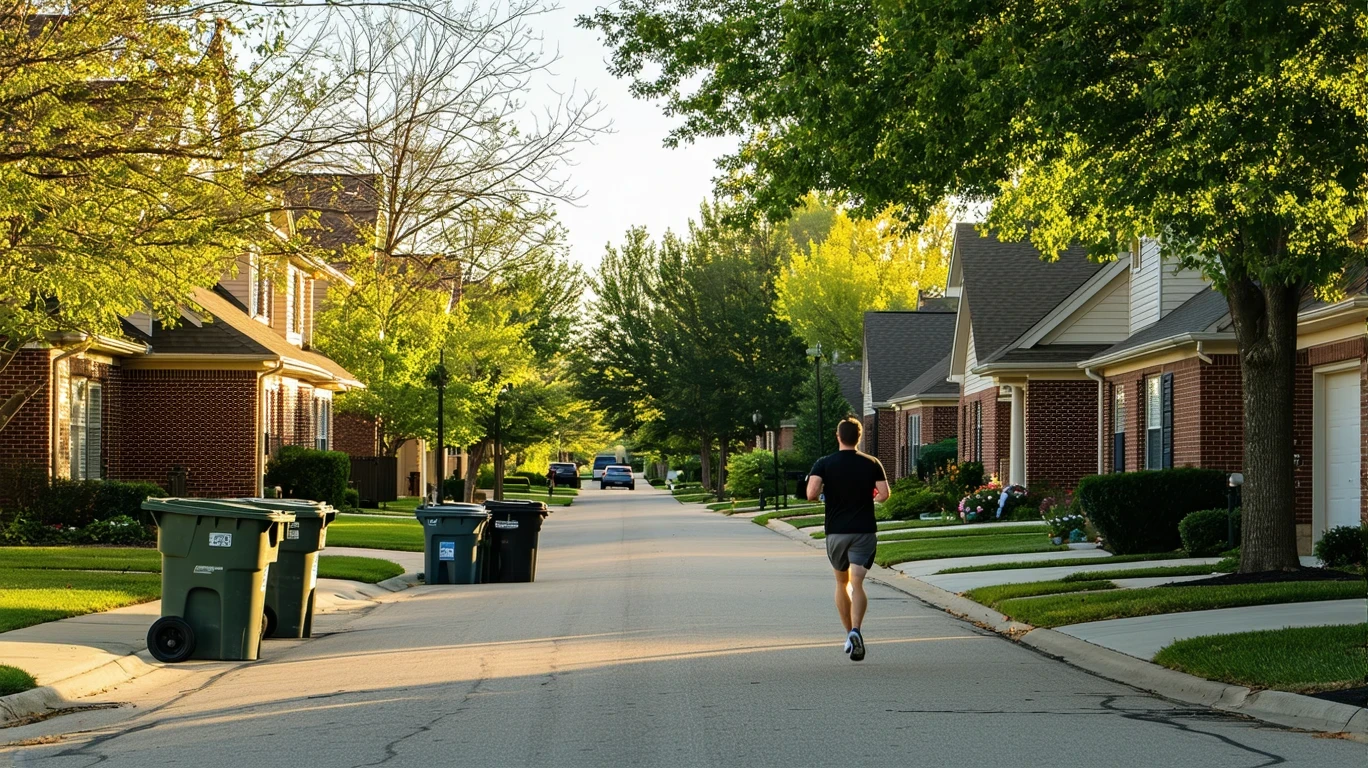
Yukon’s emotional tone centers on suburban ease and family rhythm. The city’s low-rise residential character and present green space create a backdrop where kids play in yards, neighbors know each other by name, and weekends revolve around home projects and local parks. The pedestrian-to-road ratio sits in a medium band, meaning some sidewalks exist, but the infrastructure clearly favors driving. Food and grocery density falls below typical urban thresholds, so running errands means planning trips and relying on your car. For families who wanted exactly this—a place where housing stretches further, schools are accessible, and the pace feels manageable—Yukon tends to deliver satisfaction. For those who imagined grabbing coffee on foot or catching a bus to dinner, the friction shows up quickly.
The city’s proximity to Oklahoma City shapes much of its identity. Yukon functions as a bedroom community for metro commuters, offering lower housing pressure than inner OKC neighborhoods while keeping the city’s job centers within reach. That tradeoff—space and affordability in exchange for car dependency and limited local texture—defines much of the emotional experience here. People who feel “at home” in Yukon tend to be those who already own reliable vehicles, work flexible or remote schedules, or simply prefer quiet over convenience. Those who feel restless are often the ones who underestimated how much of daily life would require driving, or who expected more spontaneous access to dining, healthcare, or entertainment.
Social Media Buzz in Yukon
On platforms like Facebook and Reddit, Yukon’s online conversation tends to cluster around a few recurring themes: pride in affordability, frustration with limited dining variety, and protective affection for the city’s slower pace. Residents frequently describe Yukon as “a great place to raise kids” or “exactly what we needed after living in the city,” emphasizing the relief of finding space and stability without stretching financially. At the same time, there’s a persistent undercurrent of mild annoyance about having to drive to Oklahoma City for anything beyond basic groceries or chain restaurants.
“We love the neighborhood feel, but I do wish we had more local spots to grab dinner without getting back in the car.”
“It’s quiet, safe, and affordable. If you’re looking for nightlife or walkable streets, this isn’t it—but that’s exactly why we moved here.”
“Yukon works if you’re okay with planning. Everything takes a little longer because you’re driving everywhere, but the tradeoff is worth it for the house we got.”
The tone is rarely angry, but it’s also rarely ecstatic. Most commentary reflects a pragmatic satisfaction: Yukon delivers what it promises, as long as you knew what you were signing up for. Newcomers who expected more urban texture or spontaneous walkability tend to express disappointment, while long-time residents and intentional suburbanites defend the city’s identity with quiet pride.
Local News Tone
Local coverage of Yukon tends to frame the city through themes of steady growth, family-oriented development, and community identity preservation. The tone is rarely dramatic—stories focus on new schools, park improvements, and small business openings rather than controversy or upheaval. When tension does surface, it’s usually around the pace of change: how much growth is too much, whether new development will alter the city’s character, and how to balance convenience with the quiet that drew people here in the first place.
Simulated topic buckets that reflect recurring coverage themes include:
- “New Retail Arrives as Residents Weigh Convenience vs Quiet”
- “Community Debates What Growth Should Look Like”
- “Schools and Parks Expand to Meet Family Demand”
- “Local Businesses Anchor Neighborhood Identity”
- “Residents Balance Metro Access with Suburban Comfort”
The framing tends to be optimistic but cautious, reflecting a community that values stability and wants to grow without losing what made it appealing. There’s little appetite for rapid transformation, and coverage reflects that conservatism—celebrating incremental improvements while acknowledging the tradeoffs that come with staying small and car-oriented.
Review-Based Public Perception
On platforms like Google Reviews, Yelp, and Nextdoor-style forums, Yukon’s public perception splits predictably along expectation lines. Families, retirees, and suburban-minded households tend to leave warm, appreciative reviews, praising the city’s safety, school access, and affordability. Those who moved expecting urban amenities or walkable errands tend to express mild disappointment, noting the lack of variety in dining, limited healthcare options, and the necessity of driving for nearly every task.
Positive commentary often highlights:
- Affordable housing relative to Oklahoma City
- Family-friendly parks and school infrastructure
- Quiet, low-traffic neighborhoods
- Short commute to metro job centers
Common critiques include:
- Sparse food and grocery density requiring car trips
- Limited local healthcare (no hospital within city limits)
- Few walkable errands or spontaneous dining options
- Chain-heavy retail landscape with limited local character
Neighborhood variation is subtle but present. Newer planned areas tend to feature more uniform housing stock and slightly better sidewalk infrastructure, while older pockets offer more architectural variety but less pedestrian connectivity. Neither area escapes the fundamental reality: Yukon is built for cars, and daily life reflects that structure. People who thrive here are those who either prefer that rhythm or have the resources and flexibility to navigate it without friction.
Comparison to Nearby Cities
| Dimension | Yukon, OK | Edmond, OK | Mustang, OK |
|---|---|---|---|
| Overall Vibe | Affordable suburban comfort, car-dependent | Polished suburban feel, higher cost | Quieter, more rural-suburban blend |
| Walkability | Limited, mixed pedestrian infrastructure | Slightly better in pockets, still car-oriented | Minimal, very car-dependent |
| Dining & Retail | Sparse, chain-heavy | More variety, local options present | Very limited, requires driving to nearby cities |
| Family Appeal | Strong school access, parks present | Highly rated schools, more amenities | Family-friendly, quieter, fewer services |
| Affordability | Moderate, accessible for many households | Higher housing costs, more competitive | Similar to Yukon, slightly lower pressure |
Choosing between Yukon, Edmond, and Mustang often comes down to how much you’re willing to pay for polish versus how much you value quiet and affordability. Edmond offers more walkable pockets, better dining variety, and highly regarded schools, but housing costs run higher and competition for homes is stiffer. Mustang leans even further into rural-suburban character, offering similar affordability to Yukon but with fewer services and even less walkability. Yukon sits in the middle: more affordable than Edmond, more developed than Mustang, but still fundamentally car-dependent. If you prioritize access to Oklahoma City, want family infrastructure without premium pricing, and don’t mind driving for errands, Yukon tends to feel like the right balance. If you need walkable texture or local healthcare, Edmond may justify the cost. If you want maximum quiet and minimal traffic, Mustang may fit better.
What Locals Are Saying
“We moved here from a smaller apartment in OKC and finally have a yard, a garage, and room to breathe. The commute is easy, and we’re not stretching financially. It’s exactly what we needed.”
— Young family, recent transplant
“Yukon is fine if you’re okay with driving everywhere. I didn’t realize how much I’d miss being able to walk to a coffee shop or grab takeout without planning a trip.”
— Remote worker, moved from a walkable city
“The schools are solid, the parks are clean, and our neighbors actually talk to each other. It’s not flashy, but it works for us.”
— Parent of school-age children
“I wish there were more local restaurants and a hospital closer by. For routine stuff it’s fine, but anything beyond that means driving to OKC.”
— Retiree, long-time resident
“It’s quiet, affordable, and low-drama. If you’re looking for excitement or variety, you’ll be disappointed. If you want stability and space, you’ll be happy.”
— Long-time homeowner
“We love the affordability and the neighborhood feel, but we do find ourselves heading into the city more often than we expected for dining and entertainment.”
— Couple in their 30s
“Yukon is a great place to raise kids, but it’s not a place where you can just wander around and discover things. You have to be intentional about where you’re going.”
— Parent and commuter
Does Yukon Feel Like a Good Fit?
Yukon’s emotional profile is one of pragmatic suburban satisfaction. It works well for families seeking affordable housing, present school infrastructure, and a short commute to Oklahoma City. It works well for households who already own reliable vehicles and prefer quiet, low-rise neighborhoods over dense, walkable streets. It works well for people who value predictability, space, and financial breathing room over spontaneous access to dining, healthcare, or entertainment.
It tends to frustrate those who underestimated the degree of car dependency, those who expected more local texture or walkable errands, and those who need frequent healthcare access without driving to neighboring cities. The city’s sparse food and grocery density, limited transit options, and absence of a local hospital create friction for households that don’t fit the car-oriented suburban mold.
Understanding whether Yukon feels like a good fit means understanding what you’re willing to trade. If you’re willing to drive for most errands in exchange for lower housing costs and family-friendly infrastructure, Yukon delivers. If you need walkability, dense amenities, or local healthcare, the city will feel limiting. The vibe here isn’t about excitement or variety—it’s about comfort, stability, and managing day-to-day costs without financial strain. For the right household, that’s exactly enough. For others, it’s a reminder that not every place optimizes for every lifestyle need.
How this article was built: In addition to public economic data, this article incorporates location-based experiential signals derived from anonymized geographic patterns—such as access density, walkability, and land-use mix—to reflect how day-to-day living actually feels in Yukon, OK.
The perspectives shown reflect commonly expressed local sentiment and recurring themes in public discussion, rather than individual accounts.