
Getting around Yukon means understanding how a low-rise suburban city in the Oklahoma City metro actually functions day-to-day. For most residents, transportation options in Yukon center on personal vehicles, not public transit. The city’s layout—spread out, with errands and employment distributed across corridors rather than concentrated in walkable zones—creates a structure where driving isn’t just convenient, it’s necessary for nearly every household task. Newcomers often underestimate how much of daily life requires a car here, even for short trips.
Yukon sits west of Oklahoma City proper, close enough to metro employment centers to attract commuters, but far enough that it functions as its own suburban node. The infrastructure reflects that role: wide roads, ample parking, and residential neighborhoods designed around car access. Pedestrian paths exist in moderate density, but the sparse distribution of grocery stores, restaurants, and services means walking to errands isn’t practical for most residents. This isn’t a city where you can easily live without a vehicle, even if you work from home or have flexible hours.
Public Transit Availability in Yukon
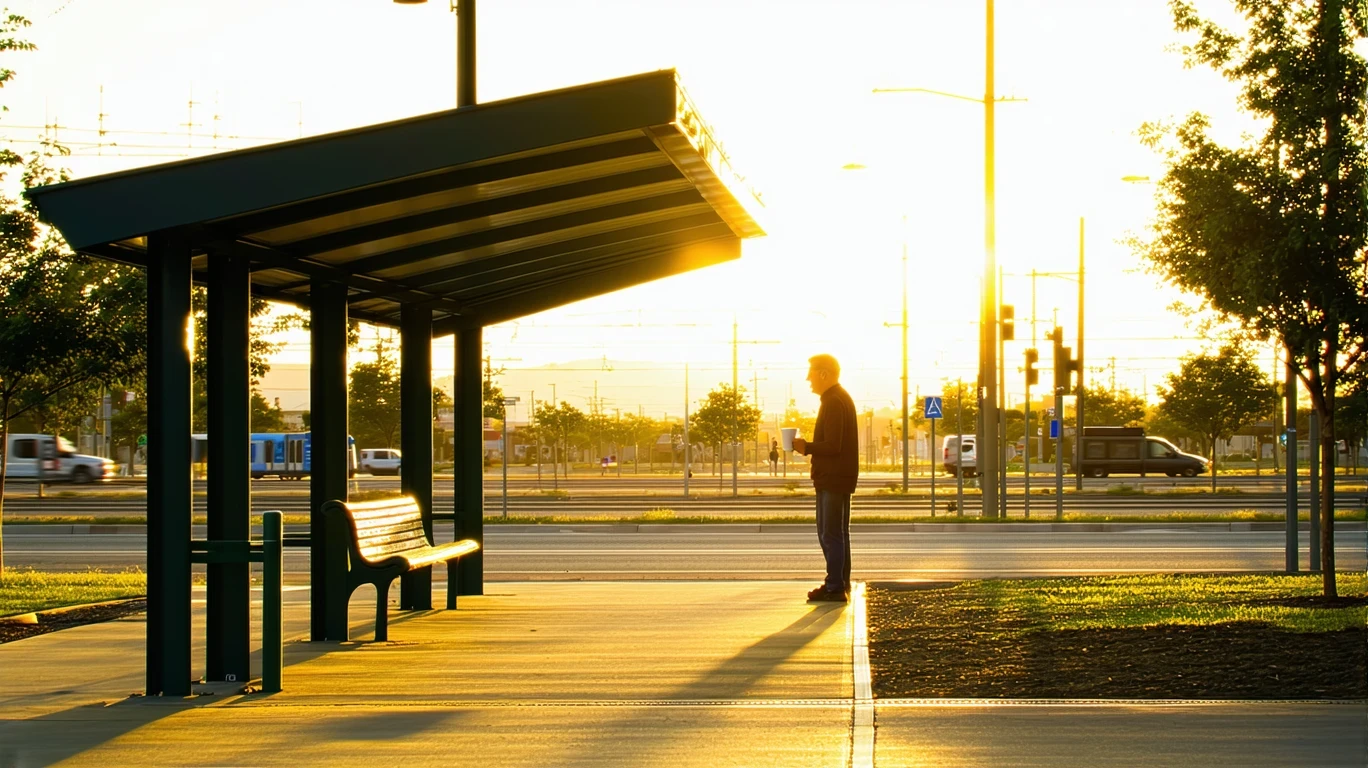
Public transit plays a minimal role in Yukon’s transportation landscape. The city does not operate its own transit system, and regional options that serve the Oklahoma City metro area offer limited coverage here. Residents may encounter services such as Embark (Oklahoma City’s transit authority), but routes that extend into Yukon are sparse and typically serve only specific corridors or connection points rather than providing comprehensive neighborhood access.
Where transit does exist, it tends to work best for commuters traveling into Oklahoma City for work or appointments, not for daily errands within Yukon itself. Coverage gaps are significant: late-hour service is rare, weekend schedules are reduced, and many residential areas sit outside any practical transit zone. For someone trying to get groceries, pick up kids, or run multiple errands in a day, transit isn’t a viable tool. The infrastructure simply wasn’t built to support that kind of use.
This limited transit presence isn’t an oversight—it reflects Yukon’s development pattern. The city grew outward during decades when car ownership was assumed, and land use followed that assumption. Mixed-use corridors where transit thrives are largely absent here. Instead, commercial strips, standalone grocery stores, and employment centers are scattered in ways that require point-to-point driving, not linear transit routes.
Driving & Car Dependence Reality
Driving is the default mode of transportation in Yukon, and the city’s infrastructure reinforces that reality at every turn. Parking is abundant and usually free, roads are designed for vehicle flow, and nearly every destination—whether it’s a school, grocery store, or medical office—assumes you’ll arrive by car. This isn’t a matter of preference; it’s a structural fact. The distance between home and errands, the lack of sidewalk connectivity to commercial areas, and the absence of dense, walkable centers all point in one direction: you need a vehicle.
For families, this setup offers flexibility. Parents can chain together school drop-offs, grocery runs, and after-school activities without the time penalties that come with waiting for buses or walking long distances in summer heat. Homeowners benefit from direct garage access, and commuters heading into Oklahoma City can choose their route and timing without being locked into a fixed schedule. The tradeoff is exposure: every household must budget for at least one car, often two, plus fuel, insurance, and maintenance. There’s no fallback if a vehicle breaks down.
Sprawl defines the commute experience here. Employment centers in the metro area are reachable, but they’re spread across multiple nodes—downtown Oklahoma City, suburban office parks, and industrial zones along I-40. That distribution means commute distances vary widely depending on where you work, and there’s no single “easy” direction. Traffic congestion is generally lighter than in denser metros, but the distances themselves add up, especially for households with two working adults commuting in different directions.
Commuting Patterns & Daily Mobility
Commuting in Yukon typically involves single-destination trips—home to work, work to home—rather than complex multi-stop routes. The city’s role as a bedroom community means many residents leave Yukon each morning for jobs elsewhere in the metro, then return in the evening. This pattern works well for households with predictable schedules, but it creates friction for anyone juggling multiple responsibilities during the day. Running an errand mid-commute or picking up a child between work shifts requires backtracking, because services and schools are distributed across the city rather than clustered along commute corridors.
For remote workers or retirees, the commute burden disappears, but the need for a car doesn’t. Errands still require driving, and the sparse accessibility of food and services means even a quick trip to the store involves getting in the car. Proximity to home doesn’t translate into walkability here—the infrastructure just isn’t designed for it. Households that benefit most from Yukon’s layout are those with flexible vehicle access and the ability to absorb driving as a routine part of every day.
Who Transit Works For — and Who It Doesn’t
Transit in Yukon works for a very narrow slice of residents: those commuting into Oklahoma City along specific corridors, with schedules that align with limited service windows, and without the need to run errands or make stops along the way. For a single professional working downtown with a 9-to-5 schedule, regional bus service might be viable a few days a week. For everyone else—families, shift workers, parents managing school pickups, or anyone needing to grocery shop on the way home—transit falls short.
Renters in Yukon face the same car dependence as homeowners. Unlike denser urban cores where renters might trade higher rent for transit access, Yukon offers no such tradeoff. The city’s low-rise character and sparse errand infrastructure mean that even residents living near commercial corridors still need a vehicle to function. Peripheral neighborhoods are even more isolated, with longer distances to the nearest grocery store or service and no realistic transit alternative.
Young professionals or students without cars encounter significant friction here. Ride-sharing can fill gaps for occasional trips, but relying on it daily becomes expensive quickly, and the distances involved mean costs add up faster than in compact cities. Yukon isn’t hostile to car-free living, but it doesn’t support it either. The infrastructure simply assumes you’ll drive.
Transportation Tradeoffs in Yukon
Choosing between transit and driving in Yukon isn’t really a choice for most households—it’s a foregone conclusion. Driving offers control, predictability, and the flexibility to handle the multi-stop, time-sensitive logistics that define family life and dual-income households. Transit offers limited coverage, restricted hours, and routes that don’t align with where most people actually need to go. The tradeoff isn’t about cost savings or convenience; it’s about whether you can function without a car at all, and in Yukon, the answer is almost always no.
For households that do own vehicles, the question shifts to how many cars are necessary. Single-car households face scheduling constraints, especially when work commutes and school or errand runs overlap. Two-car households gain flexibility but double their exposure to fuel prices, insurance, and maintenance. The city’s layout doesn’t penalize drivers with parking costs or congestion tolls, but it also doesn’t offer any escape from the baseline cost of car ownership.
The broader tradeoff is time versus distance. Yukon’s suburban character means housing costs are often lower than in denser parts of the metro, but that savings comes with the expectation that you’ll absorb commute time and driving costs as part of the deal. For households prioritizing space, yard access, and lower rent or mortgage payments, that tradeoff makes sense. For those hoping to minimize transportation exposure or live car-light, Yukon isn’t structured to support that goal.
FAQs About Transportation in Yukon (2026)
Is public transit usable for daily commuting in Yukon?
Public transit in Yukon is limited to regional bus service that connects to Oklahoma City along specific corridors. It may work for commuters with fixed schedules traveling into the city, but it’s not practical for daily errands, multi-stop trips, or households needing flexibility. Most residents rely on personal vehicles.
Do most people in Yukon rely on a car?
Yes. Yukon’s layout, errand distribution, and lack of comprehensive transit make car ownership essential for nearly all households. Even residents living near commercial areas typically need a vehicle to access groceries, schools, and services efficiently.
Which areas of Yukon are easiest to live in without a car?
No area of Yukon is designed to support car-free living. Even neighborhoods with moderate pedestrian infrastructure face sparse food and service density, meaning daily errands require driving. Proximity to regional bus routes may help commuters, but it doesn’t eliminate the need for a vehicle.
How does commuting in Yukon compare to nearby cities?
Yukon functions as a suburban commuter node within the Oklahoma City metro. Commutes into the city are common, and distances vary depending on employment location. Traffic is generally lighter than in denser metros, but the spread-out layout means driving is unavoidable regardless of where you live or work in the area.
Can you get by with one car in Yukon if you have a family?
Single-car households are possible but face scheduling friction, especially when work commutes and school or errand runs overlap. Two-car households gain flexibility but absorb higher costs. The city’s infrastructure assumes vehicle access for every adult, and coordinating around one car requires careful planning.
How Transportation Fits Into the Cost of Living in Yukon
Transportation in Yukon isn’t just a line item—it’s a structural cost that shapes where you live, how you manage time, and what kind of flexibility your household can maintain. Because the city’s layout assumes car ownership, every household must factor in vehicle costs, fuel exposure, and the time spent driving into their broader financial picture. Unlike cities where transit offers a lower-cost alternative, Yukon provides no escape hatch. You either own a car or face significant daily friction.
For households evaluating what a budget has to handle in Yukon, transportation sits alongside housing and utilities as a non-negotiable expense. The city’s lower housing costs relative to denser metros can offset some of that burden, but only if you’re prepared to absorb the driving that comes with suburban life. Families benefit from the flexibility and space that car-dependent infrastructure enables, but they also carry the full weight of vehicle ownership without the option to downsize or substitute transit.
Understanding how people actually move through Yukon—by car, on their own schedules, across distances that don’t support walking or transit—clarifies what living here demands. It’s not a city where you can test out car-free living or rely on occasional ride-sharing. It’s a place built for drivers, and that reality shapes every other decision, from where you rent to how you structure your day.
How this article was built: In addition to public economic data, this article incorporates location-based experiential signals derived from anonymized geographic patterns—such as access density, walkability, and land-use mix—to reflect how day-to-day living actually feels in Yukon, OK.