
Housing in Yukon, OK sits at the intersection of accessible entry prices and long-term cost exposure shaped by Oklahoma’s climate extremes and car-dependent suburban infrastructure. With a median home value of $173,200 and median rent at $1,036 per month, the nominal figures look manageable—but the real cost story emerges from what happens after you move in: how far you drive for groceries, how hard your AC works in summer, and whether your housing choice locks you into daily logistics friction or gives you breathing room.
This article breaks down how housing costs actually behave in Yukon—not just what homes cost to acquire, but how ownership, renting, location, and building type interact with local conditions to shape your monthly exposure and long-term financial predictability.
The Housing Market in Yukon Today
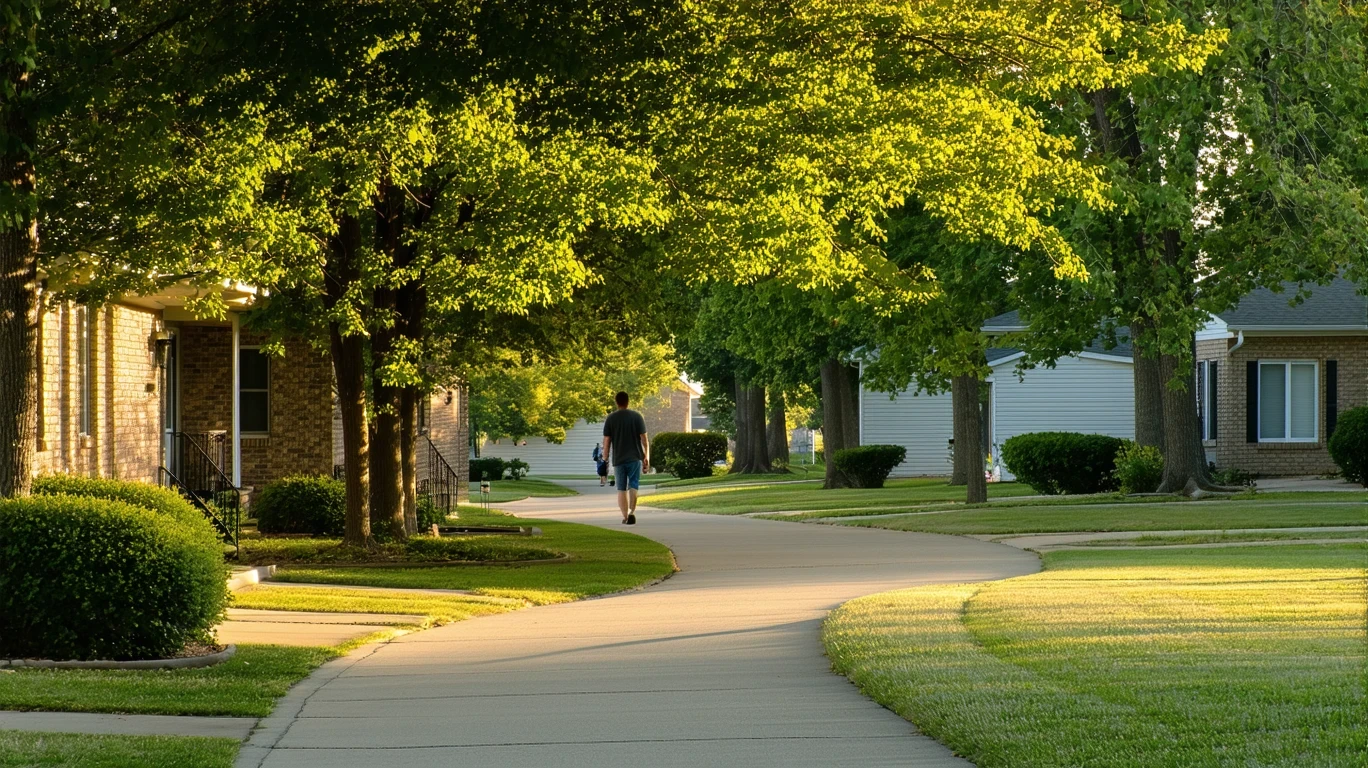
Yukon functions as a suburban extension of the Oklahoma City metro, drawing households who want single-family ownership at lower price points than closer-in neighborhoods. The $173,200 median home value reflects a market built around low-rise residential development with minimal mixed-use density. This isn’t a walkable town center with apartments above storefronts—it’s a car-oriented suburb where housing affordability comes bundled with transportation dependency.
What newcomers often misread is the tradeoff embedded in that accessible price. Yukon’s low-density form means your housing location determines how much time and fuel you spend on routine errands. Food establishment density falls below typical thresholds, and grocery access sits in a moderate band—workable, but requiring intentional planning. If you’re used to neighborhoods where you can walk to three different grocery stores, Yukon will feel different. You’re not paying Manhattan rent, but you’re also not getting Manhattan convenience.
The regional price parity index of 74 signals that goods and services in Yukon cost less than the national baseline, which helps stretch household budgets. But that advantage gets partially offset by the reality that most daily needs require a car trip. The 2.8% unemployment rate reflects a stable local economy, which supports housing demand without creating the kind of rapid price escalation seen in high-growth metros.
Renting in Yukon
At $1,036 per month, median gross rent in Yukon sits well below what renters face in denser urban cores, but it buys you a different kind of housing experience. Most rental stock consists of single-family homes or small apartment complexes, not high-rise buildings with on-site amenities. You’re renting space in a low-density suburb, which means your lease price doesn’t include walkable access to cafes, clinics, or transit stops.
Renters in Yukon need to account for the cost of getting around. Because errands accessibility is sparse and the built environment favors driving, your effective housing cost includes fuel, vehicle maintenance, and the time cost of covering distance for routine needs. If your work commute, grocery runs, and errands each require separate car trips, that pattern compounds quickly.
Rental availability tends to track the broader suburban housing stock—mostly detached homes and low-rise complexes. This limits options for households seeking compact, amenity-rich buildings or neighborhoods where you can manage daily life without a car. If you’re renting in Yukon, you’re renting into a car-dependent system, and your monthly budget needs to reflect that reality.
Owning a Home in Yukon
Ownership in Yukon offers predictability on the acquisition side—home values remain accessible relative to the $75,865 median household income—but exposes you to ongoing costs shaped by Oklahoma’s climate and suburban infrastructure. Cooling costs dominate summer months due to extended heat exposure, and while heating needs are lighter, occasional winter cold snaps can spike natural gas usage. Electricity runs 12.62¢ per kWh, and natural gas costs $10.78 per MCF, both of which matter more in a climate where your HVAC system runs hard for months at a time.
Property taxes, insurance, and maintenance costs vary by neighborhood and home age, but the low-rise, car-dependent form means you’re also maintaining the infrastructure that connects you to daily needs—your vehicle becomes part of your housing cost structure. Owners in Yukon aren’t just paying for the house; they’re paying for the mobility system that makes suburban life functional.
Homeownership here also means accepting responsibility for outdoor maintenance, which in Oklahoma includes managing vegetation through hot, dry summers and dealing with storm season exposure. The presence of parks and water features signals some green space access, but your own yard becomes another cost center requiring water, equipment, and time.
Apartment vs House in Yukon — Cost Behavior Comparison
| Expense Category | Apartment | House |
|---|---|---|
| Cooling Exposure | Shared walls reduce heat gain; smaller square footage limits AC load during extended summer heat | Full perimeter exposure and larger square footage mean higher cooling costs through triple-digit summer months |
| Heating Exposure | Shared walls and compact layout reduce heating needs during occasional winter cold | Detached structure and larger volume increase natural gas usage when temperatures drop |
| Outdoor Maintenance | Typically covered by landlord or HOA; no direct cost or time burden | Full responsibility for lawn care, irrigation, and storm cleanup in Oklahoma climate |
| Errands Logistics | Same car dependency as houses; apartment location doesn’t reduce driving burden in Yukon’s low-density form | Same car dependency; single-family neighborhoods offer no walkability advantage over apartment complexes here |
Why these categories? The table focuses on distinctions driven by Yukon’s climate and built form. Cooling and heating exposure differ meaningfully because of Oklahoma’s temperature extremes and the structural differences between shared-wall apartments and detached homes. Outdoor maintenance matters because of the local climate’s demands on landscaping. Errands logistics is included to highlight that neither housing type solves Yukon’s car dependency—location and density, not building type, determine access friction here. Categories like base rent or property taxes were excluded because they vary more by individual property than by apartment-vs-house structure in this market.
Utilities & Upkeep Differences
Utility exposure in Yukon is dominated by cooling season intensity. Extended summer heat drives electricity usage well beyond what households in milder climates experience, and the difference between an apartment with shared walls and a detached house with full sun exposure can be substantial. Houses face higher cooling loads simply because of their geometry and perimeter exposure, while apartments benefit from thermal buffering.
Natural gas costs remain secondary except during winter cold snaps, when heating a larger detached home becomes noticeably more expensive than a compact apartment. The seasonal swing matters—your utility bills won’t be flat year-round, and ownership of a house means absorbing the high end of that variability.
Maintenance exposure also tracks housing type and age. Older single-family homes in Yukon require ongoing attention to roofing, HVAC systems, and exterior upkeep, all of which face stress from Oklahoma’s storm seasons and temperature swings. Apartments shift most of that burden to landlords or property management, leaving renters with more predictable monthly costs even if they sacrifice control and equity.
Rent vs Buy: Long-Term Exposure in Yukon
Renting in Yukon gives you flexibility and shields you from property-level maintenance costs, but it leaves you exposed to lease renewals and offers no equity accumulation. Rent can shift with market conditions, and while Yukon’s suburban rental market doesn’t see the volatility of urban cores, you’re still at the mercy of landlord decisions and regional demand trends.
Ownership locks in your acquisition cost and builds equity, but it transfers all operational risk to you. Utility bills fluctuate with seasonal intensity, maintenance costs arrive unpredictably, and property-level expenses—insurance, taxes, repairs—become your responsibility. Over time, ownership in Yukon rewards households who can absorb short-term cost spikes and value long-term stability over month-to-month flexibility.
The key distinction isn’t whether one is cheaper—it’s which risk profile fits your household. Renters trade equity for predictability and mobility. Owners trade flexibility for control and long-term cost stability. In a car-dependent suburb with climate-driven utility swings, both paths require planning, but the exposure types differ fundamentally.
FAQs About Housing Costs in Yukon
Is $173,200 affordable for most households in Yukon, OK?
Relative to the $75,865 median household income, a $173,200 home value falls within reach for many buyers using conventional financing, but affordability depends on your ability to handle ongoing ownership costs—utilities, maintenance, transportation—not just the mortgage payment.
How much do utilities typically cost for a house in Yukon, OK?
Utility costs vary by home size, insulation, and HVAC efficiency, but expect cooling to dominate expenses during extended summer heat. Electricity at 12.62¢ per kWh and natural gas at $10.78 per MCF provide the rate structure, but your actual bills depend on how hard your systems work against Oklahoma’s climate.
Does renting or owning make more sense in Yukon, OK?
Renting makes sense if you value flexibility and want to avoid maintenance and utility volatility. Owning makes sense if you plan to stay long enough to build equity and can absorb the seasonal and structural costs of maintaining a home in a car-dependent, climate-exposed suburb.
How does Yukon’s car dependency affect housing costs?
Because daily errands require driving and food/grocery density is sparse, your housing cost effectively includes transportation. Fuel, vehicle maintenance, and time spent covering distance become part of your monthly budget, regardless of whether you rent or own.
What should I know about maintenance costs for homes in Yukon, OK?
Oklahoma’s storm exposure, temperature swings, and extended cooling season put stress on roofing, HVAC, and exterior systems. Older homes require more frequent attention, and deferred maintenance compounds quickly in this climate. Budget for ongoing upkeep, not just emergency repairs.
Making Housing Choices in Yukon
Housing in Yukon rewards households who understand the tradeoff between accessible entry costs and the ongoing exposure that comes with suburban, car-dependent living. The $173,200 median home value and $1,036 median rent look manageable on paper, but the real cost picture includes driving for daily needs, cooling a home through Oklahoma summers, and maintaining property in a climate that tests infrastructure.
Families with stable income and a preference for low-density, single-family neighborhoods will find Yukon’s housing market aligned with their priorities—especially if they value school access and don’t mind planning errands around car trips. Renters and owners alike need to account for the fact that Yukon’s built form doesn’t support walkable convenience, and what a budget has to handle in Yukon extends beyond the lease or mortgage payment.
If you’re deciding between renting and owning, focus on risk tolerance and time horizon, not just monthly payment comparisons. Ownership here means taking on climate-driven utility swings and maintenance responsibility in exchange for equity and long-term stability. Renting means preserving flexibility but accepting that you’re still paying for car dependency and have no control over lease renewals.
Yukon’s housing market isn’t expensive by metro standards, but it’s not simple either. The cost structure reflects the realities of suburban Oklahoma living—accessible prices, climate exposure, and a built environment that assumes you’ll drive. Make your housing choice with that full picture in view, and you’ll avoid the surprises that catch households who only looked at the rent or purchase price.
How this article was built: In addition to public economic data, this article incorporates location-based experiential signals derived from anonymized geographic patterns—such as access density, walkability, and land-use mix—to reflect how day-to-day living actually feels in Yukon, OK.