
Is Wilmore the kind of place you grow roots—or just pass through? That question shapes how people experience this small Kentucky city, where the pull of close-knit community meets the friction of limited commercial options. For those who value quiet streets, accessible green space, and a college-adjacent identity, Wilmore tends to feel like home. For those who need variety in dining, shopping, or healthcare without a drive, the tradeoffs show up quickly.
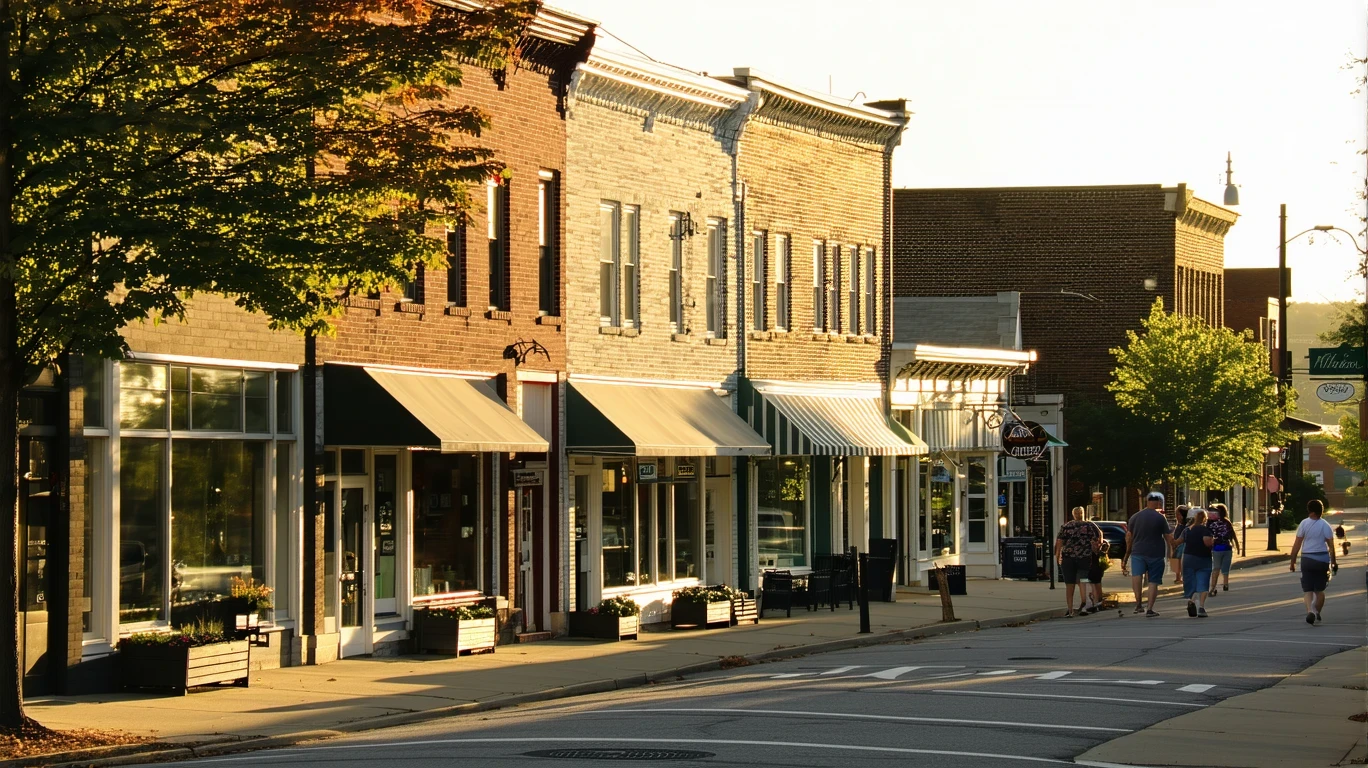
The Emotional Landscape of Wilmore
Wilmore’s vibe centers on a tension between intimacy and limitation. The city offers a walkable core with pockets of pedestrian-friendly infrastructure, integrated park access, and a mix of residential and commercial land use that supports some daily errands on foot. Yet food and grocery density remains sparse, and the absence of a local hospital means residents plan around healthcare access rather than expect it nearby.
People who thrive here tend to value predictability, safety, and the kind of neighborly familiarity that comes with a smaller population. Those who feel restless often cite the need to leave town for most non-grocery shopping, limited restaurant variety, and a social scene shaped heavily by the college presence. The city doesn’t try to be everything—it succeeds by being specific, and that specificity either fits or it doesn’t.
What People Talk About Online
In local Facebook groups and regional subreddit threads, Wilmore residents often discuss the balance between small-town charm and practical inconvenience. Conversations tend to circle around a few recurring themes: pride in community events, frustration with the lack of dining options, appreciation for the walkable downtown pockets, and ongoing debate about how much the college shapes the town’s identity.
One common sentiment: “It’s the kind of place where you know your neighbors, but you also know you’re driving to Lexington for anything beyond basics.” Another: “The parks are genuinely great, and you can walk more than you’d expect for a town this size—but don’t expect variety in where you eat.” A third perspective: “If you want quiet and green space without total isolation, Wilmore delivers. Just know what you’re trading.”
The tone is rarely bitter, but it’s also rarely unconditional. People who feel aligned with Wilmore’s rhythm tend to frame the tradeoffs as intentional; those who feel friction describe feeling stuck between rural isolation and suburban convenience.
How Local Coverage Frames the City
Local news and community outlets tend to frame Wilmore through the lens of identity preservation and incremental change. Coverage often highlights the town’s historical roots, its connection to the college, and the tension between maintaining small-town character and accommodating growth pressures from the broader Lexington metro area.
Typical headline themes include:
- “Community Gathers to Celebrate Tradition and Connection”
- “Residents Weigh Growth and Preservation as Region Expands”
- “Local Parks and Green Spaces Draw Families Seeking Outdoor Access”
- “Small-Town Identity Meets College Influence in Ongoing Dialogue”
- “Healthcare Access Remains a Practical Concern for Residents”
The framing is rarely alarmist, but it consistently returns to questions of fit: who belongs here, what the town should become, and whether growth will enhance or dilute what makes Wilmore distinct.
Review-Based Public Perception
On platforms like Google Reviews, Yelp, and neighborhood forums, Wilmore earns praise for safety, green space, and a genuine sense of community. Families appreciate the presence of playgrounds and schools, even if school density is lower than in larger suburbs. Retirees and remote workers highlight the ability to walk in certain areas without needing a car for every errand, thanks to the pedestrian-to-road ratio that supports walkable pockets.
Complaints tend to focus on what drives expenses when convenience isn’t local: the need to drive for most shopping, limited restaurant variety, and the absence of urgent care or hospital facilities within city limits. One recurring theme: “It’s perfect if you already know what you’re getting, but it’s not the place to expect spontaneity or variety.”
Newer planned areas and older residential pockets offer slightly different textures—some streets feel more walkable, others more car-dependent—but the overall pattern holds. Wilmore rewards those who plan ahead and don’t mind driving for non-essentials. It frustrates those who expect walkable access to diverse amenities or who need frequent medical care without a commute.
How Wilmore Compares to Nearby Cities
| Dimension | Wilmore | Nicholasville | Versailles |
|---|---|---|---|
| Overall Vibe | Quiet, college-adjacent, tight-knit | Suburban growth hub, more commercial | Historic charm, equestrian identity |
| Walkability | Pockets of strong pedestrian infrastructure | Car-oriented with some mixed-use corridors | Walkable downtown core, car-dependent outskirts |
| Dining & Shopping | Sparse, requires driving for variety | Broader retail and chain dining options | Limited but locally focused, some variety |
| Green Space | Integrated, high park density | Present but less integrated | Present, tied to historic character |
| Healthcare Access | Limited, no local hospital | More local clinics and urgent care | Limited, similar to Wilmore |
Nicholasville offers more commercial texture and a broader range of services, making it a better fit for households that prioritize convenience and don’t mind a more suburban, car-oriented environment. Versailles leans into historic identity and equestrian culture, appealing to those who want small-town charm with a distinct sense of place. Wilmore sits between them: quieter than Nicholasville, less identity-driven than Versailles, and more walkable in pockets than either—but also more limited in day-to-day commercial access.
If you value green space and walkability over dining variety, Wilmore may feel more aligned than Nicholasville. If you need more healthcare options or shopping without a drive, Nicholasville reduces friction. If you want historic character and don’t mind driving for most errands, Versailles offers a different kind of intimacy.
What Locals Are Saying
“We moved here for the schools and the safety, and it’s delivered on both. But we drive to Lexington at least twice a week for anything beyond groceries. It’s the tradeoff we knew we were making.” — Family with young children
“I love that I can walk to the park and actually see neighbors outside. It feels like a real community, not just a subdivision. The downside is that ‘going out to dinner’ means planning ahead or settling for the same few spots.” — Young professional
“Wilmore is perfect for retirement if you don’t need a hospital nearby and you’re okay with a quieter social scene. The green space is genuinely excellent, and the walkability in certain areas is better than I expected.” — Retiree
“The college presence is a double-edged sword. It brings some energy and events, but it also shapes the town’s identity in ways that don’t always align with what long-time residents want.” — Long-time local
“As a remote worker, I appreciate the quiet and the lower cost compared to Lexington. But I do feel the lack of variety—coffee shops, coworking spaces, even just different lunch options. It’s manageable, but it’s real.” — Remote worker
“If you’re looking for spontaneity or a vibrant nightlife, this isn’t it. But if you want a place where your kids can bike to a friend’s house and you know the people at the farmers market, Wilmore works.” — Parent of school-age children
“Healthcare is the biggest gap for us. We’ve had to drive to Lexington for urgent care more than once, and it’s not ideal when you’re not feeling well or dealing with a sick kid.” — Family with health considerations
How Place Structure Shapes Daily Life in Wilmore
The way Wilmore is built affects how people actually move through their day. Because pedestrian infrastructure is denser than you’d expect in certain pockets—especially relative to the road network—residents in those areas can walk to parks, some errands, or neighborhood destinations without defaulting to the car every time. The city’s high park density and presence of water features mean that outdoor access feels integrated rather than occasional, which matters for families, retirees, and anyone who values green space as part of daily rhythm rather than a weekend destination.
At the same time, food and grocery density remains below thresholds that would support truly car-free living. That combination—walkable pockets for recreation and some errands, but sparse commercial access for dining and shopping—creates a specific pattern: people walk more than they might in a purely car-dependent suburb, but they still drive regularly for anything beyond basics. The result is a lifestyle that rewards planning and accepts limitation, rather than one that optimizes for spontaneity or variety.
Does Wilmore Feel Like a Good Fit?
Wilmore tends to work for people who value community intimacy, green space, and the ability to walk in certain areas without sacrificing affordability or safety. It fits households that don’t mind driving for most shopping and dining, and who see the college presence as a feature rather than a distraction. It rewards those who plan their errands, appreciate neighborly familiarity, and don’t need a hospital within city limits.
It tends to frustrate people who expect walkable access to diverse amenities, who need frequent healthcare without a commute, or who want a vibrant social scene beyond what a small college town offers. The city doesn’t pretend to be something it’s not—it’s specific, and that specificity either aligns with your priorities or it doesn’t.
If you’re still weighing whether Wilmore fits your needs, consider exploring what a budget has to handle in Wilmore or reviewing the real tradeoffs between renting and buying. Understanding how place structure, cost rhythm, and lifestyle expectations intersect will help you decide whether this is the kind of place you grow roots—or just pass through.
How this article was built: In addition to public economic data, this article incorporates location-based experiential signals derived from anonymized geographic patterns—such as access density, walkability, and land-use mix—to reflect how day-to-day living actually feels in Wilmore, KY.
The perspectives shown reflect commonly expressed local sentiment and recurring themes in public discussion, rather than individual accounts.