
How much is enough to feel at ease? In Wilmore, that question doesn’t come with a clean answer—because comfort isn’t a number you hit. It’s a condition you either recognize or you don’t, shaped by what you expect from daily life and how much margin you keep between income and obligation.
Wilmore sits in Jessamine County, just outside Lexington, with a median household income around $59,848 per year (roughly $4,987 gross per month). Housing costs anchor most household budgets here: the median home value is $200,500, and median rent runs $857 per month. Electricity costs 14.27¢ per kilowatt-hour, natural gas goes for $12.72 per thousand cubic feet, and gas prices hover near $3.90 per gallon. The unemployment rate stands at 4.4 percent.
These figures set the baseline—but they don’t explain who thrives here and who quietly struggles.
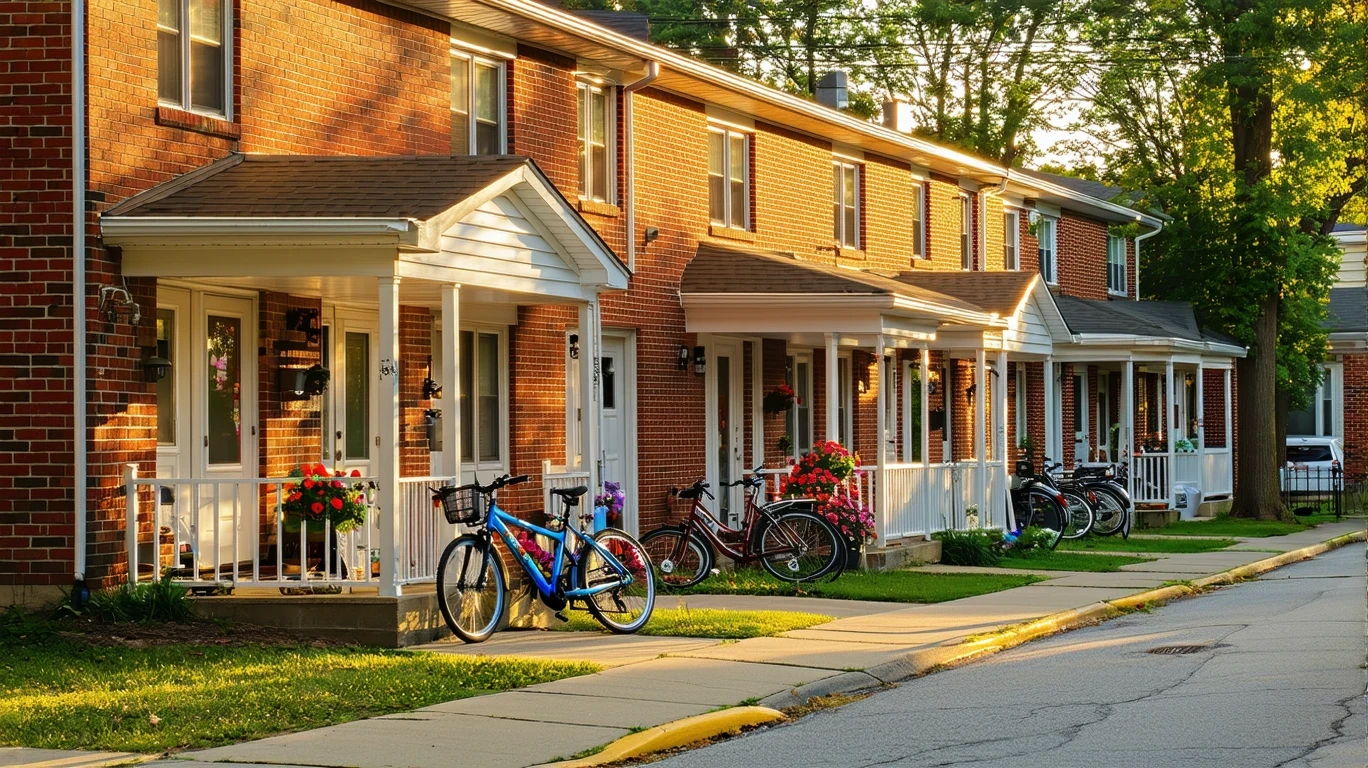
What “Living Comfortably” Means in Wilmore
Comfort in Wilmore doesn’t mean luxury. It means having enough room between what you earn and what you owe that a surprise expense—car trouble, a high utility month, an urgent repair—doesn’t force you to rearrange your life.
It means choosing where to live based on what fits your household, not just what’s available. It means running the air conditioner during Kentucky’s humid summers without calculating the bill first. It means deciding whether to eat out or cook at home because you want to, not because you have to.
Comfort is also contextual. A single adult working remotely may feel entirely at ease in a one-bedroom rental, walking to the few errands available nearby and absorbing moderate utility swings without stress. A family with two kids and two commutes may feel stretched at a similar income level, even if the rent is identical, because transportation costs, healthcare access, and the need for more space collide quickly.
The structure of Wilmore itself plays a role. The town has walkable pockets—pedestrian infrastructure is strong relative to the road network—but daily errands remain sparse. Grocery density sits in a medium band, food establishment density falls below the low threshold. That means even small trips often require a car, and the cost of that car (payment, insurance, fuel, maintenance) becomes non-negotiable rather than optional.
Park access is exceptional here: density exceeds the high threshold, and water features add to the outdoor environment. For households that value green space and a slower pace, that’s a meaningful quality-of-life asset. For those who prioritize walkable retail or transit options, it’s less of a tradeoff and more of a constraint.
Where Income Pressure Shows Up First
Housing is the first place most households feel the squeeze. At $857 per month, median rent may look manageable on paper—but only if your gross monthly income comfortably exceeds $2,850 (the point where rent consumes 30 percent). For someone earning $3,500 per month, that rent leaves $2,643 before utilities, transportation, food, and everything else. That’s workable for a single person. It’s tight for a couple if one income is irregular. It’s precarious for a family.
Buying a home introduces a different set of pressures. A $200,500 home, depending on down payment and interest rate, could mean a monthly mortgage in the range of $1,200 to $1,500 before property taxes, insurance, and maintenance. Ownership shifts the risk profile: rent is predictable month to month, but a mortgage locks you into a long-term obligation that doesn’t flex when income dips.
Utilities add seasonal volatility. Kentucky summers are hot and humid; cooling costs dominate from June through September. Winters bring heating demand, though it’s less extreme than in northern states. A household using around 1,000 kilowatt-hours per month in summer might see an electric bill near $143 before fees, and natural gas heating in winter could add another $13 or more per month depending on usage. These aren’t catastrophic costs, but they’re not trivial either—and they don’t stay flat year-round.
Transportation is the other major pressure point. Wilmore’s sparse errands accessibility and limited transit options mean most households depend on at least one car. For someone commuting to Lexington or another nearby job center, fuel alone could run $40 to $50 per month, assuming a typical round-trip distance and current gas prices. Add insurance, maintenance, and the occasional repair, and transportation easily becomes the second-largest line item after housing.
For families, healthcare access becomes a friction point. No hospital or clinics were detected locally, meaning routine care and urgent needs often require a drive. Playground density sits in a medium band, and school density falls below the low threshold, so families with young children may find themselves managing more logistics than expected—coordinating care, school access, and extracurriculars across a wider area.
How the Same Income Feels Different by Household
Households at similar income levels often experience very different pressure depending on size, structure, and expectations.
A single adult earning $4,000 gross per month can live comfortably in Wilmore if they keep housing costs reasonable and don’t carry heavy debt. Rent at $857 leaves enough margin for utilities, food, transportation, and discretionary spending. The town’s walkable pockets and integrated green space make it easy to enjoy low-cost recreation. Errands require planning, but for someone working remotely or with flexible hours, that’s manageable.
A couple earning a combined $6,000 per month has more flexibility, but also more complexity. If both work outside Wilmore, transportation costs double. If one stays home or works part-time, the household may feel pressure similar to a single earner at $4,000. Housing costs don’t scale with income, so the couple has more room to save or spend—but only if they avoid lifestyle inflation and keep fixed costs in check.
A family with two kids earning $7,000 gross per month faces a fundamentally different calculus. What a budget has to handle expands quickly: larger housing (either higher rent or a mortgage), higher utility usage, childcare or after-school logistics, healthcare trips, and the constant hum of small expenses that don’t fit neatly into categories. Even at an income well above the median, this household may feel stretched—not because they’re overspending, but because the fixed costs of family life in a car-dependent town with limited local services add up faster than intuition suggests.
The Comfort Threshold (Qualitative)
There’s a point where income stops dictating every decision—where you can absorb a high utility month without rearranging other spending, where you can choose a home based on fit rather than affordability alone, where saving becomes a regular behavior rather than an aspiration.
In Wilmore, that threshold isn’t a single number. It’s the point where:
- Your housing cost (rent or mortgage) feels like a choice you made, not the only option you had.
- You can cover a $500 surprise expense without borrowing or skipping other bills.
- Seasonal utility swings don’t change your behavior—you heat and cool your home based on comfort, not cost.
- Transportation is a tool, not a budget crisis waiting to happen.
- You have enough margin that a single income disruption (a missed paycheck, a temporary reduction in hours) doesn’t immediately threaten your ability to stay housed.
For a single adult, that threshold might arrive around $4,500 to $5,000 gross per month. For a couple, closer to $6,500 to $7,500. For a family, it’s often $8,000 or higher—and even then, comfort depends on how much of that income is stable, how much debt the household carries, and how well expectations align with what Wilmore actually offers.
Why Online Cost Calculators Get Wilmore Wrong
Most cost-of-living calculators treat Wilmore as a data point: plug in the rent, add typical expenses, multiply by household size, and out comes a number. But those tools miss the texture of how life actually works here.
They assume you’ll spend a national average on groceries, but they don’t account for the fact that sparse errands accessibility means fewer nearby options and more driving to stock up. They estimate transportation costs based on commute length, but they don’t capture the reality that almost every household errand—not just work—requires a car.
They treat utilities as a flat monthly line item, but they don’t explain that Kentucky summers drive cooling costs up for months at a time, or that a household in a less-efficient rental may see bills swing by $50 or more between seasons.
They don’t distinguish between a single person who can walk to a park and feel content, and a family that needs access to schools, clinics, and activities that aren’t available within town limits. They don’t account for the fact that Wilmore’s low-rise, mixed-use character and integrated green space create a specific quality of life that some people value intensely—and others find limiting.
Most importantly, they don’t explain that comfort isn’t about hitting a total. It’s about whether your income gives you enough control that the big pressure points in your life feel manageable rather than constant.
How to Judge Whether Your Income Fits Wilmore
Instead of asking “Is my income enough?”, ask these questions:
How sensitive are you to housing tradeoffs? If you need a specific type of home (more bedrooms, a yard, updated appliances), can you afford it here without stretching beyond 30 percent of your gross income? If not, will you be comfortable with what’s available in your range?
Can you absorb seasonal utility swings? If your electric bill jumps by $40 in July or your gas bill rises in January, does that force you to cut back elsewhere, or is it just an expected fluctuation?
Is time or money your limiting factor? Wilmore’s sparse errands accessibility and car dependency mean you’ll spend time driving for groceries, healthcare, and many services. If your schedule is tight or your income doesn’t easily cover a second vehicle, that constraint becomes a daily friction point.
How much flexibility do you expect month to month? If your income varies (freelance work, hourly wages, commission-based pay), do you have enough margin that a low-income month doesn’t immediately threaten your ability to cover rent, utilities, and transportation? Or are you budgeting to the edge every month?
What do you value most about where you live? If walkable retail, transit options, and dense amenities matter to you, Wilmore will feel limiting no matter your income. If you value green space, a slower pace, and a small-town structure, the tradeoffs may feel worth it—but only if your income supports the car dependency and logistical planning the town requires.
FAQs About Living Comfortably in Wilmore
Is $50,000 a year enough to live comfortably in Wilmore?
For a single adult, yes—if you keep housing costs reasonable and avoid heavy debt. That’s roughly $4,167 gross per month, which leaves room for rent, utilities, transportation, and discretionary spending. For a couple or family, $50,000 becomes tight quickly, especially if both adults work outside town and transportation costs double.
How much do utilities really cost here?
It depends on your home’s efficiency and your tolerance for temperature swings. A household using typical electricity and natural gas might see combined utility costs between $120 and $180 per month, with summer and winter months running higher. Renters in older or less-efficient units may see bills at the higher end of that range.
Can you live in Wilmore without a car?
Technically, yes—but it’s not practical for most people. The town has walkable pockets and excellent park access, but daily errands accessibility is sparse. Groceries, healthcare, and many services require a drive. If you work remotely and can plan around limited local options, it’s possible. For most households, a car is essential.
What’s the biggest financial surprise people face after moving here?
Transportation costs. Many people underestimate how much driving they’ll do—not just for work, but for groceries, healthcare, school activities, and errands. Even if rent feels affordable, the cost of owning, insuring, fueling, and maintaining a vehicle (or two) adds up faster than expected.
Does Wilmore work for families on a median income?
It can, but it requires discipline and realistic expectations. At $59,848 per year (about $4,987 gross per month), a family will need to keep housing costs modest, manage transportation carefully, and accept that many services and activities require driving to nearby towns. Comfort is possible, but there’s not much margin for error.
How this article was built: In addition to public economic data, this article incorporates location-based experiential signals derived from anonymized geographic patterns—such as access density, walkability, and land-use mix—to reflect how day-to-day living actually feels in Wilmore, KY.
Wilmore can work well for some households—but only if expectations match reality. The town offers green space, a slower pace, and a small-town structure that some people value intensely. But it also requires car dependency, logistical planning, and enough income margin to absorb the costs that come with limited local services. Comfort here isn’t about hitting a number—it’s about whether your income, your household structure, and your expectations align with what the town actually demands.