
A first-time renter in Wilmore pays $857 per month in median gross rent—well below regional norms—but quickly learns that keeping grocery runs, errands, and medical appointments manageable means planning around sparse commercial density and limited local healthcare. A first-time buyer faces a median home value of $200,500, benefiting from a regional price parity index of just 77, but must weigh predictable ownership costs against the reality that routine services often require a drive, even in walkable pockets of town.
This article explains how housing costs behave in Wilmore: what renters and owners actually pay, which expenses stay stable and which don’t, and how the structure of the town—compact in form but sparse in daily services—shapes the long-term cost experience of living here.
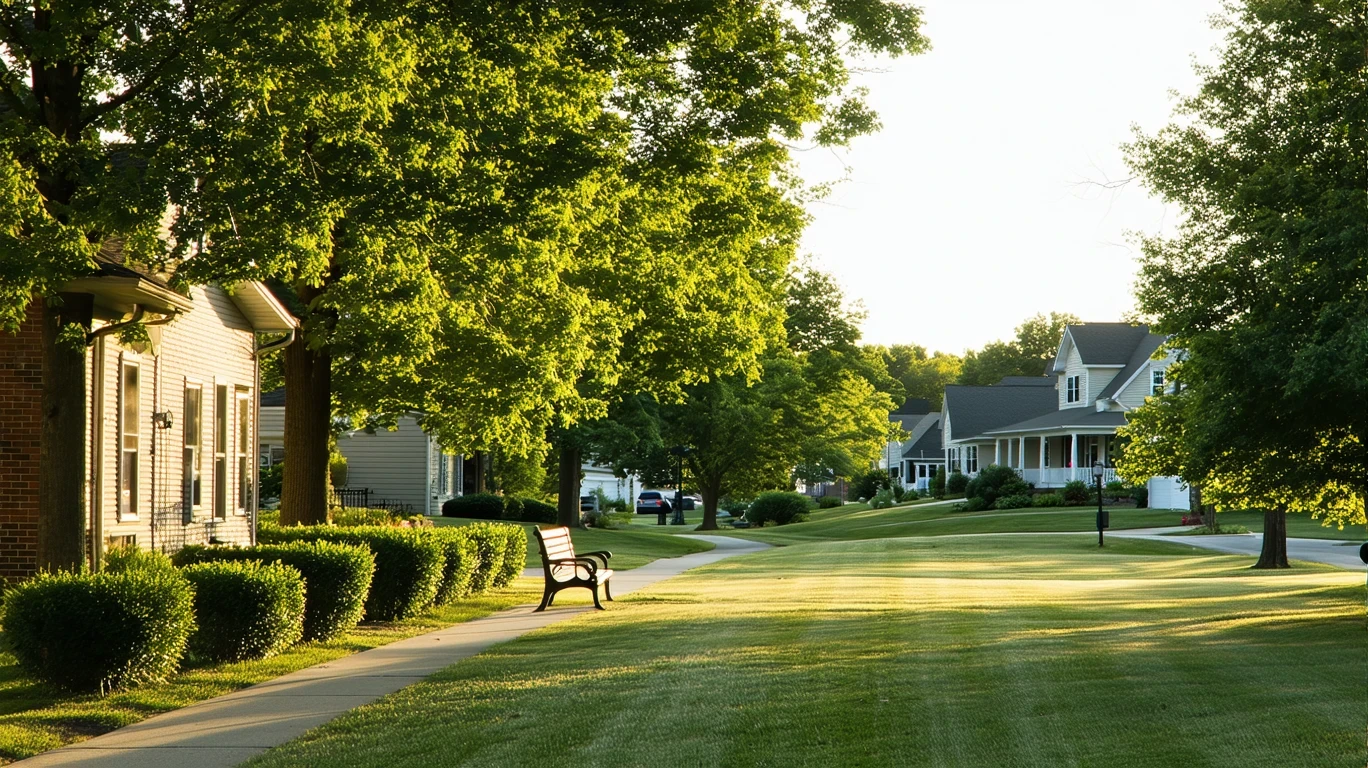
The Housing Market in Wilmore Today
Wilmore operates as a small Kentucky town with a regional price parity well below the national baseline, meaning a dollar stretches further here than in most U.S. markets. The median home value of $200,500 reflects this affordability, positioning Wilmore as accessible to first-time buyers and households seeking ownership without the leverage pressure common in higher-cost metros.
What newcomers often misunderstand is that Wilmore’s affordability is structural, not transactional. The town features mixed building heights and both residential and commercial land use in its core, but food establishment density falls below thresholds and healthcare access is limited—no hospital or clinics were detected in the immediate area. This means that while cost structure favors ownership on paper, the day-to-day experience requires car access for errands, medical appointments, and grocery runs, even in neighborhoods with high pedestrian-to-road ratios.
The local economy shows an unemployment rate of 4.4%, suggesting stable employment but not rapid wage growth. For buyers, this translates to predictable income conditions but limited upward pressure on home values. For renters, it means competition for units remains moderate, though availability is shaped more by housing stock age and turnover than by speculative development.
Renting in Wilmore
Median gross rent in Wilmore sits at $857 per month, a figure that includes utilities in some cases but not universally. Renters benefit from below-national housing costs, but the rental experience is defined by trade-offs: lower monthly outlays come with the reality that daily errands require planning and transportation, as food and grocery density is sparse and healthcare facilities are not locally concentrated.
Rental availability in Wilmore reflects a small-town housing stock rather than a purpose-built rental market. Units tend to cluster near the compact town core where land use is mixed, but even in these areas, walkability serves neighborhood circulation more than errand completion. Renters who rely on public transit will find limited options; those who expect to walk to groceries or a pharmacy will need to adjust expectations or accept longer trips.
For young professionals or single renters, the low rent provides breathing room in a budget, but car dependency becomes non-negotiable. Families renting in Wilmore face a similar calculus: affordable housing, but moderate family infrastructure—playground density is in the medium band, and school density falls below thresholds—means that convenience and access require intentional planning.
Owning a Home in Wilmore
The median home value of $200,500 positions Wilmore as one of the more accessible ownership markets in Kentucky. Buyers benefit from the regional price parity of 77, meaning that purchasing power here exceeds what the same income would afford in higher-cost regions. For first-time buyers, this creates a rare opportunity: entry-level ownership without the income stretch or bidding wars common in metro submarkets.
Ownership in Wilmore carries predictable structural costs—property taxes, insurance, and maintenance—but the absence of property tax rate data in the feed means buyers must verify local mill rates and assessment practices before closing. Kentucky property tax structures vary by county, and while Wilmore’s home values suggest moderate tax exposure, the actual annual burden depends on local levies, school district funding, and any applicable exemptions.
Maintenance exposure in Wilmore is shaped by climate and housing stock age. Summers bring heat that drives cooling costs; winters require heating but are less extreme than northern markets. Homes here are typically low- to mid-rise, and mixed building character suggests a range of ages and construction types. Buyers should expect routine upkeep—HVAC servicing, roof inspections, and exterior maintenance—but not the intensive weatherproofing or storm reinforcement required in coastal or high-wind zones.
Ownership also shifts the relationship with Wilmore’s service accessibility. Renters can relocate if errands become burdensome; owners are anchored. The town’s sparse food density and limited healthcare access become long-term considerations, not temporary inconveniences. Buyers who value proximity to parks—Wilmore’s green space access is highly integrated—and who accept that grocery runs and medical appointments require a car will find ownership here sustainable. Those who expect urban-style walkable errands will struggle.
Apartment vs House in Wilmore — Cost Behavior Comparison
| Expense Category | Apartment | House |
|---|---|---|
| Cooling Exposure | Moderate; shared walls reduce load, but summer heat still drives AC use | Higher; detached structure and larger square footage increase cooling demand |
| Heating Exposure | Lower; shared walls and smaller footprint reduce natural gas or electric heating needs | Moderate; standalone homes lose heat faster, especially in older construction |
| Outdoor Maintenance | None; landlord or property management handles grounds | Owner responsibility; lawn care, trimming, and seasonal cleanup required in low-density areas |
| Errand Accessibility | Sparse regardless of housing type; car trips required for groceries and healthcare | Sparse regardless of housing type; car trips required for groceries and healthcare |
| Green Space Access | High; park density exceeds thresholds, accessible on foot in walkable pockets | High; park density exceeds thresholds, accessible on foot in walkable pockets |
Why these differences matter in Wilmore: The town’s climate drives moderate cooling and heating exposure, but apartments benefit from shared-wall efficiency while houses face higher standalone costs. Outdoor maintenance is non-negotiable for homeowners in Wilmore’s low-rise, mixed residential areas. Critically, both apartments and houses face the same errand accessibility constraint—sparse food density and limited healthcare—meaning housing type does not resolve car dependency. Green space access is universally strong due to high park density, making outdoor recreation equally available to renters and owners.
Omitted categories include water/sewer (no local rate variation data), trash service (typically bundled or flat-fee), and internet (not housing-type dependent). Property taxes and insurance appear only in ownership scenarios and are not included here.
Utilities & Upkeep Differences
Utility exposure in Wilmore is shaped by Kentucky’s climate—hot summers and mild-to-cool winters—and by housing type. Electricity rates sit at 14.27¢/kWh, slightly above the national average, meaning cooling costs during extended summer heat become noticeable for homeowners in detached, single-family structures. Apartments with shared walls and smaller square footage see lower cooling loads, though air conditioning remains necessary during peak months.
Heating costs depend on fuel type. Natural gas is priced at $12.72 per thousand cubic feet (MCF), a moderate rate that makes gas heating economical during winter months. Homes relying on electric resistance heat will face higher costs due to the electricity rate, particularly in older construction with less insulation. Apartments again benefit from reduced exposure due to smaller footprints and shared thermal mass.
Maintenance differences are driven by Wilmore’s housing stock and land-use patterns. Houses in low-rise, mixed-use areas require routine outdoor upkeep—lawn care, gutter cleaning, and exterior painting—that apartments do not. The town’s integrated green space and water features suggest that properties near parks or natural areas may face additional landscaping or drainage considerations, though these are manageable with seasonal attention.
Upkeep intensity is moderate in Wilmore. The climate does not impose extreme weathering or storm damage risk, and the mixed building character suggests a range of ages rather than uniformly aging stock. Buyers should budget for HVAC servicing, roof inspections, and occasional exterior repairs, but not the intensive costs associated with coastal humidity, freeze-thaw cycles, or high-wind exposure.
Rent vs Buy: Long-Term Exposure in Wilmore
Renting in Wilmore offers flexibility and predictable monthly outlays, but renters remain exposed to lease renewals and landlord decisions. The median gross rent of $857 per month is low by regional standards, but renters do not build equity, and they cannot control long-term cost behavior. Rent increases, though not quantified here, follow landlord discretion and local market pressure, which in a small town like Wilmore tends to be moderate but not absent.
Ownership shifts exposure from monthly volatility to long-term structural costs. Buyers lock in a purchase price of $200,500 (median) and gain control over maintenance timing, upgrades, and property use. Property taxes, insurance, and upkeep become the primary variables, and while these costs rise over time, they do so more predictably than rent. Owners also benefit from equity accumulation, though this depends on local appreciation rates, which in Wilmore are shaped by stable but slow-growing economic conditions.
The decision between renting and buying in Wilmore hinges on how households value control versus flexibility, and how they navigate the town’s service accessibility constraints. Renters can relocate if sparse errands or limited healthcare become burdensome; owners cannot. Buyers who accept that day-to-day costs include car dependency and who prioritize green space access, low entry prices, and long-term stability will find ownership advantageous. Renters who prioritize mobility, lower upfront costs, and minimal maintenance responsibility will find the rental market accessible, though limited in inventory.
Neither path eliminates the need for a car, and neither resolves Wilmore’s sparse food density or limited healthcare access. The choice is not about convenience—it’s about whether you want to own the tradeoffs or rent them.
FAQs About Housing Costs in Wilmore
Is Wilmore, KY affordable for first-time homebuyers?
Yes. The median home value of $200,500 and regional price parity of 77 make Wilmore one of the more accessible ownership markets in Kentucky. First-time buyers benefit from lower entry costs and below-national price levels, though they must account for car dependency and sparse local services.
How does rent in Wilmore compare to nearby cities?
Median gross rent in Wilmore is $857 per month, which is below regional averages. Renters benefit from affordability, but the rental market is small, and availability is shaped by housing stock turnover rather than new construction. Nearby metro areas may offer more units but at higher prices.
What are the biggest hidden costs of owning a home in Wilmore?
Property taxes and insurance are the primary ongoing costs, though exact rates depend on county assessment and coverage choices. Maintenance exposure is moderate due to climate, but homeowners must budget for HVAC servicing, roof upkeep, and outdoor care. Car dependency also adds transportation costs that renters and owners both face.
Do apartments in Wilmore include utilities?
Some do, some don’t. Median gross rent of $857 per month may include utilities in certain cases, but this varies by landlord and lease terms. Renters should verify what’s covered before signing, as electricity and natural gas costs can add noticeable monthly expenses during summer cooling and winter heating.
Is Wilmore a good place to buy if I work remotely?
Yes, if you accept the tradeoffs. Low home values, integrated green space, and walkable pockets make Wilmore appealing for remote workers who value affordability and outdoor access. However, sparse food density and limited healthcare mean errands require car trips, and the town lacks urban-style convenience. Buyers who prioritize cost control and quiet surroundings over walkable services will find it sustainable.
Making Housing Choices in Wilmore
Housing costs in Wilmore are shaped by low regional price parity, accessible home values, and a small-town structure that favors affordability over convenience. Renters pay $857 per month in median gross rent and gain flexibility, but they remain exposed to lease renewals and landlord decisions. Buyers pay a median of $200,500 for ownership and gain control, but they anchor themselves to a town where errands, groceries, and healthcare require car trips, even in walkable pockets.
The town’s integrated green space, mixed building form, and high pedestrian-to-road ratio in certain areas create a pleasant local environment, but sparse food density and limited healthcare access mean that daily logistics depend on transportation. Families benefit from moderate playground density and affordable housing, but school density is low, and family infrastructure is only partially developed. Young professionals and remote workers benefit from low costs and outdoor access, but they must accept that Wilmore is not a walkable-errands town.
Ownership in Wilmore makes sense for households who value long-term cost predictability, equity building, and control over their living environment, and who are willing to drive for services. Renting makes sense for those who prioritize flexibility, lower upfront costs, and the ability to relocate if the service accessibility tradeoffs become burdensome. Neither path eliminates car dependency, and neither changes the town’s structural characteristics.
For more on what a budget has to handle in Wilmore, including utilities, transportation, and household expenses, see our companion guide. If you’re planning a move, see our 2025 moving company picks for cost and logistics guidance.
How this article was built: In addition to public economic data, this article incorporates location-based experiential signals derived from anonymized geographic patterns—such as access density, walkability, and land-use mix—to reflect how day-to-day living actually feels in Wilmore, KY.