
Can you live in Wilmore without a car? For most residents, the short answer is no—but the full picture is more textured than that. Wilmore is a small city where daily life revolves around driving, yet certain parts of town offer surprisingly strong pedestrian infrastructure. Understanding how people actually get around here—and who benefits from the walkable pockets versus who absorbs the friction of car dependence—is essential for anyone considering a move.
How People Get Around Wilmore
Wilmore operates primarily as a car-oriented community. The city’s layout, its position relative to Lexington, and the sparse distribution of food and grocery establishments mean that most households depend on a vehicle for errands, work commutes, and family logistics. Gas prices in Wilmore sit at $3.90 per gallon, a cost that becomes meaningful when driving is non-negotiable.
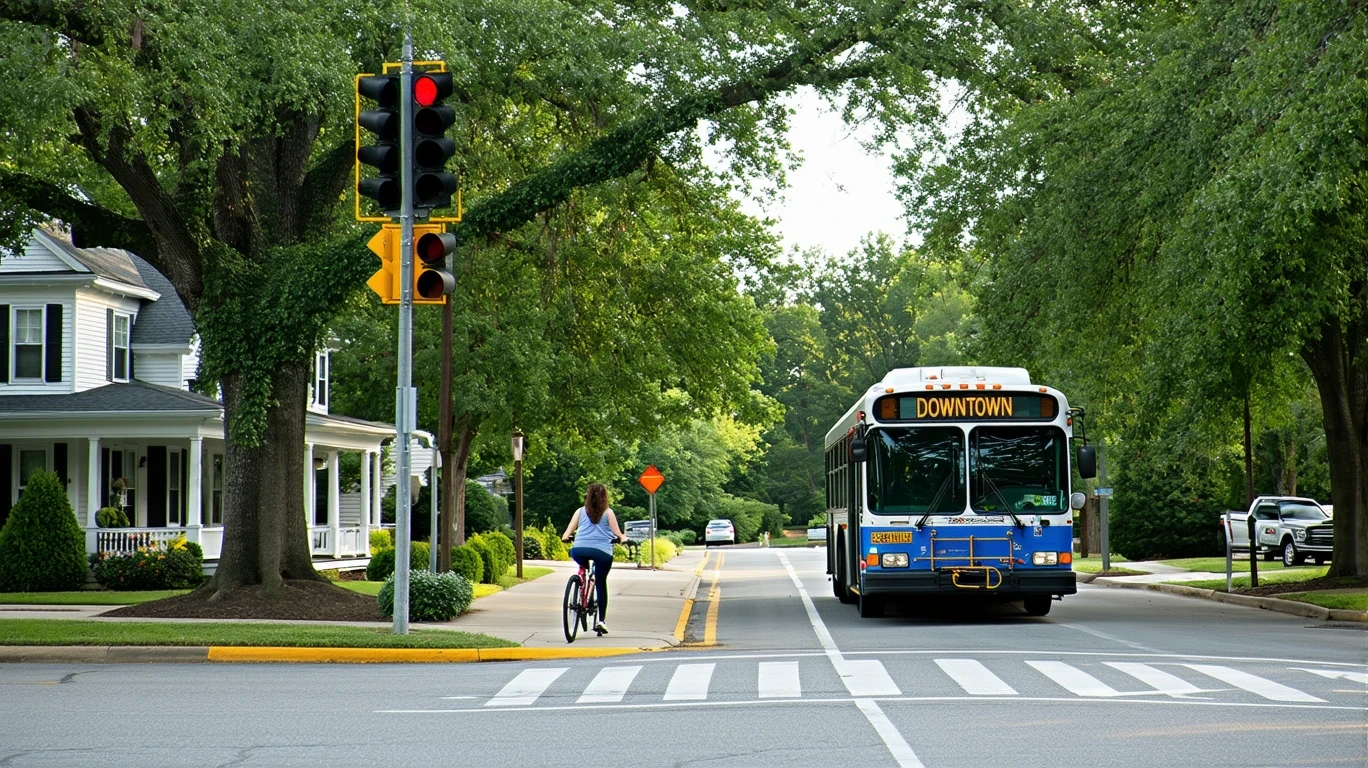
That said, Wilmore isn’t uniformly car-dependent. Certain areas—particularly near Asbury University and the historic downtown core—feature pedestrian infrastructure that exceeds typical suburban standards. Sidewalks, crosswalks, and mixed-use development create pockets where walking is genuinely practical for short trips. But these walkable zones are localized. They don’t eliminate the need for a car; they simply reduce how often you use it if you live within them.
For newcomers, the key misunderstanding is assuming that walkability in one part of Wilmore translates to walkability everywhere. It doesn’t. The city’s pedestrian-friendly areas are real, but they’re islands in a broader car-dependent landscape.
Public Transit Availability in Wilmore
Public transit plays essentially no role in daily mobility for Wilmore residents. There is no evidence of bus service, rail access, or regional transit connections that serve the city in a practical way. For households accustomed to cities where transit provides a viable alternative to driving, Wilmore represents a fundamentally different mobility structure.
This absence shapes everything: where people choose to live, how they structure their workdays, and what kinds of errands feel manageable. Without transit, proximity to Lexington—where most Wilmore residents commute for work—becomes a question of driving time and fuel exposure, not bus schedules or train frequency.
If you’re evaluating Wilmore and hoping to rely on public transportation, you’ll need to recalibrate. The city’s transportation reality is built around private vehicles, and that won’t change in the near term.
Driving & Car Dependence Reality
Driving in Wilmore is not optional for most households. Grocery stores, medical facilities, and employment centers are distributed in ways that make a car necessary for routine tasks. Even residents who live in walkable pockets typically own a vehicle for trips beyond their immediate neighborhood.
Parking is abundant and generally free, which reduces one friction point common in denser cities. Commutes to Lexington—where many Wilmore residents work—are manageable by car, though they add daily mileage and fuel costs that accumulate over time. The tradeoff is predictability: you control your schedule, your route, and your timing in ways that transit-dependent households cannot.
Car dependence also means that vehicle maintenance, insurance, and fuel become non-negotiable line items in household budgets. These aren’t occasional expenses; they’re structural. For families with multiple drivers, the cost and logistical complexity multiply accordingly.
Commuting Patterns & Daily Mobility
Most Wilmore residents who work outside the city commute to Lexington, a pattern that reflects the city’s role as a residential community within the broader metro area. These commutes are almost universally car-based, and they shape daily routines in ways that transit-served cities do not.
Single-job commutes are straightforward: you leave in the morning, return in the evening, and your transportation cost is predictable. But households with multi-stop routines—dropping kids at school, running errands, picking up groceries—face compounding friction. Without transit or dense commercial corridors, every stop requires planning, time, and fuel.
For residents who work locally—particularly those affiliated with Asbury University—the commute burden is lighter. Proximity to work and the presence of walkable infrastructure near campus create a different mobility experience, one that more closely resembles small-town life than suburban car dependence.
Who Transit Works For — and Who It Doesn’t
Transit doesn’t work for anyone in Wilmore, because it doesn’t exist in a functional form. But walkability does work for a narrow slice of residents: those who live near the university, retirees who’ve chosen homes within the historic core, and students whose daily needs are concentrated in a small geographic area.
For everyone else—families with school-age children, commuters to Lexington, households living outside the walkable pockets—car ownership is non-negotiable. The city’s errands infrastructure is sparse enough that even short trips often require driving, and the lack of public transit means there’s no fallback option when a car is unavailable.
Renters and owners face the same transportation reality, though renters may have slightly more flexibility to choose housing within walkable zones. Owners, particularly those in newer subdivisions on the city’s edges, are fully embedded in car-dependent infrastructure.
Transportation Tradeoffs in Wilmore
The tradeoff in Wilmore is between control and cost. Driving gives you predictability, flexibility, and the ability to structure your day without depending on external schedules. But it also locks in ongoing expenses—fuel, maintenance, insurance—that don’t fluctuate with how much you use the car. You pay for the capacity to drive, whether you drive five miles a week or fifty.
Walkability, where it exists, offers a different tradeoff: lower transportation costs and a slower, more localized daily rhythm, but only if your needs align with what’s accessible on foot. For most households, walkability is a supplement, not a replacement, for driving.
There’s no “right” choice here, only fit. If you value autonomy and need to commute or run complex errands, Wilmore’s car-oriented structure works in your favor. If you hoped to minimize driving or avoid car ownership entirely, Wilmore will feel like a poor match.
FAQs About Transportation in Wilmore (2026)
Is public transit usable for daily commuting in Wilmore?
No. Public transit does not serve Wilmore in any practical capacity. Daily commuting, errands, and most trips require a personal vehicle.
Do most people in Wilmore rely on a car?
Yes. The vast majority of Wilmore residents depend on a car for work, groceries, healthcare, and family logistics. Walkability exists in limited areas but doesn’t eliminate the need for vehicle access.
Which areas of Wilmore are easiest to live in without a car?
The areas near Asbury University and the historic downtown core offer the strongest pedestrian infrastructure. Residents in these zones can walk for some daily needs, though a car remains useful for trips beyond the immediate neighborhood.
How does commuting in Wilmore compare to nearby cities?
Wilmore functions as a bedroom community within the Lexington metro area. Commutes to Lexington are car-based and add daily mileage, but they’re generally manageable in terms of distance. Unlike Lexington, Wilmore offers no transit alternative, so commuting flexibility depends entirely on vehicle access.
Does Wilmore’s walkability reduce transportation costs?
For residents who live within walkable pockets and work locally, yes—walkability can reduce how often you drive and lower fuel expenses. But for most households, walkability is a convenience, not a cost-saving strategy. The sparse distribution of grocery stores and services means driving remains necessary for routine errands.
How Transportation Fits Into the Cost of Living in Wilmore
Transportation in Wilmore isn’t just a budget line—it’s a structural factor that shapes where you live, how you spend your time, and what kinds of tradeoffs you’re willing to accept. Car dependence means that fuel, maintenance, and insurance are non-negotiable for most households, and those costs don’t disappear even if you drive less.
For a clearer picture of how transportation expenses fit alongside housing, utilities, and other costs, see What a Budget Has to Handle in Wilmore. That article breaks down the full cost structure and helps you understand where transportation sits relative to other financial pressures.
Wilmore rewards residents who value control, predictability, and the flexibility that comes with car ownership. If you’re comfortable with that structure—and the costs it entails—the city’s transportation reality is straightforward and manageable. If you hoped to minimize driving or rely on transit, Wilmore will require a significant adjustment in expectations.
How this article was built: In addition to public economic data, this article incorporates location-based experiential signals derived from anonymized geographic patterns—such as access density, walkability, and land-use mix—to reflect how day-to-day living actually feels in Wilmore, KY.