
74 out of 100 residents say they’re happy in Westfield — a number that reflects the city’s appeal to families and professionals seeking suburban comfort with surprising pockets of walkability, but also hints at the tradeoffs that come with rapid growth and corridor-based convenience.
Westfield sits in the northern Indianapolis metro, where newer development meets established neighborhoods, and where the promise of “small-town feel” bumps up against the reality of commuter rhythms and clustered amenities. For many, it delivers exactly what they came for: well-kept homes, hospital access, and a strong sense of investment in the community. For others, the experience reveals gaps — in school density, in walkable errands beyond certain corridors, in the texture that comes from older, layered neighborhoods.
This article translates the emotional tone of living in Westfield through the lens of public discussion, recurring themes, and the everyday friction points that shape how people feel about being here. It’s not about proving happiness or measuring satisfaction — it’s about helping you predict whether this place fits the life you’re trying to build.
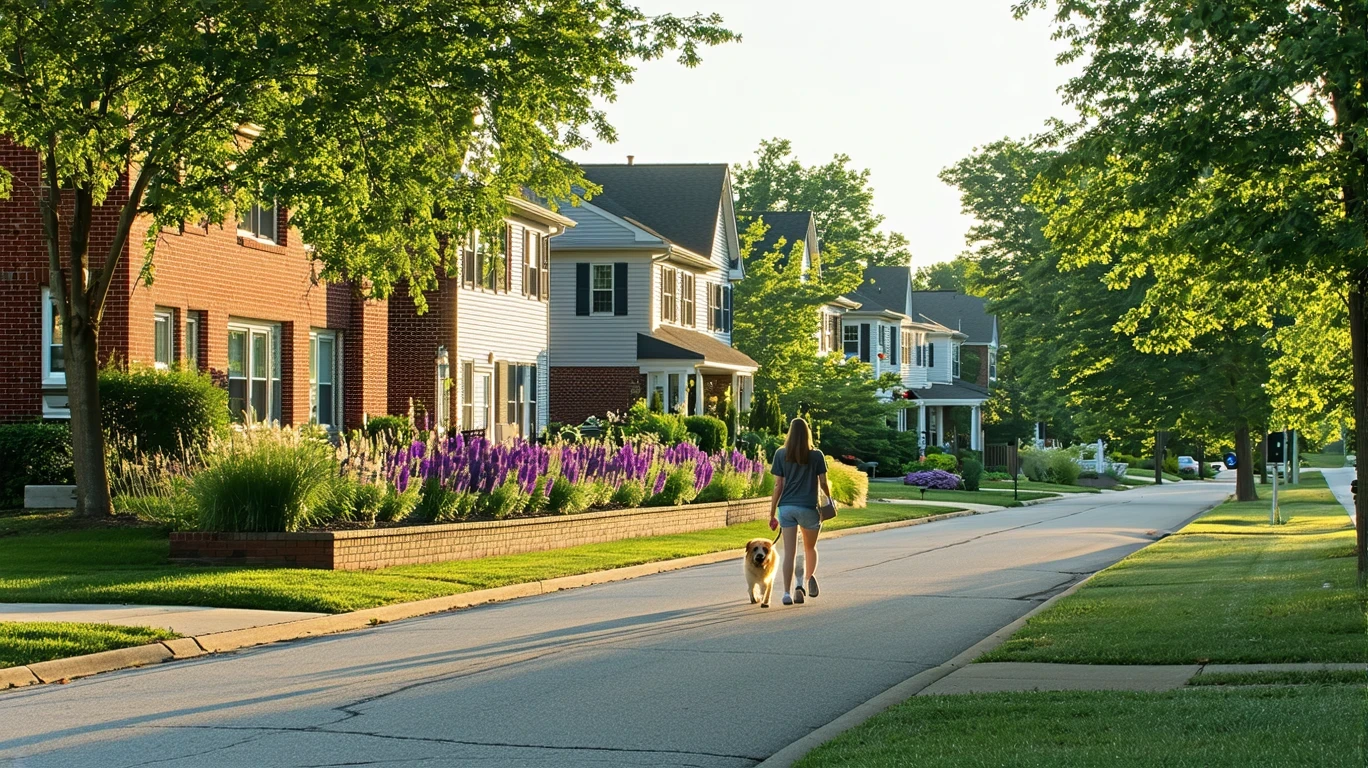
What It Feels Like to Live Here
Westfield’s vibe is shaped by a tension between suburban order and the desire for spontaneity. The city has invested heavily in cycling infrastructure — bike-to-road ratios exceed high thresholds — and certain areas offer genuine pedestrian-friendly texture. But errands and daily needs tend to cluster along corridors rather than spread evenly, which means some households enjoy walkable convenience while others plan around the car.
The presence of a hospital and pharmacies signals strong healthcare access, yet family infrastructure — schools and playgrounds — registers below density thresholds in many areas. That gap matters emotionally: families arrive expecting kid-centered abundance and sometimes find themselves driving to parks or coordinating pickups across longer distances than anticipated.
Income levels run high, and housing stock skews newer and well-maintained. The median household income of $117,519 per year supports a community that values upkeep, amenities, and investment in quality of life. But that same economic profile creates pressure for renters and younger households trying to establish themselves without stretching too far.
People who thrive here tend to be those who wanted planned suburban living with some walkable moments, who value hospital proximity and cycling options, and who don’t mind corridor-based errands. People who struggle tend to be those who expected urban texture throughout, dense school access, or the ability to run daily errands on foot from any neighborhood.
Social Media Buzz in Westfield
Online discussion about Westfield often revolves around growth, identity, and the balance between convenience and character. Residents express pride in the city’s investments — parks, trails, cycling paths — but also voice frustration when new development feels disconnected from existing neighborhoods or when amenities don’t keep pace with population.
Common themes include:
- Pride in infrastructure: “The trails here are genuinely great — you can bike to a lot of places if you know the routes.”
- Frustration with unevenness: “It’s weird how walkable some parts are and how car-dependent others feel, even though they’re only a few blocks apart.”
- Mixed feelings on growth: “I love that Westfield is growing, but sometimes it feels like we’re adding houses faster than we’re adding the things that make a neighborhood work.”
The tone is rarely angry — more often it’s protective, cautious, and hopeful. People want Westfield to succeed, but they’re also watching closely to see whether the city’s rapid expansion preserves the qualities that drew them here in the first place.
Local News Tone
Coverage of Westfield tends to frame the city as a place in transition — balancing suburban appeal with the logistics of growth. Stories often focus on infrastructure decisions, community amenities, and the evolving identity of a city that’s no longer “small” but hasn’t fully settled into what comes next.
Recurring topic buckets include:
- “New Amenities Arrive as Town Identity Evolves”
- “Community Debates What Growth Should Look Like”
- “Residents Weigh Convenience vs Quiet”
- “Cycling and Trail Investments Draw Attention”
- “Healthcare Access Expands in Northern Suburbs”
The framing is generally optimistic but not uncritical. There’s recognition that Westfield is building toward something, and that the outcome depends on choices being made now about density, connectivity, and infrastructure.
Review-Based Public Perception
Public reviews of Westfield — whether on Google, Yelp, or neighborhood platforms — tend to reflect expectation matching more than objective quality. People who wanted suburban order, newer housing, and strong income demographics tend to praise the city warmly. People who wanted urban texture, walkability throughout, or lower price points tend to express disappointment.
Positive reviews often highlight:
- Well-maintained homes and neighborhoods
- Strong sense of community investment
- Access to healthcare and cycling infrastructure
- Family-friendly atmosphere in planned areas
Critical reviews often mention:
- Uneven walkability — some pockets feel connected, others isolated
- Errands require driving unless you live near specific corridors
- School and playground access less dense than expected for a family-oriented suburb
- Rental costs high relative to alternatives in the metro
Neighborhood variation exists but is often described in broad terms: newer planned areas with mixed building types versus older pockets with more established trees and varied lot sizes. The city’s mixed building height profile — neither purely low-rise nor notably vertical — contributes to a sense of transition rather than settled character.
Comparison to Nearby Cities
| Aspect | Westfield | Carmel | Fishers |
|---|---|---|---|
| Overall Vibe | Suburban comfort with walkable pockets and cycling focus | Polished, arts-oriented, established suburban prestige | Tech-forward, newer development, family-dense |
| Walkability | Corridor-clustered; some areas genuinely walkable | Mixed; downtown core walkable, outer areas car-dependent | Mostly car-dependent; newer infrastructure |
| Family Infrastructure | Limited density; hospital present | Strong school presence; arts and rec amenities | High family density; abundant playgrounds and schools |
| Price Pressure | High income levels; newer housing stock | Higher price points; established prestige premium | Competitive; strong demand from young families |
| Growth Character | Rapid expansion; identity in transition | Mature; slower, selective growth | Fast-growing; tech and corporate draw |
Westfield, Carmel, and Fishers all serve the northern Indianapolis metro, but they appeal to different priorities. Carmel offers established prestige and arts amenities, with a downtown core that feels more finished. Fishers leans heavily into family density and tech-forward infrastructure, with newer development and abundant playgrounds. Westfield sits between them: newer than Carmel, more cycling-focused than Fishers, but still figuring out its identity as growth continues.
If you value cycling infrastructure and don’t mind corridor-based errands, Westfield offers strong appeal. If you want dense family amenities or a more established downtown, Carmel or Fishers might align better. If you’re seeking lower price points, all three present challenges — but Westfield’s newer stock and mixed building types offer some variety.
What Locals Are Saying
“We moved here for the schools and the family vibe, but honestly, the school density isn’t what we expected. We drive more than we thought we would.” — Family with young children
“The trails are fantastic. I bike to work a few days a week, and it’s one of the best parts of living here. Not every suburb has that.” — Remote worker, mid-30s
“It’s clean, it’s safe, people care about their homes. But it doesn’t feel like a ‘place’ yet — more like a collection of neighborhoods that haven’t quite knit together.” — Long-time resident
“I love that there’s a hospital right here. When my dad had a health scare, we didn’t have to drive to Indy. That peace of mind matters.” — Adult child caring for aging parent
“Rent is higher than I expected for a suburb. I thought moving out of the city would give me more breathing room, but the budget is still tight.” — Young professional, renting
“Some parts of Westfield feel really walkable — you can grab coffee, run errands, see people out. Other parts feel like you’re stuck in the car for everything. It’s inconsistent.” — Couple in their 40s
“We wanted suburban comfort without giving up all the conveniences of city life. Westfield gets us most of the way there, but you have to know which corridors to live near.” — Newcomer from out of state
Does Westfield Feel Like a Good Fit?
Westfield works well for households that value suburban order, cycling infrastructure, and hospital access, and who don’t mind planning errands around specific corridors. It appeals to professionals and families with strong income levels who want newer housing stock and a community that invests in quality of life. The city’s walkable pockets and notable bike presence offer texture that many suburbs lack, and the mixed building types create variety within a generally low-rise landscape.
But Westfield can frustrate households expecting dense family infrastructure, walkability throughout, or lower price points. The limited school and playground density relative to the city’s family-oriented reputation creates friction for some parents. The corridor-clustered errands pattern means convenience isn’t evenly distributed, and renters face housing pressure similar to more established suburbs.
The city’s emotional profile is one of transition: pride in what’s been built, caution about what comes next, and a protective hope that growth won’t erase the qualities that make Westfield appealing. If you’re someone who values infrastructure investment and can tolerate unevenness while a place finds its footing, Westfield offers real strengths. If you need consistency, density, or a fully formed sense of place, you may feel the gaps more acutely.
Understanding where money goes and what quality of life factors matter most to your household will help you decide whether Westfield’s tradeoffs align with your priorities — or whether a nearby alternative might fit better.
How this article was built: In addition to public economic data, this article incorporates location-based experiential signals derived from anonymized geographic patterns—such as access density, walkability, and land-use mix—to reflect how day-to-day living actually feels in Westfield, IN.
The perspectives shown reflect commonly expressed local sentiment and recurring themes in public discussion, rather than individual accounts.