
Is The Village the kind of place you grow roots—or just pass through? For many, this small Oklahoma City suburb offers something that feels increasingly rare: quiet residential streets where kids actually play outside, parks you can walk to, and a rhythm that doesn’t demand constant hustle. But that same calm can feel limiting if you’re hoping for spontaneous dinner options, walkable nightlife, or immediate access to specialized healthcare. The Village tends to reward people who value outdoor space, strong schools, and a low-key pace—and frustrate those who expect the texture and convenience of denser urban living.
What makes The Village emotionally distinct is the gap between its infrastructure and its amenities. The bones are there—bike lanes, sidewalks in pockets, abundant green space, excellent school and playground density—but the daily conveniences that usually accompany walkability (cafes, restaurants, third places) are sparse. It’s a place where you can bike safely with your kids to a park, but you’ll likely drive for dinner. That tradeoff defines much of the local sentiment.
What the Vibe Feels Like Day-to-Day
The Village operates on a suburban cadence, but with a few surprises. Residents consistently describe a strong sense of safety and neighborliness—the kind of place where people wave from porches and know the names of kids on the block. The parks are genuinely integrated into daily life, not just weekend destinations. Families talk about evening walks feeling easy and natural, with playgrounds scattered throughout and water features adding visual interest.
But there’s also a recurring theme of logistical planning. Because restaurant and cafe density is low, spontaneity around food requires a car. Grocery access is strong, so weekly shopping runs smoothly, but grabbing a quick bite or meeting a friend for coffee often means leaving the city limits. For some, that’s a welcome simplicity—less temptation, more intentionality. For others, especially younger professionals or empty nesters, it feels like friction.
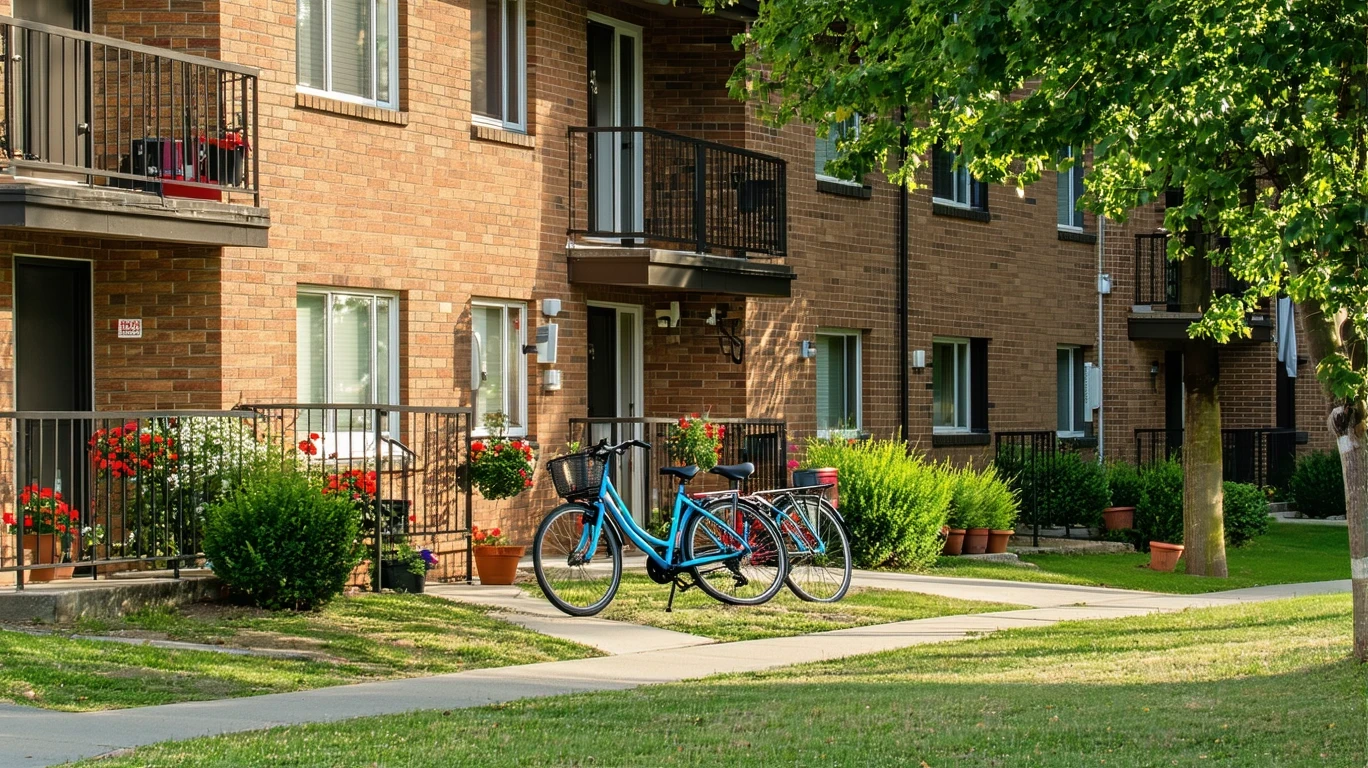
The bike infrastructure stands out as unexpectedly robust for a small suburb. Residents mention feeling comfortable letting older kids ride to school or the park, and recreational cyclists appreciate the connectivity. Yet that bikeability doesn’t translate into car-free living—it’s more about safety and recreation than replacing vehicle dependence.
Social Media Buzz in The Village
Online discussions about The Village tend to circle around three emotional poles: pride in the family-friendly environment, frustration with limited dining and entertainment, and protectiveness over the town’s quiet character when growth pressures emerge.
On neighborhood Facebook groups and local Reddit threads, you’ll see frequent praise for the school quality and the accessibility of parks. Parents share photos of kids biking to playgrounds and talk about how easy it is to get outside. There’s genuine affection for the low-rise, low-key feel.
But the dining conversation comes up often, usually with a tone of resigned humor: “Love it here, but we’ve memorized every restaurant within 15 minutes because there just aren’t that many close by.” It’s not anger—more a recognition that this is the tradeoff for affordability and space.
Healthcare access occasionally surfaces as a concern, particularly for families with young children or aging parents: “It’s great until someone needs urgent care—then you realize how far the nearest hospital actually is.” The presence of pharmacies helps for routine needs, but the lack of local clinics or a hospital creates anxiety for some households.
There’s also a protective streak when development or annexation discussions arise. Long-time residents express concern about losing the small-town feel, while newer arrivals sometimes push for more amenities. The tension is mild but persistent.
Local News Tone
Coverage of The Village tends to frame the city through the lens of suburban identity preservation and gradual change. You’ll see recurring topic clusters that reflect both pride and caution:
- “Community Celebrates Another Year of Strong Schools and Safe Streets”
- “Residents Weigh Growth Opportunities Against Small-Town Character”
- “New Retail and Dining Options Arrive Just Outside City Limits”
- “Families Drawn to Affordability and Outdoor Access in The Village”
- “Local Leaders Discuss Infrastructure Needs as Population Shifts”
The tone is rarely urgent or crisis-oriented. Instead, it reflects a community that feels stable but aware of its limitations—particularly around commercial development and healthcare infrastructure. There’s an ongoing conversation about what kind of growth would enhance quality of life without eroding the residential calm that defines the place.
Review-Based Public Perception
On platforms like Google Reviews, Nextdoor, and Yelp, The Village earns consistent praise for safety, schools, and parks—and consistent critique for limited variety in dining and services.
Families who moved from denser parts of the Oklahoma City metro often express relief: “Finally, a place where my kids can ride bikes without me panicking. The parks are everywhere, and the schools actually feel like a community.” The family infrastructure resonates deeply with households in the elementary and middle school years.
Retirees and empty nesters offer more mixed reviews. Some appreciate the quiet and the ease of maintaining a single-family home in a low-rise area. Others feel isolated, particularly if they’re used to walkable errands or spontaneous social opportunities: “It’s peaceful, but you really need to plan everything. There’s not much to do unless you drive.”
Newer planned areas tend to get slightly higher marks for cohesion and curb appeal, while older pockets are described as more affordable but occasionally showing age. The variation isn’t dramatic—it’s more about aesthetic preference than functional difference.
One recurring surprise in reviews: the bike lanes. People who didn’t expect suburban Oklahoma to prioritize cycling infrastructure mention it as a pleasant discovery, even if they don’t use it daily.
Comparison to Nearby Cities
| Aspect | The Village | Nichols Hills | Warr Acres |
|---|---|---|---|
| Overall Vibe | Quiet, family-focused, park-rich but amenity-light | Affluent, manicured, exclusive feel | Working-class, practical, unpretentious |
| Walkability Feel | Pockets of good sidewalks, bike-friendly, but car-dependent for errands | Scenic for walks, but not errand-oriented | Limited pedestrian infrastructure |
| Dining & Nightlife | Sparse locally, requires short drive | Minimal within city, relies on nearby districts | Budget-friendly chains, limited variety |
| Family Appeal | Strong schools, abundant parks and playgrounds | Excellent schools, but higher cost barrier | Affordable for families, fewer green spaces |
| Cost Pressure | Moderate and stable | High, exclusivity-driven | Lower, budget-conscious |
The Village occupies a middle position emotionally: more polished and family-oriented than Warr Acres, but far more accessible and relaxed than Nichols Hills. If you want the school quality and park access without the country club atmosphere, The Village tends to fit. If you need more walkable dining or nightlife texture, you might feel the limits quickly. Warr Acres offers lower [housing pressure](/the-village-ok/housing-costs/) but less green space and fewer bike-friendly routes. Nichols Hills delivers prestige and excellent schools, but at a significant cost premium and with a more exclusive social tone.
For families prioritizing outdoor play, school quality, and a neighborhood feel, The Village often edges ahead. For singles, young professionals, or empty nesters seeking spontaneous social life, the other options might offer better alignment depending on budget and priorities.
What Locals Are Saying
“We moved here from Edmond, and honestly, the parks sold us. My kids are outside every day, and I don’t worry about traffic or safety. It’s exactly what we needed.” — Parent of two elementary-aged children
“It’s a great place to raise a family, but I do miss being able to walk to a coffee shop or grab dinner without getting in the car. Everything requires a little planning.” — Remote worker, early 30s
“The bike lanes were a surprise. I use them all the time for exercise, and my teenager bikes to school. That’s something I didn’t expect in a suburb this size.” — Long-time resident, mid-40s
“I love the quiet, but when my mom had a health scare, we realized how far we were from a hospital. It’s something to think about if you have aging parents or young kids.” — Homeowner, late 30s
“Honestly, it’s boring if you’re single. There’s nothing to do here at night, and even during the day, you’re driving to Nichols Hills or OKC for anything interesting.” — Renter, mid-20s
“We downsized here after the kids left, and it’s been perfect. Low maintenance, safe, and we’re close enough to the city when we want it. But yeah, you need a car.” — Empty nester couple, early 60s
“The schools are solid, the neighbors are friendly, and my kids have freedom I didn’t think existed anymore. But I do wish there were more local restaurants—we’re creatures of habit now.” — Parent of three, late 30s
Does The Village Feel Like a Good Fit?
The Village works best for households who value residential calm, outdoor access, and strong family infrastructure—and who are comfortable with car dependency for dining, entertainment, and healthcare. It’s a place where the parks genuinely shape daily life, where kids can bike safely, and where the pace feels manageable rather than stagnant.
It tends to frustrate people who expect walkable spontaneity, diverse dining, or immediate access to urban amenities. The infrastructure suggests walkability, but the amenity landscape doesn’t deliver on that promise. If you need a hospital nearby, work from home and crave third places, or want nightlife within walking distance, the tradeoffs may feel too steep.
For families in the elementary-through-middle-school years, The Village often feels like a natural fit. For young professionals, singles, or households with complex healthcare needs, the limitations become more visible. The question isn’t whether The Village is “happy”—it’s whether the specific things it does well align with what you need from a place. If parks, schools, safety, and bike-friendly streets matter more than restaurant variety and walkable errands, the emotional math tends to work. If the opposite is true, you’ll likely feel the gaps quickly.
To understand [where money goes](/the-village-ok/monthly-budget/) in The Village or explore [what drives housing costs](/the-village-ok/housing-costs/) in this part of the metro, the related guides offer deeper context on the financial and logistical realities that shape daily life here.
How this article was built: In addition to public economic data, this article incorporates location-based experiential signals derived from anonymized geographic patterns—such as access density, walkability, and land-use mix—to reflect how day-to-day living actually feels in The Village, OK.
The perspectives shown reflect commonly expressed local sentiment and recurring themes in public discussion, rather than individual accounts.