
Is San Jose the kind of place you grow roots—or just pass through? For a city of over a million people, San Jose often feels like a paradox: culturally diverse yet architecturally uniform, economically prosperous yet financially stressful, family-friendly yet emotionally neutral. It’s a city where median household income sits at $136,010 per year, yet housing costs—with a median home value of $1,149,600 and median rent of $2,526 per month—create a constant undercurrent of financial calculation. The emotional tone here isn’t defined by a single narrative. Instead, it’s shaped by tradeoffs: opportunity vs. affordability, convenience vs. character, diversity vs. homogeneity in the built environment.
Who tends to feel at home in San Jose? Tech professionals with income streams that can absorb housing pressure. Families drawn to strong school infrastructure, accessible groceries, and parks woven throughout neighborhoods. People who value cultural variety in food and population but don’t require dense urban texture or nightlife. Who tends to feel friction? Cost-sensitive households without Silicon Valley salaries. Renters navigating a market tilted toward ownership. People seeking walkable urbanism throughout the city, not just in pockets. Those craving neighborhood intimacy or a distinct sense of place beyond function and comfort.
What the Conversation Sounds Like
Public discussion about San Jose tends to orbit around a few recurring emotional poles: pride in diversity and safety, frustration with cost and sameness, and ambivalence about identity. On platforms like Reddit and local Facebook groups, the tone is often pragmatic rather than passionate. People describe the city as “fine,” “functional,” “safe but boring,” or “expensive but stable.” There’s less romantic attachment than you’d find in smaller towns, and less cultural defensiveness than in cities with stronger brand identity.
“It’s a great place to raise kids if you can afford it—good schools, clean parks, everything you need nearby. But it doesn’t feel like a community, it feels like a collection of subdivisions.”
“I love the food here. You can get incredible Vietnamese, Mexican, Indian, Filipino—all authentic. But outside of restaurants, the city feels like it has no personality.”
“People complain about San Jose being boring, but I think they just don’t know where to look. There are pockets with character, you just have to seek them out.”
The conversation often splits along expectations. Those who wanted suburban comfort with excellent logistics tend to feel satisfied. Those who wanted urban energy, walkability across the board, or affordability relative to income potential tend to feel let down. The city’s identity as the “capital of Silicon Valley” looms large, but it’s more a economic fact than an emotional rallying point.
How Local Coverage Frames the City
Local news and community outlets tend to frame San Jose through the lens of growth, cost pressure, and evolving identity. Coverage doesn’t dwell on crisis or celebration—it reflects a city in constant negotiation with its own scale and function. Headlines and story themes tend to fall into familiar buckets:
- “Residents Weigh Housing Costs Against Job Proximity”
- “New Development Brings Amenities, Raises Questions About Character”
- “Commute Times Remain Steady Despite Regional Growth”
- “Families Drawn to Schools and Safety, Despite Price Tag”
- “Cultural Festivals Highlight Diversity, But Neighborhood Identity Remains Elusive”
The tone is rarely alarmist, but it’s also rarely celebratory. San Jose is covered as a city that works well for those who can afford it, but one that hasn’t yet resolved the tension between its economic success and its cultural legibility. There’s frequent discussion of what the city could become, but less consensus on what it currently is.
What Reviews and Public Perception Reveal
On platforms like Google Reviews, Yelp, and Nextdoor, San Jose’s public perception splits along expectation lines. Positive reviews emphasize safety, cleanliness, convenience, and access. Negative reviews focus on cost, blandness, and the feeling that the city lacks a center—both literally and emotionally.
People who moved here for work and family logistics tend to express satisfaction: “Everything I need is within 10 minutes. Parks are clean, grocery stores are well-stocked, and I feel safe letting my kids bike around the neighborhood.” Those who moved expecting urban vibrancy or affordability relative to income tend to express disappointment: “It’s expensive and sterile. You pay Bay Area prices but get suburban sprawl.”
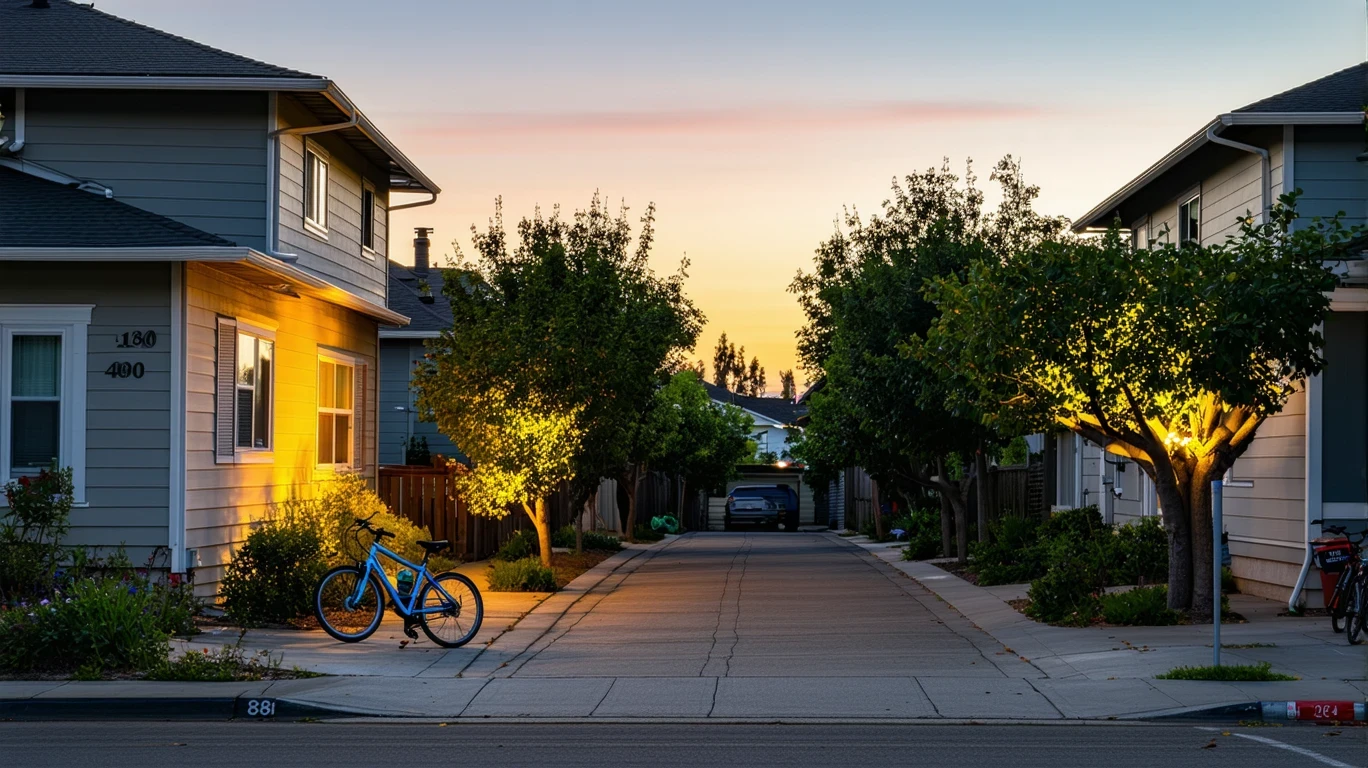
Neighborhood variation exists, but it’s often described in functional rather than emotional terms. Older pockets near downtown or along certain corridors offer more walkability and architectural variety, while newer planned developments emphasize space, parking, and uniformity. The city’s infrastructure—transit options including rail, notable bike presence, and broadly accessible errands—creates pockets of convenience, but the experience isn’t consistent across all areas.
Food and cultural amenities receive consistent praise. San Jose’s diversity shows up most clearly in its restaurants, markets, and festivals. But outside those spaces, the built environment often feels generic, and the social fabric can feel transient, shaped by people passing through for career phases rather than settling for generations.
How San Jose Compares to Nearby Cities
| Dimension | San Jose | Fremont | Santa Clara |
|---|---|---|---|
| Overall Vibe | Functional, diverse, expensive, emotionally neutral | Quieter, family-focused, less dense, slightly more affordable | Compact, transit-adjacent, younger feel, tech-centric |
| Housing Pressure | Severe cost burden, ownership-dominated market | High but slightly less intense than San Jose | High, with more rental options near transit and employers |
| Walkability & Transit | Pockets of walkability, rail present, bike infrastructure notable | Car-dependent overall, limited transit options | More walkable near downtown and Caltrain, compact layout |
| Cultural Identity | Diverse population, but built environment feels uniform | Suburban, quieter, less visible cultural texture | Tech-forward, younger demographic, less neighborhood variety |
| Family Appeal | Strong schools, parks, accessible errands, safe feel | Family-oriented, spacious, slower pace | Good schools, compact, but less green space per capita |
San Jose sits in the middle of a regional tradeoff spectrum. Fremont offers slightly more space and affordability, but less walkability and fewer transit options. Santa Clara offers more compactness and transit connectivity, but less green space and a younger, more transient feel. If you prioritize family infrastructure, accessible errands, and a mix of mobility options, San Jose delivers more completely than its neighbors. If you want lower cost or a tighter urban form, you might find better alignment elsewhere. None of these cities offer the affordability or neighborhood intimacy of smaller towns outside the Bay Area, but they each reflect different strategies for navigating Silicon Valley’s cost-opportunity equation.
What Locals Are Saying
“I moved here for a tech job and stayed because my kids are settled in great schools. The cost is brutal, but the logistics are easy—everything we need is close, and the neighborhoods feel safe. I just wish it had more soul.”
“San Jose gets a bad rap for being boring, but I think people just don’t explore. There are great trails, farmers markets, and some really interesting pockets if you know where to look. It’s not flashy, but it works.”
“We’re paying over $2,500 a month for a two-bedroom apartment, and it’s hard to see how we’ll ever buy here. The income is good, but the housing tradeoffs are exhausting. We’re starting to look at other regions.”
“As a retiree, I appreciate the weather, the safety, and the fact that I can walk to the grocery store and the park. It’s not exciting, but it’s comfortable, and that’s what I need at this stage.”
“I grew up here, and it’s changed a lot. It’s cleaner and safer than it used to be, but it’s also more expensive and less interesting. A lot of the character got smoothed out as the city grew.”
“The diversity here is real—my kids go to school with families from all over the world, and we have access to incredible food. But the city itself feels like it was designed by a spreadsheet. There’s no center, no gathering place that feels uniquely San Jose.”
“I work remotely and chose San Jose because it’s central to the Bay Area without being San Francisco prices. But honestly, I’m not sure what I’m paying for beyond location. The city doesn’t offer much that I can’t get in cheaper suburbs elsewhere.”
Does San Jose Feel Like a Good Fit?
San Jose doesn’t ask you to fall in love with it. It asks whether you can afford it, whether its infrastructure matches your logistics, and whether you’re comfortable trading character for convenience. The city works best for people whose priorities align with what it delivers: accessible errands, strong family amenities, safety, cultural diversity in population, and proximity to the innovation economy. It tends to frustrate people who need affordability relative to income, consistent walkability across neighborhoods, vibrant nightlife, or a strong sense of place.
The emotional experience here is shaped by tradeoffs. High income potential vs. housing cost pressure. Functional excellence vs. cultural blandness. Diversity in people vs. sameness in built form. Walkable pockets and transit options vs. car dependency in many areas. If you’re in a life stage where logistics, schools, and safety matter more than nightlife or neighborhood intimacy, San Jose can feel like a relief. If you’re seeking affordability, urban texture, or emotional connection to place, it can feel like an expensive compromise.
Understanding where money goes each month and what quality of life actually looks like here can help clarify whether the city’s tradeoffs align with your priorities—or whether you’re better served looking elsewhere in the region or beyond.
How this article was built: In addition to public economic data, this article incorporates location-based experiential signals derived from anonymized geographic patterns—such as access density, walkability, and land-use mix—to reflect how day-to-day living actually feels in San Jose, CA.
The perspectives shown reflect commonly expressed local sentiment and recurring themes in public discussion, rather than individual accounts.