

Bellevue’s median home value sits at $1,139,500, while Redmond’s comes in at $1,026,400—a difference that shapes not just the entry barrier, but the type of housing inventory each city offers. Both cities anchor the Eastside of the Seattle metro, share the same utility providers and gas stations, and offer similar access to transit, parks, and groceries. Yet the housing market structure and urban form create distinct experiences for renters, first-time buyers, and families deciding where to land in 2026.
The choice between Redmond and Bellevue isn’t about finding the “cheaper” option—it’s about understanding where cost pressure concentrates and which household type feels that pressure most. Renters face different monthly obligations. Buyers confront different entry thresholds and unit-type availability. Families weigh school access and space needs against commute friction and neighborhood walkability. This article breaks down how housing, utilities, transportation, groceries, taxes, and lifestyle factors behave differently in each city, so you can identify which cost structure aligns with your household’s priorities.
Both cities benefit from strong family infrastructure, hospital access, and integrated green space. Both offer rail transit, notable cycling infrastructure, and walkable pockets. The meaningful differences emerge in housing form, entry costs, and the tradeoffs between vertical living and mixed-height neighborhoods—not in the day-to-day operational expenses that many cost-of-living comparisons overemphasize.
Housing Costs
Bellevue’s median gross rent stands at $2,422 per month, compared to Redmond’s $2,299 per month. For renters, that $123 monthly difference translates to nearly $1,500 annually—a gap that matters most for single adults and young couples managing tight budgets. Renters in Bellevue face higher baseline obligations before utilities, parking, or renter’s insurance enter the picture. Renters in Redmond gain slightly more flexibility to absorb unexpected expenses or save toward a down payment.
For buyers, the gap widens. Bellevue’s median home value of $1,139,500 creates a steeper entry barrier than Redmond’s $1,026,400. That $113,100 difference affects down payment requirements, mortgage qualification thresholds, and monthly principal-and-interest obligations. First-time buyers stretching to meet lender requirements may find Redmond’s lower median opens access to ownership sooner. Established buyers with larger down payments may prioritize other factors—commute proximity, school boundaries, or preferred housing form—over the entry-cost difference.
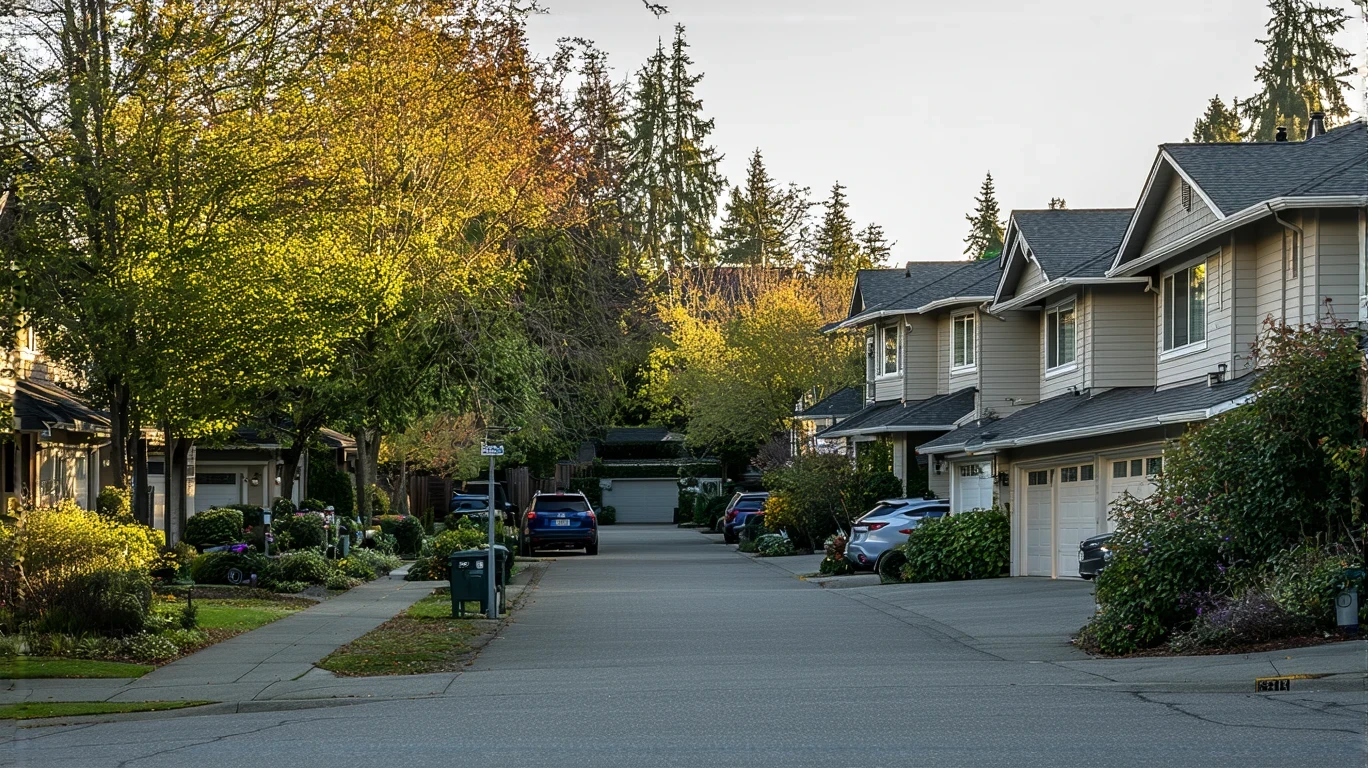
Urban form shapes inventory availability. Bellevue’s building height profile exceeds the high threshold, signaling a more vertical character with greater prevalence of condos, townhomes, and mid-rise apartments. Redmond’s average building levels fall in the medium band, indicating a mixed landscape where single-family homes, duplexes, and low-rise apartments coexist. Buyers seeking detached homes with yards may find Redmond’s housing stock more aligned with that preference. Buyers prioritizing walkable, low-maintenance living may find Bellevue’s vertical inventory better suited to their needs.
| Housing Type | Redmond | Bellevue |
|---|---|---|
| Median Home Value | $1,026,400 | $1,139,500 |
| Median Gross Rent | $2,299/month | $2,422/month |
| Building Height Character | Mixed (medium band) | More Vertical (high threshold) |
Renters sensitive to monthly cash flow pressure benefit from Redmond’s lower baseline rent, especially when managing student loans, childcare, or other fixed obligations. Families renting larger units—three-bedroom apartments or townhomes—feel the percentage difference more acutely as unit size scales up. First-time buyers face a lower entry threshold in Redmond, which may accelerate the timeline to ownership or reduce the need for gift funds and co-signers. Established buyers prioritizing specific unit types—condos with amenities in Bellevue, single-family homes with yards in Redmond—will find inventory availability shaped by each city’s urban form.
Housing takeaway: Redmond imposes lower entry costs for both renters and buyers, while Bellevue’s more vertical character offers different unit-type availability. Households prioritizing lower monthly obligations or faster paths to ownership may find Redmond’s structure more accommodating. Households seeking vertical, walkable living with condo or townhome inventory may find Bellevue’s housing stock better aligned, despite the higher entry barrier.
Utilities and Energy Costs
Both Redmond and Bellevue share identical utility rate structures: 14.11¢ per kWh for electricity and $17.38 per MCF for natural gas. The Pacific Northwest’s mild climate moderates heating and cooling demands compared to regions with extreme summers or harsh winters. Heating needs dominate utility exposure during the cool, damp months from November through March, while cooling needs remain modest even during the warmest weeks of summer. Households in both cities experience similar seasonal rhythms—higher gas usage in winter, stable baseline electricity year-round, and occasional spikes during rare heat events.
Utility cost exposure depends more on housing characteristics than city choice. Older single-family homes with poor insulation, single-pane windows, and aging HVAC systems generate higher heating bills during winter months. Newer apartments and condos—more prevalent in Bellevue’s vertical housing stock—often feature better insulation, energy-efficient windows, and shared-wall construction that reduces heat loss. Renters in modern mid-rise buildings may see lower utility volatility than renters in older walk-up units or detached homes. Homeowners in Redmond’s mixed housing stock encounter a wider range of building ages and energy performance, creating more variability in monthly utility obligations.
Household size and occupancy patterns amplify these differences. Single adults working from home run baseline electricity loads throughout the day—computers, monitors, lighting, and climate control—without the benefit of shared usage across multiple earners. Families with children generate higher water heating, laundry, and refrigeration loads, but spread fixed costs across more people. Dual-income couples who leave home during the day reduce daytime heating and cooling exposure, while retirees and remote workers maintain comfort levels across longer daily windows. Bellevue’s more vertical housing form may offer more units where utilities are bundled into HOA fees or where master-metered buildings smooth individual volatility, though this varies widely by building age and ownership structure.
Utility takeaway: Identical rate structures mean utility cost differences stem from housing type, building age, and household occupancy—not from city-level policy or infrastructure. Renters in newer, well-insulated buildings (more common in Bellevue’s vertical stock) may experience lower heating volatility. Homeowners in Redmond’s mixed housing stock face more variability depending on the age and efficiency of their specific unit. Households sensitive to seasonal bill swings should prioritize building characteristics and insulation quality over city choice.
Groceries and Daily Expenses
Both Redmond and Bellevue show broadly accessible food and grocery density, with establishments exceeding high thresholds across the city. Residents in either location can reach supermarkets, specialty grocers, and prepared food options without long drives or logistical friction. The regional price parity index of 151 applies to both cities, meaning grocery staples, household goods, and dining out all reflect the same elevated cost structure relative to the national baseline. A pound of ground beef, a gallon of milk, or a rotisserie chicken costs effectively the same whether purchased in Redmond or Bellevue.
Grocery spending pressure depends more on household habits and sensitivity to convenience creep than on city-level price differences. Single adults who rely heavily on prepared foods, coffee shops, and takeout face higher monthly grocery bills than those who cook at home and pack lunches. Families managing larger volumes of staples—milk, bread, eggs, fresh produce—benefit from bulk purchasing at big-box retailers, which both cities offer access to within short drives. Couples splitting cooking responsibilities may find meal planning reduces waste and smooths weekly spending, while households with unpredictable schedules often lean on convenience options that carry premium pricing.
Bellevue’s more vertical urban form concentrates retail along walkable corridors, making it easier to run quick errands on foot or by bike. Redmond’s mixed character spreads grocery options across neighborhood centers and larger retail clusters, often requiring short car trips but offering more parking availability. Households without cars benefit from Bellevue’s denser retail clustering, while car-dependent households may find Redmond’s layout equally convenient with less competition for parking. Both cities support a range of shopping strategies—discount chains, farmers markets, ethnic grocers, and premium organic stores—so cost sensitivity can be managed through choice rather than imposed by limited access.
Grocery takeaway: Grocery and daily expense pressure feels nearly identical in Redmond and Bellevue due to shared regional pricing and broadly accessible food density. Households sensitive to convenience spending creep should focus on their own habits—cooking frequency, takeout reliance, coffee shop visits—rather than expecting meaningful city-level price differences. Bellevue’s walkable retail corridors may reduce car dependency for errands, while Redmond’s mixed layout offers more parking ease for car-based shopping trips.
Taxes and Fees
Washington State imposes no personal income tax, so both Redmond and Bellevue residents avoid state-level income tax obligations regardless of earnings. Sales tax rates apply uniformly across the region, meaning purchases of clothing, electronics, and household goods carry the same tax burden in either city. Property taxes, however, vary by assessed home value and local levy rates, creating different obligations for homeowners even when tax rates per $1,000 of assessed value remain similar.
Bellevue’s higher median home value of $1,139,500 generates higher annual property tax bills than Redmond’s median of $1,026,400, even if the effective millage rate stays constant. A homeowner in Bellevue pays property taxes on a larger assessed base, which translates to higher annual obligations for schools, fire districts, libraries, and other local services. First-time buyers stretching to afford Bellevue’s entry price face not only higher mortgage payments but also higher ongoing property tax exposure. Long-term homeowners who purchased years ago and benefit from slower assessment growth may see smaller year-over-year increases, but new buyers enter at current market valuations and absorb the full tax impact immediately.
HOA fees and special assessments vary widely by neighborhood and housing type rather than by city. Bellevue’s more vertical housing stock includes more condos and townhomes with mandatory HOA fees covering landscaping, exterior maintenance, shared amenities, and sometimes utilities. These fees can range from modest monthly amounts to several hundred dollars, depending on building age and amenity level. Redmond’s mixed housing stock includes more single-family homes without HOA obligations, though planned communities and newer developments often impose fees as well. Renters typically don’t pay property taxes or HOA fees directly, but landlords factor these costs into rent levels, so the higher property tax base in Bellevue indirectly supports the higher median rent.
Tax and fee takeaway: Homeowners in Bellevue face higher property tax obligations due to higher assessed home values, even when tax rates remain similar. Buyers sensitive to ongoing annual costs should account for property taxes as a recurring obligation that scales with home price. Renters avoid direct property tax exposure but absorb it indirectly through rent levels. HOA fees depend more on housing type and building age than city choice, though Bellevue’s more vertical stock increases the likelihood of encountering mandatory HOA structures.
Transportation & Commute Reality
Both Redmond and Bellevue show rail transit present and notable cycling infrastructure, with pedestrian-to-road ratios exceeding high thresholds. Residents in either city can access light rail stations, bus routes, and protected bike lanes, reducing absolute car dependency for those whose daily routines align with transit coverage. Walkable pockets exist in both cities, meaning certain neighborhoods support errands, dining, and recreation on foot, though the extent and connectivity of these pockets vary by specific address.
Gas prices sit at $5.45 per gallon in both cities, reflecting regional fuel costs rather than city-specific pricing. Households that commute by car face identical per-gallon costs, so transportation expense differences stem from commute distance, frequency, and whether the job location favors one city over the other. A household commuting from Redmond to downtown Seattle may experience different travel times and route options than one commuting from Bellevue to the same destination, but those differences depend on workplace address and shift timing rather than inherent city-level transportation cost structure.
Car ownership remains common in both cities despite transit availability. Families with children, households managing multiple work schedules, and residents whose jobs lie outside transit corridors still rely on personal vehicles for flexibility and time efficiency. Parking availability, garage space, and street parking regulations vary by neighborhood, but neither city imposes the severe parking scarcity or permit costs seen in denser urban cores. Single adults and couples without children may find transit and biking sufficient for daily needs, especially if they live near rail stations and work along transit-served corridors. Retirees and remote workers face minimal commute costs regardless of city, though proximity to healthcare, grocery stores, and recreational amenities still influences transportation frequency and mode choice.
Transportation takeaway: Redmond and Bellevue offer similar transit infrastructure, bike presence, and walkable pockets, so transportation cost differences depend more on individual commute patterns and lifestyle than on city-level structure. Households whose jobs align with rail or bus routes can reduce car dependency in either city. Households requiring cars for work, childcare, or errands face identical gas prices and similar parking availability, making commute distance and route efficiency the primary cost drivers rather than city choice.
Cost Structure Comparison
Housing dominates the cost experience in both Redmond and Bellevue, but the entry barrier and ongoing obligations differ meaningfully. Bellevue’s higher median home value and median rent create steeper upfront costs for buyers and renters alike. First-time buyers face a larger down payment hurdle, stricter income qualification requirements, and higher monthly mortgage obligations. Renters absorb higher baseline monthly costs before utilities, parking, or renter’s insurance enter the equation. Redmond’s lower entry costs provide more breathing room for households managing student debt, childcare expenses, or irregular income streams.
Utilities introduce similar seasonal volatility in both cities due to identical rate structures and comparable climate exposure. Heating costs rise during the cool, damp months, while cooling needs remain modest even in summer. The difference in utility exposure stems from housing type and building age rather than city choice. Bellevue’s more vertical housing stock includes more newer, energy-efficient buildings where shared-wall construction and modern insulation reduce heating variability. Redmond’s mixed housing stock includes more older single-family homes where insulation quality and HVAC efficiency vary widely, creating more household-to-household differences in seasonal bill swings.
Transportation patterns matter more for households with long commutes or car-dependent routines, but both cities offer rail transit, notable bike infrastructure, and walkable pockets. The cost difference depends on where you work and how your daily routine aligns with transit coverage, not on inherent city-level transportation infrastructure gaps. Families managing school drop-offs, extracurricular activities, and grocery runs may rely on cars regardless of transit availability, making commute distance and parking convenience more relevant than transit access. Single adults and couples without children may find transit sufficient if their jobs and social lives cluster along rail-served corridors.
Grocery and daily expense pressure feels nearly identical due to shared regional pricing and broadly accessible food density in both cities. Households sensitive to convenience spending creep—frequent takeout, coffee shop visits, prepared meals—will experience similar cost exposure in either location. The decision to cook at home, pack lunches, or rely on bulk purchasing drives grocery spending more than city-level price differences, which remain negligible given the shared regional price parity index.
For households sensitive to housing entry costs, Redmond offers a lower barrier to both renting and ownership. For households prioritizing vertical, walkable living with condo or townhome inventory, Bellevue’s more vertical character provides better unit-type availability despite the higher entry price. For households focused on minimizing utility volatility, building age and insulation quality matter more than city choice, though Bellevue’s newer vertical stock may offer more energy-efficient options. For households managing transportation costs, commute distance and job location drive expenses more than city-level infrastructure differences.
How the Same Income Feels in Redmond vs Bellevue
Single Adult
Rent becomes the first non-negotiable cost, and Redmond’s lower median rent leaves more room for student loan payments, retirement contributions, or emergency savings. Flexibility exists in grocery spending, dining out, and entertainment, but only if the rent baseline doesn’t consume too much of gross income. Commute friction matters less if the job aligns with transit routes, but car ownership still imposes insurance, maintenance, and parking costs regardless of city. Bellevue’s higher rent tightens the budget before discretionary spending begins, making it harder to absorb unexpected expenses or build savings momentum.
Dual-Income Couple
Housing costs still dominate, but two incomes provide more flexibility to absorb Bellevue’s higher rent or mortgage without sacrificing other priorities. The non-negotiable costs expand to include two commutes, potentially two cars, and higher grocery volumes if cooking at home replaces takeout. Flexibility appears in the ability to prioritize location over unit size, or to trade commute time for lower housing costs by choosing one city over the other. Bellevue’s vertical housing stock may offer more walkable, low-maintenance living that reduces time costs even if cash costs run higher, while Redmond’s mixed stock may offer more space for the same monthly outlay.
Family with Kids
Childcare, school proximity, and space needs become non-negotiable, often forcing families to prioritize housing size and neighborhood over minimizing rent or mortgage costs. Flexibility disappears quickly as grocery volumes rise, transportation needs multiply with school drop-offs and activities, and utility usage climbs with more occupants. Redmond’s lower housing entry costs may allow families to afford an extra bedroom or a yard, while Bellevue’s higher costs may push families toward smaller units or longer commutes to find affordable space. Time costs—commute friction, errands accessibility, proximity to schools and parks—often matter more than cash cost differences, making the decision less about which city costs less and more about which city’s layout reduces daily logistical friction.
Decision Matrix: Which City Fits Which Household?
| Decision Factor | If You’re Sensitive to This… | Redmond Tends to Fit When… | Bellevue Tends to Fit When… |
|---|---|---|---|
| Housing entry + space needs | You need lower upfront costs or more space per dollar | You prioritize lower rent or home price and prefer mixed housing stock with more single-family options | You prioritize walkable, vertical living and accept higher entry costs for condo or townhome inventory |
| Transportation dependence + commute friction | You want to minimize car dependency or reduce commute time | Your job location favors Redmond’s transit routes or you value parking ease for car-based routines | Your job location favors Bellevue’s transit routes or you prioritize walkable errands over car convenience |
| Utility variability + home size exposure | You want predictable utility bills and lower seasonal volatility | You prioritize newer construction or smaller units regardless of city and can navigate mixed housing stock | You prioritize newer, energy-efficient vertical buildings where shared-wall construction reduces heating exposure |
| Grocery strategy + convenience spending creep | You want to control daily spending without sacrificing access | You prefer car-based shopping trips with easier parking and don’t mind short drives to grocery stores | You prefer walkable retail corridors where errands can be completed on foot or by bike |
| Fees + friction costs (HOA, services, upkeep) | You want to avoid mandatory HOA fees or minimize ongoing service costs | You prioritize single-family homes without HOA obligations and accept higher maintenance responsibility | You accept HOA fees in exchange for lower maintenance burden and shared amenities in vertical buildings |
| Time budget (schedule flexibility, errands, logistics) | You want to minimize time spent on errands and household logistics | You value parking ease and car-based efficiency for managing multiple stops and family schedules | You value walkable density where errands, dining, and services cluster within short distances |
Lifestyle Fit
Both Redmond and Bellevue offer integrated green space access, with park density exceeding high thresholds and water features present throughout the area. Families benefit from strong infrastructure in both cities, with school and playground density meeting thresholds that support active, outdoor-oriented lifestyles. Hospital facilities and pharmacies exist in both locations, ensuring routine and emergency healthcare needs can be met locally without long drives. The experiential structure of daily life—how people move, run errands, and access services—feels remarkably similar, with walkable pockets, rail transit, and notable cycling infrastructure present in both cities.
Bellevue’s more vertical character creates denser retail and dining corridors, making it easier to walk to coffee shops, restaurants, and services without needing a car for every trip. The urban form supports a lifestyle where errands and social activities cluster within short distances, reducing the need for car trips and parking searches. Redmond’s mixed building height profile offers more variety in housing types and neighborhood textures, with single-family homes, duplexes, and low-rise apartments coexisting alongside newer developments. This mix appeals to households seeking yards, garages, and more separation between residential and commercial zones, even if it means slightly longer drives to reach certain amenities.
Cultural and recreational opportunities overlap significantly due to the cities’ proximity within the Seattle metro. Residents of either city can access regional parks, trails, waterfront areas, and cultural institutions with short drives. Local distinctions emerge in neighborhood character—Bellevue’s downtown core offers more high-rise living and urban amenities, while Redmond’s tech-industry presence and suburban layout create a different daily rhythm. Families prioritizing school quality, playground access, and green space will find strong infrastructure in both cities, making the decision less about amenity availability and more about preferred housing form and neighborhood walkability.
Quick fact: Both Redmond and Bellevue show rail transit present, reducing car dependency for households whose routines align with transit coverage.
Quick fact: Bellevue’s building height profile exceeds the high threshold, offering more vertical, walkable living options compared to Redmond’s mixed-height character.
Frequently Asked Questions
Is Redmond or Bellevue more affordable for renters in 2026?
Redmond’s median gross rent of $2,299 per month runs lower than Bellevue’s $2,422 per month, creating a $123 monthly difference that adds up to nearly $1,500 annually. Renters managing tight budgets, student loans, or saving for a down payment may find Redmond’s lower baseline rent provides more financial breathing room. Both cities offer broadly accessible grocery density, rail transit, and walkable pockets, so the lifestyle and amenity differences remain minimal while the rent gap persists.
Which city has lower home prices, Redmond or Bellevue, and does it matter for first-time buyers in 2026?
Redmond’s median home value of $1,026,400 sits below Bellevue’s $1,139,500, creating a $113,100 difference that affects down payment requirements, mortgage qualification, and monthly principal-and-interest obligations. First-time buyers stretching to meet lender income thresholds may find Redmond’s lower entry barrier accelerates the path to ownership or reduces reliance on gift funds and co-signers. Established buyers with larger down payments may prioritize other factors—commute proximity, preferred housing form, or school boundaries—over the entry-cost difference.
Do utilities cost more in Bellevue or Redmond in 2026?
Both cities share identical utility rate structures: 14.11¢ per kWh for electricity and $17.38 per MCF for natural gas. Utility cost differences stem from housing type, building age, and household occupancy rather than city-level pricing. Renters in newer, well-insulated buildings—more common in Bellevue’s vertical housing stock—may experience lower seasonal heating volatility. Homeowners in Redmond’s mixed housing stock face more variability depending on the age and efficiency of their specific unit, making building characteristics more important than city choice.
Is it easier to live without a car in Redmond or Bellevue in 2026?
Both cities show rail transit present, notable cycling infrastructure, and walkable pockets, so car-free living remains feasible for households whose routines align with transit coverage. Bellevue’s more vertical urban form concentrates retail and dining along walkable corridors, making it easier to run errands on foot or by bike. Redmond’s mixed layout spreads amenities across neighborhood centers, often requiring short car trips but offering more parking availability. Single adults and couples without children may find transit sufficient in either city, while families managing school drop-offs and extracurricular activities often rely on cars regardless of transit access.
Which city is better for families with kids, Redmond or Bellevue, based on cost and lifestyle in 2026?
Both cities offer strong family infrastructure, with school and playground density meeting thresholds that support active, outdoor-oriented lifestyles. Redmond’s lower housing entry costs may allow families to afford larger units or homes with yards, while Bellevue’s higher costs may push families toward smaller spaces or longer commutes. Bellevue’s more vertical character offers walkable density that reduces time spent on errands, while Redmond’s mixed layout provides more single-family housing options with parking ease. The decision depends less on which city costs less overall and more on whether your household prioritizes space, walkability, or minimizing housing entry costs.
Conclusion
Redmond and Bellevue share the same regional cost structure for utilities, gas, and groceries, making the decision between them less about operational expenses and more about housing entry costs and preferred urban form. Redmond’s lower median home value and median rent reduce the financial barrier for renters and first-time buyers