
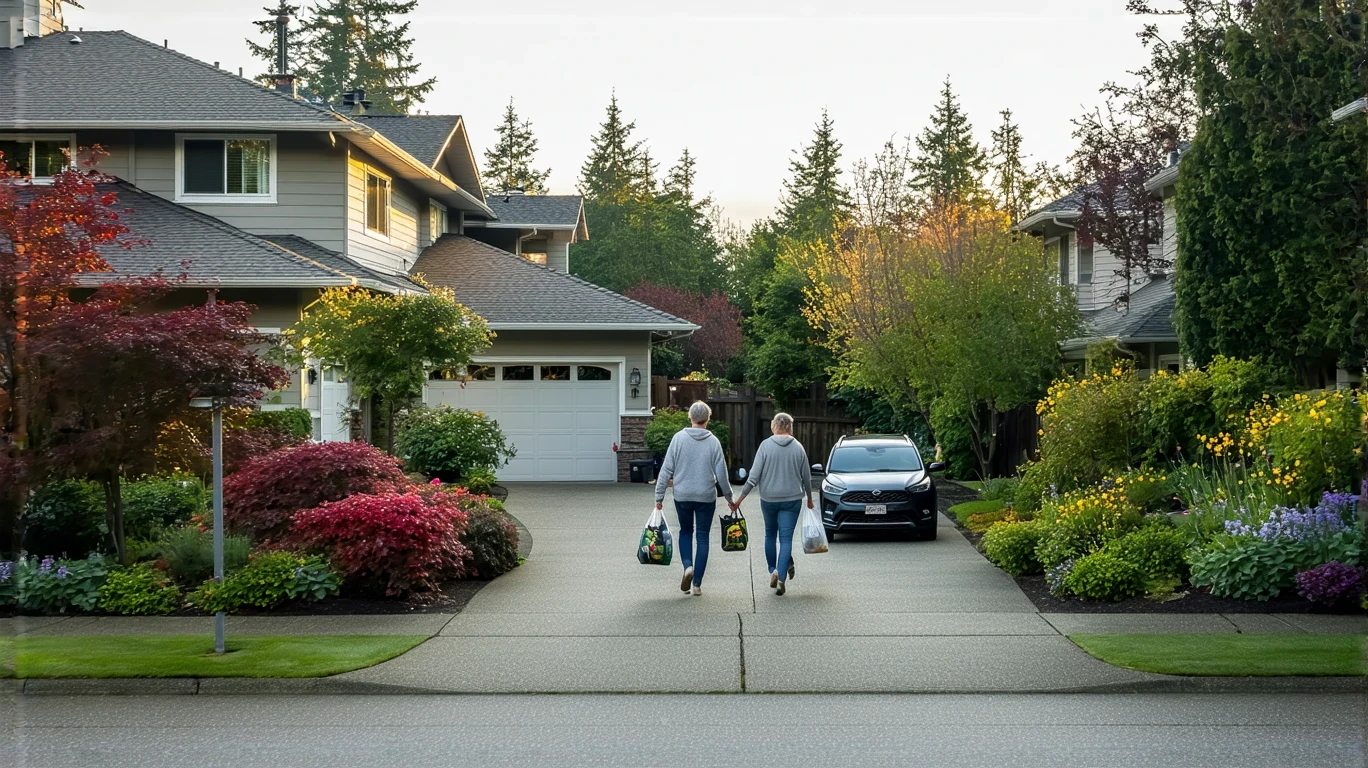
How Grocery Costs Feel in Redmond
Grocery prices in Redmond sit noticeably above the national baseline, shaped by the region’s elevated cost structure and the premium shoppers pay for convenience, quality, and selection in the Seattle metro. While the city’s median household income of $155,287 per year provides meaningful cushion for many residents, food costs still register as a persistent line item—one that feels tighter for singles, young professionals, and families stretching toward homeownership or managing childcare expenses. The pressure isn’t uniform: households accustomed to mid-tier or premium grocers may not feel sticker shock, but those shopping with tighter margins or comparing prices to previous cities often notice the difference quickly.
For two adults, monthly grocery spending in Redmond tends to run higher than in many suburban markets, though the exact figure varies widely based on store choice, dietary preferences, and how often meals are prepared at home versus purchased ready-made. Families with children feel the multiplier effect more acutely—each additional household member doesn’t just add volume, but often introduces less flexible demands around snacks, school lunches, and dietary variety. Singles, meanwhile, face a different challenge: per-person costs rise when buying smaller quantities, and the convenience of grab-and-go options or eating out becomes more tempting when cooking for one feels inefficient.
What makes grocery costs in Redmond distinct isn’t just the price level—it’s the interaction between income, household size, and the local retail landscape. High earners may absorb the premium without adjusting behavior, while moderate-income households often become more intentional about store selection, sale timing, and meal planning. The city’s walkable pockets and strong transit access mean some residents can shop multiple stores without relying solely on a car, but that flexibility doesn’t always translate to lower costs—it depends on whether the accessible stores compete on price or convenience.
Grocery Price Signals (Illustrative)
Item-level prices in Redmond illustrate how staple goods tend to compare locally—not a full shopping list, but a set of anchors that help contextualize what “expensive” or “reasonable” means here. Ground beef at $10.12 per pound and cheese at $7.22 per pound sit well above national averages, reflecting both regional cost structure and the prevalence of higher-quality or organic options in many stores. Milk at $6.14 per half-gallon and eggs at $3.55 per dozen follow similar patterns—prices that don’t shock seasoned Redmond shoppers but can feel steep to newcomers or households accustomed to discount-focused markets.
Derived estimate based on national baseline adjusted by regional price parity; not an observed local price.
| Item | Price |
|---|---|
| Ground beef | $10.12/lb |
| Cheese | $7.22/lb |
| Milk | $6.14/half-gallon |
| Eggs | $3.55/dozen |
| Chicken | $3.07/lb |
| Bread | $2.73/lb |
| Rice | $1.60/lb |
These prices illustrate relative positioning rather than checkout-accurate totals. Chicken at $3.07 per pound and rice at $1.60 per pound remain comparatively accessible, offering households a way to build meals around lower-cost proteins and grains when managing tighter budgets. Bread at $2.73 per pound falls somewhere in the middle—neither a bargain nor a luxury, but reflective of the region’s overall price elevation. The variability across categories matters: households that rely heavily on dairy, red meat, or convenience items feel the pressure more than those who cook from scratch using grains, legumes, and seasonal produce.
What these numbers don’t capture is the range within each category. A pound of ground beef might cost $10.12 at a mid-tier grocer, but $7.50 at a discount chain or $14 at a premium market emphasizing grass-fed or local sourcing. That spread—often 30 to 50 percent between tiers—means store choice drives grocery costs as much as the items themselves. Households that treat all grocers as interchangeable often overspend without realizing it, while those who map their shopping to store strengths (bulk staples at one, fresh produce at another) can soften the impact without sacrificing quality.
Store Choice & Price Sensitivity
Grocery price pressure in Redmond varies significantly by store tier, and understanding that structure is essential for managing monthly expenses effectively. Discount-focused chains anchor the lower end, offering straightforward pricing on staples, private-label goods, and bulk basics—stores where a household can fill a cart with rice, beans, pasta, canned goods, and frozen vegetables without encountering premium positioning or curated selection. These stores don’t always offer the widest variety or the most appealing shopping experience, but they deliver predictable value for households prioritizing cost control over convenience or ambiance.
Mid-tier grocers occupy the center of the market, balancing selection, quality, and price in ways that appeal to the broadest range of shoppers. These stores stock both national brands and store-label alternatives, maintain well-organized produce sections, and offer enough specialty items (organic, gluten-free, international) to accommodate diverse diets without pricing out budget-conscious families. For many Redmond households, mid-tier stores become the default—close enough to home, familiar enough in layout, and varied enough in inventory to handle weekly shopping without requiring multiple stops. The tradeoff is that prices run 15 to 25 percent higher than discount chains on comparable items, a gap that compounds quickly for larger households or those shopping frequently.
Premium grocers cater to shoppers prioritizing quality, sourcing, and experience—stores where the emphasis shifts from price per pound to provenance, preparation, and presentation. These markets stock organic produce, artisan breads, specialty cheeses, and prepared meals designed for convenience and flavor rather than cost efficiency. For high-income households or those who view grocery shopping as part of lifestyle rather than logistics, the premium feels justified. But for families managing tighter budgets or those new to Redmond’s cost structure, premium stores can feel disorienting—a place where a modest cart easily exceeds $150 and where the line between necessity and indulgence blurs quickly.
The practical implication is that grocery costs in Redmond aren’t fixed—they’re chosen, often unconsciously, through store selection and shopping habits. A household that defaults to premium grocers for convenience may spend 40 to 60 percent more annually than one that splits trips between discount and mid-tier stores, even if both households buy similar volumes and eat comparable diets. Redmond’s food establishment density exceeds high thresholds, meaning most residents have access to multiple tiers without long drives, but that access only translates to savings if households actively map their shopping to store strengths rather than defaulting to proximity or habit.
What Drives Grocery Pressure Here
Grocery costs in Redmond don’t exist in isolation—they interact with income, household composition, and the broader cost structure in ways that amplify or soften their impact. For households earning near or above the city’s median income, grocery spending registers as noticeable but manageable, a line item that requires some attention but rarely forces difficult tradeoffs. For those earning below the median—particularly singles, young professionals, or families with one income—grocery costs become a more active pressure point, one that competes directly with housing, childcare, and transportation for limited discretionary dollars.
Household size sensitivity plays a critical role. A single adult shopping for one can sometimes spend less in absolute terms but often faces higher per-person costs due to smaller package sizes, less efficient meal planning, and the temptation to rely on convenience foods or dining out when cooking feels inefficient. Two adults gain some efficiency through shared staples and bulk purchasing, but the real multiplier hits when children enter the picture. Each child doesn’t just add volume—they introduce less flexible demands around snacks, school lunches, dietary variety, and the time pressure that makes convenience items more appealing even when they cost more per serving.
Regional distribution and access patterns also shape how grocery costs feel. Redmond’s grocery density sits high, with food and grocery options broadly accessible rather than concentrated in isolated corridors. That means most households can reach multiple stores without long drives, but it doesn’t guarantee price competition—many neighborhoods are served primarily by mid-tier or premium grocers, with discount options requiring intentional trips rather than convenient stops. Households with cars can navigate this landscape more easily, while those relying on transit or walking face a different calculus: the closest store may not be the cheapest, and the time cost of reaching a discount chain may outweigh the savings for smaller trips.
Seasonal variability introduces another layer, though it’s more qualitative than numeric. Produce prices fluctuate with growing seasons, weather disruptions, and supply chain pressures, but Redmond’s position in the Pacific Northwest means year-round access to regional farms and distributors softens some of the volatility seen in more isolated markets. Still, households that shop seasonally—buying berries in summer, root vegetables in fall, citrus in winter—can reduce costs and improve quality compared to those who buy the same items year-round regardless of availability or price.
Practical Ways People Manage Grocery Costs
Managing grocery costs in Redmond isn’t about extreme couponing or deprivation—it’s about intentional behavior that aligns spending with priorities and reduces waste without sacrificing nutrition or variety. One of the most effective strategies is mapping shopping trips to store strengths rather than defaulting to a single grocer for everything. Households that buy shelf-stable staples, grains, and frozen goods at discount chains, fresh produce and proteins at mid-tier stores, and specialty items only occasionally at premium markets can reduce overall spending significantly without feeling like they’re compromising on quality or convenience.
Meal planning and batch cooking offer another lever, particularly for families or households where time pressure drives convenience purchases. Preparing larger portions of soups, casseroles, or grain-based dishes on weekends and portioning them for weekday meals reduces reliance on takeout, minimizes food waste, and allows households to take advantage of bulk pricing on ingredients. The upfront time investment pays off in lower per-meal costs and less decision fatigue during busy weeknights, though it requires some discipline and storage space to execute consistently.
Buying in bulk works well for non-perishable staples and frequently used items, but only when households have the storage capacity and consumption patterns to justify it. A family that goes through rice, pasta, canned beans, and cooking oil quickly can realize meaningful savings by purchasing larger quantities, while a single adult or couple may find that bulk buying leads to waste or ties up cash in inventory that sits unused. The key is matching bulk purchases to actual consumption rather than aspirational meal plans that don’t materialize.
Reducing food waste—through better storage, using leftovers intentionally, and buying only what will realistically be consumed—addresses one of the most common sources of hidden grocery costs. Households that let produce spoil, forget about pantry items, or discard leftovers effectively pay full price for food they never eat, a pattern that compounds quickly in a high-cost market like Redmond. Simple habits like organizing the fridge by expiration date, freezing surplus ingredients, and planning meals around what’s already on hand can reduce waste and stretch grocery budgets without requiring dramatic lifestyle changes.
Groceries vs Eating Out (Directional)
The tradeoff between cooking at home and eating out in Redmond isn’t purely financial—it’s a balance of time, energy, convenience, and the social or experiential value that dining out provides. Cooking at home almost always costs less per meal, particularly when households prepare simple, ingredient-driven dishes rather than replicating restaurant-style recipes that require specialty items or techniques. But the time required to plan, shop, cook, and clean creates friction, especially for dual-income households, parents managing school and activity schedules, or singles who find cooking for one inefficient or uninspiring.
Dining out in Redmond spans a wide range, from fast-casual chains to upscale restaurants, and the cost per meal varies accordingly. A quick lunch or casual dinner might run $12 to $18 per person, while a sit-down meal with drinks and appetizers can easily exceed $40 to $60 per person before tip. For households that eat out frequently—whether for convenience, socialization, or preference—the cumulative cost can rival or exceed grocery spending, particularly if dining out becomes the default rather than an intentional choice.
The practical question isn’t whether to cook or dine out exclusively, but how to allocate meals in ways that match household priorities and constraints. Families with young children often find that cooking at home most nights and reserving dining out for weekends or special occasions offers the best balance of cost control and sanity preservation. Singles and couples without children may lean more heavily on dining out during the workweek, accepting the higher cost in exchange for time and flexibility, while cooking more elaborate meals on weekends when time pressure eases. The key is recognizing that each meal represents a choice—one that compounds over weeks and months—and that intentional allocation based on actual needs and preferences tends to feel better and cost less than defaulting to convenience without reflection.
FAQs About Grocery Costs in Redmond (2026)
Is it cheaper to shop in bulk in Redmond? Bulk buying can reduce per-unit costs on non-perishable staples like rice, pasta, canned goods, and cooking oil, but only if your household has the storage space and consumption patterns to use what you purchase before it expires or goes stale. For families or larger households, bulk buying often pays off; for singles or couples, it can lead to waste unless you’re disciplined about meal planning and storage.
Which stores in Redmond are best for low prices? Discount-focused chains consistently offer the lowest prices on staples, private-label goods, and bulk basics, while mid-tier grocers balance selection and cost, and premium markets emphasize quality and convenience over price. Redmond’s high grocery density means most households can access multiple tiers without long drives, so mapping your shopping to store strengths—staples at discount stores, fresh items at mid-tier—can reduce overall spending without sacrificing variety.
How much more do organic items cost in Redmond? Organic produce, dairy, and proteins typically cost more than conventional equivalents, with premiums varying by item and store tier. Premium grocers stock the widest organic selection but charge the highest prices, while mid-tier stores offer some organic options at more moderate premiums, and discount chains carry limited organic inventory focused on high-turnover staples. The cost difference matters most for households buying organic across all categories rather than selectively.
How do grocery costs for two adults in Redmond tend to compare to nearby cities? Redmond’s grocery prices sit above the national baseline and align closely with the broader Seattle metro cost structure, meaning they feel similar to Bellevue or Kirkland but noticeably higher than more distant suburbs or smaller cities outside the metro core. The difference isn’t dramatic enough to justify long drives for routine shopping, but it’s enough that households relocating from lower-cost regions often notice the shift quickly.
How do households in Redmond think about grocery spending when cooking at home? Many households treat grocery spending as a controllable variable—one that responds to intentional store selection, meal planning, and waste reduction—rather than a fixed cost. Families with children often prioritize cost control through bulk buying and batch cooking, while singles and couples may accept higher per-person costs in exchange for convenience and variety. The key is matching shopping behavior to actual consumption patterns rather than aspirational meal plans that don’t materialize.
Do grocery costs in Redmond vary much by season? Produce prices fluctuate with growing seasons and supply chain conditions, but Redmond’s position in the Pacific Northwest provides year-round access to regional farms and distributors, which softens some of the volatility seen in more isolated markets. Households that shop seasonally—buying berries in summer, root vegetables in fall, citrus in winter—can reduce costs and improve quality compared to those who buy the same items year-round regardless of availability.
How do grocery costs interact with other living expenses in Redmond? Grocery spending competes directly with housing, utilities, transportation, and childcare for household dollars, and its impact varies by income level and household composition. High earners may absorb elevated grocery costs without adjusting behavior, while moderate-income households often become more intentional about store choice and meal planning to preserve flexibility in other budget categories. For families managing tight margins, grocery costs become an active pressure point rather than background noise.
How Groceries Fit Into the Cost of Living in Redmond
Grocery costs in Redmond occupy a middle tier of household expenses—less dominant than housing, more variable than utilities, and more controllable than transportation for many households. While elevated prices are real and persistent, they don’t define affordability in the way that housing costs do. A household that secures manageable rent or a mortgage payment can absorb higher grocery costs through intentional shopping and meal planning, while one stretched thin by housing pressure will feel grocery costs more acutely, even if the absolute dollar amounts are similar.
The interaction between grocery spending and other cost categories matters more than the grocery total in isolation. Households that drive long commutes or rely heavily on childcare may find that time constraints push them toward convenience foods or dining out, effectively raising grocery-related costs even if the per-item prices don’t change. Those with shorter commutes, flexible schedules, or the ability to cook in batches can reduce food spending without sacrificing nutrition or variety, creating breathing room in other budget areas.
For a complete picture of how grocery costs fit into overall household spending—including housing, utilities, transportation, and discretionary expenses—readers should consult A Month of Expenses in Redmond: What It Feels Like, which provides a structured breakdown of where money goes and how different household types experience the city’s cost structure. Grocery spending is one piece of that puzzle, but understanding the whole requires seeing how all the pieces interact, compete, and compound over time.
The good news is that grocery costs in Redmond, while elevated, respond to intentional behavior more readily than fixed expenses like rent or property taxes. Households that map their shopping to store tiers, plan meals around seasonal availability and bulk staples, and reduce waste through better storage and consumption habits can soften the impact without feeling deprived or spending hours clipping coupons. The city’s high grocery density and strong food establishment access mean that flexibility exists—it just requires some upfront effort to identify which stores serve which needs and to build shopping routines that align spending with priorities rather than defaulting to convenience or habit.
How this article was built: In addition to public economic data, this article incorporates location-based experiential signals derived from anonymized geographic patterns—such as access density, walkability, and land-use mix—to reflect how day-to-day living actually feels in Redmond, WA.