
What does it actually feel like to live in Redmond, WA? For some, it’s the ideal blend of suburban calm and accessible amenities—a place where you can walk to a grocery store, catch a train into Seattle, and still enjoy quiet streets and integrated parks. For others, it’s a city caught between identities: too expensive to feel relaxed, too polished to feel authentic, and too fast-growing to feel settled. The vibe here isn’t about universal happiness—it’s about whether Redmond’s particular mix of tech-hub energy, family-friendly infrastructure, and outdoor access aligns with what you’re actually looking for.
Sentiment snapshot: 74 out of 100 residents say they’re happy in Redmond.
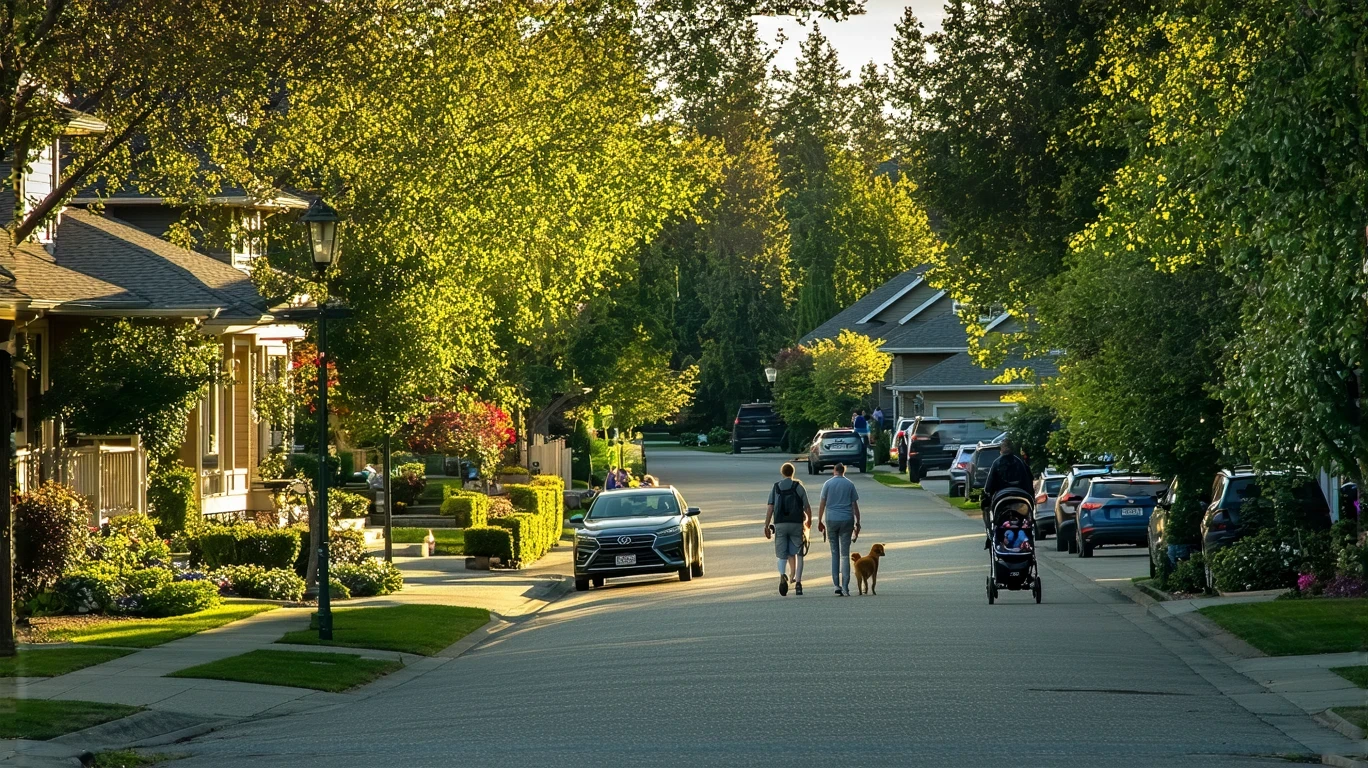
The Emotional Landscape of Redmond
Redmond’s emotional tone is shaped by a tension between prosperity and pressure. This is a city where median household income sits at $155,287 per year, where the median home value reaches $1,026,400, and where the regional price parity index stands at 151—well above the national baseline. That economic reality creates a backdrop of financial intensity that colors daily life, even for those who can afford it comfortably.
What tends to feel rewarding here: the infrastructure works. Parks are plentiful and well-maintained, with green space woven throughout the city and water features adding texture to the landscape. Schools and playgrounds meet density thresholds that matter to families. Pedestrian infrastructure is substantial in pockets, and rail transit provides a viable alternative to driving for some trips. Food and grocery options exceed high-density thresholds, meaning errands feel less like expeditions and more like quick stops. For households that value logistical ease, outdoor access, and a polished suburban environment, Redmond delivers.
What tends to feel limiting: the cost structure is relentless. With median rent at $2,299 per month, gas at $5.45 per gallon, and electricity at 14.11¢/kWh, the baseline expense of living here is high—and it doesn’t leave much room for financial missteps. The city’s rapid growth has brought new residents, new development, and new traffic, which long-time locals often describe as a loss of the quieter, more intimate community they remember. And while walkable pockets and transit exist, car dependency still dominates for many households, especially those living outside the more connected corridors.
Who tends to feel at home: families drawn to strong infrastructure, outdoor enthusiasts who prioritize park access, tech workers who value proximity to employment and modern amenities, and households willing to pay a premium for logistical convenience and safety.
Who tends to feel restless: cost-sensitive households squeezed by high expenses, renters facing competitive pressure, those seeking urban nightlife or cultural density, and long-time residents uncomfortable with the pace of change.
What People Are Saying Online
Public discussion in Redmond tends to cluster around a few recurring themes: pride in the city’s outdoor access and family-friendly character, frustration with traffic and growth, and ongoing debate about what kind of place Redmond is becoming.
On platforms like Reddit and local Facebook groups, you’ll find comments like:
“It’s a great place to raise kids—parks everywhere, good schools, safe neighborhoods. But you pay for it in every possible way.”
“I love that I can bike to the grocery store and take the train downtown. It’s not Seattle, but it’s not pure suburbia either.”
“The traffic has gotten so much worse. It feels like every year there’s another wave of new people and another stretch of road that’s suddenly jammed.”
The tone is often protective—people who live here tend to defend its strengths while acknowledging its tradeoffs. There’s less cynicism than you might find in denser urban areas, but also less romanticism than in more isolated towns. The conversation is pragmatic, focused on logistics, costs, and whether the city’s infrastructure can keep pace with its growth.
How Local Coverage Frames the City
Local news and community coverage in Redmond tends to frame the city through the lens of growth, infrastructure, and identity evolution. You’ll see recurring topic buckets that sound like:
- “Community Debates What Growth Should Look Like”
- “New Amenities Arrive as Town Identity Evolves”
- “Residents Weigh Convenience vs Quiet”
- “Parks and Trails Expand Amid Development Pressure”
- “Tech Hub Prosperity Brings Housing Affordability Questions”
The framing is rarely alarmist, but it’s not celebratory either. Coverage tends to acknowledge complexity: growth brings amenities and tax revenue, but also traffic and displacement. New development brings modern housing and retail, but also changes the character of older neighborhoods. The tone is one of cautious negotiation—how do we keep what works while adapting to what’s coming?
Review-Based Public Perception
On platforms like Google, Yelp, and Nextdoor, Redmond’s public perception splits along expectation lines. Those who wanted suburban comfort with accessible amenities tend to praise the city enthusiastically. Those who wanted urban texture, nightlife, or affordability tend to express disappointment.
Common praise: parks are clean and plentiful, grocery stores and restaurants are easy to reach, schools are well-regarded, neighborhoods feel safe, and the city feels well-managed. People appreciate that you can walk or bike in certain areas without feeling like you’re fighting infrastructure, and that rail transit provides a real option for commuting.
Common complaints: everything is expensive, traffic is getting worse, the city feels too polished and corporate, nightlife is limited, and the pace of change is unsettling for long-time residents. Some reviewers describe newer planned areas as sterile, while others find older pockets charming but less connected.
The pattern is clear: Redmond works well for households who prioritize logistical ease, family infrastructure, and outdoor access, and who can absorb the high cost structure. It frustrates those who want affordability, cultural density, or a slower pace of life.
How Redmond Compares to Nearby Cities
| Dimension | Redmond | Bellevue | Kirkland |
|---|---|---|---|
| Overall Vibe | Tech-hub suburb with walkable pockets and strong family infrastructure | Polished urban center with high-rise density and corporate energy | Waterfront charm with neighborhood texture and slower pace |
| Cost Pressure | High across housing, utilities, and daily expenses | Very high, especially for housing and dining | High, but slightly softer than Bellevue |
| Walkability | Strong in pockets, car-dependent elsewhere | High in downtown core, mixed in residential areas | Moderate, with waterfront and neighborhood corridors |
| Family Appeal | Very strong—parks, schools, and playgrounds well-distributed | Strong in certain neighborhoods, less integrated citywide | Strong, with waterfront access adding appeal |
| Nightlife/Culture | Limited—suburban dining and retail dominate | Moderate—more urban dining and entertainment options | Limited—neighborhood bars and waterfront dining |
If you’re drawn to Redmond’s family infrastructure and outdoor access but want more urban energy, Bellevue offers denser amenities and a more vertical cityscape—at an even higher cost. If you want a slower pace and waterfront character, Kirkland provides neighborhood texture and a slightly softer cost structure, though you’ll sacrifice some of Redmond’s logistical convenience. Redmond sits in the middle: suburban in form, but with enough walkable pockets, transit access, and amenity density to feel less isolated than typical sprawl.
Voices from the Community
“We moved here for the schools and parks, and we haven’t been disappointed. Our kids can bike to friends’ houses, we can walk to the grocery store, and there are trails everywhere. But the cost is real—we’re paying a lot for this lifestyle.” — Family with young children
“I work in tech and live close to the office. The commute is easy, the city feels safe, and I like that I can take the train into Seattle when I want. It’s not exciting, but it’s functional.” — Young professional
“Redmond used to feel like a small town. Now it’s just another expensive suburb full of new construction and traffic. I miss the old vibe.” — Long-time resident
“I love the outdoor access—parks, trails, water features. It’s one of the main reasons we stayed. But the cost of living keeps creeping up, and it’s hard to feel relaxed about money here.” — Outdoor enthusiast
“Renting here is tough. The competition is intense, and even when you find a place, the rent is high and renewals are unpredictable. I’m not sure how long I can stay.” — Renter in their 30s
“It’s a good place if you have kids and a solid income. If you’re single or on a budget, it can feel isolating and expensive.” — Remote worker
“The infrastructure is impressive—bike lanes, sidewalks, transit. It’s not perfect, but it’s better than a lot of suburbs. I just wish the cost matched the experience.” — Newcomer from another state
Does Redmond Feel Like a Good Fit?
Redmond’s emotional profile is defined by a specific tradeoff: you get strong infrastructure, integrated outdoor access, and logistical convenience, but you pay for it in financial pressure and rapid change. This tends to work well for families who prioritize schools, parks, and safety; for tech workers who value proximity to employment and modern amenities; and for outdoor enthusiasts who want green space woven into daily life. It tends to frustrate cost-sensitive households, renters facing competitive pressure, those seeking urban nightlife or cultural density, and long-time residents uncomfortable with the pace of growth.
The city’s walkable pockets, rail transit, and high-density errands accessibility set it apart from typical car-dependent suburbs—but car ownership still dominates for many households, and the cost structure is relentless. If you’re drawn to suburban space but want more connectivity and amenity access than sprawl typically offers, Redmond delivers. If you’re looking for affordability, slower growth, or urban texture, the friction will be constant.
Understanding Redmond’s vibe means recognizing that it’s not about whether people are happy in some universal sense—it’s about whether the city’s particular mix of strengths and pressures aligns with your priorities. For some, that alignment is strong. For others, it’s a mismatch that shows up in every rent check, every commute, and every conversation about what the city used to be.
If you’re considering a move, it’s worth exploring what a month of expenses actually feels like, what “enough” income means for the lifestyle you want, and how housing pressure shapes daily decisions.
How this article was built: In addition to public economic data, this article incorporates location-based experiential signals derived from anonymized geographic patterns—such as access density, walkability, and land-use mix—to reflect how day-to-day living actually feels in Redmond, WA.
The perspectives shown reflect commonly expressed local sentiment and recurring themes in public discussion, rather than individual accounts.