
“I moved here expecting nothing and found way more walkability than I thought—just not everywhere.” That tension captures a lot of what living in Pontiac feels like: a city with real infrastructure and green space, but uneven distribution that rewards those who know where to look and frustrates those expecting suburban consistency.
Pontiac sits in the Detroit metro with a median household income around $40,300 and median rent near $950—numbers that suggest affordability on paper but mask the emotional complexity of navigating a place in transition. The city has rail access, notable bike infrastructure, and park density that exceeds many peers, yet daily errands cluster along corridors rather than spreading evenly. That creates a vibe defined less by what Pontiac lacks and more by where things actually are—and whether your daily routine aligns with that geography.
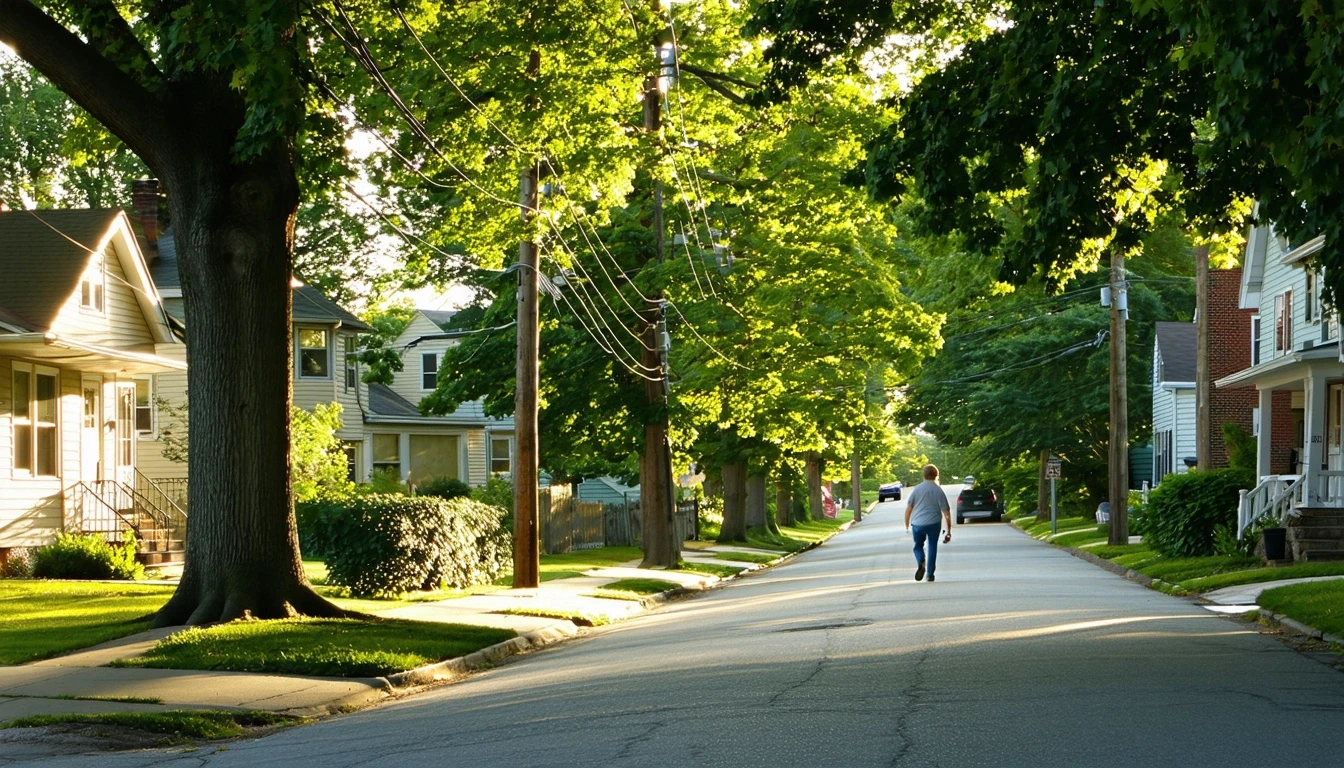
The Emotional Landscape of Pontiac
Pontiac’s overall sentiment reflects a community caught between pride in its bones and impatience with its pace. Long-time residents often express protectiveness over the city’s progress, while newcomers arrive with expectations shaped by either Detroit’s urban texture or the surrounding suburbs’ car-oriented ease—and Pontiac delivers neither cleanly.
What tends to feel rewarding here: easy access to parks and water features, the ability to walk or bike in certain pockets without needing a car for every errand, and housing costs that leave room in the budget for other priorities. The presence of rail transit adds a layer of mobility freedom uncommon in many Michigan cities of this size.
What tends to feel limiting: the corridor-clustered nature of grocery and food options means convenience isn’t uniform. If you’re not near one of the commercial stretches, daily errands require more planning. The mixed building heights and land-use variety create visual interest but also uneven retail density, leaving some blocks lively and others quiet.
Who tends to feel at home: people who value structure over polish, who prioritize low rent and park access over walkable nightlife, and who don’t mind learning which neighborhoods offer the amenities they need. Remote workers, budget-conscious renters, and families drawn to green space without premium price tags often find alignment here.
Who tends to feel restless: those expecting the convenience of a fully built-out suburb, car-free households needing dense grocery within a few blocks, and anyone who assumes walkability means the same experience citywide. Pontiac rewards intentionality but can frustrate those seeking predictability.
Social Media Buzz in Pontiac
Public discussion on platforms like Reddit, Facebook groups, and X (formerly Twitter) tends to orbit a few recurring themes: pride in underrated amenities, frustration with perception gaps, and debate over what kind of growth the city should pursue.
The emotional tone leans protective. Residents push back against outsiders who write Pontiac off, pointing to trail access, farmers markets, and transit connections. At the same time, there’s fatigue around uneven investment—some corridors feel vibrant, others neglected—and impatience with the gap between potential and present reality.
“People sleep on Pontiac until they actually spend time here. We’ve got parks, we’ve got rail, we’ve got walkable streets—just not the kind of polish that gets Instagram love.”
“I love that I can bike to the trail and take the train into Detroit, but I still drive for groceries because nothing’s close enough to my block.”
“It’s affordable, and that matters. But affordability here comes with tradeoffs you don’t always see until you’re living it.”
Conversation categories include: where to find good food without driving far, how to navigate transit for commuting, whether new development will raise rents or improve services, and which neighborhoods feel safest for walking at night. The tone isn’t pessimistic—it’s pragmatic, with an undercurrent of hope tempered by experience.
Local News Tone
Local coverage tends to frame Pontiac through the lens of transformation and identity negotiation. Stories often focus on infrastructure investment, community debate over development priorities, and efforts to balance growth with affordability. The tone is neither boosterish nor critical—it reflects a city aware of its challenges and actively discussing how to address them.
Simulated headline-style themes that capture the recurring topics:
- “Community Debates What Growth Should Look Like”
- “New Amenities Arrive as Residents Weigh Tradeoffs”
- “Parks and Trails Draw Attention, but Retail Gaps Remain”
- “Transit Access Expands While Car Dependency Persists”
- “Neighborhoods Evolve at Different Speeds”
The framing tends to acknowledge complexity rather than declare victory or crisis. Pontiac is portrayed as a city with assets—green space, transit, walkable corridors—but also unfinished work in connecting those assets into a cohesive daily experience for all residents.
Review-Based Public Perception
On platforms like Google Reviews, Yelp, and Nextdoor-style forums, Pontiac’s public perception splits along expectation lines. Those who arrived seeking affordability, park access, and transit options tend to express pleasant surprise. Those who expected suburban convenience or urban density often express mild disappointment.
Praise clusters around: park quality and quantity, trail connectivity, the ability to bike safely in certain areas, lower rent compared to surrounding suburbs, and the presence of rail for commuting. Residents also note the mixed-use character in pockets—being able to walk to a coffee shop or small market feels like a win in a region dominated by strip malls.
Complaints focus on: grocery accessibility (especially outside the main corridors), limited late-night dining or entertainment, uneven sidewalk quality, and the need to drive for certain errands despite living in a nominally walkable area. There’s also frustration that the city’s assets aren’t evenly distributed—living three blocks away from a walkable corridor can feel like living in a different city entirely.
Neighborhood variation appears in reviews, though often framed generically: “newer planned areas feel more suburban and car-dependent,” while “older pockets near downtown have more walkable texture but fewer retail options.” The mismatch between infrastructure (sidewalks, bike lanes, transit stops) and commercial density (clustered rather than dispersed) creates a recurring theme: the bones are there, but the convenience isn’t universal.
Expectation matching is key. Families drawn to affordable housing near good parks tend to feel satisfied. Young professionals hoping for walkable nightlife or dense retail feel let down. Retirees seeking quiet with occasional transit access often find a good fit. Remote workers prioritizing low rent over social infrastructure tend to stay.
Comparison to Nearby Cities
| Aspect | Pontiac | Royal Oak | Troy |
|---|---|---|---|
| Overall Vibe | Affordable, uneven, park-rich, transit-connected | Polished, walkable downtown, higher rent, nightlife-focused | Suburban, car-oriented, family-friendly, retail-dense |
| Walkability Feel | Pockets of strong infrastructure, but clustered amenities | Consistent downtown walkability, dense retail | Minimal pedestrian texture, designed for driving |
| Transit Access | Rail present, meaningful for commuting | Limited transit, mostly car-dependent outside downtown | Virtually no transit, fully car-reliant |
| Green Space | Integrated parks, high density, water features | Parks present but smaller, less central to identity | Parks available but spread thin, less walkable access |
| Cost Pressure | Low rent, modest home values, income tension | Higher rent, competitive market, income required | Moderate to high housing costs, stable income base |
Pontiac offers a different tradeoff than its neighbors. Royal Oak delivers polished walkability and nightlife but demands higher rent and offers limited transit. Troy provides suburban convenience and retail density but requires a car for nearly everything and lacks pedestrian texture. Pontiac splits the difference: it has infrastructure (rail, bike lanes, parks) and affordability, but amenities cluster rather than spread, and the experience varies block by block.
If you value low rent, park access, and the option to use transit or bike for some trips, Pontiac offers more than its reputation suggests. If you need consistent walkable errands, polished retail, or nightlife density, Royal Oak fits better despite the cost. If you prioritize driving convenience, family-oriented suburbs, and retail variety, Troy delivers that—but you’ll sacrifice transit and pedestrian options entirely.
What Locals Are Saying
“I work remotely and wanted low rent near Detroit. Pontiac checked the boxes—I can take the train when I need to, bike to the park on weekends, and my rent leaves room to save. It’s not fancy, but it works.”
“We moved here for the schools and parks. The green space is legit—our kids are outside constantly. But I still drive for groceries because the closest store that works for our budget isn’t walkable from our block.”
“I thought walkable meant I could ditch my car. Turns out Pontiac has great sidewalks and bike lanes, but if you’re not near the main corridors, you’re still driving for a lot of errands. It’s better than most suburbs, just not as seamless as I hoped.”
“Long-time resident here. Pontiac gets written off, but we’ve got bones most cities would kill for—rail, trails, parks, mixed-use blocks. The challenge is connecting it all so it feels cohesive, not patchy.”
“Retired and downsized from a bigger house in Troy. I love that I can walk to a coffee shop, take the train to see family, and not feel isolated. The rent is manageable on a fixed income, and the parks are honestly better than I expected.”
“Young professional, new to the area. Pontiac was affordable, and I liked the idea of transit access. But the nightlife and dining scene is thin, and I end up driving to Royal Oak or Detroit most weekends. It’s a good home base, just not where I spend my social time.”
“We’re a one-car family, and Pontiac makes that possible in a way most Michigan cities don’t. My partner bikes to work, I take the train, and we plan our errands around the corridors. It takes intention, but it’s doable—and way cheaper than living closer to Detroit.”
Does Pontiac Feel Like a Good Fit?
Pontiac doesn’t deliver a single, uniform experience—it rewards those who align with its specific geography and frustrates those expecting consistency. The city’s emotional profile is defined by infrastructure that exists but isn’t evenly distributed, affordability that creates breathing room but reflects income pressure, and a community that’s protective of progress while impatient for more.
This tends to work for: budget-conscious renters who value transit and park access over retail density, remote workers prioritizing low housing costs, families drawn to green space without premium pricing, and anyone willing to learn which corridors offer the amenities they need. Pontiac offers more pedestrian and bike infrastructure than most Michigan cities of its size, and the rail connection adds meaningful mobility freedom.
This tends to frustrate: those expecting suburban convenience everywhere, car-free households needing walkable groceries within a few blocks, newcomers assuming walkability means the same experience citywide, and anyone seeking polished nightlife or dense retail. The city’s assets are real, but accessing them requires intentionality and often a willingness to drive for certain errands despite living in a nominally walkable area.
If you’re drawn to Pontiac’s affordability and infrastructure, it’s worth exploring your monthly budget in Pontiac to understand where costs land in practice, or reviewing renting vs buying tradeoffs to see how housing pressure plays out. For a fuller picture of how income shapes daily decisions here, income pressure and lifestyle needs can clarify who tends to feel stable and who feels stretched.
Pontiac isn’t for everyone, but for those whose priorities align with what it offers—affordability, green space, transit access, and walkable pockets—it delivers more than its reputation suggests. The key is knowing what you’re trading and whether those tradeoffs fit your daily life.
How this article was built: In addition to public economic data, this article incorporates location-based experiential signals derived from anonymized geographic patterns—such as access density, walkability, and land-use mix—to reflect how day-to-day living actually feels in Pontiac, MI.
The perspectives shown reflect commonly expressed local sentiment and recurring themes in public discussion, rather than individual accounts.