
Pontiac is considered relatively affordable in 2026, with a median home value of $100,100 and median rent of $947 per month. The value proposition depends on housing entry cost versus transportation exposure, with commuting patterns and vehicle ownership shaping total cost pressure more than day-to-day prices.
Maya arrived in Pontiac on a Saturday in February, keys to a duplex rental in hand and a mental budget already stretched thin. She’d done the math on rent—$950 felt manageable compared to what she’d left behind in Ann Arbor—but by her second week, she realized the real cost structure wasn’t just about the lease. It was the drive to work in Troy, the gas station visits that added up faster than expected, and the realization that her walkable errands were limited to a few commercial corridors. Pontiac’s affordability, she learned, wasn’t a single number—it was a tradeoff between what you pay upfront and what you spend to make the city work for your daily life.
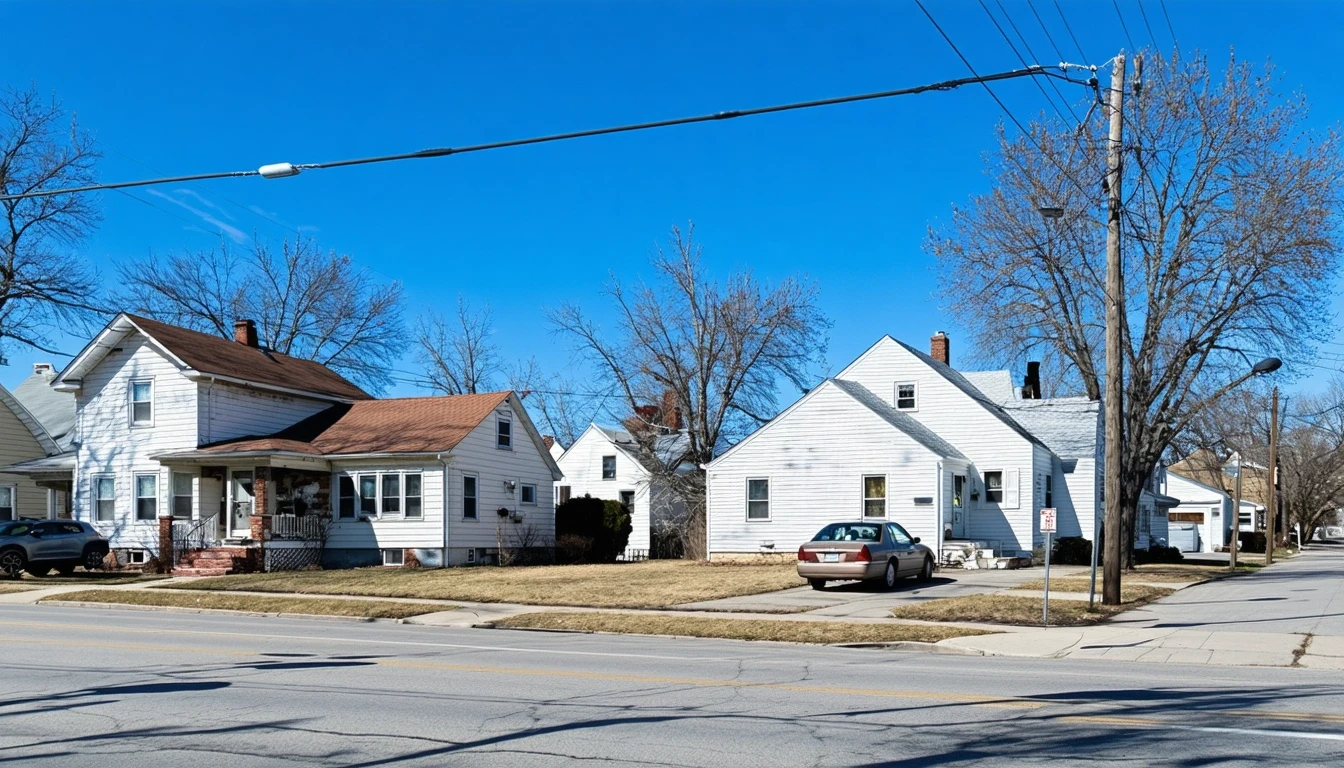
Overall Cost of Living Snapshot
Pontiac’s cost structure in 2026 reflects a regional price parity index of 95, meaning the overall cost level sits modestly below the national baseline. Housing dominates the financial picture, but the shape of cost pressure depends heavily on whether you’re renting, buying, or commuting daily to employment centers outside the city. Transportation exposure—particularly fuel costs at $4.01 per gallon and commute patterns—creates a secondary layer of recurring expense that varies widely by household.
The primary cost driver here is housing entry cost, not ongoing ownership or rental escalation. Median home values of $100,100 and median rent of $947 per month position Pontiac as accessible compared to metro Detroit’s higher-cost suburbs, but the savings on housing can be offset by transportation dependency for those working outside the city. Utility costs introduce moderate seasonal volatility, with electricity priced at 19.52¢ per kWh and natural gas at $10.02 per MCF, but these remain predictable compared to commuting variables.
What surprises newcomers is not the sticker price of housing or groceries, but the cumulative weight of car dependency and the uneven distribution of walkable amenities. Pontiac has pockets of pedestrian-friendly infrastructure and rail transit access, but daily errands and employment often require vehicle ownership, turning transportation into a recurring cost exposure rather than a convenience.
Driver verdict: Housing entry cost is low, but total cost pressure is shaped by commute length, vehicle count, and access to walkable services. The city rewards those who can work locally or leverage transit, and penalizes long-distance commuters with compounding fuel and maintenance costs.
Housing Costs (Primary Driver)
Housing in Pontiac offers two distinct pathways: renting at $947 per month or buying at a median home value of $100,100. Both represent relatively low entry points compared to surrounding metro Detroit markets, but the long-term cost implications diverge sharply.
Renting provides flexibility and avoids the upfront capital required for ownership, but it also means no equity accumulation and exposure to lease renewals. The rental market here tends to cluster in older multifamily buildings and single-family conversions, with quality and location driving significant variation within the $947 median. Renters gain predictability in monthly outflows but lose control over long-term housing cost stability.
Buying at $100,100 requires navigating property taxes, insurance, and maintenance—costs that don’t appear in the purchase price but shape the true ownership burden. Pontiac’s housing stock includes a mix of older single-family homes and smaller residential structures, many requiring ongoing upkeep. Ownership here is a bet on stability and equity over time, but it demands cash reserves and tolerance for repair cycles.
The city functions as a transitional market: affordable enough for first-time buyers or cost-conscious renters, but not insulated from the maintenance realities of aging housing stock or the fiscal pressures that can affect property tax rates over time.
| Housing Type | Cost Anchor | What That Buys You |
|---|---|---|
| Renting | $947/month median | Flexibility, no equity, exposure to lease renewals |
| Buying | $100,100 median home value | Equity potential, tax/insurance/maintenance responsibility, long-term cost control |
Conclusion: Pontiac is a buying and transitional city, offering low entry costs for ownership but requiring careful assessment of maintenance exposure and property tax trajectory.
Utilities & Energy Risk
Electricity in Pontiac is priced at 19.52¢ per kWh, a rate that sits in the moderate range for Michigan. Summer cooling and winter heating both drive seasonal usage spikes, with air conditioning loads during hot months and electric heating or appliance use during cold stretches creating predictable but noticeable swings in monthly bills.
Natural gas, priced at $10.02 per MCF (roughly equivalent to 100 therms), introduces more volatility. Heating months—typically November through March—push gas consumption higher, and price fluctuations tied to regional supply and weather severity can amplify costs unpredictably. Households relying on gas for heating, water heating, and cooking face compounded exposure during extended cold periods.
The risk here is not catastrophic, but it’s not negligible either. Utility costs in Pontiac don’t dominate the cost structure the way housing or transportation do, but they introduce a recurring variability that requires planning. Efficiency measures—insulation, programmable thermostats, appliance upgrades—reduce exposure, but the underlying seasonal pattern remains.
Risk classification: Moderate. Utility costs create predictable seasonal swings with occasional volatility during extreme weather, but they remain secondary to housing and transportation in total cost pressure.
Groceries & Daily Costs
Pontiac’s regional price parity index of 95 suggests that grocery costs run modestly below the national baseline, but the practical experience of food shopping depends heavily on where you live within the city and how far you’re willing to travel for selection and value.
Food and grocery establishments in Pontiac are corridor-clustered, meaning access is concentrated along certain commercial strips rather than evenly distributed across neighborhoods. For households near these corridors, grocery shopping is straightforward. For those in less connected areas, it requires a car trip, adding transportation costs to the grocery bill and reducing the effective savings from lower food prices.
The grocery pressure here is not about high prices—it’s about access friction. A household with walkable access to a supermarket experiences Pontiac’s cost structure differently than one that must drive several miles for the same staples. The difference isn’t dramatic, but it compounds over time, particularly for households managing tight budgets or limited vehicle access.
Transportation Reality
Transportation in Pontiac is a recurring cost exposure, not a one-time decision. The average commute is 21 minutes, but 27.2% of workers face longer commutes, and only 4.8% work from home. For the majority, getting to work means getting in a car, and that means fuel, insurance, maintenance, and depreciation—all recurring, all variable, all shaped by how far and how often you drive.
Gas prices at $4.01 per gallon translate into meaningful monthly outflows for anyone commuting to employment centers in Troy, Auburn Hills, or Detroit. A 25-mile round-trip commute at typical fuel efficiency creates a baseline transportation cost that rivals or exceeds utility bills, and that’s before accounting for vehicle payments, insurance, or repairs.
What makes Pontiac’s transportation picture more complex is the presence of rail transit and notable bike infrastructure. The city has walkable pockets with high pedestrian-to-road ratios and rail service, meaning some residents can reduce or eliminate daily car dependency. But these advantages are geographically limited. If your home, work, and errands don’t align with transit corridors or bike-friendly routes, you’re back to full car dependency, and the cost structure shifts accordingly.
Transportation here is not a fixed cost—it’s a variable shaped by where you work, where you live, and whether you can access the city’s transit and pedestrian infrastructure. For those who can, Pontiac offers a lower-cost, lower-stress mobility model. For those who can’t, transportation becomes the second-largest cost driver after housing.
Cost Exposure Profiles
Pontiac’s cost structure creates distinct exposure profiles depending on housing choice, commute pattern, and access to walkable infrastructure. Understanding these profiles helps clarify where financial pressure concentrates and where flexibility exists.
Low-exposure situation: A household that buys a home near a rail station or within a walkable pocket, works locally or uses transit, and manages one vehicle faces minimal transportation costs and stable housing expenses. Utility costs remain moderate and predictable. The primary financial risk is property maintenance and tax changes, both manageable with planning.
High-exposure situation: A renting household with two vehicles, long commutes to employment centers outside Pontiac, and limited access to walkable grocery or transit options faces compounding costs. Rent provides no equity, commuting burns fuel and vehicle life, and errands require additional driving. Utility costs add seasonal variability, and the cumulative transportation burden can rival or exceed housing costs.
The difference between these profiles is not income—it’s structure. Pontiac rewards proximity to transit, walkable services, and local employment. It penalizes distance, car dependency, and reliance on dispersed commercial corridors. The city’s cost pressure is not uniform; it’s shaped by how well your daily logistics align with the infrastructure that exists.
Frequently Asked Questions
Is Pontiac more affordable than nearby cities in 2026? Pontiac’s median home value of $100,100 and median rent of $947 per month position it as more affordable than many metro Detroit suburbs, particularly those closer to employment centers like Troy or Royal Oak. The tradeoff is often longer commutes or greater reliance on personal vehicles.
What does a typical cost profile look like in Pontiac? A typical household faces low housing entry costs, moderate utility bills with seasonal swings, and variable transportation expenses depending on commute length and vehicle count. The cost structure is shaped more by transportation and access patterns than by high prices in any single category.
Do utilities cost more in Pontiac than nearby areas? Utility rates in Pontiac—19.52¢ per kWh for electricity and $10.02 per MCF for natural gas—are comparable to surrounding areas in metro Detroit. Seasonal usage drives most of the variation, with heating and cooling months creating predictable spikes.
What costs tend to surprise newcomers in Pontiac? Newcomers often underestimate transportation costs, particularly fuel and vehicle maintenance for long commutes, and the access friction for groceries and errands in areas outside walkable corridors. The low housing cost can be offset by higher-than-expected transportation exposure.
Are property taxes higher in Pontiac than nearby cities? Property tax rates vary across metro Detroit municipalities and are influenced by local millage rates and assessed values. Pontiac’s lower median home value of $100,100 can result in lower absolute tax bills compared to higher-value suburbs, but effective rates and local fiscal conditions should be verified directly.
Is Pontiac a good place for renters or buyers? Pontiac works for both, but the value proposition differs. Renters gain flexibility and low monthly costs without equity. Buyers gain long-term stability and equity potential but must manage maintenance and property tax exposure. The city functions well as a transitional market for first-time buyers or cost-conscious renters.
How does Pontiac’s walkability affect daily costs? Pontiac has walkable pockets with strong pedestrian infrastructure and rail transit access, which can significantly reduce transportation costs for households located within these areas. Outside these pockets, car dependency increases, raising fuel, insurance, and maintenance costs as recurring expenses.
What’s the biggest financial risk of living in Pontiac? The biggest risk is underestimating transportation costs, particularly for households with long commutes or multiple vehicles. While housing entry costs are low, the cumulative burden of commuting, vehicle ownership, and access friction can shift the cost structure significantly.
How this article was built: In addition to public economic data, this article incorporates location-based experiential signals derived from anonymized geographic patterns—such as access density, walkability, and land-use mix—to reflect how day-to-day living actually feels in Pontiac, MI.
—