
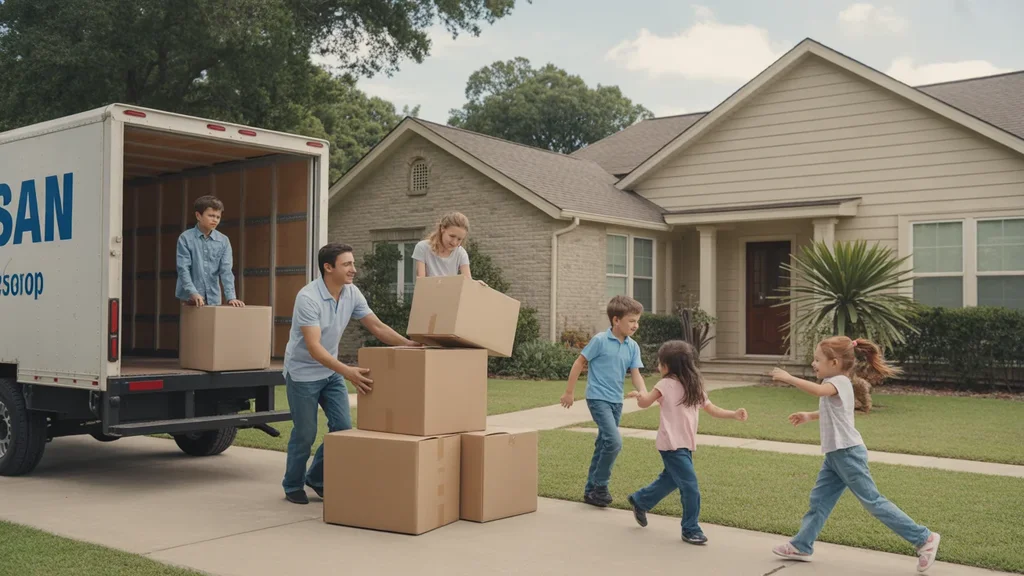
Imagine two households earning the same salary, one renting in Pasadena for $1,159 per month, the other in League City for $1,598. The first buys ground beef at $7.04 per pound, the second at $6.74. Same metro area, same grocery list, but the rent gap alone is $439 monthly—and that’s before considering what each city asks of your time, your car, and your daily routine.
Pasadena and League City sit within the same Houston metro, share similar Gulf Coast humidity and extended cooling seasons, and both rely heavily on cars for daily errands. Yet the two cities attract different households for different reasons. Pasadena offers lower entry costs for renters and buyers, with a median home value of $171,600 compared to League City’s $312,500. League City, meanwhile, draws families willing to pay a premium for stronger school and playground infrastructure, walkable pockets in parts of the city, and a median household income of $117,316 per year—81% higher than Pasadena’s $64,698.
The decision between these two cities in 2026 isn’t about which is “cheaper overall.” It’s about understanding where cost pressure concentrates, which households feel that pressure most acutely, and whether the tradeoff between lower entry costs and stronger family amenities aligns with your household’s priorities and income structure.
Housing Costs
Housing represents the starkest structural difference between Pasadena and League City. Pasadena’s median home value of $171,600 positions it as a lower-barrier entry point for first-time buyers or households prioritizing monthly flexibility over long-term equity in premium neighborhoods. League City’s $312,500 median reflects a market oriented toward families seeking newer construction, larger lots, and proximity to higher-rated schools and playgrounds. The gap isn’t just about price—it’s about what kind of housing stock dominates and who that stock serves.
For renters, the $439 monthly difference between Pasadena’s $1,159 median gross rent and League City’s $1,598 translates to ongoing budget pressure that compounds over time. Renters in Pasadena face lower baseline obligations, which creates more room for discretionary spending, savings, or absorbing unexpected costs like car repairs or medical bills. Renters in League City pay more upfront but often gain access to newer apartment complexes with included amenities, better insulation (which affects utility exposure), and proximity to mixed-use developments that reduce errand friction.
Homebuyers face a similar tradeoff, but the stakes are front-loaded. Pasadena’s lower home values mean smaller down payments, lower monthly mortgage obligations, and less exposure to property tax increases tied to assessed value. However, the housing stock skews older and lower-rise, which can mean higher maintenance costs and less energy efficiency. League City’s higher entry cost buys access to newer homes with modern HVAC systems, better windows, and layouts designed for family life—but it also locks households into higher ongoing obligations, including property taxes, insurance, and HOA fees that are more common in newer subdivisions.
| Housing Type | Pasadena | League City |
|---|---|---|
| Median Home Value | $171,600 | $312,500 |
| Median Gross Rent | $1,159/month | $1,598/month |
| Typical Housing Form | Low-rise, older stock | Mixed height, newer construction |
First-time buyers with limited savings will find Pasadena more accessible, but they’ll inherit the maintenance and efficiency tradeoffs that come with older homes. Families prioritizing school access, playground density, and neighborhood walkability will find League City’s premium justified by the infrastructure it delivers. Renters sensitive to monthly cash flow will prefer Pasadena; renters prioritizing amenities and newer construction will accept League City’s higher baseline. The housing decision isn’t about finding the lowest number—it’s about matching cost structure to household priorities and income stability.
Housing takeaway: Pasadena reduces entry barriers and ongoing obligations, making it a better fit for lower-income households, renters prioritizing flexibility, and buyers willing to manage older housing stock. League City’s higher costs buy access to family infrastructure, newer construction, and walkable pockets, making it a better fit for higher-income families and households prioritizing amenities over entry cost.
Utilities and Energy Costs
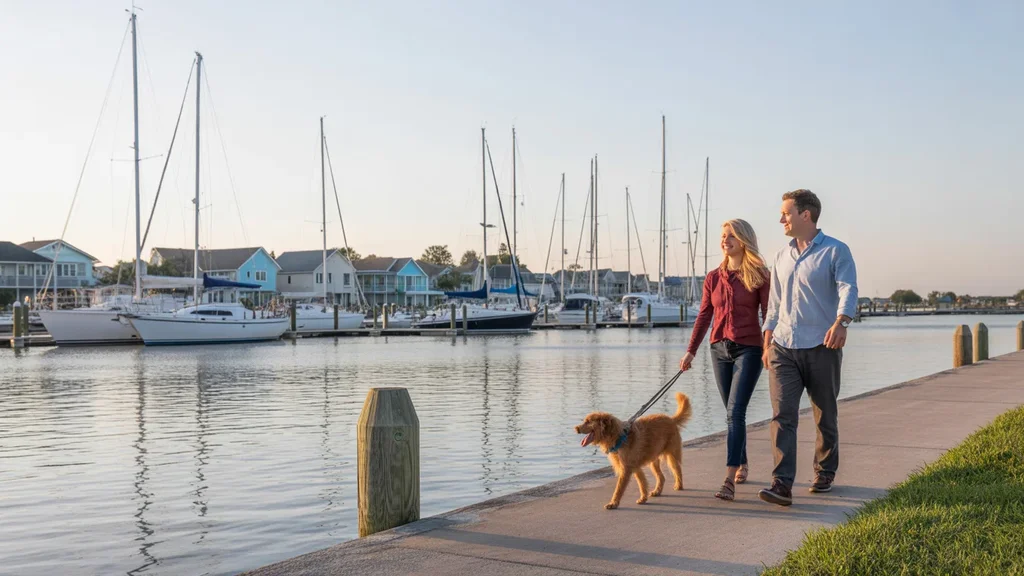
Both Pasadena and League City share the same electricity rate of 15.69¢/kWh, which eliminates one variable but shifts focus to how housing stock, building age, and household size drive actual usage. The Gulf Coast’s extended cooling season dominates utility exposure in both cities, with air conditioning running from late spring through early fall. Pasadena’s older, low-rise housing stock tends to have less efficient insulation, older HVAC systems, and single-pane windows, all of which increase cooling demand. League City’s newer construction often includes better insulation, programmable thermostats, and energy-efficient windows, which reduce baseline usage even when outdoor temperatures climb.
Natural gas pricing introduces a structural difference. Pasadena’s natural gas price of $16.51 per MCF is lower than League City’s $19.31 per MCF, a gap that matters most during the brief heating season when overnight temperatures occasionally dip low enough to require furnace use. However, natural gas exposure in both cities is modest compared to electricity, since cooling dominates energy costs year-round. Households in older Pasadena homes may offset some of their higher cooling costs with lower heating bills, while League City households pay more for natural gas but use less of it due to better insulation and more efficient heating systems.
Apartment dwellers in both cities experience lower absolute utility costs due to smaller square footage and shared walls that reduce heating and cooling loss. Single-family homeowners, especially those in larger homes, face higher exposure. In Pasadena, older single-family homes with poor insulation can see summer electricity bills spike unpredictably, especially during heat waves. In League City, newer homes with better efficiency reduce volatility, but larger square footage and higher ceilings can still drive significant cooling costs. Families with young children or elderly members who require consistent indoor temperatures face less flexibility in managing usage, making efficiency differences between cities more consequential.
Utility billing structures in both cities typically separate electricity, natural gas, water, and trash, meaning households manage multiple monthly obligations rather than a single bundled bill. Some League City neighborhoods with HOAs may bundle water, trash, or landscaping into monthly fees, which shifts costs from variable to fixed but doesn’t necessarily reduce total exposure. Pasadena households more often pay each utility separately, which increases billing friction but also provides more granular visibility into where usage spikes occur.
Utility takeaway: Pasadena’s older housing stock increases cooling exposure and volatility, especially for single-family homeowners, but lower natural gas prices provide modest relief during heating months. League City’s newer construction reduces baseline usage and smooths seasonal volatility, but higher natural gas prices and larger home sizes can offset efficiency gains. Households sensitive to unpredictable summer bills may prefer League City’s newer stock; households prioritizing lower natural gas costs and willing to manage efficiency upgrades may find Pasadena more controllable.
Groceries and Daily Expenses
Grocery costs in both cities reflect regional price parity adjustments, with Pasadena’s RPP index of 105 indicating slightly elevated costs compared to League City’s baseline RPP of 100. Ground beef in Pasadena is estimated at $7.04 per pound, compared to $6.74 in League City; milk runs $4.27 per half-gallon in Pasadena versus $4.03 in League City. Derived estimate based on national baseline adjusted by regional price parity; not an observed local price. These differences are modest on a per-item basis but compound for larger households managing weekly grocery runs, meal planning, and bulk purchasing strategies.
Both cities show corridor-clustered food and grocery access, meaning that stores and restaurants concentrate along major commercial corridors rather than distributing evenly across neighborhoods. This pattern increases car dependency for grocery shopping and limits walkable access to daily errands. Households in Pasadena and League City alike typically drive to big-box grocers, discount chains, and warehouse clubs, which offer lower per-unit prices but require planning, storage space, and upfront cash to take advantage of bulk discounts.
Single adults and couples with flexible schedules can optimize grocery spending by shopping sales, comparing prices across multiple stores, and cooking at home. Families with young children face more friction: limited time for price comparison, higher baseline consumption, and greater reliance on convenience items like pre-cut vegetables, packaged snacks, and prepared foods. Pasadena’s slightly higher grocery prices increase pressure on families already managing tighter budgets, while League City’s higher household incomes provide more cushion to absorb price variability without changing behavior.
Dining out and convenience spending follow similar patterns. Both cities offer chain restaurants, fast-casual options, and local spots clustered along commercial strips. Households that rely on takeout, coffee shops, or grab-and-go meals will find similar pricing structures in both cities, but the frequency of those purchases—and the budget impact—depends more on household income and time constraints than on city-specific pricing. League City’s higher median income allows more households to treat convenience spending as routine rather than discretionary, while Pasadena households are more likely to feel pressure from frequent small purchases that add up over time.
Grocery takeaway: Pasadena’s slightly elevated grocery prices increase cumulative costs for larger families and households managing tighter budgets, especially when combined with car-dependent errand patterns. League City’s lower RPP and higher household incomes reduce grocery sensitivity, but corridor-clustered access patterns create similar logistical friction in both cities. Households prioritizing price optimization and willing to plan around sales may find Pasadena manageable; households valuing time savings and convenience may prefer League City’s income cushion.
Taxes and Fees
Property taxes in both Pasadena and League City follow Texas’s no-state-income-tax model, which shifts revenue generation heavily onto property values and local sales taxes. Homeowners in League City face higher absolute property tax bills due to the city’s higher median home values, even if effective tax rates are similar. A home assessed at $312,500 generates significantly more annual tax revenue than one assessed at $171,600, which means League City homeowners carry a larger ongoing obligation that persists regardless of income changes or household size.
Renters in both cities don’t pay property taxes directly, but landlords pass those costs through in monthly rent. The $439 rent gap between Pasadena and League City reflects not just housing quality and location but also the embedded tax burden that landlords must recover. Renters in League City pay more upfront, but they also gain access to neighborhoods with better-funded schools, parks, and public services—infrastructure that property taxes help maintain.
HOA fees are more common in League City, especially in newer subdivisions with shared amenities like pools, playgrounds, and landscaping. These fees can range from modest monthly charges to several hundred dollars, depending on the neighborhood. HOAs bundle certain services—trash collection, lawn care, exterior maintenance—which shifts costs from variable to fixed and reduces household management burden. Pasadena has fewer HOA-governed neighborhoods, meaning homeowners manage more services individually but avoid the recurring fee structure that HOAs impose.
Sales taxes, utility connection fees, vehicle registration, and other recurring local fees apply similarly in both cities, though League City’s newer infrastructure sometimes includes special assessments or municipal utility district (MUD) taxes that fund water, sewer, and drainage improvements in developing areas. These fees are typically disclosed at purchase but can surprise first-time buyers unfamiliar with Texas’s MUD financing model. Pasadena’s older infrastructure avoids some of these newer fee structures but may face deferred maintenance costs that eventually translate into rate increases or special assessments.
Tax and fee takeaway: League City homeowners face higher absolute property tax bills due to elevated home values, plus more frequent HOA fees that bundle services but add recurring obligations. Pasadena homeowners pay lower property taxes and encounter fewer HOA fees, but they manage more services individually and may face less predictable maintenance costs. Renters in both cities absorb embedded tax costs through rent, with League City’s higher rents reflecting both housing quality and the tax burden landlords must recover.
Transportation & Commute Reality
Both Pasadena and League City rely heavily on cars for daily mobility, with bus-only transit service present in each city but limited in coverage and frequency. Pasadena’s mobility texture is mixed, with moderate pedestrian infrastructure that supports walking and driving in certain areas but still requires a car for most errands, commutes, and family logistics. League City shows walkable pockets where pedestrian-to-road ratios exceed high thresholds, meaning some neighborhoods support walking for nearby errands or recreation, but the city as a whole remains car-oriented for work commutes and grocery runs.
Gas prices show a modest difference: Pasadena at $3.67 per gallon, League City at $3.61. For households driving 25 miles round-trip daily, this six-cent gap has minimal impact on monthly fuel costs. What matters more is commute distance, traffic patterns, and whether households can consolidate errands to reduce total miles driven. Pasadena’s location closer to Houston’s industrial and port areas may shorten commutes for workers in those sectors, while League City’s position farther south along I-45 can mean longer drives into central Houston but shorter access to Galveston or Clear Lake employment centers.
Cycling infrastructure is limited in Pasadena, with bike-to-road ratios below low thresholds, meaning cycling is more recreational than practical for daily transportation. League City shows some cycling infrastructure in pockets, with bike-to-road ratios in the medium band, which allows more households to use bikes for short trips within neighborhoods or along designated paths. However, neither city supports car-free living; households without reliable vehicles face significant barriers to employment, healthcare access, and grocery shopping.
Families managing school drop-offs, extracurricular activities, and weekend errands will find similar car dependency in both cities, but League City’s stronger family infrastructure—schools and playgrounds meeting density thresholds—can reduce total drive time by concentrating activities within closer proximity. Pasadena’s limited family infrastructure means more driving to access parks, playgrounds, and after-school programs, which increases both fuel costs and time burden.
Transportation takeaway: Both cities require car ownership for practical daily living, with modest gas price differences that matter less than commute distance and errand consolidation. League City’s walkable pockets and some cycling infrastructure offer limited alternatives in certain neighborhoods, while Pasadena’s mixed pedestrian texture supports walking in specific areas but still defaults to car dependency. Households prioritizing shorter drives to family amenities may find League City’s infrastructure reduces total miles driven; households working near Pasadena’s industrial corridors may benefit from proximity despite fewer walkable options.
Cost Structure Comparison
Housing dominates the cost experience in both cities, but the pressure shows up differently. Pasadena’s lower entry costs—both for renters and buyers—reduce the baseline monthly obligation, which creates more breathing room for households managing variable income, irregular expenses, or tight budgets. League City’s higher housing costs front-load financial pressure, requiring higher income stability and larger cash reserves, but they also buy access to infrastructure that reduces friction elsewhere: better schools, more playgrounds, and neighborhoods where walking replaces some car trips.
Utilities introduce more volatility in Pasadena due to older housing stock and less efficient cooling systems, especially during peak summer months when temperatures climb and air conditioning runs continuously. League City’s newer construction smooths utility exposure, making monthly bills more predictable and reducing the risk of unexpected spikes. For households sensitive to budget variability, League City’s efficiency advantage matters as much as the absolute cost.
Groceries and daily expenses create cumulative pressure in Pasadena due to slightly elevated regional pricing and lower median household income, which leaves less cushion to absorb routine spending without adjusting behavior. League City’s higher incomes and lower RPP reduce grocery sensitivity, allowing households to prioritize convenience and time savings over price optimization. The difference isn’t dramatic on a per-item basis, but it compounds for families managing larger carts and more frequent shopping trips.
Transportation patterns matter more in terms of time cost than fuel cost. Both cities require cars, and gas prices differ by only six cents per gallon. What changes is how much driving each city demands and whether infrastructure reduces total miles driven. League City’s family amenities and walkable pockets can shorten errand loops and consolidate activities, while Pasadena’s limited family infrastructure and car-oriented layout increase drive time for households with children.
The decision isn’t about finding the city with the lowest total cost. It’s about understanding which costs dominate your household and whether the tradeoffs align with your income structure, time budget, and priorities. Households sensitive to entry barriers and monthly flexibility may prefer Pasadena’s lower baseline obligations. Households prioritizing family infrastructure, efficiency, and predictability may find League City’s premium justified by the friction it removes and the amenities it delivers.
How the Same Income Feels in Pasadena vs League City
Single Adult
For a single adult, housing becomes the first non-negotiable cost, and the $439 rent gap between cities determines how much flexibility remains for everything else. In Pasadena, lower rent leaves more room for discretionary spending, savings, or absorbing unexpected costs like car repairs or medical bills, but older housing stock can introduce utility volatility that erodes that cushion during summer months. In League City, higher rent reduces monthly flexibility, but newer apartments with better insulation and included amenities smooth utility exposure and reduce maintenance friction. The tradeoff is between lower baseline obligations with more variability versus higher baseline costs with more predictability.
Dual-Income Couple
A dual-income couple faces the same housing gap, but combined earnings create more capacity to absorb it—unless one income is irregular or part-time. In Pasadena, lower housing costs allow couples to save faster for a down payment, build emergency reserves, or allocate more toward discretionary goals like travel or dining out. In League City, higher housing costs consume more of the combined income, but access to walkable pockets and better family infrastructure becomes more relevant if the couple is planning for children or prioritizes neighborhood quality over savings rate. The decision hinges on whether the couple values near-term financial flexibility or long-term access to family-oriented amenities.
Family with Kids
For families, housing remains the largest fixed cost, but family infrastructure—schools, playgrounds, and safe walking routes—becomes a non-negotiable that shapes daily logistics and time costs. In Pasadena, lower housing costs free up income for childcare, extracurriculars, or larger grocery budgets, but limited school and playground density increases drive time and reduces walkable access to activities. In League City, higher housing costs consume more of the budget upfront, but strong family infrastructure reduces total miles driven, consolidates errands, and provides more neighborhood-based recreation options. The tradeoff is between lower monthly obligations with more driving and logistical friction versus higher baseline costs with infrastructure that reduces time burden and car dependency for family activities.
Decision Matrix: Which City Fits Which Household?
| Decision Factor | If You’re Sensitive to This… | Pasadena Tends to Fit When… | League City Tends to Fit When… |
|---|---|---|---|
| Housing entry + space needs | Down payment size, monthly rent flexibility, mortgage qualification thresholds | You prioritize lower entry costs and monthly flexibility over newer construction and family amenities | You can afford higher upfront costs and value access to newer homes and stronger family infrastructure |
| Transportation dependence + commute friction | Drive time to work, errand consolidation, walkability for daily tasks | You work near industrial or port corridors and accept car dependency for all errands | You value walkable pockets for some errands and benefit from family amenities that reduce total drive time |
| Utility variability + home size exposure | Seasonal bill spikes, cooling costs, insulation quality, energy efficiency | You can manage efficiency upgrades or accept higher summer volatility in exchange for lower housing costs | You prioritize predictable utility bills and benefit from newer construction with better insulation |
| Grocery strategy + convenience spending creep | Weekly cart size, price sensitivity, time available for meal planning and bulk shopping | You’re willing to optimize grocery spending and manage slightly higher per-item costs with careful planning | You have income cushion to absorb routine grocery costs and prioritize convenience over price comparison |
| Fees + friction costs (HOA, services, upkeep) | Recurring monthly fees, bundled services, maintenance responsibility, special assessments | You prefer managing services individually and avoiding recurring HOA fees despite higher maintenance responsibility | You value bundled services and predictable HOA fees that reduce management burden despite higher recurring costs |
| Time budget (schedule flexibility, errands, logistics) | Drive time for family activities, errand consolidation, walkable access to daily needs | You accept longer drive times and car dependency for all errands in exchange for lower monthly housing obligations | You prioritize reduced drive time for family logistics and benefit from infrastructure that consolidates activities |
Lifestyle Fit
Pasadena and League City both sit within the Houston metro’s humid subtropical climate, with extended cooling seasons, occasional brief cold snaps, and proximity to Gulf Coast weather patterns. Both cities experience similar outdoor conditions, but their infrastructure and amenities shape how households experience daily life differently. Pasadena’s low-rise, older housing stock and car-oriented layout create a more utilitarian lifestyle focused on affordability and proximity to industrial employment centers. League City’s mixed building heights, walkable pockets, and strong family infrastructure support a more amenity-driven lifestyle where neighborhood quality and access to schools and parks justify higher costs.
Healthcare access is strong in both cities, with hospitals and pharmacies present. Pasadena and League City each offer hospital facilities, meaning households don’t need to travel far for emergency care or routine medical services. This reduces one common friction point and ensures that healthcare proximity isn’t a differentiating factor between the two cities.
Outdoor access in both cities is present, with park density in the moderate range and water features detected. Neither city offers extensive green space networks, but both provide enough parks and outdoor areas to support recreation and family activities. League City’s stronger playground density and school infrastructure make it easier for families to access outdoor amenities within walking distance of home, while Pasadena households more often drive to parks and recreational facilities. The difference isn’t about availability—it’s about proximity and whether outdoor access integrates into daily routines or requires dedicated trips.
Pasadena’s median household income of $64,698 per year reflects a working-class base with strong ties to Houston’s industrial and port sectors. League City’s median household income of $117,316 per year positions it as a higher-income suburb attracting families and professionals willing to pay for quality-of-life amenities.
Frequently Asked Questions
Is Pasadena or League City more affordable for renters in 2026?
Pasadena offers lower baseline rent, with a median gross rent of $1,159 per month compared to League City’s $1,598. This $439 monthly difference reduces ongoing obligations and creates more budget flexibility for renters managing tight cash flow or variable income. However, Pasadena’s older housing stock can introduce higher utility exposure during summer months, while League City’s newer apartments often include better insulation and amenities that smooth monthly costs. Renters prioritizing lower entry costs and monthly flexibility will find Pasadena more accessible; renters valuing predictability and newer construction may prefer League City despite higher rent.
How do housing costs in Pasadena and League City compare for first-time homebuyers in 2026?
Pasadena’s median home value of $171,600 creates a lower entry barrier for first-time buyers, requiring smaller down payments and reducing monthly mortgage obligations. League City’s median home value of $312,500 nearly doubles that entry cost, which demands higher income stability and larger cash reserves. First-time buyers with limited savings will find Pasadena more accessible, but they’ll inherit the maintenance and efficiency tradeoffs of older housing stock. League City’s higher costs buy access to newer construction, better energy efficiency, and stronger family infrastructure, making it a better fit for buyers who can afford the premium and prioritize long-term amenities over near-term affordability.
Which city has lower utility costs, Pasadena or League City, in 2026?
Both cities share the same electricity rate of 15.69¢/kWh, but utility exposure differs based on housing stock and efficiency. Pasadena’s older homes with less efficient insulation and HVAC systems tend to drive higher cooling costs during the extended summer season, creating more volatility in monthly bills. League City’s newer construction reduces baseline usage and smooths seasonal exposure, making utility costs more predictable. Natural gas prices are lower in Pasadena at $16.51 per MCF compared to League City’s $19.31, but natural gas exposure is modest in both cities since cooling dominates year-round energy costs. Households sensitive to unpredictable summer bills may prefer League City’s efficiency; households willing to manage upgrades or accept variability may find Pasadena’s lower natural gas costs helpful during brief heating periods.
Do Pasadena and League City require car ownership, or is public transit viable in 2026?
Both cities require car ownership for practical daily living. Bus service is present in each city, but coverage and frequency are limited, making transit more supplemental than viable for commuting or running errands. Pasadena’s mixed pedestrian infrastructure supports walking in certain areas, while League City has walkable pockets where some neighborhoods allow walking for nearby errands or recreation. However, neither city supports car-free living, and households without reliable vehicles face significant barriers to employment, healthcare access, and grocery shopping. Families managing school drop-offs, extracurriculars, and weekend errands will need cars in both cities, though League City’s stronger family infrastructure can reduce total drive time by concentrating activities within closer proximity.
Which city is better for families with children, Pasadena or League City, in 2026?
League City offers stronger family infrastructure, with school and playground density meeting thresholds that support neighborhood-based activities and reduce drive time for family logistics. Pasadena’s family infrastructure is limited, with school and playground density below thresholds, meaning families drive more often to access parks, playgrounds, and after-school programs. League City’s higher housing costs—both for rent and home purchases—reflect the premium families pay for access to these amenities, while Pasadena’s lower costs appeal to families prioritizing budget flexibility over infrastructure quality. Families with young children who value walkable access to schools and playgrounds will find League City’s premium justified; families managing tighter budgets and willing to drive for amenities may prefer Pasadena’s lower baseline obligations.
Conclusion
Pasadena and League City serve different households within the same Houston metro, each offering distinct tradeoffs between cost structure and quality of life. Pasadena’s lower housing costs—$171,600 median home value and $1,159 median rent—reduce entry barriers and monthly obligations, making it a better fit for renters, first-time buyers, and households managing tighter budgets or prioritizing near-term financial flexibility. League City’s higher costs—$312,500 median home value and $1,598 median rent—buy access to stronger family infrastructure, newer construction, and walkable pockets that reduce friction for families with children and households valuing predictability over baseline affordability.
The decision isn’t about finding the city with the lowest total cost. It’s about understanding which costs dominate your household, how much flexibility you need to absorb variability, and whether the infrastructure each city provides aligns with your daily routines and long-term priorities.