
You’re scrolling through listings, weighing commute times, and then the question hits: Will I actually like living here? Pasadena sits in the Houston metro, close enough to tap into big-city jobs but far enough to offer breathing room and lower [housing pressure](/pasadena-tx/housing-costs/). It’s a working-class city with an industrial backbone, modest homes, and a practical edge. But whether it feels like home depends less on what Pasadena is and more on what you need it to be.
This isn’t a place that tries to be everything. It leans into affordability, accessibility to employment corridors, and a slower suburban rhythm. For some, that’s exactly the fit. For others, it’s a compromise that starts to chafe.
What It Feels Like to Live in Pasadena
Pasadena tends to reward people who value affordability over amenity density. The housing stock skews modest—low-rise, single-family homes on quiet blocks—and the cost of entry is lower than many nearby Houston suburbs. That tradeoff shows up everywhere: in the car-oriented street layout, in the corridor-clustered grocery options, in the limited family infrastructure like schools and playgrounds.
The city has a grounded, blue-collar identity. Long-time residents often express pride in continuity and community stability, while newcomers drawn by price sometimes feel the friction of fewer walkable errands, less spontaneous recreation, and a built environment that assumes you’ll drive.
Pasadena doesn’t feel polished or curated. It feels functional. Whether that reads as “authentic and unpretentious” or “lacking texture” depends entirely on what you’re leaving behind and what you’re hoping to gain.
The Conversation Online
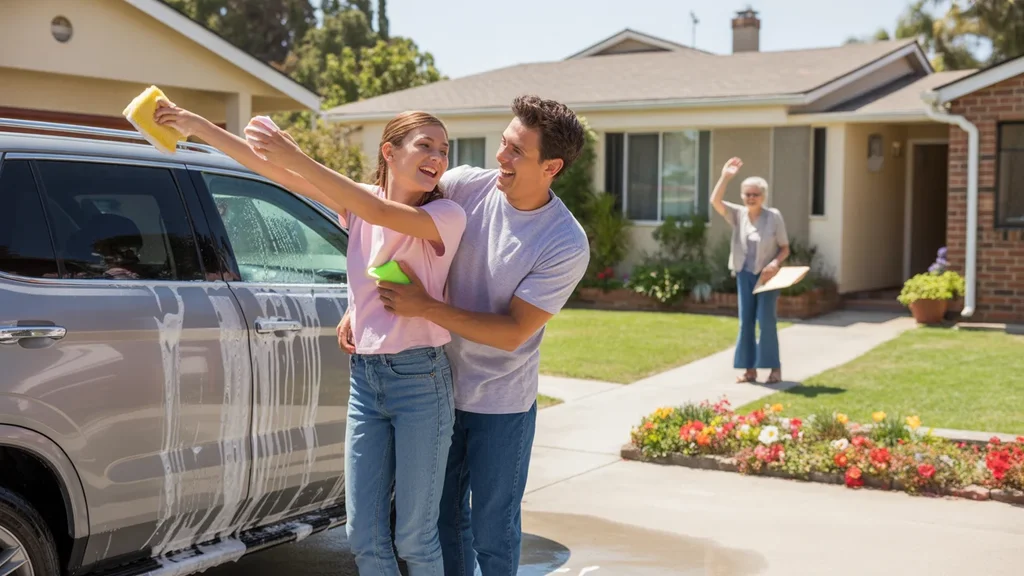
Public discussion around Pasadena—on neighborhood Facebook groups, local Reddit threads, and community forums—tends to circle a few recurring themes: affordability, proximity to work, and the car-dependent rhythm of daily life.
“It’s not fancy, but it’s ours. You can actually afford a house here without stretching yourself thin.”
“If you’re looking for walkable coffee shops and weekend farmers markets, this isn’t it. But if you want a yard and a garage for less than League City, it works.”
“I miss being able to walk to the store. Everything here is a drive, and that adds up when you’ve got kids and errands.”
The tone isn’t bitter, but it’s clear-eyed. People who feel aligned tend to emphasize value, space, and access to Houston job centers. Those who feel restless talk about sameness, car dependency, and the planning burden of daily errands.
How Local Coverage Frames the City
Local news and community coverage in Pasadena tends to focus on economic continuity, infrastructure projects, and the tension between industrial identity and residential growth. Headlines don’t declare transformation—they reflect steady, incremental change and the debates that come with it.
- “Community Weighs Growth and Neighborhood Character”
- “New Retail Corridors Bring Convenience, Raise Traffic Questions”
- “Residents Debate What ‘Family-Friendly’ Really Means”
- “Industrial Roots Meet Suburban Expansion”
- “Healthcare Access Expands as Population Grows”
The framing is pragmatic, not aspirational. Pasadena isn’t selling itself as the next hot suburb—it’s managing the friction between affordability and expectation, between legacy and change.
What Reviews and Public Perception Reveal
On platforms like Google Reviews, Yelp, and Nextdoor-style community boards, Pasadena earns measured praise for value and practical access, but frequent notes about limited walkability and amenity gaps.
People who wanted suburban comfort at a lower price point tend to feel satisfied. They highlight hospital access, bus service, and the ability to reach Houston employment hubs without paying inner-loop rent. Newer planned areas get positive mentions for tidiness and layout; older pockets are described as “lived-in” or “no-frills.”
People who expected walkable errands, dense dining options, or abundant parks express disappointment. The car dependency isn’t a surprise, but the degree of it—how much planning even a quick grocery run requires—catches some off guard. Family-focused newcomers sometimes note the gap in playground density and school access relative to other suburbs.
The city doesn’t polarize. It just quietly sorts people into “this works for me” and “I thought I’d adjust, but I haven’t.”
How Pasadena Compares to Nearby Cities
| Dimension | Pasadena | League City | Baytown |
|---|---|---|---|
| Overall Vibe | Working-class, practical, car-oriented | Suburban polish, family-focused, amenity-rich | Industrial, budget-friendly, quieter |
| Walkability | Limited; errands require driving | Moderate in planned communities | Minimal; very car-dependent |
| Affordability | Lower entry cost, value-driven | Higher prices, more amenities | Comparable or slightly lower |
| Family Infrastructure | Limited school/playground density | Strong family amenities | Sparse, similar to Pasadena |
| Commute Access | Close to Houston job corridors | Longer commute, more insulated | Industrial job proximity |
Pasadena sits between League City’s suburban polish and Baytown’s industrial quiet. If you need family amenities and walkable retail, League City tends to deliver more—but at a higher price. If you prioritize affordability and don’t mind driving, Pasadena and Baytown both offer value, with Pasadena slightly closer to Houston’s core employment zones.
The comparison isn’t about declaring a winner. It’s about recognizing that Pasadena rewards a specific set of priorities: budget discipline, car ownership, and comfort with a functional rather than curated environment.
Voices from the Ground
“We moved here from inside the loop and yeah, we miss some things. But we have a three-bedroom house with a yard, and our mortgage is less than our old rent. That buys a lot of peace of mind.”
“I work in the energy corridor and my partner works near the port. Pasadena puts us right in the middle. The commute is doable, and we’re not hemorrhaging money on rent.”
“It’s fine if you’re used to driving everywhere. But if you’re coming from a walkable neighborhood, it’s an adjustment. I have to plan every errand, and that gets old.”
“The hospital here is solid, and there are pharmacies nearby. For older folks who need routine care, that’s a big deal.”
“I thought the parks would be more accessible. There are some, but they’re not woven into the neighborhoods the way I expected. My kids mostly play in the backyard.”
“It’s not trendy, and that’s kind of the point. People here aren’t trying to impress anyone. It’s just a place to live without the pressure.”
“If you need nightlife or walkable coffee culture, you’re going to feel isolated. But if you want a quiet block and [monthly expenses](/pasadena-tx/monthly-budget/) that don’t crush you, it works.”
Does Pasadena Feel Like a Good Fit?
Pasadena doesn’t ask you to fall in love with it. It offers a deal: lower housing costs, access to Houston employment, and a car-oriented suburban rhythm in exchange for limited walkability, modest amenity density, and a functional rather than polished built environment.
This tends to work for budget-conscious families, commuters prioritizing affordability over texture, and long-time residents who value continuity. It tends to frustrate walkability seekers, non-drivers, and families expecting dense school and playground access.
The city’s emotional profile is steady, not exciting. It doesn’t promise transformation or vibrancy. It promises predictability, value, and proximity—and for the right household, that’s more than enough.
If you’re still weighing the tradeoffs, consider exploring how [lifestyle requirements](/pasadena-tx/lifestyle-requirements/) play out day-to-day, or how the city’s practical rhythm shapes what you’ll actually spend your time doing.
How this article was built: In addition to public economic data, this article incorporates location-based experiential signals derived from anonymized geographic patterns—such as access density, walkability, and land-use mix—to reflect how day-to-day living actually feels in Pasadena, TX.
The perspectives shown reflect commonly expressed local sentiment and recurring themes in public discussion, rather than individual accounts.