
Buying a home in Pasadena means confronting costs that don’t appear on the purchase contract. Beyond the mortgage, homeownership here involves sustained exposure to utility volatility driven by extended heat, maintenance demands shaped by humidity, and ongoing expenses tied to a low-rise, car-dependent built environment. Renters face different pressures—moderate baseline costs but limited flexibility in where essentials are located and how you reach them. Understanding what shapes the cost of living in Pasadena starts with recognizing that housing isn’t just shelter; it’s the platform for every other expense that follows.
Pasadena’s housing market sits within the broader Houston metro but operates with its own logic. Home values here reflect an industrial employment base, proximity to petrochemical infrastructure, and a housing stock that skews older and low-rise. The median home value stands at $171,600, positioning Pasadena as one of the more accessible entry points in the region for ownership. Median gross rent is $1,159 per month, a figure that includes the structural limitations of a place where errands and daily needs cluster along corridors rather than distribute evenly across neighborhoods.
What newcomers often miss is how Pasadena’s climate and infrastructure interact with housing costs over time. This is a city where cooling dominates household energy budgets, where older housing stock means maintenance isn’t optional, and where getting to work, groceries, or healthcare almost always requires a car. The regional price parity index of 105 signals costs slightly above the national baseline, but that modest premium masks significant variation in how different housing types and tenures perform once you’re living here.
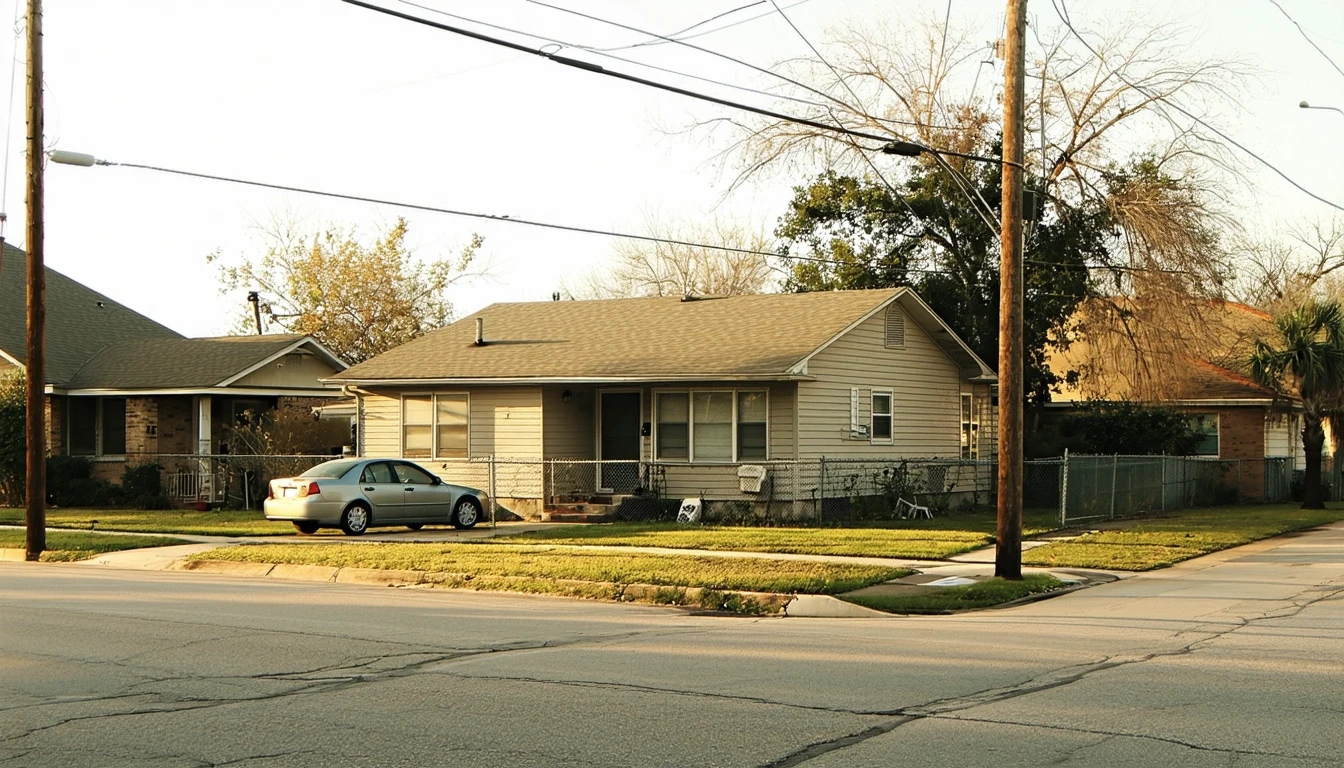
The Housing Market in Pasadena Today
Pasadena’s housing market is shaped by its role as a working-class suburb with deep ties to heavy industry. Employment in refining, petrochemicals, and logistics creates steady demand for affordable housing, but it also means the market doesn’t chase the amenity-driven premium seen in other parts of the metro. The housing stock is predominantly low-rise—single-family homes, small apartment complexes, and older duplexes—with minimal vertical development. Both residential and commercial land use are present and mixed throughout the city, but that mix doesn’t translate into walkable convenience; instead, it reflects a patchwork of residential blocks interrupted by commercial corridors.
The market here rewards buyers who understand exposure rather than appreciation. Home values are accessible, but ownership means absorbing the cost of aging infrastructure, summer utility spikes, and a built environment that assumes car access for nearly every errand. For renters, the trade is different: predictable monthly costs in exchange for less control over location and less ability to avoid the friction of corridor-clustered grocery and food access.
Pasadena doesn’t compete with inner-loop Houston neighborhoods on walkability or transit access. It competes on price, proximity to industrial employment, and the availability of single-family homes at price points that have disappeared elsewhere in the metro. That positioning attracts households willing to manage trade-offs, but it penalizes those who assume suburban affordability comes with suburban convenience.
Renting in Pasadena
Renting in Pasadena means navigating a market where $1,159 per month buys access to a low-rise, car-dependent environment with moderate pedestrian infrastructure but limited transit options. Bus service is present, but without rail connections, renters here are structurally tied to car ownership for commuting, errands, and most household logistics. Food and grocery options exist but cluster along specific corridors rather than distribute evenly, meaning your rental location directly determines how much time and fuel you spend on daily errands.
Rental stock in Pasadena skews toward older apartment complexes and single-family homes offered by small landlords. Newer construction is limited, and amenities like in-unit laundry, central air upgrades, or modern insulation are inconsistent. That variability matters in a climate where cooling costs can dominate summer budgets and where humidity accelerates wear on older HVAC systems, window seals, and exterior finishes.
Renters avoid property tax exposure and major maintenance obligations, but they also lack control over efficiency upgrades that could reduce utility volatility. Landlords here may or may not invest in weatherization, programmable thermostats, or updated windows—improvements that directly affect how much you pay to stay cool from May through September. The rental experience in Pasadena is less about rent level and more about the cumulative cost of location, transportation, and utility exposure once you’re in the unit.
Owning a Home in Pasadena
Owning a home in Pasadena at a median value of $171,600 shifts the cost structure from predictable monthly rent to long-term exposure across multiple categories. Ownership here means taking on property taxes, insurance, maintenance, and utilities in a climate that accelerates wear and punishes inefficiency. The low-rise, mixed-use character of the city means most ownership opportunities are single-family homes on individual lots, which increases both control and responsibility compared to renting.
Property taxes in Texas operate without a state income tax, meaning local governments rely heavily on property assessments to fund schools, infrastructure, and services. While the specific rate isn’t provided in the data, Texas property tax structures generally create ongoing obligations that rise with assessed value and local budget needs. Homeowners here should expect property taxes to represent a significant, recurring cost that doesn’t stabilize the way a fixed-rate mortgage does.
Insurance exposure in Pasadena reflects both climate and proximity to industrial infrastructure. Heat, humidity, and occasional severe weather drive premiums, as does the age and condition of the housing stock. Older homes may face higher rates due to outdated electrical systems, roofing materials, or foundation settling common in Gulf Coast construction. Flood risk varies by neighborhood, but proximity to bayous and low-lying areas means some properties require additional coverage beyond standard homeowners policies.
Maintenance in Pasadena isn’t optional. Extended heat and high humidity stress HVAC systems, roofing, exterior paint, and seals around windows and doors. Air conditioning units here work harder and fail faster than in drier or milder climates. Expect compressor replacements, duct sealing, and refrigerant top-offs to be recurring rather than rare. Exterior maintenance—particularly anything involving wood, caulk, or paint—requires more frequent attention than in less humid regions.
Ownership in Pasadena rewards those who budget for volatility and plan for systems to fail under sustained thermal and moisture stress. It penalizes buyers who assume maintenance schedules from other climates will apply here or who treat efficiency upgrades as optional. The cost of owning isn’t just the mortgage; it’s the sustained obligation to keep systems running in an environment that actively works against them.
Apartment vs House in Pasadena — Cost Behavior Comparison
| Expense Category | Apartment | House |
|---|---|---|
| Cooling Costs | Shared walls and smaller square footage reduce cooling load; older units may lack efficient HVAC or insulation | Standalone structure with greater exposure to heat; larger square footage and older systems drive higher summer bills |
| Maintenance Responsibility | Landlord handles HVAC, roofing, and exterior; tenant absorbs delays and lack of control over efficiency upgrades | Owner funds all repairs and replacements; climate accelerates wear on AC, roofing, and exterior finishes |
| Transportation Exposure | Location often determined by availability; corridor-clustered errands may require longer drives depending on placement | Greater choice in location; single-family neighborhoods may be farther from grocery and food corridors, increasing fuel costs |
| Outdoor Maintenance | None; landlord manages landscaping and exterior upkeep | Yard care, irrigation, pest control, and exterior painting required; humidity accelerates mold, mildew, and wood rot |
Why these categories differ in Pasadena: The comparison above isolates cost behaviors that vary meaningfully due to Pasadena’s extended cooling season, older housing stock, humid climate, and corridor-clustered commercial infrastructure. Categories like water/sewer or trash service are excluded because they don’t vary structurally between apartments and houses in this market. The distinctions shown reflect how climate intensity, building age, and spatial access patterns create different cost exposures depending on housing type.
Utilities & Upkeep Differences
Utility and maintenance costs in Pasadena are driven by climate intensity, not just housing type. Electricity rates stand at 15.69¢/kWh, a figure that becomes significant when cooling systems run from late spring through early fall. Apartments benefit from shared-wall insulation and smaller conditioned spaces, but older units may lack efficient HVAC or updated windows, limiting those advantages. Houses face full exposure—larger square footage, standalone construction, and aging systems that struggle under sustained heat.
Natural gas, priced at $16.51/MCF, plays a smaller role here than in northern climates. Heating demand is minimal and brief; the dominant utility exposure is electric cooling. Households in single-family homes should expect summer electric bills to represent the largest single utility cost, with intensity varying based on insulation quality, HVAC age, thermostat discipline, and square footage.
Maintenance differences between apartments and houses in Pasadena are shaped by humidity and heat. Houses require exterior paint touch-ups, gutter cleaning, and pest control more frequently than in drier climates. HVAC filters clog faster, condensate drains require regular clearing, and outdoor wood structures (fences, decks, trim) deteriorate quickly without treatment. Apartment renters avoid these obligations but also lack control over when and whether efficiency upgrades happen, leaving them exposed to higher utility costs in poorly maintained units.
The upkeep burden in Pasadena isn’t catastrophic, but it is relentless. Heat and moisture create a maintenance schedule that doesn’t pause, and deferred work compounds quickly. Homeowners who budget for ongoing HVAC service, exterior sealing, and proactive replacements fare better than those who wait for systems to fail.
Rent vs Buy: Long-Term Exposure in Pasadena
Choosing between renting and buying in Pasadena is a decision about which risks you’re willing to manage and which costs you can control. Renting offers predictability in monthly housing costs and shifts maintenance responsibility to landlords, but it leaves you exposed to rent increases, limits your ability to improve efficiency, and keeps you dependent on a car in a market where errands cluster along corridors. Buying trades that predictability for control, but it also means absorbing property tax obligations, insurance volatility, and the sustained cost of maintaining systems under heat and humidity stress.
Over time, renters in Pasadena face pressure from lease renewals in a market where rental supply is limited and newer construction is sparse. Rent doesn’t rise uniformly, but it does rise, and renters have little leverage to negotiate or avoid increases beyond moving—a process that itself incurs costs and may not improve location relative to work or errands. Owners face different exposure: property taxes that adjust with assessed values and local budget needs, insurance premiums that respond to claims history and climate risk, and maintenance costs that escalate as systems age and climate takes its toll.
Ownership in Pasadena provides control over efficiency investments—upgraded insulation, modern HVAC, programmable thermostats, and weatherization—that can reduce utility volatility and improve comfort. Renters rarely have that option and must absorb the consequences of landlord decisions about whether and when to upgrade. That control matters in a climate where cooling costs dominate and where older systems fail more frequently.
The long-term tradeoff isn’t about which option costs less in total; it’s about which cost structure aligns with your ability to manage volatility, absorb maintenance obligations, and benefit from efficiency improvements. Renters in Pasadena avoid the risk of major system failures but also forgo the ability to reduce exposure through upgrades. Owners take on that risk but gain the tools to manage it.
FAQs About Housing Costs in Pasadena
What drives housing costs in Pasadena beyond the purchase price or rent?
Ownership costs in Pasadena are shaped by property taxes, insurance, utilities, and maintenance—all of which respond to climate intensity and housing age. Renters avoid some of those obligations but face limited control over efficiency and location, which drives transportation and utility exposure. The built environment here assumes car dependency, meaning housing costs interact directly with fuel and vehicle expenses.
How does Pasadena’s climate affect homeownership costs?
Extended heat and high humidity create dominant cooling costs and accelerate wear on HVAC systems, roofing, exterior finishes, and seals. Air conditioning units work harder and fail more frequently than in milder climates. Maintenance schedules are compressed, and deferred work compounds quickly. Owners who budget for proactive HVAC service, weatherization, and exterior upkeep manage these pressures better than those who react to failures.
Is renting or buying more common in Pasadena?
Pasadena’s housing stock is predominantly single-family homes, but rental options exist in older apartment complexes and houses offered by small landlords. The choice between renting and buying here depends less on prevalence and more on whether you’re prepared to manage the maintenance and utility exposure that comes with ownership in a hot, humid climate with car-dependent infrastructure.
How does Pasadena’s location affect housing costs?
Pasadena sits within the Houston metro but functions as an industrial suburb with limited transit access and corridor-clustered commercial services. That geography means housing costs are lower than inner-loop neighborhoods, but transportation and time costs are higher. Proximity to employment in petrochemicals and refining supports demand, but it doesn’t create the amenity-driven premiums seen elsewhere in the region.
What should renters in Pasadena watch for when choosing a unit?
Renters should prioritize HVAC condition, insulation quality, and proximity to grocery and food corridors. Older units with inefficient cooling systems or poor weatherization will drive higher utility bills in summer. Location matters because errands here cluster rather than distribute, meaning a unit far from those corridors increases fuel costs and time spent driving for daily needs.
Making Housing Choices in Pasadena
Housing in Pasadena isn’t expensive by metro standards, but it demands careful evaluation of what you’re actually paying for and what costs follow once you’re in. Ownership here rewards buyers who plan for sustained maintenance, budget for utility volatility, and understand that climate and infrastructure create ongoing obligations that don’t stabilize. Renting offers simplicity and shifts some risk, but it also limits control and keeps you dependent on decisions landlords make about efficiency and upkeep.
The city’s low-rise, mixed-use character and corridor-clustered services mean housing decisions interact directly with transportation costs and daily logistics. Where you live determines how far you drive, how much you spend on fuel, and how much time you lose to errands. Those costs don’t appear on a lease or a mortgage statement, but they shape monthly spending in Pasadena as much as rent or property taxes do.
Pasadena fits households willing to manage trade-offs: accessible home prices in exchange for higher maintenance exposure, moderate rent in exchange for car dependency, proximity to industrial employment in exchange for limited walkability and transit access. It doesn’t fit those who expect suburban affordability to come with suburban convenience or who assume housing costs end at the monthly payment. If you’re considering moving to Pasadena, the housing decision isn’t just about what you can afford today—it’s about which cost structure you’re prepared to manage over time and whether the tradeoffs align with how you actually live.
How this article was built: In addition to public economic data, this article incorporates location-based experiential signals derived from anonymized geographic patterns—such as access density, walkability, and land-use mix—to reflect how day-to-day living actually feels in Pasadena, TX.