
Lila steps off the Caltrain at Morgan Hill station just after 7 a.m., phone in hand, checking her calendar before the walk to her office near Monterey Road. She’s one of a small but steady group of commuters who’ve built their routines around the rail line—reliable for trips north to San Jose or south toward Gilroy, but less useful for getting around Morgan Hill itself. By mid-morning, she’ll drive to a client meeting on the west side of town, because the places she needs to reach during the day aren’t connected by anything but roads. Her mornings reflect a broader truth about transportation options in Morgan Hill: the infrastructure exists in pockets, and most households navigate a blend of rail access, car dependence, and selective walkability depending on where they live and where they need to go.
Morgan Hill sits in a geographic position that shapes its transportation reality more than policy or preference ever could. It’s far enough from the urban core of Silicon Valley to retain a suburban layout, but close enough that commuters treat it as a bedroom community with one foot in the South Bay job market. The city’s development pattern—low-density residential neighborhoods radiating out from a more compact downtown—means that getting around requires different strategies depending on your starting point and daily needs. Rail service connects Morgan Hill to regional destinations, but within city limits, the car remains the primary tool for errands, appointments, and multi-stop days.
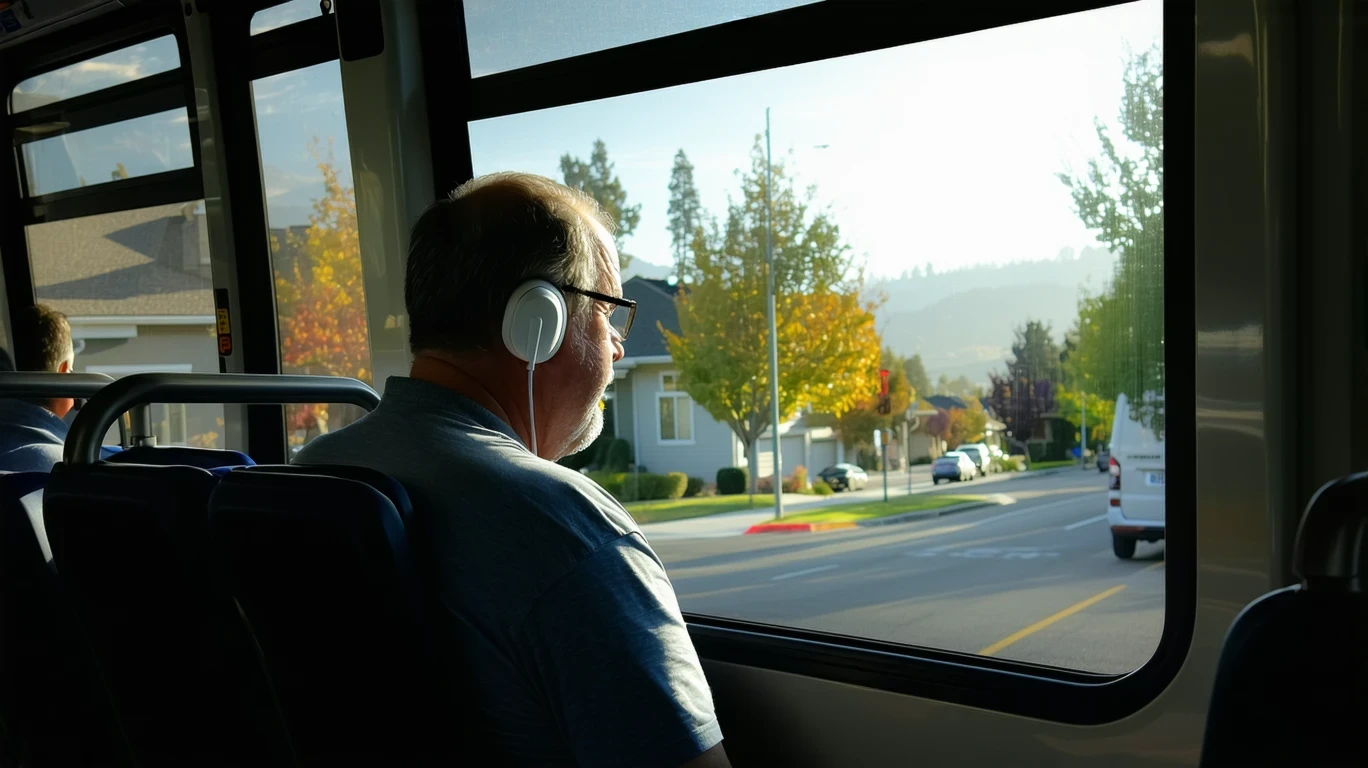
How People Get Around Morgan Hill
Most residents rely on cars for the majority of their daily movement. The street network is built to accommodate driving, and the distances between residential areas, grocery stores, schools, and workplaces generally exceed what’s practical on foot or by bike for routine trips. That said, the city’s infrastructure reveals pockets of higher pedestrian activity and cycling presence, particularly in areas closer to downtown and along certain corridors. The pedestrian-to-road ratio in these zones supports walking for specific errands or short trips, and bike infrastructure is more visible than in many comparable suburban cities. But these conditions don’t extend uniformly across Morgan Hill—they’re concentrated, not citywide.
What newcomers often misunderstand is that Morgan Hill’s transportation landscape isn’t binary. It’s not purely car-dependent, nor is it a place where you can easily go car-free. Instead, it’s a city where your mobility options depend heavily on where you live and what you’re trying to accomplish. Someone living near downtown with flexible work hours might walk to coffee, bike to the farmers’ market, and drive to Costco. Someone in a neighborhood west of Highway 101 will almost certainly drive everywhere, every day. The infrastructure doesn’t force one pattern on everyone—it creates different realities based on geography.
How this article was built: In addition to public economic data, this article incorporates location-based experiential signals derived from anonymized geographic patterns—such as access density, walkability, and land-use mix—to reflect how day-to-day living actually feels in Morgan Hill, CA.
Public Transit Availability in Morgan Hill
Public transit in Morgan Hill centers around Caltrain, the commuter rail line that connects the city to San Jose, Palo Alto, and San Francisco to the north, and Gilroy to the south. The Morgan Hill station serves as a regional access point, and for residents whose work or regular destinations align with the rail corridor, it provides a viable alternative to driving—at least for that specific trip. Commuters who work in downtown San Jose or along the Peninsula use the train to avoid Highway 101 traffic and the cost exposure that comes with long daily drives.
But Caltrain’s usefulness drops sharply once you’re talking about movement within Morgan Hill itself. The station is located near Monterey Road, and while that puts it within reach of downtown and some nearby residential areas, it doesn’t help someone living in the neighborhoods west of the highway or in the more spread-out sections to the east. Local bus service exists, but coverage is limited and doesn’t provide the frequency or reach that would make it a practical substitute for a car in most households’ daily routines. Transit works best for people whose lives are structured around a predictable commute to a fixed destination along the rail line, and who can drive or walk for everything else.
Where transit falls short is in flexibility and last-mile connectivity. If your day involves multiple stops—picking up kids, running errands, meeting friends in different parts of town—public transit doesn’t provide a framework that supports that kind of movement. The city’s layout and the spacing of destinations make cars the more practical choice for the majority of trips, even for households that use rail regularly for commuting.
Driving & Car Dependence Reality
For most people in Morgan Hill, driving isn’t optional—it’s structural. The distances between home, work, school, and daily errands are designed around car access, and the street network reflects that. Parking is generally abundant and free, which removes one of the friction points that makes car ownership costly or inconvenient in denser cities. But that convenience comes with tradeoffs: households absorb the cost of vehicle ownership, maintenance, insurance, and fuel, and they’re exposed to volatility in gas prices. At $5.34 per gallon, frequent driving adds up quickly, especially for households managing multiple vehicles or long commutes.
Car dependence also shapes where people choose to live. Proximity to Highway 101 matters more than proximity to downtown for many households, because freeway access determines commute time and flexibility. Neighborhoods farther from the highway or from major through-streets can feel more isolated, not because they’re physically remote, but because every trip requires more time and planning. The car becomes the tool that makes the city navigable, but it also becomes a fixed cost that every household has to carry regardless of how much they’d prefer to walk or bike.
Sprawl reinforces this pattern. Morgan Hill’s residential areas extend outward in ways that prioritize space and privacy over density and walkability. That’s appealing to families who want larger homes and yards, but it also means that the distance between any two points—home to school, home to grocery store, home to park—is almost always too far to walk comfortably, especially with kids or in summer heat. The city’s layout doesn’t penalize car use; it rewards it.
Commuting Patterns & Daily Mobility
Commuting in Morgan Hill often means commuting out of Morgan Hill. Many residents work in San Jose, Sunnyvale, or other parts of Silicon Valley, and their daily routines are built around the time and cost of getting to those job centers and back. For some, that means taking Caltrain north and avoiding the variability of Highway 101 traffic. For others, it means driving the full distance, either because their workplace isn’t near a train station or because their schedule doesn’t align with rail service hours.
Single-destination commutes—home to office and back—are the pattern that benefits most from rail access. Households with one working adult whose job is along the Caltrain corridor can structure their day around the train and use a car for everything else. But multi-stop routines—dropping kids at school, stopping for groceries, picking up dry cleaning—don’t fit neatly into a transit framework. Those patterns require the flexibility and point-to-point control that only a car provides, and they’re the norm for families and dual-income households.
Proximity to work isn’t common. Morgan Hill’s housing costs reflect its position within the broader Silicon Valley market, but the jobs that support those costs are often 20, 30, or 40 miles away. That geographic separation means that commuting isn’t incidental—it’s a daily cost in time, fuel, and mental load. Households that can reduce or eliminate the commute (through remote work or local employment) gain significant flexibility and cost relief, but that’s not the majority pattern.
Who Transit Works For — and Who It Doesn’t
Transit works best for a specific subset of Morgan Hill residents: those who live near the Caltrain station, work along the rail corridor, and have the ability to drive or walk for non-commute trips. This group tends to include younger professionals, couples without kids, and some empty nesters who’ve structured their lives around predictable routines and limited daily errands. For them, the train reduces commute costs and stress, and the car handles everything else.
Transit works less well—or not at all—for families with school-age children, households with multiple jobs in different directions, and anyone living in the outer residential areas where the station isn’t within practical reach. Parents managing school drop-offs, after-school activities, and weekend logistics need the flexibility that only a car provides. Shift workers, service industry employees, and anyone whose job requires travel within Morgan Hill or to locations not served by rail will find transit largely irrelevant to their daily reality.
Renters closer to downtown have better odds of incorporating transit and walking into their routines, especially if they work remotely or have flexible schedules. Homeowners in the neighborhoods west of Highway 101 or in the hills are almost universally car-dependent, not by choice but by geography. The city’s infrastructure doesn’t penalize car-free living outright, but it doesn’t support it beyond a narrow set of circumstances.
Transportation Tradeoffs in Morgan Hill
Choosing between transit and driving in Morgan Hill isn’t really a choice for most households—it’s a question of how much driving you can avoid, and whether rail access fits your specific commute. Transit offers predictability: the train runs on a schedule, and once you’re on it, you’re insulated from traffic variability and fuel price swings. But that predictability comes at the cost of flexibility. You can’t make an unplanned stop, adjust your route, or leave outside the service window.
Driving offers control and convenience, but it also means absorbing the full cost of vehicle ownership and fuel. In a region where gas prices are high and commutes are long, that exposure adds up. Households that can combine rail commuting with local driving often get the best of both: they avoid the worst of the commute cost while retaining the flexibility they need for daily life. But that combination only works if your job, home, and daily destinations align in the right way.
The tradeoff isn’t just financial—it’s also about time and mental load. A car-dependent household spends more on transportation but gains time and autonomy. A transit-reliant household saves on some costs but sacrifices spontaneity and convenience. Most households in Morgan Hill end up somewhere in the middle, using the car as the default and transit as a tool for specific trips when it makes sense.
FAQs About Transportation in Morgan Hill (2026)
Is public transit usable for daily commuting in Morgan Hill?
Yes, if your job is along the Caltrain corridor and you live near the Morgan Hill station. The train provides reliable access to San Jose, Palo Alto, and San Francisco, and it’s a practical alternative to driving for that specific commute. But for trips within Morgan Hill or to destinations not served by rail, transit options are limited, and most households rely on cars for daily errands and local movement.
Do most people in Morgan Hill rely on a car?
Yes. The city’s layout, the distances between residential areas and daily destinations, and the limited reach of local transit mean that cars are the primary mode of transportation for the majority of households. Even residents who use Caltrain for commuting typically drive for groceries, appointments, and family logistics.
Which areas of Morgan Hill are easiest to live in without a car?
Areas near downtown and close to the Caltrain station offer the most practical car-free or car-light options, especially for individuals or couples without children. These areas have higher concentrations of walkable errands, better access to rail, and more visible bike infrastructure. But even in these zones, most households find that a car is necessary for at least some trips.
How does commuting in Morgan Hill compare to nearby cities?
Morgan Hill’s commuting reality is shaped by its role as a bedroom community for Silicon Valley. Commutes tend to be longer and more car-dependent than in denser cities closer to the urban core, but the city offers more space and lower density in exchange. Compared to Gilroy, Morgan Hill has better rail access; compared to San Jose, it has fewer transit options but less congestion within city limits.
Does Morgan Hill have good bike infrastructure?
Bike infrastructure is more developed in Morgan Hill than in many comparable suburban cities, particularly in areas closer to downtown. The bike-to-road ratio is higher than typical for a city of this size and layout, and some residents use bikes for recreation or short errands. But biking as a primary mode of transportation is limited by distance, heat, and the car-oriented design of most neighborhoods.
How Transportation Fits Into the Cost of Living in Morgan Hill
Transportation isn’t just a line item—it’s a structural factor that shapes what a budget has to handle in Morgan Hill. Households that can reduce driving through rail commuting or remote work gain meaningful cost relief and flexibility. Households that can’t—because of job location, family logistics, or neighborhood geography—carry the full weight of car ownership, fuel costs, and commute time as fixed expenses that don’t vary much month to month.
The city’s transportation infrastructure doesn’t penalize any one choice, but it rewards car ownership and proximity to Highway 101 or the Caltrain station. Where you live determines how much you drive, and how much you drive determines a significant portion of your monthly cost exposure. For families weighing a move to Morgan Hill, understanding that tradeoff—space and access versus commute cost and time—is essential to making a decision that fits both your budget and your daily life.