
It’s Sunday evening in Morgan Hill, and you’re mapping out the week’s meals. Chicken stir-fry Monday, tacos Wednesday, maybe pasta Friday. You pull up your notes app, sketch a shopping list, and start thinking through where to go: the discount grocer near the rail station, the mid-tier chain by the park, or the premium market with the prepared foods section. In Morgan Hill, that choice matters more than the list itself. Grocery costs here aren’t defined by a single price level—they’re shaped by which store you choose, how many people you’re feeding, and how much friction you’re willing to tolerate in exchange for savings.
This article explains how grocery prices feel in Morgan Hill in 2026, which households notice the pressure most, and how store tier and shopping behavior influence what you actually spend. It won’t simulate a grocery receipt or prescribe a weekly budget—those depend on your household size, preferences, and routines. Instead, it breaks down the cost signals, the tradeoffs, and the practical levers that give you control over one of the few flexible line items in a high-cost region.
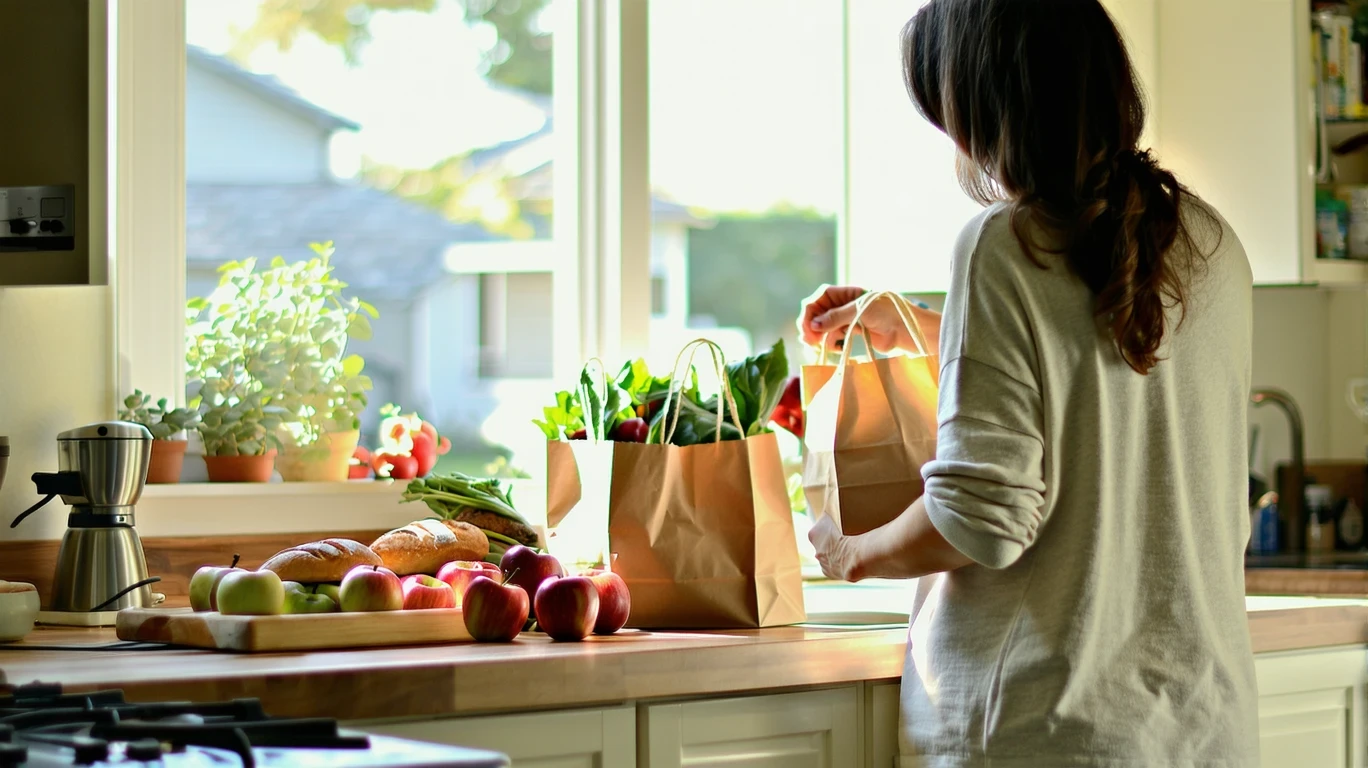
How Grocery Costs Feel in Morgan Hill
Morgan Hill sits in the southern reach of Silicon Valley, where the regional price parity index holds at 100—right in line with the national average. That positioning is unusual for the Bay Area, and it shows up in grocery pricing. While you’re not dealing with San Francisco or Palo Alto premiums, you’re also not insulated from the broader market dynamics of a high-income tech corridor. The median household income here is $152,199 per year, which creates demand for premium grocers, organic options, and prepared meal sections—but it also sustains a full range of discount and mid-tier stores. The result is a grocery landscape defined more by choice than by scarcity.
For singles and young professionals, grocery costs rarely feel like a binding constraint. High incomes and smaller household sizes mean that even shopping at premium stores doesn’t create meaningful budget pressure. A $6.74 pound of ground beef or a $4.68 pound of cheese might register as expensive in absolute terms, but it doesn’t force difficult tradeoffs when you’re feeding one or two people. The bigger question is convenience: do you want to drive to a discount store and spend time comparing prices, or do you value proximity, selection, and speed enough to absorb a 20–30% premium?
Families with children face a different calculation. Grocery costs scale with household size, and even a modest per-item premium compounds quickly when you’re buying for four or five people. A family that switches from discount to premium stores might see weekly costs rise by $40 to $60—not because any single item is unaffordable, but because volume amplifies every price difference. In Morgan Hill, where strong family infrastructure and high playground density support household routines, grocery shopping becomes a recurring logistics event, not an occasional errand. That frequency makes store choice and planning behavior more consequential than in cities where families eat out more often or rely on prepared foods.
Grocery Price Signals (Illustrative)
The table below shows illustrative prices for common staple items in Morgan Hill, derived from national baselines adjusted for regional price parity. These are not store-specific quotes or weekly snapshots—they’re anchors that reflect how staple costs tend to compare locally. Actual prices vary by store tier, brand, and season.
| Item | Illustrative Price |
|---|---|
| Bread | $1.85/lb |
| Cheese | $4.68/lb |
| Chicken | $2.05/lb |
| Eggs | $2.50/dozen |
| Ground Beef | $6.74/lb |
| Milk | $4.03/half-gallon |
| Rice | $1.07/lb |
These prices illustrate how staple items tend to compare locally—not a full shopping list. Ground beef and cheese sit at the higher end of the spectrum, reflecting both regional demand for quality proteins and the premium tier’s influence on the market. Eggs, rice, and bread remain relatively accessible, even at mid-tier stores. The spread between discount and premium stores in Morgan Hill can reach 25–35% on proteins and dairy, but staples like rice and bread show narrower gaps. That variance is why store choice becomes the primary lever for managing grocery costs here.
Store Choice & Price Sensitivity
Grocery price pressure in Morgan Hill varies more by store tier than by any single “average” experience. The city’s broadly accessible food density—supported by high grocery establishment availability throughout the area—means you’re not locked into one store or forced to drive long distances for alternatives. Discount, mid-tier, and premium options all operate here, and the distance between them is often measured in minutes, not miles. That accessibility shifts the question from “where can I shop?” to “where do I choose to shop, and what am I trading off?”
Discount stores anchor the low end of the price spectrum. These are the grocers that prioritize volume, limited selection, and no-frills environments in exchange for consistently lower prices. A household that commits to discount shopping in Morgan Hill can reduce grocery costs by 20–30% compared to premium alternatives, but the tradeoff isn’t just aesthetic—it’s also time, selection, and proximity. Discount stores may require longer drives, offer fewer organic or specialty items, and involve more planning to avoid multiple trips. For families on tighter budgets or anyone prioritizing cost control, that tradeoff makes sense. For high-income households, it often doesn’t.
Mid-tier chains occupy the middle ground. These stores offer broader selection, better locations, and more consistent stock than discount grocers, but without the prepared foods, specialty sections, or premium branding of high-end markets. Pricing sits 10–20% above discount stores and 10–15% below premium options. For most Morgan Hill households, mid-tier stores represent the default choice: accessible, reliable, and aligned with the regional price parity index of 100. They’re where you go when you want predictability without paying for ambiance.
Premium grocers serve the top end of the market. These stores emphasize organic options, prepared meals, specialty imports, and customer experience. Prices run 25–35% above discount stores, and the gap widens on proteins, dairy, and produce. In Morgan Hill, where the median household income exceeds $150,000, premium stores thrive—not because they’re necessary, but because they’re convenient and aligned with how high-income households value time. A family that shops premium isn’t necessarily unaware of the cost difference; they’ve decided that the time saved, the selection gained, and the friction avoided are worth the premium. That’s a luxury afforded by income, and it’s one reason grocery costs feel so variable across households here.
What Drives Grocery Pressure Here
Income is the first and most obvious driver of grocery cost sensitivity in Morgan Hill. At a median household income of $152,199, most families have enough cushion to absorb grocery price swings without restructuring their budgets. A $20 or $30 weekly increase—whether from inflation, store choice, or household size—doesn’t force tradeoffs against housing, utilities, or transportation. That income level also creates tolerance for premium store pricing, organic premiums, and prepared food markups that would feel prohibitive in lower-income cities. The result is a grocery market that skews toward quality and convenience rather than cost minimization.
Household size amplifies every price signal. A single professional buying chicken at $2.05 per pound might spend $6 or $8 on a week’s worth of protein. A family of four buying the same chicken at the same price might spend $25 or $30. That scaling effect makes store tier choice far more consequential for families than for singles. A 20% premium at a high-end grocer might add $10 to a single person’s weekly bill, but $40 to a family’s. Over a month, that’s the difference between a minor line item and a noticeable budget shift. In Morgan Hill, where strong family infrastructure supports larger households, grocery costs become one of the few flexible expenses that families can actively manage through behavior and store selection.
Regional distribution and access patterns also shape how grocery costs feel. Morgan Hill’s broadly accessible food density means that most residents live within a short drive—or, in walkable pockets, a short walk—of multiple grocery options. That reduces the friction cost of switching stores or comparison shopping. In car-dependent suburbs where the nearest discount store is 15 or 20 minutes away, the time cost of saving $15 or $20 per trip often outweighs the savings. In Morgan Hill, where rail service and walkable pockets reduce car dependency for some errands, the calculus shifts. You can walk to a mid-tier store, drive five minutes to a discount grocer, or stop at a premium market on the way home from work. That optionality doesn’t lower prices, but it does lower the cost of exercising choice.
Seasonal variability affects produce and dairy more than shelf-stable staples. California’s year-round growing season moderates some of the seasonal price swings seen in colder climates, but it doesn’t eliminate them. Berries, stone fruits, and leafy greens still fluctuate with harvest cycles, and dairy prices respond to regional supply conditions. In Morgan Hill, where the regional price parity index holds steady at 100, these swings tend to track national patterns rather than amplifying them. That stability makes grocery costs more predictable than in cities with higher or more volatile price parities, but it also means you don’t benefit from regional discounts or below-average pricing.
Practical Ways People Manage Grocery Costs
Store tier switching is the most direct lever for controlling grocery costs in Morgan Hill. A household that shifts from premium to mid-tier stores can reduce weekly spending without changing what they buy—just where they buy it. The savings come from eliminating markups on ambiance, prepared foods, and specialty branding, not from sacrificing quality or variety. For families, this strategy works best when applied selectively: buy proteins, dairy, and produce at mid-tier or discount stores, then pick up specialty items or prepared foods at premium grocers only when convenience justifies the cost. That hybrid approach captures most of the savings without requiring full commitment to a single store tier.
Meal planning reduces waste and eliminates impulse purchases. In Morgan Hill, where high incomes and accessible food options make it easy to over-purchase or default to takeout, planning becomes a behavioral anchor rather than a financial necessity. A household that plans meals for the week buys only what it needs, avoids duplicate purchases, and reduces the likelihood of throwing out unused produce or proteins. The savings aren’t dramatic on a per-trip basis, but they compound over time. More importantly, meal planning shifts grocery shopping from a reactive errand to a controlled process, which reduces the temptation to upgrade to premium stores or add unnecessary items.
Buying in bulk works for shelf-stable staples and household items, but it requires storage space and upfront capital. In Morgan Hill, where the median home value exceeds $1 million and median rent sits at $2,249 per month, most households have the space and income to support bulk buying. The challenge is behavioral: bulk purchases only generate savings if you actually use what you buy. A 25-pound bag of rice at $1.07 per pound saves money compared to buying smaller quantities at mid-tier stores, but only if it doesn’t sit in the pantry for two years. For families with predictable consumption patterns, bulk buying makes sense. For singles or couples, it often doesn’t.
Seasonal and local produce shopping takes advantage of California’s agricultural proximity. Morgan Hill sits in a region with year-round access to fresh produce, and local farmers’ markets or farm stands often price seasonal items below what premium grocers charge for the same products. The tradeoff is time and availability: farmers’ markets operate on limited schedules, and selection varies by season. For households that value fresh, local produce and have the flexibility to shop outside traditional grocery store hours, this strategy reduces costs and improves quality. For time-constrained families or professionals, it’s often not worth the friction.
Groceries vs Eating Out (Directional)
The tradeoff between cooking at home and eating out isn’t purely financial in Morgan Hill—it’s also about time, convenience, and how much friction you’re willing to tolerate. High incomes and demanding work schedules create strong incentives to outsource meal preparation, whether through takeout, delivery, or prepared foods from premium grocers. A household that eats out three or four times per week might spend two to three times what they’d spend cooking the same meals at home, but the time saved and the mental load reduced often justify the cost. That’s especially true for dual-income professional couples or families where both parents work full-time.
Cooking at home consistently requires planning, shopping, and time—all of which have opportunity costs in a high-income area. A family that commits to home cooking can control ingredient quality, portion sizes, and costs in ways that eating out doesn’t allow, but the time investment is real. In Morgan Hill, where broadly accessible food options and walkable pockets reduce the friction of grocery shopping, the barriers to cooking at home are lower than in car-dependent suburbs where every grocery trip requires a 20-minute round-trip drive. That accessibility doesn’t eliminate the time cost, but it does make home cooking more feasible for households that want to prioritize it.
The financial gap between groceries and dining out widens with household size. A single professional might spend $12 to $15 on a prepared meal from a premium grocer or $15 to $20 on takeout, compared to $5 to $8 cooking the same meal at home. That’s a noticeable difference, but not a prohibitive one. A family of four faces a different calculation: $50 to $70 for takeout versus $15 to $25 cooking at home. Over a week, that gap can reach $150 to $200, which starts to matter even at Morgan Hill’s high median income. For families, cooking at home becomes a meaningful cost control lever. For singles and couples, it’s more about preference than necessity.
FAQs About Grocery Costs in Morgan Hill (2026)
Is it cheaper to shop in bulk in Morgan Hill? Bulk buying reduces per-unit costs on shelf-stable staples like rice, beans, and canned goods, but it requires upfront capital and storage space. In Morgan Hill, where most households have the income and space to support bulk purchases, the strategy works well for families with predictable consumption patterns—but it’s less effective for singles or couples who may not use large quantities before expiration.
Which stores in Morgan Hill are best for low prices? Discount-tier grocers consistently offer the lowest prices, typically 20–30% below premium stores on proteins, dairy, and produce. Mid-tier chains sit in the middle, balancing cost and convenience. The best choice depends on how much time you’re willing to invest in comparison shopping and whether proximity or selection matters more than price.
How much more do organic items cost in Morgan Hill? Organic premiums vary by item and store tier, but they generally run 20–40% above conventional equivalents. Premium grocers carry the widest organic selection but also charge the highest markups. Mid-tier stores offer organic options at lower premiums, while discount grocers stock limited organic inventory. The cost difference is most noticeable on produce, dairy, and proteins.
How do grocery costs for two adults in Morgan Hill tend to compare to nearby cities? Morgan Hill’s regional price parity index of 100 suggests grocery costs align closely with national averages, which is lower than San Jose, Palo Alto, or San Francisco but similar to other South Bay communities. The bigger variation comes from store tier choice and shopping behavior rather than city-to-city price differences.
How do households in Morgan Hill think about grocery spending when cooking at home? Most households view grocery costs as one of the few flexible budget categories they can actively control through store choice, meal planning, and shopping frequency. High incomes reduce the pressure to minimize costs, so decisions often prioritize convenience, quality, and time savings over strict cost minimization. Families tend to focus more on cost control than singles or couples, simply because household size amplifies every price difference.
Does Morgan Hill’s walkability affect grocery shopping habits? In parts of the city with walkable pockets and accessible food density, some households can complete grocery runs on foot or by bike, which reduces car dependency and makes frequent, smaller shopping trips more feasible. That flexibility allows for fresher ingredients and less food waste, though it doesn’t directly lower prices. Most residents still drive for larger grocery trips, especially families buying for multiple people.
How does seasonal produce pricing work in Morgan Hill? California’s year-round growing season moderates seasonal price swings compared to colder climates, but produce costs still fluctuate with harvest cycles. Berries, stone fruits, and leafy greens are cheapest during peak local harvest periods. Shopping seasonally and buying from farmers’ markets or farm stands can reduce costs and improve quality, but it requires flexibility and planning.
How Groceries Fit Into the Cost of Living in Morgan Hill
Grocery costs in Morgan Hill occupy a middle position in the broader cost structure: less rigid than housing or utilities, but more recurring and visible than occasional expenses like car maintenance or clothing. At a median household income of $152,199, most families can absorb grocery price swings without restructuring their budgets, but that doesn’t mean grocery costs are trivial. For families with children, weekly grocery spending can rival utility bills or transportation costs, especially if they default to premium stores or eat out frequently. For singles and young professionals, groceries rarely create budget pressure, but they still represent one of the few line items where behavior directly controls outcomes.
The real cost of groceries in Morgan Hill isn’t just what you spend at checkout—it’s the time, friction, and planning required to manage that spending. A household that shops at discount stores saves money but invests more time comparing prices, driving farther, and tolerating limited selection. A household that shops at premium stores pays more but gains convenience, proximity, and reduced mental load. Neither choice is wrong; they’re just optimized for different priorities. In a high-income area where time often feels scarcer than money, that tradeoff tilts toward convenience more often than cost minimization.
For a complete picture of how grocery costs interact with housing, utilities, transportation, and other recurring expenses, see What a Budget Has to Handle in Morgan Hill. That article breaks down the full monthly cost structure and explains how different household types allocate income across categories. Grocery costs are just one piece of the puzzle, but they’re one of the few pieces you can actively reshape through planning, store choice, and behavior. In Morgan Hill, where accessible food options and high incomes create real optionality, the question isn’t whether you can afford groceries—it’s how much control you want to exercise over what you spend and where that spending fits into your broader financial priorities.
How this article was built: In addition to public economic data, this article incorporates location-based experiential signals derived from anonymized geographic patterns—such as access density, walkability, and land-use mix—to reflect how day-to-day living actually feels in Morgan Hill, CA.