
What does it actually feel like to live in Milford? Not the stats, not the rankings—just the day-to-day emotional texture of being here. For some, Milford delivers exactly what they’re looking for: a suburban rhythm with surprising pockets of walkability, abundant green space, and a small-town identity within reach of Cincinnati. For others, the tradeoffs feel sharper—errands require planning, school density doesn’t match the family-friendly housing stock, and the car stays central to nearly everything.
The city’s vibe isn’t one thing. It’s a blend of quiet residential comfort, corridor-based convenience, and a community still negotiating what growth should look like. Whether Milford feels like home depends less on whether it’s “good” and more on whether its particular mix of access, autonomy, and compromise aligns with what you need from a place.
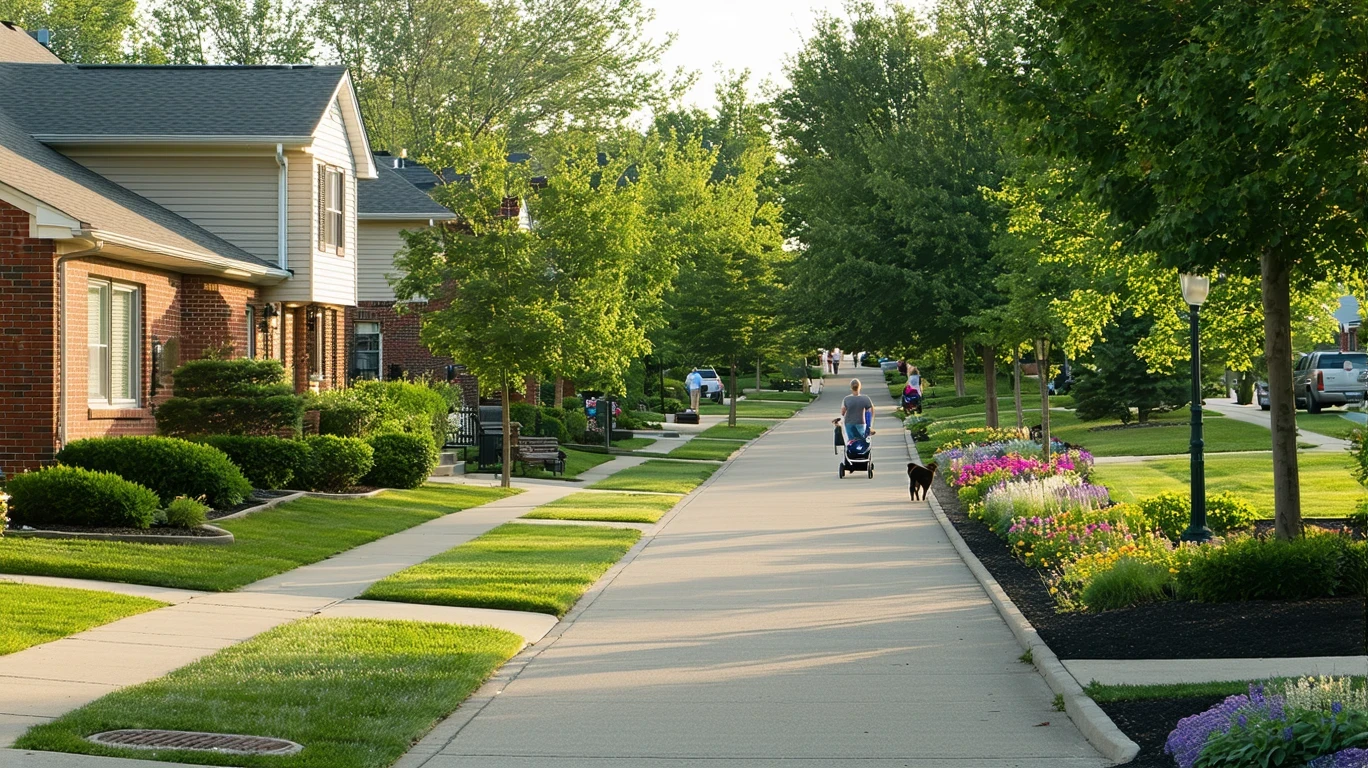
The Emotional Landscape of Milford
Milford tends to reward people who value outdoor access and don’t mind driving to get things done. The park density here exceeds what you’d find in many comparable suburbs, and water features add texture to the landscape. If your weekends revolve around trails, green space, and time outside, that infrastructure is genuinely present—not just promised.
But the city’s walkability tells a more complicated story. Pedestrian infrastructure exists in pockets, with a high ratio of sidewalks to roads in certain areas, but those pockets don’t connect into a citywide network. Errands cluster along commercial corridors rather than spreading throughout neighborhoods, which means convenience depends heavily on where you live and whether you’re willing to drive. For households used to running out for milk on foot, that shift can feel limiting. For those who’ve always driven everywhere, it’s invisible.
Family infrastructure is another friction point. Despite the prevalence of single-family homes and a median household income that suggests family orientation, school density falls below typical thresholds. Playgrounds exist but aren’t as widespread as parks. It’s not that families can’t thrive here—it’s that the city’s infrastructure doesn’t automatically smooth the logistics the way some assume it will.
What People Are Talking About Online
In local Facebook groups and on platforms like Reddit, Milford residents tend to express a protective pride mixed with low-grade frustration. The tone isn’t angry—it’s more like people defending a place they genuinely like while acknowledging its limitations.
“It’s quiet, it’s safe, and you’re not far from anything if you’re willing to drive. But don’t expect to walk to dinner.”
“The parks are legitimately great. We’re out at the Little Miami Trail constantly. That part of living here is better than advertised.”
“I thought it would be more walkable based on the downtown area, but once you’re outside that pocket, you’re back in the car for everything.”
Conversations about growth come up frequently, often with ambivalence. Long-time residents worry about losing the small-town feel, while newer arrivals sometimes express surprise at how car-dependent daily life remains despite the town’s traditional layout in certain areas. There’s also recurring discussion about errands—specifically, the need to plan trips rather than make spontaneous stops.
How Local Coverage Frames the City
Local news and community outlets tend to frame Milford as a place in transition—neither fully suburban nor small-town, neither stagnant nor rapidly transforming. Coverage often reflects tension between preservation and progress, with stories that highlight both.
- “Community Debates What Growth Should Look Like”
- “New Retail Arrives Along Main Corridors”
- “Outdoor Access Remains a Draw for Families”
- “Residents Weigh Convenience vs Quiet”
- “Schools and Infrastructure Under Renewed Focus”
The framing isn’t crisis-oriented, but it’s not boosterish either. It reflects a community aware of its tradeoffs and uncertain about which direction to lean. That ambiguity shows up in public sentiment, too—people aren’t unhappy, but they’re also not unconflicted.
Review-Based Public Perception
On Google, Yelp, and Nextdoor-style platforms, Milford earns praise for what it delivers well and mild criticism for what it doesn’t. The pattern is consistent: people who wanted suburban comfort, outdoor access, and proximity to Cincinnati tend to feel satisfied. People who expected walkable urbanism, dense amenities, or car-optional living tend to feel let down.
Positive reviews emphasize the parks, the trail access, the sense of safety, and the ease of reaching Cincinnati or other suburbs when needed. There’s frequent mention of “small-town charm” in the downtown pocket, though reviewers also note that charm doesn’t extend citywide.
Critical reviews—rarely harsh—focus on the need to drive for nearly everything, limited dining variety, and a sense that the city feels “in between” rather than fully defined. Families sometimes express surprise at the limited school and playground density given the housing stock. Remote workers and younger professionals occasionally mention feeling isolated or understimulated.
Newer planned areas tend to get described as clean and family-friendly but somewhat generic. Older pockets near downtown get credit for character but also notes about inconsistency in walkability and upkeep.
Comparison to Nearby Cities
| Dimension | Milford | Loveland | Mason |
|---|---|---|---|
| Walkability | Pockets of pedestrian texture, mostly car-dependent | Stronger downtown walkability, trail-connected | Planned suburban, limited pedestrian infrastructure |
| Outdoor Access | High park density, water features present | Trail-centric, strong green space integration | Parks present but less integrated into daily life |
| Errands | Corridor-clustered, requires planning | Mixed accessibility, some walkable zones | Big-box retail dominant, drive-to model |
| Community Vibe | Small-town identity, transitional feel | Arts-forward, cohesive downtown culture | Family-oriented, newer suburban energy |
| Transit | Bus service present, limited coverage | Bus service, slightly better connectivity | Minimal transit, car-essential |
Milford sits between Loveland’s more cohesive walkable downtown and Mason’s fully suburban, amenity-rich model. If you value outdoor access and don’t need walkability beyond occasional pockets, Milford offers a compelling middle ground. If you want a stronger pedestrian culture, Loveland may feel more aligned. If you prioritize newer infrastructure and big-box convenience, Mason’s model might fit better. None of these is objectively better—they’re just different answers to the same question: what do you need a place to do for you?
What Locals Are Saying
“We moved here for the schools, but honestly the parks have been the bigger win. The Little Miami Trail is five minutes away and we’re out there constantly. The school situation is fine, but it’s not what sold us in the end.”
“I work remotely and thought the downtown area would give me more third places to work from, but it’s pretty limited. I end up driving to Loveland or into Cincinnati when I need a change of scenery.”
“It’s a great place to raise kids if you’re okay with driving them everywhere. There’s not much they can walk to on their own, but the neighborhoods feel safe and the outdoor space is real.”
“I appreciate that it’s not cookie-cutter suburban, but it’s also not quite walkable enough to feel urban. It’s in this middle zone that works for us now, but I’m not sure it’s a forever place.”
“The commute to Cincinnati is totally manageable, and we get more house for the money here than we would closer in. The tradeoff is that we’re in the car a lot, but we knew that going in.”
“I wish there were more local spots within walking distance. The downtown has a few things, but if you’re not near that area, you’re driving to everything—even coffee.”
“We’ve been here for twenty years and it’s changed, but not in a bad way. It’s still quiet, still feels like a small town, but you can tell it’s trying to figure out what it wants to be next.”
Does Milford Feel Like a Good Fit?
Milford works best for people who value suburban comfort, strong outdoor access, and proximity to Cincinnati without needing walkable urbanism or car-free living. It rewards households comfortable with driving for errands, who appreciate green space and water features, and who don’t expect dense school or playground infrastructure despite the family-oriented housing stock.
It tends to frustrate people who want spontaneous walkability, transit-dependent living, or a cohesive small-town downtown that extends beyond a few blocks. The city’s identity feels transitional—not stagnant, but not fully resolved either. That ambiguity can feel like possibility or like limbo, depending on what you’re looking for.
If you’re trying to decide whether Milford fits your life, the question isn’t whether people here are happy—it’s whether the specific things that create friction or satisfaction here align with your own priorities. The parks are real. The car dependency is real. The pockets of walkability are real, but so is their limited reach. What matters is whether that particular mix feels like home or like compromise.
For a clearer sense of how costs shape daily decisions and household logistics here, explore a month of expenses in Milford. If you’re weighing housing pressure and what it takes to find a place, that context can help clarify whether the tradeoffs make sense. And if you’re curious about income pressure and who feels stable here, that lens adds another layer to the alignment question.
How this article was built: In addition to public economic data, this article incorporates location-based experiential signals derived from anonymized geographic patterns—such as access density, walkability, and land-use mix—to reflect how day-to-day living actually feels in Milford, OH.
The perspectives shown reflect commonly expressed local sentiment and recurring themes in public discussion, rather than individual accounts.