
Milford is considered moderately priced in 2026, with a median home value of $211,900 and median rent at $879 per month. The value proposition depends on housing entry cost versus car dependence, as most daily errands require planning around commercial corridors despite walkable pockets.
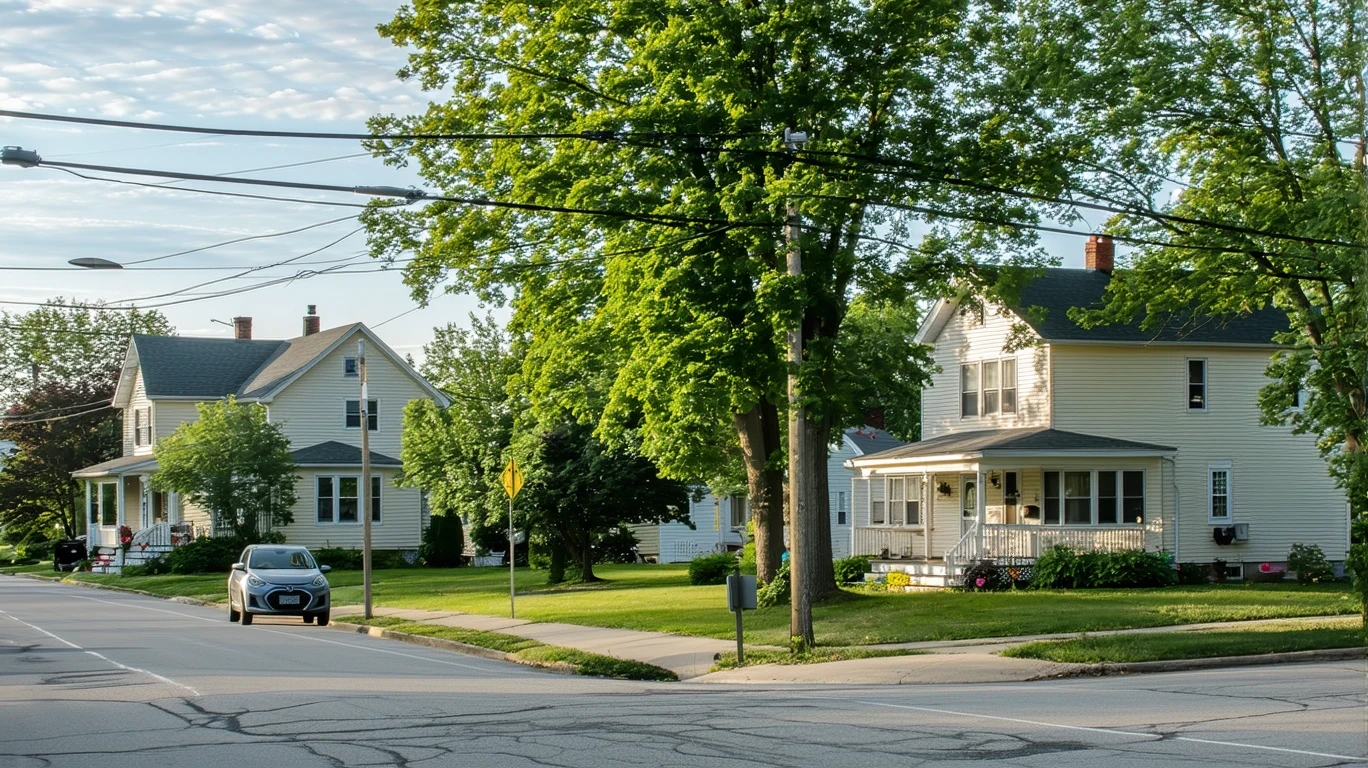
Is the True Cost of Living Higher Than You Think?
Milford’s cost structure rewards those who can navigate its split personality: neighborhoods with strong pedestrian infrastructure sit alongside a retail and service landscape that still demands a car for routine errands. The pedestrian-to-road ratio exceeds high thresholds in parts of the city, yet food and grocery density remains corridor-clustered rather than broadly accessible. This means your day-to-day experience hinges less on sticker prices and more on how you move—whether you’re someone who can batch errands into planned trips or someone who needs frequent, spontaneous access to services.
The primary cost driver here is housing entry cost, but transportation dependency runs a close second. With a 22-minute average commute and 38.2% of workers facing long commutes, vehicle ownership isn’t optional—it’s structural. Gas at $3.75 per gallon and a car-dependent errand pattern mean transportation becomes a recurring exposure, not a one-time decision. Meanwhile, utilities carry moderate seasonal risk: electricity at 17.59¢/kWh and natural gas at $11.03/MCF create predictable winter heating and summer cooling swings, but neither dominates the cost profile the way housing pressure does.
Overall Cost of Living Snapshot
Milford’s regional price parity index sits at 88, indicating costs run below the national baseline. But that headline figure masks the real story: housing and transportation together form the weight-bearing walls of your budget, while groceries, utilities, and daily costs apply steady but manageable pressure.
The shape of costs here is suburban-classic: lower housing entry points than urban cores, but higher transportation dependency. The city’s mixed building height character and land-use mix create pockets of walkability, yet the infrastructure doesn’t support car-free living. Parks and green space are integrated throughout—park density exceeds high thresholds and water features are present—but schools and playgrounds fall below density benchmarks, signaling limited family infrastructure despite the suburban form.
Compared to denser metro areas, Milford offers breathing room on housing. Compared to more rural areas, it demands more from your transportation budget. The unemployment rate stands at 4.1%, reflecting a stable but not booming labor market. Median household income is $69,141 per year, which shapes affordability differently depending on whether you’re renting, buying, commuting solo, or managing a multi-vehicle household.
Driver verdict: Housing entry cost dominates upfront decisions, but transportation dependency—shaped by corridor-clustered errands and limited transit options—determines your ongoing financial exposure. Surprises come not from high prices, but from underestimating how much driving you’ll do.
Housing Costs (Primary Driver)
At $211,900, Milford’s median home value sits well below many nearby metro markets, making ownership accessible for households with stable income and down payment capacity. At $879 per month, median rent offers a lower-risk entry point, though renters face the same transportation dependency as owners without building equity.
The renting versus owning calculus here isn’t about monthly payment parity—it’s about how long you plan to stay and whether you value mobility over wealth-building. Renters avoid maintenance volatility and property tax exposure but remain subject to lease renewals in a market where rental stock is present but not abundant. Owners absorb upfront closing costs, ongoing maintenance, and insurance, but lock in a predictable housing cost base (excluding taxes and insurance adjustments) and gain equity accumulation over time.
Milford functions as a transitional-to-ownership city: renting works for short-term stays or income uncertainty, but the relatively affordable home values tilt the long-term advantage toward buying for those who can manage the entry cost and transportation overhead.
| Housing Type | Cost Anchor | What That Buys You |
|---|---|---|
| Median Home Value | $211,900 | Ownership entry with equity-building potential, property tax and maintenance exposure, stable base cost |
| Median Rent | $879/month | Lower upfront cost, mobility flexibility, no maintenance burden, lease renewal risk |
Conclusion: Milford is a buying-favored market for households with down payment capacity and stable income, but renting remains viable for those prioritizing flexibility or testing the commute before committing.
Utilities & Energy Risk
Electricity at 17.59¢/kWh sits in a moderate range—not cheap, but not punitive. For a household using around 1,000 kWh per month, this translates to steady baseline exposure during milder months, with spikes during summer cooling season. Milford’s climate brings warm, humid summers that push air conditioning usage, making electricity a predictable but not extreme cost driver.
Natural gas at $11.03/MCF (roughly 100 therms) introduces more volatility. Heating months—typically late fall through early spring—drive usage up, and gas pricing can swing with regional supply conditions and weather severity. A household using 1 MCF per month during peak heating season faces moderate but noticeable bills, and colder-than-average winters amplify that exposure.
The key risk here isn’t catastrophic utility costs—it’s seasonal swing. Summer electricity and winter gas don’t move in lockstep, so budgeting requires anticipating two distinct peaks rather than one steady baseline. Efficiency measures (programmable thermostats, insulation, HVAC maintenance) reduce usage and smooth volatility, but the structural exposure remains.
Risk classification: Moderate. Utilities won’t dominate your cost structure, but they introduce seasonal variability that requires planning and can surprise households accustomed to milder climates or more stable pricing.
Groceries & Daily Costs
Grocery pricing in Milford reflects the regional price parity index of 88, meaning food costs run modestly below national baselines. Derived estimates based on that adjustment show bread at $1.63/lb, chicken at $1.80/lb, eggs at $2.20/dozen, and ground beef at $5.93/lb. Derived estimate based on national baseline adjusted by regional price parity; not an observed local price.
The practical impact isn’t about individual item prices—it’s about cumulative pressure. A household cooking most meals at home will notice moderate grocery bills, but the corridor-clustered food and grocery density (both in medium bands) means access requires intentional trips. You won’t stumble into a grocery store on a walk; you’ll drive to a commercial corridor, park, and shop. That adds time and transportation cost to every grocery run, even if the food itself is reasonably priced.
For households that rely on convenience—grabbing items between errands, stopping on the way home—Milford’s layout introduces friction. For households that batch-shop weekly or biweekly, the structure works fine. The difference in household impact comes from how you organize your time, not just what you pay at checkout.
Transportation Reality
The average commute in Milford is 22 minutes, but 38.2% of workers face long commutes, and only 2.8% work from home. This is a car-dependent city by structure, not preference. Bus service is present, but rail transit is not, and the corridor-clustered errands pattern means even non-commute trips require a vehicle.
Gas at $3.75/gallon becomes a recurring line item, not an occasional expense. A household running two vehicles, each driven for commuting and errands, faces steady fuel costs that compound over weeks and months. The bike-to-road ratio sits in a medium band, indicating some cycling infrastructure, but it’s concentrated in pockets rather than networked across the city—practical for recreation, not for replacing car trips.
Transportation here isn’t just about getting around—it’s about time, predictability, and control. A 22-minute commute is manageable, but long commutes stretch that into 30, 40, or 50 minutes each way, turning transportation into a daily time cost as much as a financial one. Vehicle count, fuel efficiency, and commute distance become the primary levers for managing this exposure.
Cost Exposure Profiles
Milford’s cost structure creates distinct exposure profiles depending on housing choice, commute length, and vehicle count.
Low-exposure situations: Renters with short commutes, single-vehicle households, and those who can batch errands into planned weekly trips face manageable costs. The $879 median rent is accessible, the 22-minute average commute is tolerable, and corridor-clustered errands work fine if you’re organized. Utilities remain moderate, and grocery costs stay below national norms.
High-exposure situations: Homebuyers stretching to the median home value while managing long commutes and multi-vehicle households face compounding pressures. Mortgage, property tax, insurance, and maintenance stack on the housing side; fuel, insurance, and vehicle maintenance stack on the transportation side. Seasonal utility swings add variability, and the lack of walkable errands means every forgotten item or last-minute need triggers another car trip.
The difference isn’t about who can or cannot afford Milford—it’s about which cost levers you control. Owners build equity but absorb maintenance volatility. Renters avoid that volatility but don’t build wealth. Short commuters save time and fuel. Long commuters trade both for housing access or job options. Single-vehicle households minimize transportation overhead. Multi-vehicle households gain flexibility but double the recurring costs.
Milford rewards households who can lock in low housing costs (either through affordable rent or early ownership) and minimize transportation exposure (short commutes, efficient vehicles, disciplined errand planning). It penalizes those who stretch on housing while underestimating how much driving they’ll do.
How Day-to-Day Living Actually Works Here
Milford’s infrastructure creates a specific daily rhythm. The pedestrian-to-road ratio exceeds high thresholds, meaning sidewalks, paths, and crossings are well-developed in parts of the city—you can walk your neighborhood comfortably. But food and grocery density sit in medium bands and cluster along commercial corridors, so walking to grab milk or pick up dinner isn’t realistic for most residents. You’ll drive to a corridor, park, and handle multiple errands in one trip.
This structure works well for planners—households that keep lists, batch tasks, and schedule weekly shopping runs. It works poorly for spontaneous errand-runners or households that rely on grabbing things on the way home from work. The city’s mixed land use (both residential and commercial zones are present) and integrated green space (park density exceeds high thresholds) make it pleasant to live in, but the gap between walkable streets and car-dependent errands means your vehicle remains central to daily logistics.
Bus service provides some coverage, but without rail transit and with only 2.8% of workers able to work from home, most households default to driving. The bike infrastructure exists in pockets—practical for recreation or short trips within those areas, but not a replacement for car-based errands across the city. If you’re moving here, plan for a car. If you’re trying to reduce transportation costs, focus on commute distance and errand discipline, not transit alternatives.
How this article was built: In addition to public economic data, this article incorporates location-based experiential signals derived from anonymized geographic patterns—such as access density, walkability, and land-use mix—to reflect how day-to-day living actually feels in Milford, OH.
Frequently Asked Questions
Is Milford more affordable than Cincinnati in 2026? Milford’s median home value of $211,900 and median rent of $879/month generally run below Cincinnati’s urban core pricing, but transportation dependency and commute length can offset housing savings depending on where you work.
What does a typical cost profile look like in Milford? Housing and transportation dominate, with moderate utility seasonality and below-national grocery costs. The profile favors homeowners with short commutes and penalizes long commuters managing multiple vehicles.
Do utilities cost more in Milford than nearby areas? Electricity at 17.59¢/kWh and natural gas at $11.03/MCF sit in moderate ranges for the region—not the cheapest, but not outliers. Seasonal swings (summer cooling, winter heating) drive variability more than baseline rates.
What costs tend to surprise newcomers in Milford? Transportation dependency surprises those expecting walkable errands. The corridor-clustered layout means even short trips require a car, and long commute percentages (38.2%) catch households off guard if they underestimate drive time.
Are property taxes higher in Milford than nearby suburbs? Property tax rates vary by jurisdiction and aren’t included in this data set, but the $211,900 median home value suggests moderate tax exposure compared to higher-value markets—verification with local assessors is essential before buying.
Can you live in Milford without a car? Practically, no. Bus service exists, but food and grocery access clusters along corridors, work-from-home rates are low (2.8%), and bike infrastructure is limited to pockets. A car is structurally necessary for most households.
How do grocery costs in Milford compare to the national average? The regional price parity index of 88 indicates grocery costs run modestly below national baselines, but the real cost comes from transportation—driving to corridor-clustered stores adds time and fuel to every shopping trip.
Is Milford a good place for renters or buyers? Milford tilts toward buyers for long-term residents due to accessible home values and equity-building potential, but renters benefit from lower upfront costs and flexibility—especially useful for testing commute patterns before committing to ownership.
—