
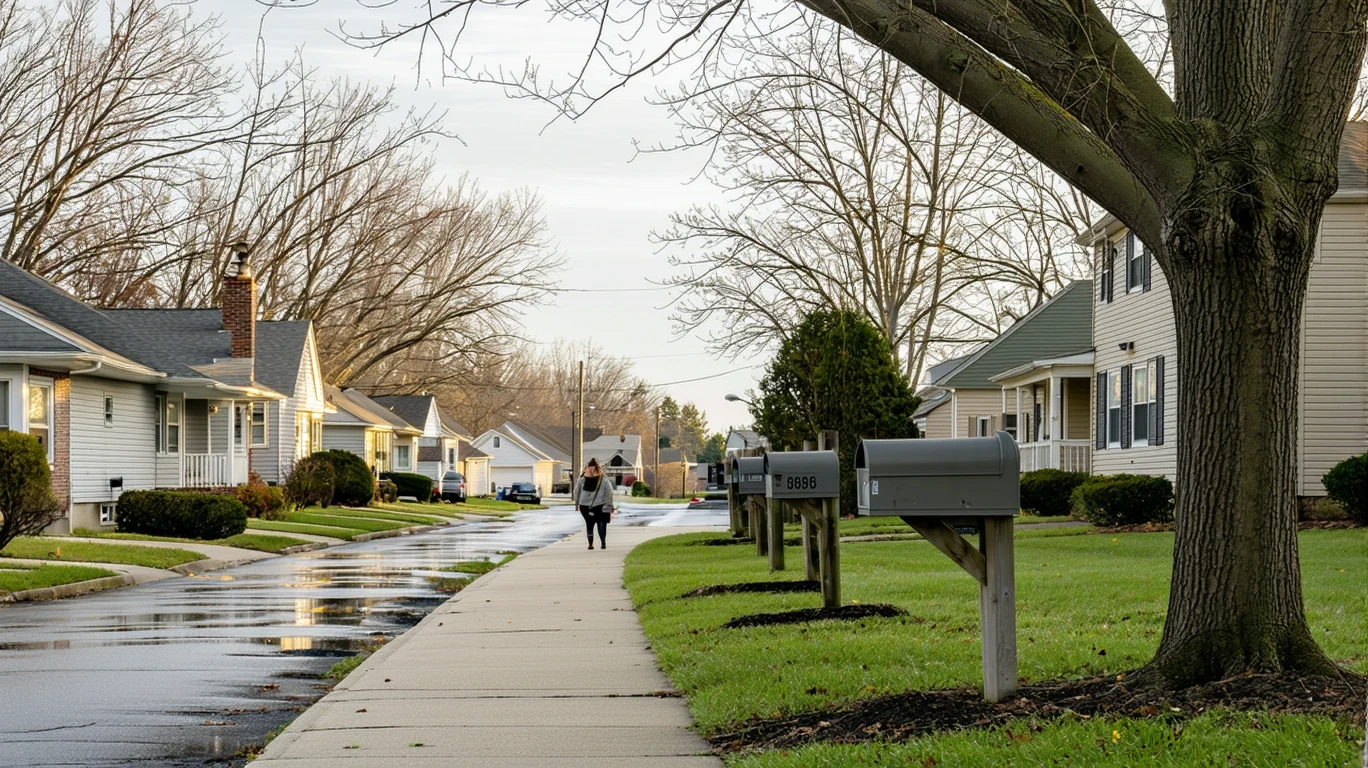
Milford and Mason sit just miles apart in the Cincinnati metro, share the same regional economy, and draw from overlapping job markets—yet the way households experience cost pressure in each city differs in structure, not just scale. Milford offers lower housing entry costs and tighter neighborhood errands infrastructure; Mason commands higher home values and rents but provides rail transit access and more extensive cycling infrastructure. The decision between them in 2026 isn’t about which city costs less overall—it’s about which cost patterns align with how a household actually lives, commutes, and manages daily logistics.
Both cities attract families, commuters, and professionals, but the tradeoffs show up differently depending on whether a household prioritizes predictable fixed costs, transportation flexibility, or access to parks and outdoor space. Milford’s median household income sits at $69,141 per year, while Mason’s reaches $121,082 per year—a difference that shapes not just affordability, but the types of housing stock, amenities, and infrastructure each city supports. Understanding where cost pressure concentrates in each place helps households avoid mismatches that feel manageable on paper but create friction in daily routines.
This comparison explains how housing, utilities, groceries, transportation, and local fees behave differently in Milford and Mason, and which households feel those differences most acutely. It’s not a race to the bottom—it’s a guide to recognizing which city’s cost structure fits the way you actually spend time and money.
Housing Costs
Housing costs in Milford and Mason differ sharply in both entry price and ongoing obligations. Milford’s median home value stands at $211,900, while Mason’s reaches $375,000—a structural difference that affects not just who can buy, but what type of housing stock dominates each market. Renters face a similar gap: Milford’s median gross rent sits at $879 per month, compared to Mason’s $1,685 per month. These aren’t minor variations—they reflect fundamentally different housing markets serving households with different income baselines and space expectations.
The difference in home values translates directly into mortgage obligations, property tax exposure, and insurance costs, even though the article doesn’t calculate monthly payments. A household buying in Mason takes on a larger fixed cost structure from day one, which reduces flexibility if income fluctuates or unexpected expenses arise. Milford’s lower entry costs leave more room for discretionary spending or savings, but the housing stock skews toward older construction and smaller lot sizes, which can increase maintenance unpredictability and limit space for growing families.
For renters, the gap between $879 and $1,685 per month represents a fundamental difference in how much income gets locked into non-negotiable housing obligations before any other costs enter the picture. Mason renters often access newer construction, more square footage, and amenities like in-unit laundry or attached garages—but those features come with higher baseline exposure. Milford renters face fewer upfront costs but may encounter older units with less energy efficiency, which shifts some of the savings into higher utility variability during extreme weather months.
| Housing Type | Milford | Mason |
|---|---|---|
| Median Home Value | $211,900 | $375,000 |
| Median Gross Rent | $879 per month | $1,685 per month |
Housing takeaway: First-time buyers and single-income households face lower entry barriers in Milford, where housing costs leave more room for other expenses or savings. Mason’s higher home values and rents suit dual-income households or those prioritizing newer construction and larger floor plans, but the tradeoff is front-loaded cost pressure that reduces flexibility if income changes. Renters sensitive to baseline fixed costs will feel the difference between these two markets immediately, while buyers must weigh entry price against long-term maintenance exposure and space needs.
Utilities and Energy Costs
Electricity rates in Milford and Mason are identical at 17.59¢/kWh, and natural gas pricing differs only slightly—$11.03/MCF in Milford versus $11.25/MCF in Mason. The similarity in utility rates means that differences in energy costs come down to housing stock, home size, and seasonal usage patterns rather than pricing structure. Older homes in Milford may experience higher heating and cooling loads due to less efficient insulation and older HVAC systems, while Mason’s newer construction often includes better envelope performance and programmable thermostats that reduce baseline consumption.
Both cities experience the same regional climate—hot, humid summers and cold winters—so cooling and heating demands follow similar seasonal curves. However, the size and age of the home determine how much energy it takes to maintain comfort. A 2,500-square-foot home in Mason with modern insulation and dual-pane windows will cost less to heat and cool per square foot than a 1,400-square-foot home in Milford built in the 1970s with single-pane windows and minimal attic insulation. The paradox is that Milford’s smaller, older homes can sometimes generate higher utility bills per square foot, even though the total space is smaller.
Households in apartments or townhomes—more common in Milford’s rental market—often see lower absolute utility costs because shared walls reduce heating and cooling surface area. Single-family homes, which dominate Mason’s housing stock, expose more exterior surface to temperature swings, increasing both baseline usage and seasonal volatility. Families in larger homes also face higher water heating costs, especially if multiple bathrooms and appliances run simultaneously during peak morning or evening hours.
Utility takeaway: Households in older Milford homes face higher heating and cooling exposure per square foot, even though total space may be smaller. Mason’s newer construction reduces energy waste, but larger floor plans increase absolute consumption. Renters in multi-unit buildings experience the most predictable utility costs, while single-family homeowners—especially those in older stock—should budget for seasonal spikes and consider efficiency upgrades to reduce volatility over time.
Groceries and Daily Expenses

Grocery and daily spending pressure in Milford and Mason reflects differences in store density, access patterns, and household routines rather than dramatic price gaps. Milford’s corridor-clustered food and grocery infrastructure means that essentials are available, but often concentrated along a few main roads rather than distributed evenly across neighborhoods. Mason’s grocery density falls below typical thresholds, meaning households may need to drive farther or plan trips more deliberately to access full-service supermarkets or specialty stores.
The structural difference affects how households manage time and convenience. In Milford, a quick stop for milk or bread might be feasible on the way home from work if the route passes through a commercial corridor. In Mason, the same errand could require a dedicated trip, adding time and fuel costs even if the grocery prices themselves are similar. Households that rely on frequent small trips—common for singles or couples without much storage space—feel this friction more acutely than families who do bulk shopping once or twice a month.
Dining out and convenience spending also vary by access and habit. Mason’s higher median income supports more restaurants and takeout options in nearby commercial areas, but the sparse grocery density means households may lean more heavily on prepared foods or delivery services when time is tight. Milford’s tighter errands infrastructure makes it easier to grab ingredients on short notice, which can reduce reliance on costlier convenience meals—but only if the household has the time and flexibility to cook.
Groceries takeaway: Households in Milford benefit from more accessible grocery corridors that reduce trip planning friction, especially for smaller, frequent purchases. Mason’s sparse grocery density pushes households toward bulk shopping or delivery services, which can increase convenience spending if time is limited. Singles and couples who cook frequently will notice the access difference more than families who already plan weekly shopping trips. Price sensitivity matters less than the time cost of accessing essentials in daily routines.
Taxes and Fees
Property taxes, local fees, and recurring service charges behave differently in Milford and Mason due to differences in home values, municipal service structures, and neighborhood governance. Mason’s higher median home value of $375,000 generates larger absolute property tax bills than Milford’s $211,900 median, even if the millage rates were identical. Homeowners in Mason face higher baseline tax obligations simply because the assessed value of the property is higher, which increases the annual cost of ownership regardless of how long the household has lived there.
Local fees for trash collection, water, sewer, and stormwater management vary by municipality and sometimes by neighborhood. In some Mason developments, HOA fees bundle landscaping, snow removal, and shared amenities, which can add predictability but also increase fixed monthly costs. Milford’s older neighborhoods are less likely to have HOA structures, meaning homeowners pay directly for services like lawn care and snow removal—offering more control but also more variability depending on the season and the condition of the property.
Renters in both cities typically see some of these costs embedded in their monthly rent, but the structure differs. In Milford, landlords may pass through water and trash fees separately, especially in older multi-unit buildings. In Mason, newer rental communities often include utilities and services in a single monthly payment, which simplifies budgeting but can obscure the true cost of individual line items. Long-term residents who stay in one place for several years may see property tax increases as home values appreciate, but the impact is more pronounced in Mason due to the higher starting valuation.
Taxes and fees takeaway: Homeowners in Mason face higher property tax exposure due to higher home values, even if tax rates are similar. Milford homeowners benefit from lower baseline tax obligations but may encounter more variability in service fees depending on neighborhood age and infrastructure. Renters in Mason often see more bundled fees, which simplifies budgeting but reduces visibility into individual cost drivers. Households planning to stay long-term should consider how property tax growth compounds differently when starting from a $375,000 base versus a $211,900 base.
Transportation & Commute Reality
Transportation costs and commute patterns in Milford and Mason differ in both time and infrastructure, even though both cities serve the same regional job market. Milford’s average commute time sits at 22 minutes, while Mason’s reaches 26 minutes—a difference that compounds over weeks and months, especially for households where both adults commute daily. Milford’s 38.2% long-commute percentage (compared to Mason’s 41.4%) suggests that a slightly smaller share of workers face extended travel times, but the difference is modest enough that both cities see substantial commuter populations.
The infrastructure gap matters more than the time gap. Mason offers rail transit access, which provides an alternative to driving for some commuters, especially those working in downtown Cincinnati or along transit corridors. Milford relies on bus-only service, which limits route flexibility and frequency. Households in Mason also benefit from notable cycling infrastructure, with bike-to-road ratios exceeding high thresholds—useful for errands, recreation, or short commutes in good weather. Milford’s cycling infrastructure exists in pockets but doesn’t reach the same density, meaning most trips still require a car.
Gas prices reflect the same pattern: Milford’s $3.75 per gallon versus Mason’s $3.91 per gallon. The difference is small on a per-fill basis, but households driving 25 miles round-trip five days a week will notice the gap over time. More importantly, Mason’s higher work-from-home percentage (5.9% versus Milford’s 2.8%) suggests that a larger share of Mason households avoid commute costs entirely, either due to job type or employer flexibility. For households that must commute daily, the combination of slightly longer travel times, higher gas prices, and less frequent transit service in Milford adds up to more car dependence and less flexibility when vehicles need maintenance or fuel prices spike.
Cost Structure Comparison
Housing pressure dominates the cost experience in both cities, but the nature of that pressure differs. Milford’s lower home values and rents reduce the baseline fixed cost that households must cover before addressing any other expenses. Mason’s higher housing costs absorb a larger share of income upfront, which leaves less room for discretionary spending or emergency savings unless the household earns well above the median. Renters feel this difference immediately—$879 per month versus $1,685 per month represents a fundamentally different starting point for monthly budgeting.
Utilities introduce similar seasonal volatility in both cities due to identical electricity rates and nearly identical natural gas pricing, but the housing stock determines how much energy it takes to maintain comfort. Mason’s newer homes reduce waste and improve predictability, while Milford’s older stock increases exposure to heating and cooling spikes. The tradeoff isn’t about which city has cheaper utilities—it’s about whether the household prioritizes lower baseline energy use (Mason) or lower upfront housing costs that leave more room to absorb seasonal utility swings (Milford).
Transportation patterns matter more in Mason due to longer average commute times, higher gas prices, and a larger share of households facing long commutes. However, Mason’s rail transit access and extensive cycling infrastructure provide alternatives that Milford’s bus-only system and limited bike lanes don’t match. Households that can use transit or bike for daily errands gain flexibility and reduce car dependence, but those alternatives only work if the household’s job location and daily routines align with available routes and schedules.
Daily errands and grocery access reverse the pattern. Milford’s corridor-clustered food and grocery infrastructure makes it easier to grab essentials without dedicated trip planning, which reduces time costs and convenience spending. Mason’s sparse grocery density pushes households toward bulk shopping or delivery services, which works well for families with storage space and predictable schedules but creates friction for singles or couples who prefer frequent small trips. The difference isn’t about price—it’s about how much time and planning it takes to keep the household stocked.
For households sensitive to baseline fixed costs, Milford offers lower entry barriers and more flexibility to absorb unexpected expenses. For households with stable dual incomes who prioritize newer construction, transit options, and cycling infrastructure, Mason’s higher upfront costs come with structural advantages that reduce car dependence and improve energy efficiency. The better choice depends on which costs dominate the household’s daily routines and which tradeoffs—predictability versus flexibility, upfront cost versus long-term efficiency—align with how the household actually lives.
How the Same Income Feels in Milford vs Mason
Single Adult
For a single adult, housing becomes the first non-negotiable cost, and the gap between Milford’s $879 median rent and Mason’s $1,685 median rent determines how much income remains for everything else. In Milford, lower rent leaves more room for transportation costs, dining out, or building savings, but the sparse transit options and limited work-from-home prevalence mean most singles still need a car and the insurance, fuel, and maintenance costs that come with it. In Mason, higher rent absorbs more income upfront, but rail transit access and notable cycling infrastructure create opportunities to reduce car dependence if the job and daily routines align with available routes. Flexibility disappears faster in Mason when rent locks in a larger fixed obligation, but the infrastructure offers more ways to control transportation costs if the household can take advantage of them.
Dual-Income Couple
Dual-income couples absorb higher housing costs more easily than single adults, but the difference between Milford and Mason still shapes how much discretionary income remains after fixed obligations. In Mason, higher rent or mortgage payments consume a larger share of combined income, but the couple gains access to newer construction, better energy efficiency, and more square footage—tradeoffs that matter more if the household plans to stay long-term or values predictable utility costs. In Milford, lower housing costs leave more room for dining out, travel, or savings, but older housing stock increases the likelihood of maintenance surprises and higher heating or cooling bills during extreme weather. The commute friction differs too: Mason’s longer average commute and higher gas prices affect both earners if both drive daily, while Milford’s shorter commute and bus-only transit still require car ownership for most couples unless both work locally.
Family with Kids
Families face the most complex cost structure because housing, transportation, groceries, and access to parks and schools all interact. In Mason, higher home values and rents buy more space and newer construction, but grocery density falls below typical thresholds, meaning families must plan shopping trips more deliberately or rely on delivery services when time is tight. School density also sits below low thresholds in both cities, so families can’t assume walkable access to schools regardless of where they live. In Milford, lower housing costs leave more room for groceries, activities, and unexpected expenses, and the integrated green space access (with park density exceeding high thresholds) provides more outdoor options for kids without requiring long drives. However, Milford’s limited family infrastructure and older housing stock mean families may face higher maintenance costs and fewer nearby amenities designed for children. The tradeoff is front-loaded cost pressure in Mason versus ongoing variability and access friction in Milford.
Decision Matrix: Which City Fits Which Household?
| Decision factor | If you’re sensitive to this… | Milford tends to fit when… | Mason tends to fit when… |
|---|---|---|---|
| Housing entry + space needs | You need lower fixed costs or flexibility to absorb income changes | Lower home values and rents leave more room for other expenses or savings | Higher income supports larger upfront costs in exchange for newer construction and more square footage |
| Transportation dependence + commute friction | You want alternatives to driving or shorter commute times | Shorter average commute and lower gas prices reduce time and fuel costs | Rail transit access and notable cycling infrastructure provide alternatives to car dependence if routes align with daily routines |
| Utility variability + home size exposure | You prioritize predictable energy costs or efficient construction | Smaller homes and multi-unit buildings reduce absolute utility costs despite older stock | Newer construction reduces waste and improves energy efficiency despite larger floor plans |
| Grocery strategy + convenience spending creep | You prefer frequent small trips or want to avoid delivery reliance | Corridor-clustered grocery access reduces trip planning friction and supports flexible shopping habits | Sparse grocery density works better for bulk shoppers with storage space and predictable schedules |
| Fees + friction costs (HOA, services, upkeep) | You want control over service costs or prefer bundled predictability | Lower property tax baseline and fewer HOA structures offer more control but increase variability | Higher property taxes and HOA fees bundle services but reduce flexibility and increase fixed obligations |
| Time budget (schedule flexibility, errands, logistics) | You need to manage errands efficiently or value outdoor access without long drives | Integrated green space access and tighter errands infrastructure reduce time costs for daily routines | Rail transit and cycling infrastructure reduce car dependence but require alignment with job location and daily schedules |
Lifestyle Fit
Milford and Mason offer distinct lifestyle textures shaped by infrastructure, outdoor access, and daily routines. Milford’s 22-minute average commute and walkable pockets (with pedestrian-to-road ratios exceeding high thresholds) create opportunities for neighborhood-scale errands and recreation, especially in areas near commercial corridors. Mason’s 26-minute average commute and rail transit presence open up more flexibility for households that can align their routines with transit schedules, while the city’s notable cycling infrastructure (with bike-to-road ratios exceeding high thresholds) supports both recreation and practical trips for households comfortable riding in mixed traffic.
Outdoor access differs in density and integration. Milford’s park density exceeds high thresholds, and water features add variety to the outdoor environment—useful for families with young children or households that prioritize green space without requiring long drives. Mason’s park density sits in the moderate range, which still provides access but requires more intentional trip planning to reach larger parks or trails. Both cities show mixed building height profiles and mixed residential-commercial land use, meaning neighborhoods blend single-family homes with small commercial nodes rather than separating uses into isolated zones.
Healthcare access in both cities relies on local clinics rather than hospital facilities, so households managing chronic conditions or expecting frequent specialist visits should plan for travel to nearby regional centers. The unemployment rate sits slightly lower in Mason (3.8%) compared to Milford (4.1%), reflecting the higher income baseline and different job market composition, but both cities draw from the same regional economy and job centers. Lifestyle costs—dining out, entertainment, recreation—tend to scale with the income baseline in each city, meaning Mason households encounter more upscale options while Milford households find more budget-friendly alternatives.
Milford’s integrated green space and tighter errands infrastructure reduce the time cost of daily routines. Households that value frequent outdoor access and neighborhood-scale walkability without requiring extensive transit networks will find Milford’s structure more aligned with those priorities. Mason’s rail transit and extensive cycling infrastructure suit households that can reduce car dependence through transit or biking. Families prioritizing newer construction and larger floor plans will find Mason’s housing stock more aligned with those needs, even though grocery access requires more planning.
Frequently Asked Questions
Is it cheaper to rent in Milford or Mason in 2026?
Milford’s median gross rent sits at $879 per month, while Mason’s reaches $1,685 per month. The difference reflects fundamentally different housing markets: Milford offers lower baseline fixed costs, while Mason provides newer construction and larger units. Renters sensitive to upfront cost pressure will find Milford more accessible, but Mason renters often gain better energy efficiency and more square footage in exchange for higher monthly obligations.
How do commute costs compare between Milford and Mason in 2026?
Milford’s average commute time is 22 minutes with gas at $3.75 per gallon, while Mason’s average commute reaches 26 minutes with gas at $3.91 per gallon. Mason offers rail transit access and notable cycling infrastructure, which provide alternatives to driving if the household’s routines align with available routes. Milford relies on bus-only service and limited bike lanes, meaning most households depend on cars for daily commutes and errands.
Which city has better access to groceries and daily errands in 2026?
Milford’s food and grocery infrastructure clusters along commercial corridors, making it easier to grab essentials without dedicated trip planning. Mason’s grocery density falls below typical thresholds, meaning households often need to drive farther or plan bulk shopping trips. Singles and couples who prefer frequent small trips will notice the access difference more than families who already plan weekly shopping runs.
Do utility costs differ between Milford and Mason in 2026?
Electricity rates are identical at 17.59¢/kWh, and natural gas pricing differs only slightly ($11.03/MCF in Milford versus $11.25/MCF in Mason). The real difference comes from housing stock: Mason’s newer construction reduces energy waste, while Milford’s older homes increase heating and cooling exposure per square foot. Households in multi-unit buildings experience the most predictable utility costs, while single-family homeowners face more seasonal volatility.
Which city is better for families with kids in 2026?
Both cities show limited family infrastructure, with school density below low thresholds in each. Milford offers integrated green space access with park density exceeding high thresholds, which provides more outdoor options for children without long drives. Mason’s higher home values buy more space and newer construction, but sparse grocery density and limited school walkability mean families must plan errands and school transportation more deliberately. The choice depends on whether the household prioritizes lower housing costs and outdoor access (Milford) or larger floor plans and newer construction (Mason).
Conclusion
Milford and Mason serve different household priorities within the same regional economy. Milford’s lower housing costs, integrated green space, and corridor-clustered grocery access suit households that prioritize baseline affordability, outdoor access, and neighborhood-scale errands without requiring extensive transit networks. Mason’s higher home values and rents come with newer construction, rail transit access, and notable cycling infrastructure—advantages that matter most for dual-income households, transit-oriented commuters, or families willing to trade upfront cost for long-term energy efficiency and larger floor plans.
The decision isn’t about which city costs less overall—it’s about which cost structure aligns with how a household actually lives. Households sensitive to fixed housing costs and daily errands friction will find Milford’s lower entry barriers and tighter infrastructure more manageable. Households with stable incomes who value transit alternatives, cycling infrastructure, and predictable utility costs will find Mason’s higher upfront costs justified by the structural advantages they provide. Both cities offer tradeoffs; the better choice depends on which costs dominate your daily routines and which tradeoffs—predictability versus flexibility, upfront cost versus long-term efficiency—fit the way your household operates in 2026.
How this article was built: In addition to public economic data, this article incorporates location-based experiential signals derived from anonymized geographic patterns—such as access density, walkability, and land-use mix—to reflect how day-to-day living actually feels in Milford and Mason.