
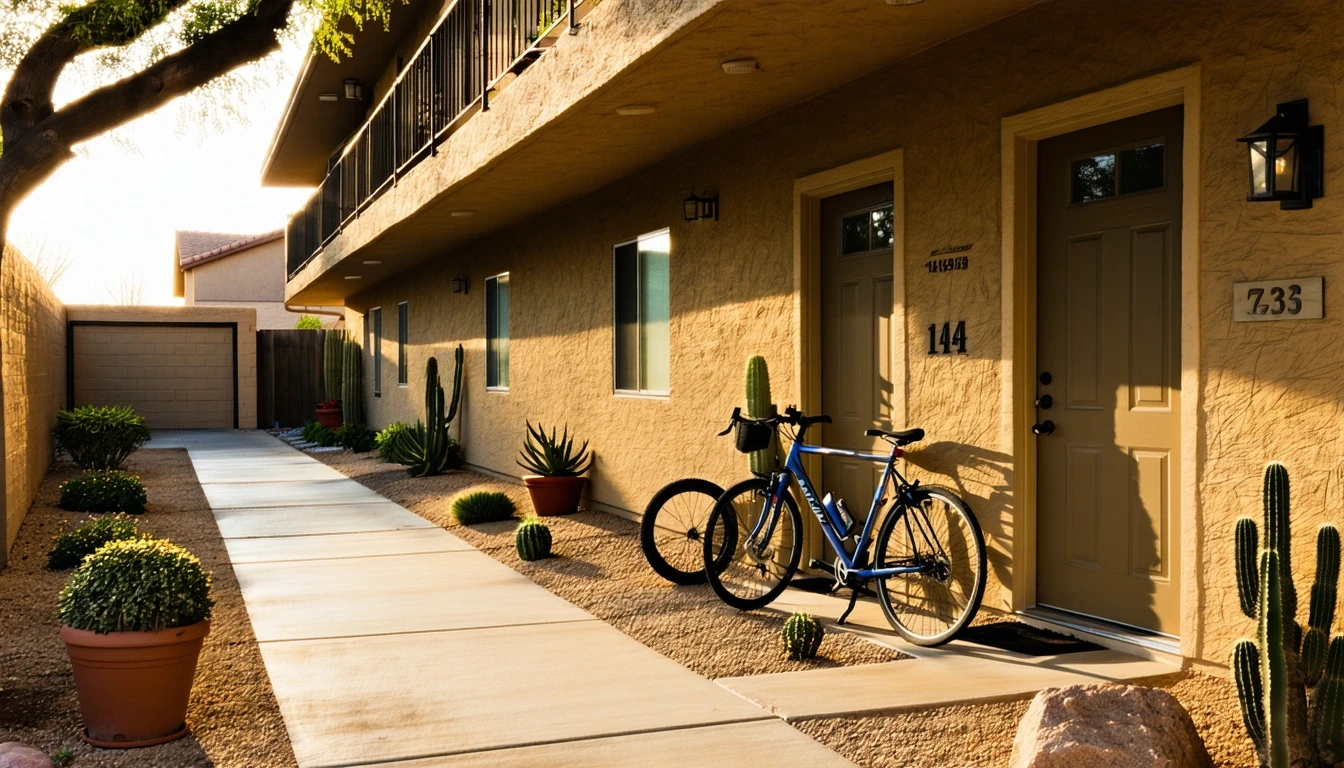
The Housing Market in Maricopa Today
Maricopa’s housing market reflects its role as a newer suburban extension of the Phoenix metro area, built largely in the 2000s and 2010s. The city’s housing stock skews toward single-family homes in master-planned communities, many governed by homeowners associations. This development pattern creates a distinct cost structure: newer construction with modern cooling systems, but also mandatory HOA dues, landscaping requirements, and limited rental inventory compared to older metro suburbs.
What newcomers often misunderstand is that Maricopa’s affordability relative to central Phoenix comes with tradeoffs in commute time, utility exposure, and governance. The city’s distance from employment centers means day-to-day costs include significant transportation expenses, while its desert location and newer housing stock create predictable but substantial cooling costs. The housing market here isn’t just about purchase price or rent—it’s about understanding how distance, climate, and community structure shape long-term expenses.
Maricopa’s growth trajectory also means the market is sensitive to broader metro trends. When Phoenix-area employment strengthens, Maricopa attracts commuters seeking newer homes at lower entry costs. When metro growth slows, the city’s distance becomes a friction point. This dynamic makes Maricopa’s housing market more volatile than established inner-ring suburbs, with sharper swings in both rental demand and resale activity.
Renting in Maricopa
Rental housing in Maricopa is constrained by the city’s development model. Most construction focused on for-sale single-family homes, leaving a smaller pool of purpose-built apartments and rental houses. This limited inventory means renters face less choice in location, floor plan, and price tier compared to cities with more diverse housing stock. When demand rises—often driven by households priced out of Phoenix or waiting to buy—rental availability tightens quickly.
Renters in Maricopa also navigate the same climate and commute realities as owners. Cooling costs don’t disappear because you rent; they’re either embedded in rent levels or billed separately, and newer construction may offer efficiency advantages that older rental stock elsewhere lacks. The commute to Phoenix-area jobs remains a daily cost in time and fuel, and many rental communities include HOA-managed amenities that influence rent structure even if tenants don’t pay HOA fees directly.
The rental experience here is also shaped by Maricopa’s suburban character. Walkable urban amenities are sparse, so renters typically need a vehicle for errands, work, and recreation. This makes the rent-versus-own decision less about lifestyle flexibility and more about whether you’re ready to absorb the full cost structure of homeownership in a commuter-oriented, climate-exposed market.
Owning a Home in Maricopa
Homeownership in Maricopa means taking on predictable but substantial ongoing costs tied to the city’s climate and governance. Cooling expenses dominate summer utility bills, driven by triple-digit heat that runs from May into October. Homes with older HVAC systems, poor insulation, or west-facing exposure face higher costs, and even efficient systems run heavily during peak months. This isn’t a variable you control through behavior alone—it’s a structural cost of living in the Sonoran Desert.
Many Maricopa neighborhoods are governed by homeowners associations, which add mandatory monthly or annual fees. These fees fund common-area maintenance, landscaping, and amenities like pools or parks, but they also introduce governance layers that affect what you can do with your property. HOA rules may regulate exterior paint colors, landscaping choices, and even vehicle parking. For some buyers, this structure provides predictability and maintained surroundings; for others, it’s a loss of autonomy and an added fixed cost.
Property taxes in Maricopa are set by Pinal County and local districts, and while Arizona’s tax structure includes assessment limits for primary residences, the actual tax burden depends on assessed value and voter-approved overrides. Owners should expect taxes to adjust over time as assessments update, though the rate of change is constrained by state law. The key difference from renting is that owners absorb these changes directly, without a lease-end exit option.
Exterior maintenance in Maricopa also reflects the climate. Desert heat stresses roofing materials, exterior paint, and seals around windows and doors. Landscaping costs vary widely depending on whether you maintain turf (which requires significant water) or shift to desert-adapted plants. HOAs may mandate certain landscape standards, limiting your ability to reduce water and maintenance costs. These aren’t one-time expenses—they’re recurring exposures that intensify as homes age.
Apartment vs House in Maricopa — Cost Behavior Comparison
| Expense Category | Apartment | House |
|---|---|---|
| Cooling Costs | Lower total due to smaller square footage and shared walls reducing heat gain; may be included in rent or billed separately | Higher due to larger conditioned space, standalone structure with more exterior exposure, and often older or less efficient HVAC systems |
| Exterior Maintenance | Managed by property owner or HOA; tenant not responsible for roof, paint, or structural repairs | Owner responsible for all exterior upkeep; desert heat accelerates roof and paint degradation |
| HOA Fees | Typically embedded in rent structure; tenant doesn’t pay separately but cost is reflected in rent level | Paid directly by owner; common in Maricopa’s master-planned communities and covers landscaping, amenities, and common-area maintenance |
| Yard and Water Use | No yard responsibility; water for landscaping managed by property | Owner maintains yard and pays for irrigation; turf grass significantly increases water costs in desert climate |
Methodology note: The table reflects cost categories that behave differently in Maricopa due to climate intensity (cooling and water), housing stock age and design (exterior maintenance), and governance prevalence (HOA structure). Generic categories like insurance or trash service were omitted because they don’t vary meaningfully between apartments and houses in this market. The distinctions shown are driven by Maricopa’s desert environment and suburban development model, not universal apartment-versus-house differences.
Utilities & Upkeep Differences
Utility exposure in Maricopa is dominated by cooling, and the difference between apartments and houses is driven by conditioned square footage and building design. Apartments benefit from shared walls that reduce heat gain and smaller spaces that require less air conditioning. Houses, especially those with poor insulation, vaulted ceilings, or significant west-facing glass, face substantially higher cooling costs. The extended cooling season—running from late spring through early fall—means this isn’t a short-term spike; it’s a sustained cost driver that shapes household budgets for half the year.
Water costs also diverge based on housing type and landscape choices. Apartment residents typically don’t manage outdoor irrigation, so water bills reflect only indoor use. Homeowners with turf grass or non-native plants face much higher water costs, particularly during summer months when evaporation and plant stress demand frequent watering. Desert-adapted landscaping reduces this exposure, but HOA rules may limit how much owners can shift away from turf or ornamental plants.
Maintenance intensity in Maricopa is shaped by heat and sun exposure. Exterior paint fades faster, roofing materials degrade under UV stress, and seals around windows and doors crack more readily than in milder climates. Apartment residents are insulated from these costs; homeowners absorb them as recurring expenses. The age of Maricopa’s housing stock—much of it built in the last two decades—means many homes are approaching the point where major systems like HVAC, water heaters, and roofs will need replacement, creating a wave of capital expenses for owners who bought during the city’s growth phase.
Rent vs Buy: Long-Term Exposure in Maricopa
The decision between renting and owning in Maricopa isn’t primarily about monthly payment comparisons—it’s about which cost structure aligns with your tolerance for volatility, control, and long-term exposure. Renters face the risk of rent increases at lease renewal, which can be sharp in tight markets or when property owners adjust for rising insurance, taxes, or HOA fees. However, renters also avoid direct exposure to cooling cost spikes, major maintenance events, and HOA governance changes. When a roof fails or an HVAC system dies, it’s the owner’s problem, not the tenant’s.
Homeowners gain cost predictability in some areas—fixed-rate mortgages lock in principal and interest, and Arizona’s assessment limits slow property tax growth for primary residences—but they absorb the full impact of utility volatility, maintenance cycles, and HOA fee increases. Cooling costs don’t stabilize just because you own; they fluctuate with weather intensity, rate changes, and system efficiency. Exterior maintenance expenses grow as homes age, and HOA fees can rise to cover deferred common-area repairs or expanded services.
Ownership in Maricopa also means committing to the city’s commuter orientation and climate exposure for as long as you hold the property. Renters can exit at lease end if job locations change or if the commute becomes unsustainable. Owners face transaction costs, market timing risk, and the possibility that Maricopa’s distance from employment centers affects resale demand. The long-term tradeoff isn’t about building equity versus “throwing money away”—it’s about whether you’re prepared to manage the operational and financial exposure that comes with owning a standalone home in a desert climate, governed by an HOA, and located at the metro’s edge.
FAQs About Housing Costs in Maricopa
How do cooling costs in Maricopa compare to other Phoenix-area suburbs?
Maricopa’s cooling costs are driven by the same desert heat as the rest of the metro, but the city’s newer housing stock may offer efficiency advantages over older Phoenix neighborhoods. However, Maricopa’s lower-density development means homes are often larger and standalone, which increases total cooling load compared to attached or smaller urban units. The extended cooling season affects all Phoenix-area residents, but the size and design of Maricopa homes can amplify the cost.
Are HOA fees in Maricopa higher than in other cities?
HOA fees in Maricopa reflect the amenities and common-area maintenance typical of master-planned communities—pools, parks, landscaping, and sometimes gated entry. The fees themselves aren’t necessarily higher than comparable communities elsewhere, but the prevalence of HOAs in Maricopa is notable because so much of the city was built as planned developments. Buyers should expect HOA fees as a standard cost component, not an exception.
Does renting in Maricopa make sense if I work in Phoenix?
Renting in Maricopa while commuting to Phoenix trades lower housing costs for higher transportation expenses and time. Whether that tradeoff makes sense depends on your job location, commute tolerance, and how long you plan to stay. Renters gain flexibility to relocate if the commute becomes unsustainable, but they also face the same cooling and distance costs as owners, just structured differently. It’s a viable short-term strategy but requires honest assessment of commute impact on daily life.
What happens to property taxes in Maricopa over time?
Property taxes in Maricopa are governed by Pinal County and Arizona’s assessment limit laws, which cap annual increases for primary residences. However, taxes can still rise due to voter-approved overrides, changes in assessed value when properties are sold, or adjustments after major improvements. Owners should expect gradual increases over time, though the rate of change is slower than in states without assessment caps. The key is that owners absorb these changes directly, while renters experience them indirectly through rent adjustments.
How does housing age affect costs in Maricopa?
Most of Maricopa’s housing stock was built in the 2000s and 2010s, meaning many homes are approaching the age where major systems—HVAC, water heaters, roofs—will need replacement. Buyers purchasing homes from that era should anticipate capital expenses in the near term. Newer construction may delay these costs but often comes with higher purchase prices and HOA fees. The desert climate accelerates wear on exterior materials, so even relatively young homes require more frequent maintenance than similar-aged homes in milder climates.
Making Housing Choices in Maricopa
Housing costs in Maricopa are shaped by three defining forces: the city’s desert climate, its role as a commuter suburb, and its governance through homeowners associations. These forces don’t just affect what you pay—they determine how predictable, controllable, and volatile your housing expenses will be over time. Renters and owners both face cooling costs and commute exposure, but ownership shifts maintenance risk, tax responsibility, and HOA governance directly onto the household.
The decision to rent or buy here isn’t about finding the lowest monthly number—it’s about matching your household’s risk tolerance, time horizon, and operational capacity to Maricopa’s cost structure. Renters preserve flexibility and avoid capital risk but remain exposed to rent volatility and landlord decisions. Owners gain control and payment stability in some areas but absorb the full weight of climate-driven utility costs, aging systems, and HOA fee changes. Neither path eliminates exposure; they just distribute it differently.
For households considering Maricopa, the most important step is understanding what drives costs here specifically: extended cooling seasons, commute distances, HOA prevalence, and a housing stock that’s newer but approaching the age where major expenses cluster. If those factors align with your budget, commute tolerance, and willingness to manage ongoing operational costs, Maricopa’s housing market offers a clear value proposition. If they don’t, the city’s distance and climate exposure will create friction that no purchase price or rent level can fully offset. The city’s cost structure rewards households who understand what they’re taking on and penalizes those who focus only on entry price.