
Moving from Chicago, IL to Gilbert, AZ: Where Costs and Rhythms Change
The move from Chicago to Gilbert represents more than a change of address—it’s a fundamental shift in how daily costs concentrate, how households manage exposure to climate extremes, and how much of life revolves around the car. Chicago’s density, transit infrastructure, and established urban rhythms give way to Gilbert’s low-rise suburban form, where triple-digit summer heat dominates utility planning and nearly every errand requires driving. This isn’t about whether one city is “cheaper”—it’s about understanding where financial pressure moves and which household types feel the change most acutely.
Gilbert sits in the Phoenix metro area, a fast-growing region where housing entry barriers have climbed significantly but ongoing expenses follow different seasonal patterns than the Midwest. Chicago’s long heating season and older housing stock create one kind of cost exposure; Gilbert’s extended cooling season and newer construction create another. The commute experience changes dramatically: Chicago’s average 34-minute commute often involves transit options and walkable neighborhoods, while Gilbert’s 26-minute average assumes car dependency across a sprawling metro where 38.5% of workers face long commutes compared to Chicago’s 59.7%. For households used to running errands on foot or by train, the shift to driving everywhere adds friction that doesn’t always show up in cost comparisons but shapes daily life profoundly.
This guide explains where cost pressure typically concentrates in each city, how housing markets and neighborhood form differ, what changes in daily logistics and climate exposure, and which types of movers tend to adapt easily versus those who struggle with the transition. It’s built for people who need to understand tradeoffs, not just compare price tags.
Where Cost Pressure Concentrates Differently
The most visible shift when moving from Chicago to Gilbert appears in housing entry costs. Chicago’s median home value sits at $304,500, while Gilbert’s reaches $454,300—a substantial jump that reflects both the Phoenix metro’s rapid growth and Gilbert’s position as a family-oriented suburb with newer housing stock. Renters face a similar pattern: Chicago’s median gross rent of $1,314 per month rises to $1,839 per month in Gilbert. This isn’t just about sticker prices—it reflects different market dynamics. Chicago’s housing stock includes a wide range of older buildings, vintage apartments, and diverse neighborhood price points. Gilbert’s housing is predominantly newer, low-rise construction with HOA fees often bundled into ownership costs, creating a different ongoing obligation structure.
But housing entry barriers tell only part of the story. Chicago’s Regional Price Parity index of 103 and Gilbert’s 106 suggest similar overall cost levels, yet the composition of expenses differs significantly. Chicago’s economy runs on a mix of industries with a median household income of $71,673 per year and an unemployment rate of 5.4%. Gilbert’s economy, tied to the broader Phoenix metro’s growth sectors, supports a median household income of $115,179 per year—substantially higher, reflecting both the cost of entry and the types of households the area attracts. The unemployment rate of 3.1% signals a tighter labor market, but income requirements for comfortable living remain steep given housing costs.
Utility exposure shifts dramatically with climate. Chicago’s electricity rate of 17.07¢/kWh and natural gas price of $9.48/MCF reflect a cost structure where heating dominates winter months and cooling is seasonal. Gilbert’s electricity rate of 15.46¢/kWh appears lower, but the extended cooling season—where air conditioning runs from late spring through early fall—means households face sustained high usage for months. Natural gas at $17.90/MCF costs more per unit but sees far less use in a climate with rare freezing nights. The practical result: Chicago households plan for winter heating spikes; Gilbert households plan for summer cooling marathons that can dominate annual utility budgets.
Transportation costs follow different patterns as well. Chicago’s gas price of $3.50/gal versus Gilbert’s $3.85/gal matters less than the structural difference in how people move. Chicago’s rail transit system and walkable neighborhoods mean many households can reduce car dependency, especially in denser areas. Gilbert’s infrastructure assumes car ownership—groceries, healthcare, schools, and social activities typically require driving. The bike-to-road ratio exceeds high thresholds in both cities, but the lived experience differs: Chicago’s cycling infrastructure serves commuters and errand-runners in specific corridors, while Gilbert’s newer paths often connect residential areas to parks rather than daily destinations. For households accustomed to walking to the train or running errands on foot, the shift to driving everywhere adds time, planning burden, and vehicle-related costs that extend beyond fuel.
Housing Markets and Neighborhood Form
Chicago’s housing market reflects over a century of urban development, with neighborhoods ranging from high-rise lakefront buildings to low-rise bungalow districts and everything in between. This diversity creates entry points across a wide price spectrum, though desirable neighborhoods with strong transit access command premiums. Renters benefit from a large, competitive market with options in older buildings that may lack modern finishes but offer lower monthly costs. Ownership in Chicago often means navigating property taxes that vary significantly by neighborhood, older systems that require maintenance, and in some areas, condo or co-op structures with their own governance complexities.
Gilbert’s housing market is fundamentally different. The city grew rapidly in recent decades, resulting in predominantly single-family homes built since the 1990s with master-planned community layouts. This creates a more uniform housing stock—newer construction, HOA governance, and amenities like pools and parks built into developments. Entry costs are higher, but ongoing maintenance surprises are often lower given newer systems. Renters face a tighter market with fewer vintage options; most rentals are either newer apartments or single-family homes, both priced for a market where demand has outpaced supply. The low-rise character means density is lower, neighborhoods are car-oriented, and the trade for newer construction is often less walkable access to daily needs.
Both cities show mixed residential and commercial land use, but the texture differs. Chicago’s walkable pockets integrate corner stores, transit stops, and services within residential blocks, especially in established neighborhoods. Gilbert’s land use mix tends toward corridor clustering—grocery stores, medical offices, and restaurants line major roads with residential subdivisions branching off. This pattern works well for households who value newer homes and don’t mind driving, but it creates friction for those who prefer spontaneous errands on foot or want to avoid getting in the car multiple times a day.
Lifestyle Patterns and Daily Rhythms
Daily life in Chicago revolves around density and infrastructure that supports multiple mobility options. The city’s rail transit system, extensive bus network, and walkable neighborhoods mean many households can structure routines around public transit, especially for commuting. The 34-minute average commute reflects a mix of transit users, drivers navigating urban traffic, and those with shorter neighborhood-based commutes. About 14.6% of workers operate from home, a figure that reflects both the city’s office-heavy economy and the challenges of remote work in a region where many industries require physical presence. For households living in transit-accessible areas, the ability to walk to groceries, pharmacies, and restaurants reduces planning burden and creates a rhythm where errands happen incrementally rather than in dedicated car trips.
Gilbert’s daily rhythms assume car dependency from the start. The 26-minute average commute is shorter in duration but almost universally requires driving, often across the sprawling Phoenix metro to employment centers in Tempe, Scottsdale, or Phoenix proper. Only 6.8% of workers operate from home, reflecting both the types of jobs common in the area and the family-oriented demographic where remote work may be less prevalent. Errands require planning—grocery runs, medical appointments, and school pickups all involve getting in the car, and the low density means destinations are rarely within walking distance. The city’s cycling infrastructure and pedestrian paths serve recreational purposes more than daily transportation, and while parks are plentiful and well-integrated, reaching them still typically involves driving.
Climate shapes daily life in both cities but in opposite ways. Chicago’s long heating season, cold winters, and humid summers create a rhythm where outdoor activity peaks in warm months and winter means bundling up or staying inside. Gilbert’s extended cooling season inverts this pattern—outdoor activity happens in early mornings or evenings during summer, while midday heat keeps people indoors. The desert climate means less weather variability day-to-day but more intensity during peak summer months, when triple-digit heat affects everything from grocery shopping timing to how much time kids can spend outside. For households moving from Chicago, the absence of snow and ice is liberating, but the relentless summer heat creates its own constraints.
Food and grocery access differs structurally. Both cities show high food and grocery density, but Chicago’s accessibility comes from neighborhood-level options—corner stores, ethnic grocers, and supermarkets within walking or short transit distance in many areas. Gilbert’s grocery access is broadly available but corridor-clustered, meaning most households drive to larger stores along major roads. The practical result: Chicago households can often pick up a few items on the way home from work; Gilbert households tend to plan larger shopping trips. This doesn’t necessarily cost more, but it changes how meal planning and household logistics work.
Climate Exposure and Seasonal Cost Behavior
Chicago’s climate creates cost exposure concentrated in winter. Heating dominates utility bills from November through March, and older housing stock often means less efficient systems and higher usage. Natural gas heating is common, and bills swing significantly with temperature extremes. Summer cooling costs exist but are seasonal and shorter in duration. The humidity adds to discomfort but doesn’t extend the cooling season the way desert heat does in Arizona. Snow removal, winter car maintenance, and the wear on infrastructure from freeze-thaw cycles create secondary costs that households absorb over time. For renters, heating costs are sometimes included in rent, but in many cases they’re billed separately, creating winter budget pressure.
Gilbert’s climate exposure is inverted. Summer cooling costs dominate from May through September, and in extreme years, air conditioning runs nearly continuously during peak months. Electricity bills spike accordingly, and households without efficient systems or good insulation face sustained high costs. The dry heat is less humid than Chicago summers, but the intensity and duration create a different kind of burden. Winter heating costs are minimal—natural gas usage drops to near zero in mild months, and even cold snaps rarely require sustained heating. Water costs also rise in summer as landscaping and pool maintenance (common in HOA communities) require more irrigation. The practical result: Chicago households budget for winter spikes; Gilbert households budget for summer marathons.
The shift from cold-weather to hot-weather exposure affects more than utilities. Wardrobes change—heavy winter coats and boots give way to sun protection and lightweight clothing. Outdoor maintenance shifts from snow shoveling to desert landscaping and pool care. Vehicle needs change too—remote starters and winter tires matter less; sun shades and air conditioning reliability matter more. These aren’t always large costs individually, but they add up and require adjustment in how households think about seasonal preparation.
Relocation Logistics and Adjustment Friction
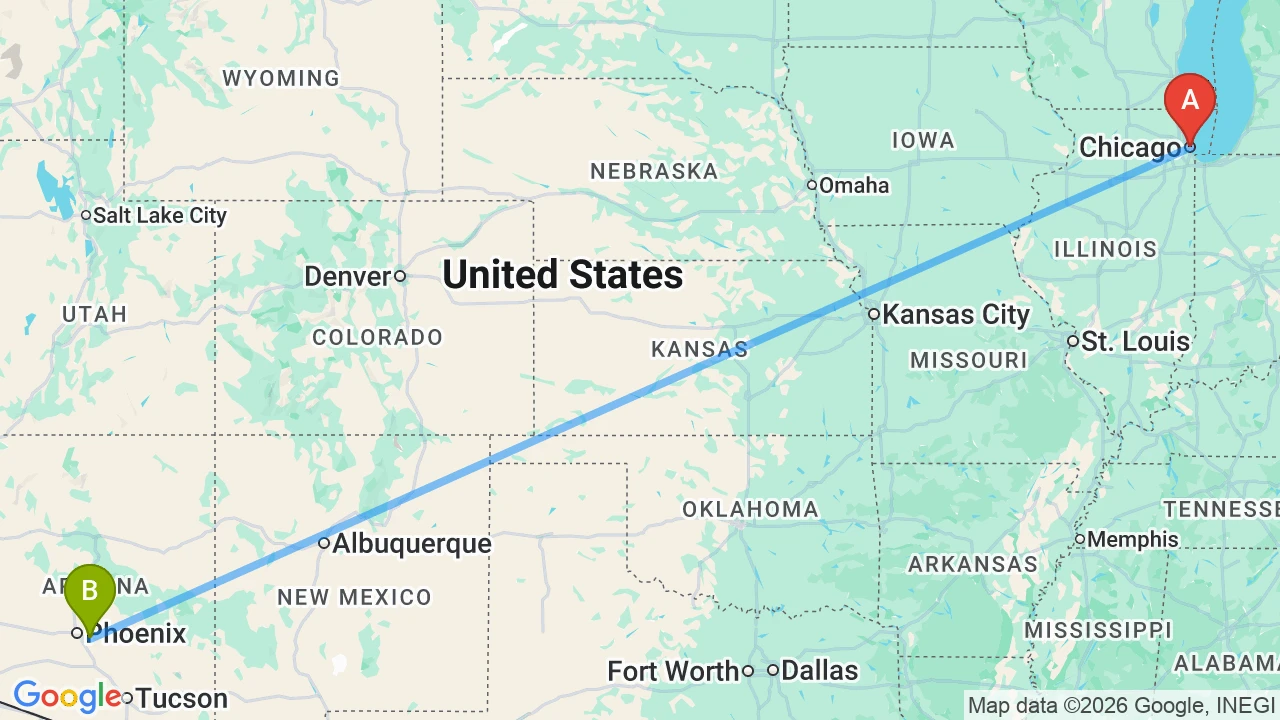
The physical move from Chicago to Gilbert spans roughly 1,700 miles, making it a long-haul relocation that typically involves professional movers or a multi-day drive. Timing matters: summer moves mean arriving during Gilbert’s peak heat, which can make house-hunting and settling in more challenging. Fall and winter offer milder weather but may coincide with higher housing demand as families try to settle before the school year. Spring is often ideal for climate but can see competitive housing markets as others have the same idea.
Establishing routines takes time. Households accustomed to Chicago’s transit options and walkable errands need to adjust to driving everywhere, which means factoring in parking, traffic patterns, and the mental load of planning every trip. Finding new doctors, dentists, and service providers requires research, and the sprawling Phoenix metro means options are plentiful but not always nearby. Both cities have hospitals and pharmacies readily available, but in Gilbert, reaching them almost always involves a car trip rather than a walk or quick train ride.
Social adjustment varies by household type. Families with school-age children often find Gilbert’s strong school infrastructure and playground availability helpful, though the density is moderate rather than high, meaning playdates and activities still require coordination and driving. Adults accustomed to Chicago’s dense social scenes—walkable bars, restaurants, cultural venues—may find Gilbert quieter and more spread out, with nightlife and entertainment concentrated in specific Phoenix metro corridors rather than integrated into neighborhoods. The shift from urban density to suburban sprawl affects how spontaneous social life feels and how much planning goes into maintaining connections.
Financial adjustment goes beyond the initial housing cost shock. Households need to recalibrate utility budgets for summer cooling rather than winter heating, plan for vehicle dependency and associated costs, and understand how HOA fees (common in Gilbert) differ from Chicago’s property tax and condo fee structures. Income expectations differ too—Gilbert’s higher median household income reflects both the cost of entry and the types of jobs that support living there, so career planning and salary negotiations may need adjustment.
Frequently Asked Questions
- Does Gilbert feel more or less expensive than Chicago?
- Cost pressure concentrates differently rather than simply higher or lower. Gilbert’s housing entry costs are substantially higher, but households with strong incomes may find ongoing expenses more predictable given newer construction and lower heating costs. Chicago offers more entry points across price ranges but can surprise with winter utility spikes and older building maintenance. Families with high incomes often adapt well to Gilbert’s cost structure; those stretching to afford housing may feel more pressure than they did in Chicago’s more diverse market.
- How do housing markets differ between Chicago and Gilbert?
- Chicago’s market reflects over a century of development with diverse stock—vintage apartments, bungalows, high-rises, and everything in between—creating entry points across price ranges. Gilbert’s market is predominantly newer, low-rise single-family homes in master-planned communities with HOA governance. Chicago offers more walkable, transit-accessible options; Gilbert offers newer construction and suburban space. Renters find more variety and competition in Chicago; Gilbert’s rental market is tighter and skews toward newer builds.
- What feels different about daily life after moving to Gilbert?
- The shift from transit-accessible urban density to car-dependent suburban sprawl changes daily rhythms significantly. Errands that once happened on foot or by train now require driving and planning. Summer heat replaces winter cold as the dominant climate constraint, affecting when people go outside and how much air conditioning costs. Social life becomes less spontaneous and more coordinated, and the pace feels slower and more family-oriented compared to Chicago’s urban energy.
- When does this move tend to feel easiest or hardest?
- Fall and winter moves offer milder Gilbert weather and easier adjustment to the climate, though housing markets can be competitive. Spring moves allow settling in before peak summer heat but may coincide with school transitions. Summer moves mean arriving during the most intense heat, which can make house-hunting and initial adjustment more challenging. Financially, the move feels smoothest for households with strong incomes and savings to cover higher housing entry costs without stretching budgets.
- What adjustment pressures catch Chicago movers off guard?
- The extent of car dependency surprises many—even short errands require driving, and the mental load of planning every trip adds friction. Summer cooling costs can shock households used to Chicago’s shorter cooling season, especially in less-efficient homes. The absence of walkable neighborhood services and spontaneous social options requires intentional planning for activities that once happened organically. HOA fees and rules in master-planned communities also introduce governance structures that differ from Chicago’s condo or single-family ownership norms.
- Who tends to benefit from this move, and who struggles?
- Families with strong incomes, school-age children, and a preference for newer suburban homes with outdoor space tend to adapt well—Gilbert’s infrastructure supports this lifestyle, and the milder winters are a major draw. Households that value walkability, transit access, and urban density often struggle with the car dependency and sprawl. Those stretching financially to afford Gilbert’s higher housing costs may find less budget flexibility than they had in Chicago’s more varied market. Remote workers with flexibility and families prioritizing schools over nightlife often thrive; urbanites who rely on spontaneous neighborhood life may feel isolated.
Making the Decision
The move from Chicago to Gilbert isn’t about finding a cheaper city—it’s about understanding where cost pressure moves and whether the lifestyle tradeoffs align with your household’s priorities. Gilbert offers newer housing, milder winters, and strong family infrastructure, but it requires higher income to enter the market comfortably and assumes car dependency for nearly everything. Chicago offers more diverse entry points, walkable neighborhoods, and transit options, but it comes with older housing stock, winter heating costs, and urban density that some find energizing and others find exhausting.
Households that thrive in Gilbert tend to value space, newer construction, and a slower suburban pace, and they have the income to absorb higher housing costs without strain. Those who struggle often miss Chicago’s walkability, transit access, and the spontaneity of urban life, or they find the summer heat and car dependency more burdensome than expected. The decision hinges on whether you’re ready to trade density and transit for space and sun, and whether your income and lifestyle preferences align with Gilbert’s suburban, car-oriented structure.
For deeper exploration of how costs break down in each city individually, see the Chicago living guide and the Gilbert living guide. Both offer detailed looks at housing, utilities, transportation, and daily expenses to help you understand what life actually costs in each place.
How this article was built: In addition to public economic data, this article incorporates location-based experiential signals derived from anonymized geographic patterns—such as access density, walkability, and land-use mix—to reflect how day-to-day living actually feels in Gilbert, AZ and Chicago, IL.