
Moving from Seattle, WA to Gilbert, AZ: Cost & Lifestyle Comparison for 2026
The move from Seattle to Gilbert represents one of the more dramatic geographic and lifestyle shifts in the U.S. relocation landscape. You’re leaving a dense, vertical, transit-rich Pacific Northwest metro for a low-rise, car-oriented desert suburb in the Phoenix area. The climate flips from cool and damp to hot and dry. The housing market changes from some of the nation’s highest entry barriers to a more accessible—but still substantial—price point. And daily rhythms shift from walkable urban pockets and rail commutes to driving nearly everywhere, often in triple-digit heat.
This guide explains where cost pressure concentrates in each city, how housing obligations and ongoing expenses differ, and which household types tend to feel relief versus new friction after the move. It does not declare a financial winner or estimate total savings—it clarifies where costs show up, why they behave differently, and who tends to benefit from the tradeoffs.
Cost Pressure Shifts: Where Money Moves
Seattle’s cost profile is dominated by housing entry barriers. The median home value sits at $879,900, and median rent reaches $1,945 per month. Gilbert’s housing costs are lower but still significant: median home value is $454,300, with median rent at $1,839 per month. The entry barrier to ownership drops substantially, but ongoing obligations—especially summer cooling costs—rise in ways Seattle households rarely experience.
Seattle’s regional price parity index stands at 113, while Gilbert’s is 106, reflecting a modest overall cost difference. But this aggregate measure obscures the texture of daily expenses. In Seattle, food and grocery density exceeds high thresholds, transit is rail-present, and pedestrian infrastructure supports errand consolidation. In Gilbert, food and grocery options are also broadly accessible, but the urban form is low-rise and car-oriented, meaning nearly every errand requires a vehicle.
Transportation costs shift in character. Seattle’s average commute is 27 minutes, with 43.2% of workers facing long commutes; Gilbert’s average is 26 minutes, with 38.5% experiencing long commutes. The numbers are similar, but the mode differs. Seattle offers rail transit and walkable pockets; Gilbert’s rail presence exists but serves a limited role in daily life. Gas prices favor Gilbert at $3.85 per gallon versus Seattle’s $4.61 per gallon, but Gilbert households drive more frequently and across longer distances for routine errands.
Utility exposure reverses. Seattle’s electricity rate is 13.33¢/kWh, and natural gas costs $15.51/MCF—but heating and cooling demands are moderate. Gilbert’s electricity rate is higher at 15.46¢/kWh, and the extended cooling season means air conditioning dominates summer bills in ways Seattle households rarely encounter. Natural gas in Gilbert costs $17.90/MCF, though heating needs are minimal.
Housing & Neighborhood Patterns
Seattle’s housing market is characterized by vertical density, mixed-use neighborhoods, and high pedestrian-to-road ratios. Average building levels exceed high thresholds, and both residential and commercial land use are integrated throughout much of the city. This density supports transit viability and errand consolidation, but it also drives up entry costs and limits single-family inventory.
Gilbert’s urban form is the opposite: low-rise, car-oriented, and dominated by single-family homes. Average building levels fall below low thresholds, and while both residential and commercial land use are present, they are spatially separated. This pattern lowers entry barriers but increases dependence on driving and reduces the ability to walk or bike for daily needs.
For renters, the monthly cost difference is modest—$106 per month lower in Gilbert—but the experience differs. Seattle renters often live in walkable neighborhoods with transit access and dense amenities. Gilbert renters typically occupy low-rise complexes in car-dependent areas, where proximity to work, schools, and groceries requires intentional planning.
For buyers, the home value gap is substantial—$425,600 lower in Gilbert—but ongoing obligations shift. Seattle homeowners face higher property taxes and insurance in a high-value market, but moderate utility exposure. Gilbert homeowners pay less upfront but absorb higher summer cooling costs, HOA fees in many neighborhoods, and the long-term expense of vehicle dependence.
Lifestyle & Daily Rhythms
Seattle’s daily life is shaped by rain, moderate temperatures, and infrastructure that supports walking, biking, and transit. Pedestrian-to-road ratios exceed high thresholds, bike infrastructure is notable, and rail service connects neighborhoods. Food and grocery density is high, and park access is integrated, with water features present throughout the city. Schools and playgrounds meet medium-density thresholds, and hospital facilities are present. The pace is urban, the rhythm is walkable in many areas, and car ownership—while common—is not universally required.
Gilbert’s daily life is defined by heat, driving, and suburban sprawl. The extended cooling season means triple-digit temperatures dominate summer months, and outdoor activity shifts to early mornings or evenings. While pedestrian-to-road ratios technically exceed high thresholds in some areas and bike infrastructure is notable, the low-rise, car-oriented form means most households drive for nearly every errand. Food and grocery density is high, park access is integrated, and family infrastructure is strong, but reaching these amenities requires a vehicle. Rail service exists but plays a limited role in daily commutes.
The climate shift is profound. Seattle’s cool, damp weather means heating costs are moderate, cooling is rare, and outdoor activity is year-round but often wet. Gilbert’s hot, dry climate means air conditioning runs for months, outdoor exposure requires heat management, and seasonal rhythms revolve around avoiding midday sun.
Commute patterns change in texture, not just duration. Seattle commuters may walk to transit, bike to work, or drive in dense traffic. Gilbert commuters almost always drive, often across sprawling suburban corridors, and rely on personal vehicles for school drop-offs, grocery runs, and weekend errands. The shift from transit-viable to car-dependent is one of the most significant lifestyle adjustments movers experience.
Relocation Logistics & Practical Friction
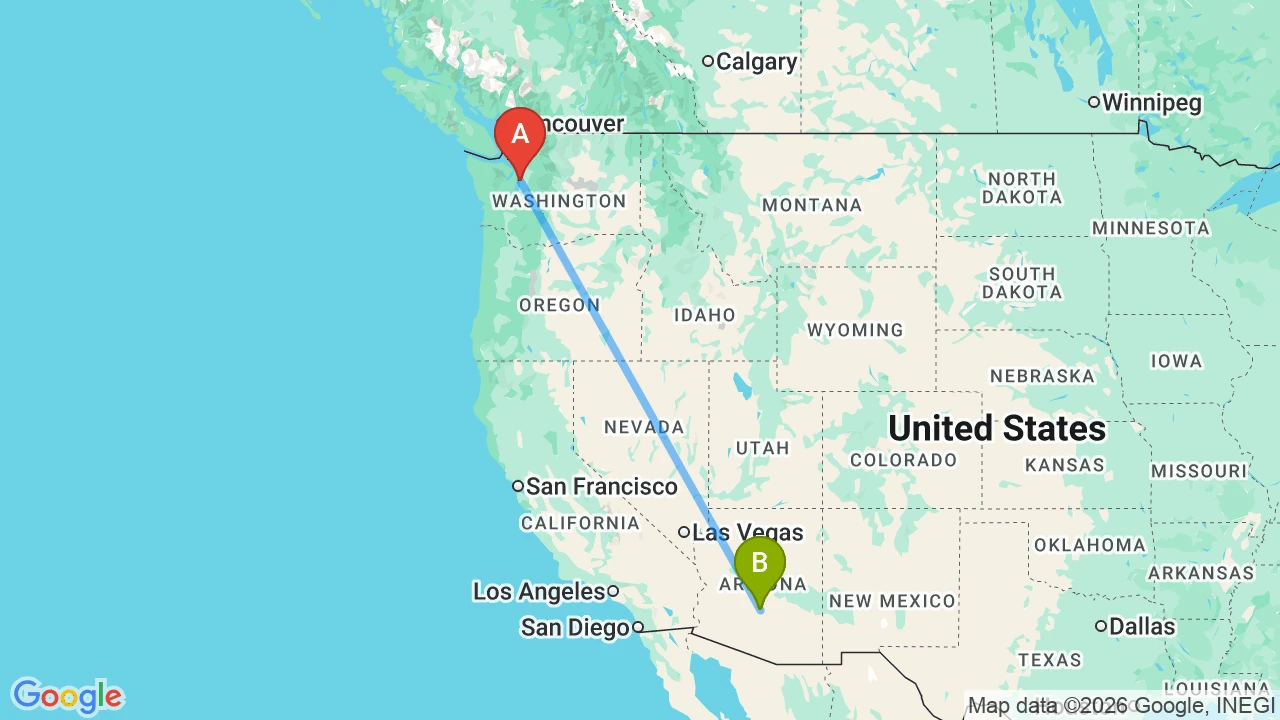
The move from Seattle to Gilbert spans roughly 1,400 miles and crosses multiple climate zones. Professional movers, rental trucks, and shipping timelines all factor into upfront costs, but the deeper friction comes from adjusting to a fundamentally different daily structure.
Seattle households accustomed to walking to coffee, biking to work, or taking light rail downtown will find Gilbert requires a car for nearly everything. Grocery trips, school drop-offs, and social plans all assume vehicle access. Households with one car may find themselves stretched; those without a car will face significant logistical challenges.
Summer heat introduces new household behaviors. Air conditioning becomes non-negotiable, and utility bills spike from May through September. Outdoor routines shift to early mornings or late evenings. Yard maintenance, pool upkeep (if applicable), and vehicle cooling all become part of the rhythm.
Seattle’s rain and gray skies are replaced by relentless sun and dry air. Skin care, hydration, and sun protection become daily considerations. The seasonal mood shift—from Seattle’s long, dark winters to Gilbert’s bright, hot summers—affects household energy and outdoor engagement in ways that surprise many movers.
Social and community networks reset. Seattle’s density supports spontaneous social interaction and neighborhood familiarity. Gilbert’s suburban form means social life often revolves around planned activities, school communities, and organized events. The shift from urban density to suburban sprawl changes how households meet people and build routines.
Frequently Asked Questions
- Does Gilbert feel more or less expensive than Seattle?
- Gilbert’s housing entry barrier is substantially lower, but cost pressure shifts rather than disappears. Seattle’s high rents and home prices dominate budgets, while Gilbert’s ongoing expenses—especially summer cooling, vehicle dependence, and HOA fees—concentrate differently. Households trading Seattle’s upfront housing costs for Gilbert’s car-oriented, heat-exposed lifestyle may find relief in ownership access but new friction in daily logistics and utility exposure.
- How do housing markets differ between Seattle and Gilbert?
- Seattle’s market is vertical, dense, and expensive, with high entry barriers and mixed-use neighborhoods that support walkability. Gilbert’s market is low-rise, car-oriented, and more accessible, with single-family homes dominating and spatial separation between residential and commercial areas. Renters pay slightly less in Gilbert but lose walkability; buyers gain entry access but absorb higher cooling costs and vehicle dependence.
- What feels different about daily life after moving to Gilbert?
- The shift from walkable, transit-rich Seattle to car-dependent, heat-exposed Gilbert changes nearly every routine. Errands require driving, summer heat dominates outdoor activity, and social life revolves around planned events rather than spontaneous neighborhood interaction. The climate, pace, and infrastructure all flip, and households accustomed to Seattle’s density and moderation often find Gilbert’s sprawl and intensity require significant adjustment.
- When does this move tend to feel easiest or hardest?
- Moving in fall or winter allows households to settle before Gilbert’s intense summer heat, giving time to adjust routines and test cooling costs. Arriving in summer means immediate exposure to triple-digit temperatures and high utility bills, which can feel overwhelming for households unfamiliar with desert living. Seattle’s mild summers and cool winters mean the seasonal rhythm in Gilbert—where heat dominates half the year—requires intentional planning and behavioral change.
- What are common adjustment pressures after this move?
- Vehicle dependence surprises Seattle households used to walking or transit. Summer cooling costs spike in ways Seattle’s moderate climate never required. The loss of walkable density and spontaneous access to amenities means more planning, more driving, and more time in the car. Social networks reset, outdoor routines shift to avoid heat, and the relentless sun replaces Seattle’s gray skies, affecting mood and energy in ways that take months to normalize.
- Who does this move work best for—and who may struggle?
- Households seeking homeownership access, lower housing entry barriers, and tolerance for heat and driving tend to benefit. Families with school-age children find strong infrastructure, and those who value sun and outdoor space (managed around heat) often thrive. Households that rely on walkability, transit, or moderate climates—or those without reliable vehicle access—face significant friction. Singles and couples accustomed to Seattle’s urban density and spontaneous access may find Gilbert’s suburban sprawl isolating and logistically demanding.
Making the Decision
The move from Seattle to Gilbert is not a simple cost reduction—it’s a fundamental lifestyle recalibration. Housing entry barriers drop, but ongoing obligations shift to cooling, driving, and heat management. Walkability and transit give way to car dependence and suburban sprawl. Cool, damp Pacific Northwest weather is replaced by relentless desert sun and extended heat exposure.
Households that value homeownership access, family-oriented infrastructure, and tolerance for heat and driving will find Gilbert offers relief from Seattle’s housing pressure. Those who rely on walkability, transit, moderate climates, or spontaneous urban access will feel the loss acutely. The decision hinges not on which city is “cheaper,” but on which set of tradeoffs aligns with your household’s priorities, routines, and tolerance for change.
For deeper exploration of Seattle’s cost drivers, housing patterns, and neighborhood texture, visit the Seattle living guide. To understand Gilbert’s suburban rhythms, cooling exposure, and family infrastructure, explore the Gilbert living guide. Both hubs offer granular breakdowns of the factors that shape daily life and long-term cost pressure in each city.
How this article was built: In addition to public economic data, this article incorporates location-based experiential signals derived from anonymized geographic patterns—such as access density, walkability, and land-use mix—to reflect how day-to-day living actually feels in Seattle, WA and Gilbert, AZ.