
Transit Coverage & Average Ride Times in Loveland
| Transit Type | Coverage Area | Typical Service Pattern |
|---|---|---|
| Regional Bus | Limited corridor access | Weekday-focused, reduced weekend |
| Local Circulator | Core zones only | Peak-hour emphasis |
| Rail Transit | Not present | — |
Coverage reflects typical service zones; individual routes and schedules vary. Verify current service availability before relying on transit for daily commuting.
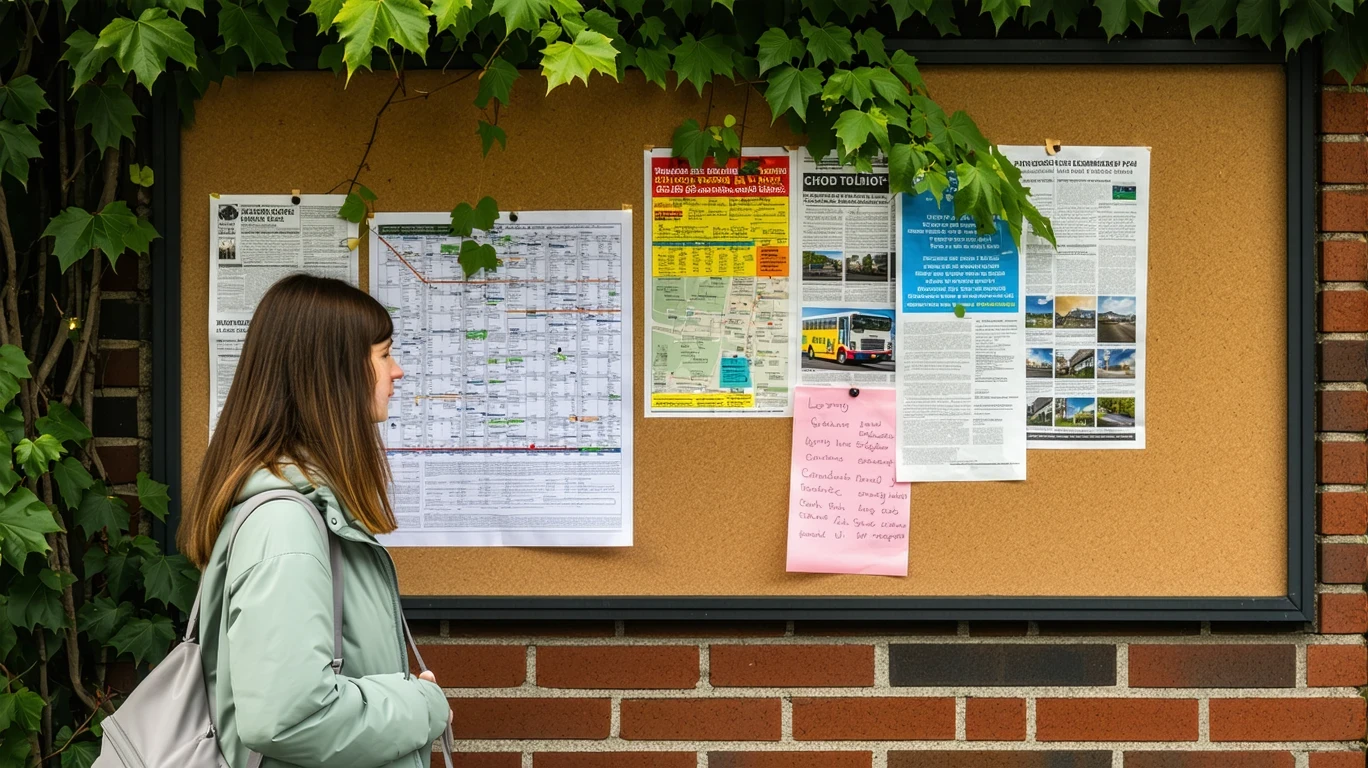
How People Get Around Loveland
Transportation options in Loveland reflect the city’s suburban structure and its position within the broader Cincinnati metro area. Most residents rely on personal vehicles for daily errands, work commutes, and household logistics. The city’s layout—characterized by residential neighborhoods separated from commercial corridors and employment centers—makes driving the default mobility choice for the majority of households.
Public transit exists but plays a supporting role rather than serving as the backbone of daily movement. Bus service connects certain corridors to regional destinations, yet coverage remains sparse across much of Loveland’s residential fabric. Newcomers often assume transit will function as it does in denser urban cores, only to discover that car ownership quickly becomes essential for managing school runs, grocery trips, and multi-stop errands that don’t align neatly with fixed routes.
The pedestrian infrastructure shows pockets of walkability—sidewalks appear consistently in established neighborhoods, and the pedestrian-to-road ratio exceeds typical suburban thresholds. Yet walkability here supports neighborhood circulation more than it replaces car dependency. Residents walk to nearby parks or within their immediate area, but reaching grocery stores, medical appointments, or workplaces almost always requires a vehicle. This creates a mobility pattern where walking enhances quality of life without reducing transportation costs.
Public Transit Availability in Loveland
Public transit in Loveland often centers around systems such as the Southwest Ohio Regional Transit Authority (SORTA), which operates bus routes connecting parts of the city to downtown Cincinnati and other regional employment hubs. Service tends to concentrate along major corridors, leaving many residential streets without direct access. Riders typically need to walk or drive to a stop, which adds friction to what might otherwise be a viable commute.
Transit works best for residents living near established routes and commuting to predictable destinations during weekday business hours. Coverage thins considerably in the evenings and on weekends, limiting its usefulness for shift workers, service-industry employees, or households managing irregular schedules. The absence of rail transit means all public transportation relies on buses navigating the same traffic as personal vehicles, which can extend travel times and reduce reliability during peak periods.
For households weighing transit viability, the question isn’t whether buses exist—it’s whether the available routes align with daily needs. A commute that requires one transfer and forty-five minutes each way may be manageable for a single worker with a fixed schedule, but it becomes impractical for parents coordinating childcare pickups or anyone balancing multiple jobs. Transit in Loveland functions as a supplemental option rather than a comprehensive mobility solution.
Driving & Car Dependence Reality
Driving dominates daily life in Loveland because the city’s geography and development pattern prioritize automobile access. Grocery stores, schools, healthcare facilities, and workplaces sit dispersed across a landscape designed around parking lots and wide arterials. Even residents who live in walkable pockets find themselves driving for most errands simply because destinations cluster along commercial strips rather than within neighborhood centers.
Parking rarely presents a challenge. Residential streets accommodate on-street parking, and most homes include driveways or garages. Commercial areas provide ample surface lots, which reduces the hassle of finding a spot but reinforces car-first design. This convenience comes with tradeoffs: households absorb the cost of vehicle ownership, maintenance, fuel, and insurance as unavoidable baseline expenses rather than optional upgrades.
Sprawl shapes commute flexibility in subtle ways. Residents who work in Cincinnati or other nearby employment centers face longer drives but gain access to more job opportunities. Those who work locally may enjoy shorter commutes, yet they remain car-dependent because transit doesn’t connect residential areas to Loveland’s own commercial zones effectively. The result is a mobility structure where driving isn’t just convenient—it’s structurally necessary for participation in daily economic and social life.
Commuting Patterns & Daily Mobility
Commuting in Loveland typically involves single-occupancy vehicle trips to workplaces scattered across the metro area. Some residents drive to downtown Cincinnati, others to suburban office parks in Mason or Blue Ash, and still others work locally in retail, healthcare, or service roles. The diversity of destinations makes shared commuting or transit coordination difficult; carpooling works only when schedules and endpoints align closely, which happens less often in a dispersed suburban setting.
Multi-stop commutes add complexity. Parents dropping children at school before heading to work, or workers running errands during lunch breaks, rely on the flexibility that personal vehicles provide. Transit can’t accommodate these layered trips without significant time penalties, which explains why even households sympathetic to public transportation often default to driving once they map out their actual daily routines.
Proximity to work matters more for quality of life than for cost savings. Residents who live and work within Loveland reduce time spent commuting, but they still drive because walking or biking to most employment sites isn’t practical. Those commuting to Cincinnati or other regional centers absorb longer drives but access higher wages and more diverse job markets. The tradeoff isn’t between transit and driving—it’s between time and opportunity, with the car serving as the constant across both scenarios.
Who Transit Works For — and Who It Doesn’t
Public transit in Loveland fits a narrow profile: individuals commuting alone to fixed destinations along established bus routes during weekday business hours. A single worker living near a major corridor and employed in downtown Cincinnati might find transit viable, especially if their workplace sits within walking distance of a bus stop on the other end. This scenario works when schedules align and when the rider can tolerate longer travel times compared to driving.
Transit falls short for families managing school schedules, households with multiple earners working in different directions, and anyone whose job requires flexibility or irregular hours. Parents coordinating childcare pickups can’t rely on buses that run every thirty to sixty minutes. Shift workers in healthcare or hospitality find that service tapers off precisely when they need it most. Retirees and older adults may appreciate transit in theory but struggle with limited coverage and the physical demands of reaching distant stops.
Renters living in core areas closer to bus routes have better access than homeowners in peripheral neighborhoods, yet even well-positioned renters often choose driving once they account for grocery hauls, medical appointments, and weekend errands. Ownership of a car doesn’t eliminate the option to use transit occasionally, but it does reduce the urgency—once a household owns a vehicle, the marginal cost of each additional trip by car feels lower than the time cost of waiting for a bus.
Transportation Tradeoffs in Loveland
Choosing between transit and driving in Loveland isn’t primarily a financial calculation—it’s a question of control, predictability, and time. Driving offers flexibility: you leave when you’re ready, stop where you need to, and adjust routes in real time. Transit offers lower direct costs per trip but imposes rigid schedules, limited coverage, and longer travel times. For most households, the tradeoff resolves in favor of driving because the city’s structure penalizes those without cars more than it rewards those who avoid them.
Predictability matters differently depending on household type. A single commuter with a fixed schedule can build a routine around bus times, accepting longer trips in exchange for avoiding car payments. A family with children, or a household with two earners working different shifts, faces compounding unpredictability when relying on transit—missed connections, delayed pickups, and limited service windows create friction that driving eliminates. The cost of that friction isn’t always monetary; it shows up as stress, lost time, and constrained choices.
Exposure to volatility also differs. Drivers absorb fuel price swings and maintenance surprises, but they retain control over when and how they travel. Transit riders depend on service continuity and route stability, which can shift due to budget cuts or policy changes beyond their control. Neither option insulates households from external shocks, but driving allows for incremental adjustments—delaying a repair, consolidating trips—that transit use doesn’t accommodate as easily.
How this article was built: In addition to public economic data, this article incorporates location-based experiential signals derived from anonymized geographic patterns—such as access density, walkability, and land-use mix—to reflect how day-to-day living actually feels in Loveland, OH.
FAQs About Transportation in Loveland (2026)
Is public transit usable for daily commuting in Loveland?
Public transit can work for specific commuting scenarios—primarily single workers traveling to downtown Cincinnati or other regional centers along established bus routes during weekday business hours. Coverage remains limited across much of Loveland’s residential fabric, and service frequency drops significantly in the evenings and on weekends. Households managing multiple stops, irregular schedules, or family logistics typically find transit impractical for daily use.
Do most people in Loveland rely on a car?
Yes. The city’s suburban layout, dispersed commercial zones, and limited transit coverage make car ownership the default for most residents. Even neighborhoods with good pedestrian infrastructure and nearby parks still require driving for grocery shopping, medical appointments, and work commutes. Walking supports neighborhood circulation and recreation, but it doesn’t replace the need for a vehicle when managing day-to-day errands and household responsibilities.
Which areas of Loveland are easiest to live in without a car?
No area of Loveland fully eliminates car dependency, but residents living near major bus corridors and within walking distance of grocery stores or small commercial clusters face less daily driving pressure. Core neighborhoods with higher pedestrian infrastructure density allow for more errands on foot, yet even these areas require a car for reaching workplaces, schools, and services outside the immediate vicinity. Living without a car in Loveland is possible but demands significant compromises in convenience and access.
How does commuting in Loveland compare to nearby cities?
Commuting in Loveland reflects the broader suburban Cincinnati pattern: car-dependent, with transit serving as a limited supplement rather than a primary option. Nearby cities like Mason or Blue Ash share similar mobility structures, where driving dominates and public transit offers narrow utility. Downtown Cincinnati provides denser transit access and more walkable commuting options, but residents who choose Loveland typically accept longer or car-based commutes in exchange for suburban housing, green space, and lower density.
Can I get by with one car in a two-earner household in Loveland?
Managing with one car in a two-earner household in Loveland depends entirely on whether both jobs, schools, and daily errands align geographically and temporally. If both adults work near each other or can coordinate schedules tightly, one vehicle may suffice. If jobs sit in different directions, or if one partner works irregular hours, the lack of viable transit alternatives makes a second car nearly essential. Families with children face additional coordination challenges that typically push toward two-vehicle ownership.
How Transportation Fits Into the Cost of Living in Loveland
Transportation in Loveland functions as a structural cost rather than a discretionary expense. The city’s layout and limited transit coverage mean that car ownership becomes a prerequisite for employment access, household logistics, and participation in daily life. This shapes monthly expenses in ways that extend beyond fuel and insurance—vehicle payments, maintenance, registration, and depreciation all compound into a baseline cost that households absorb regardless of income level.
Mobility also influences housing decisions. Residents who prioritize shorter commutes may pay more for homes closer to workplaces or major corridors, while those willing to drive farther can access lower housing costs in peripheral areas. The tradeoff isn’t just time versus money—it’s predictability versus flexibility, with each household weighing how much commute friction they can tolerate against how much housing expense they can carry.
Understanding transportation in Loveland means recognizing that the city’s suburban structure locks in certain costs and limits certain choices. Transit exists but doesn’t replace driving for most households. Walking enhances neighborhood life but doesn’t eliminate car dependency. The question isn’t whether you’ll need a vehicle—it’s how many, how often, and what that means for your household’s broader financial and logistical balance. Knowing that upfront helps you plan for the reality of getting around here, rather than hoping for a mobility structure that doesn’t yet exist.