
74 out of 100 residents say they’re happy in Loveland, OH — but that number only tells part of the story. What makes someone feel at home here isn’t just satisfaction; it’s alignment. Loveland tends to reward people who value green space, strong schools, and suburban calm with pockets of walkability. It tends to frustrate those expecting spontaneous urban energy, late-night options, or transit flexibility. The city’s vibe isn’t about being universally loved — it’s about knowing whether the tradeoffs fit your life.
What Loveland Feels Like Day to Day
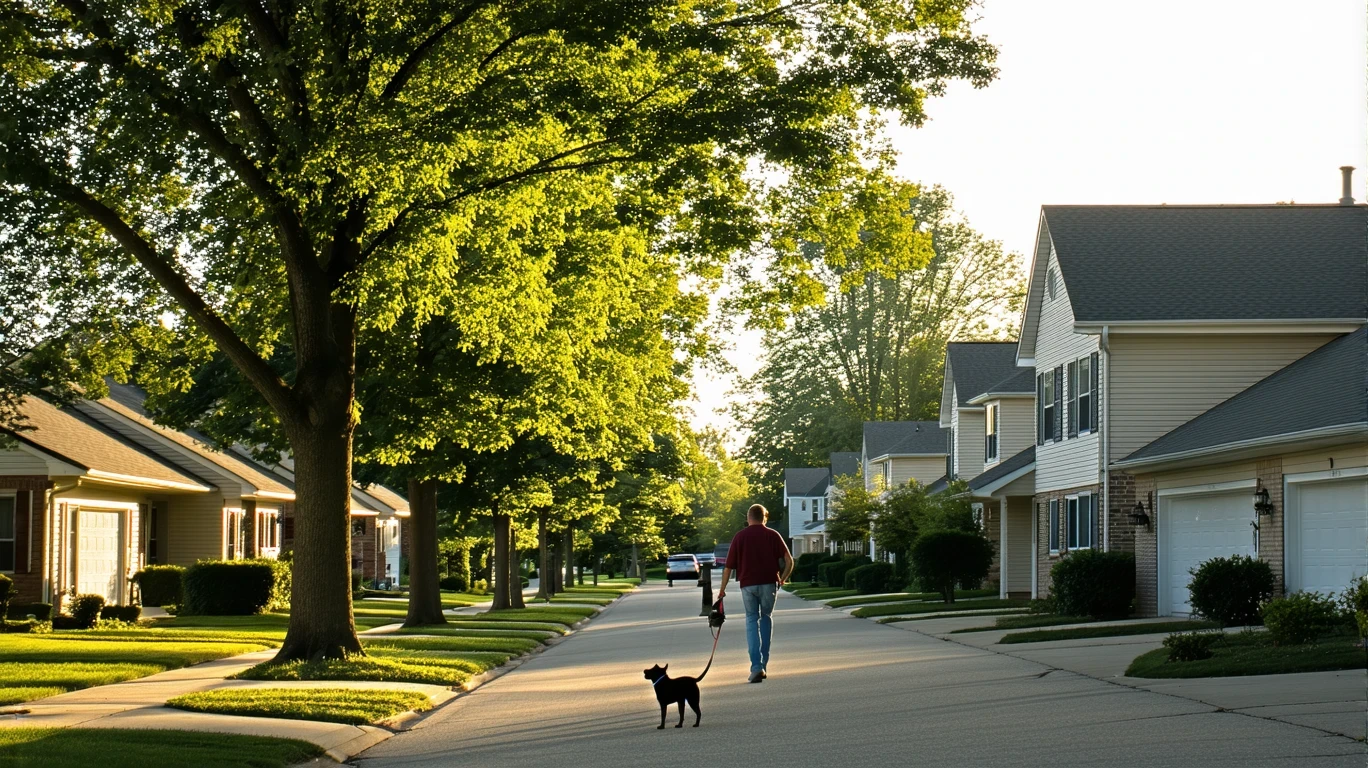
Loveland occupies an interesting middle ground: it’s not a sleepy bedroom community, but it’s not trying to be a bustling downtown either. The city offers integrated park access and strong family infrastructure — playgrounds, schools, and green space are woven into daily life. Walkable pockets exist, especially along certain corridors, but errands and dining tend to cluster rather than spread evenly across neighborhoods. That means some blocks feel pedestrian-friendly and others require a car for nearly everything.
For families, this structure works. Kids can bike to parks, schools are accessible, and the pace feels manageable. For young professionals or urbanites, the tradeoff becomes clear quickly: evenings are quiet, nightlife is limited, and spontaneity requires a drive. The city doesn’t apologize for being suburban, but it also doesn’t lean fully into car-only sprawl. That in-between quality is either exactly what you’re looking for or a source of constant friction.
Proximity to Cincinnati adds another layer. Loveland offers lower-pressure living with access to bigger-city amenities — but only if you’re willing to commute for them. That dynamic shapes how people talk about the city: it’s either a smart compromise or a frustrating halfway point, depending on what you need from your surroundings.
Social Media Buzz in Loveland
Online conversations about Loveland tend to center on a few recurring themes: pride in parks and trails, mild frustration with dining variety, and ongoing tension about growth and development. Residents who love the city often emphasize outdoor access and family-friendly infrastructure. Those who feel restless point to limited nightlife, lack of walkable urban texture, and the need to drive for most errands.
Composite sentiment from local discussion reflects this split:
- “It’s perfect if you want safe, quiet, and green space — but don’t expect much after 9 p.m.”
- “Great for families, but if you’re single or don’t have kids, it can feel pretty limiting.”
- “I love that I can walk to a few spots, but I still end up driving for groceries and dinner most of the time.”
There’s also a protective tone when Loveland gets compared to other Cincinnati suburbs. Long-time residents push back against characterizations of the city as “boring” or “just another suburb,” pointing to the bike trail, local events, and community feel. Newcomers, especially those relocating from urban cores, sometimes express surprise at how car-dependent daily life feels despite the walkable pockets.
Local News Tone
Coverage of Loveland tends to frame the city through the lens of growth management, community identity, and infrastructure evolution. The tone is rarely crisis-driven; instead, it reflects ongoing negotiation about what kind of place Loveland wants to be as it continues to develop.
Simulated headline-style themes that capture this tone include:
- “Community Debates What Growth Should Look Like”
- “New Amenities Arrive as Town Identity Evolves”
- “Residents Weigh Convenience vs Quiet”
- “Outdoor Access Remains a Draw for Families”
- “Balancing Suburban Calm with Walkable Texture”
The framing is rarely alarmist, but it does reflect tension: between preserving the small-town feel and accommodating new development, between maintaining green space and adding density, between serving families and appealing to younger residents. The city’s identity is still being negotiated, and that shows up in how it’s discussed.
Review-Based Public Perception
Public reviews of Loveland — whether on Google, Yelp, or neighborhood platforms — tend to cluster around a few predictable patterns. Praise centers on parks, schools, safety, and the bike trail. Criticism focuses on limited dining variety, lack of nightlife, and the need to drive for most errands despite some walkable areas.
What stands out is how expectation-dependent the feedback is. People who moved to Loveland for suburban family life tend to be delighted: the schools deliver, the parks are plentiful, and the neighborhoods feel safe and quiet. People who moved expecting urban convenience or cultural variety tend to be disappointed: restaurants close early, entertainment options are thin, and spontaneous walkability is limited to specific corridors.
Neighborhood variation also appears in reviews, though it’s often framed generically. Newer planned areas tend to feel more uniform and car-oriented, while older pockets near the trail or downtown corridor offer more pedestrian texture. That difference matters to people who prioritize walkability, but it’s not always clear from the outside which areas deliver that experience.
Healthcare access gets mixed feedback. Clinics and pharmacies are present, but the lack of a local hospital means serious medical needs require a drive. For most residents, that’s a non-issue; for aging households or those with chronic conditions, it’s a noted limitation.
Comparison to Nearby Cities
| Dimension | Loveland, OH | Mason, OH | Milford, OH |
|---|---|---|---|
| Overall Vibe | Suburban calm with walkable pockets and strong parks | Planned, family-focused, amenity-rich | Small-town feel, quieter, more rural edges |
| Walkability | Corridor-clustered, some pedestrian texture | Car-oriented with planned paths | Limited, mostly car-dependent |
| Nightlife & Dining | Limited, closes early | More chain options, family-oriented | Very limited, quieter evenings |
| Family Infrastructure | Strong schools and playgrounds | Excellent schools, abundant amenities | Solid schools, fewer amenities |
| Outdoor Access | Integrated parks, bike trail highlight | Parks present, more planned | Green space available, less dense |
Loveland sits between Mason’s polished, amenity-heavy suburban model and Milford’s quieter, more rural-adjacent character. Mason offers more dining and entertainment options, but it feels more planned and less walkable. Milford offers more space and quiet, but fewer amenities and less pedestrian infrastructure. Loveland’s corridor-clustered errands and walkable pockets give it a slightly more textured feel than either neighbor, but it doesn’t deliver the spontaneous walkability of an urban core or the full convenience of a larger suburb.
For families prioritizing schools and parks, all three work well. For young professionals or urbanites, none of them fully satisfy — but Loveland’s proximity to Cincinnati and its pockets of walkability make it the most viable compromise. For retirees seeking quiet and green space, Milford may feel more peaceful, while Mason may offer more structured amenities.
What Locals Are Saying
Composite quotes from different household types reflect the range of experiences in Loveland:
- Young family, relocated from Columbus: “We love the parks and the schools. Our kids can bike to the playground, and we feel like we’re actually part of a community. It’s not flashy, but it works for us.”
- Remote worker, mid-30s, no kids: “It’s fine, but I get bored. There’s not much to do at night, and I end up driving to Cincinnati for anything interesting. The trail is nice, but I wish there were more cafes or bars within walking distance.”
- Retiree, long-time resident: “Loveland has changed a lot, but it’s still a good place to live. It’s quiet, safe, and I can get to everything I need. I do miss some of the old local spots, but that’s just how things go.”
- Young professional couple, renting: “We picked Loveland because it’s cheaper than living in Cincinnati and we can still get downtown in 20 minutes. But honestly, we’re here more for the price than the vibe. It feels a little sleepy for us.”
- Parent of school-age kids, moved from out of state: “The schools were the main draw, and they’ve been great. The neighborhood feels safe, and there’s always something to do outdoors. I do wish there were more restaurant options, but it’s a small tradeoff.”
- Single professional, early 30s: “I thought the walkable parts would be enough, but I still drive everywhere. It’s frustrating because I can see the potential — there are sidewalks and trails — but the density just isn’t there for spontaneous errands or nightlife.”
- Family with teens, longtime residents: “Loveland is great for younger kids, but once they hit high school, there’s not much for them to do here. We end up driving them to friends’ houses or into the city. It’s safe and quiet, but maybe too quiet for teenagers.”
Does Loveland Feel Like a Good Fit?
Loveland’s emotional profile is shaped by tradeoffs that work beautifully for some households and create constant friction for others. The city rewards people who value green space, strong schools, and suburban calm with occasional walkable texture. It frustrates those expecting spontaneous urban energy, late-night options, or transit flexibility.
This tends to work for families prioritizing outdoor access and education, commuters willing to drive for work but wanting local parks and schools, and households seeking a quieter pace with proximity to Cincinnati. It tends to frustrate urbanites expecting walkability everywhere, young professionals seeking nightlife and cultural variety, and households without cars facing limited transit options.
The city’s corridor-clustered errands and walkable pockets create an in-between experience: not fully car-dependent, but not spontaneously walkable either. That structure is either exactly the compromise you’re looking for or a source of ongoing disappointment, depending on what you need from your surroundings.
If you’re still weighing whether Loveland fits your life, consider exploring housing tradeoffs, monthly budget pressure points, or lifestyle requirements to see how the city’s structure translates into day-to-day costs and decisions.
How this article was built: In addition to public economic data, this article incorporates location-based experiential signals derived from anonymized geographic patterns—such as access density, walkability, and land-use mix—to reflect how day-to-day living actually feels in Loveland, OH.
The perspectives shown reflect commonly expressed local sentiment and recurring themes in public discussion, rather than individual accounts.