
Loveland sits in the Cincinnati metro with a housing market shaped by suburban structure, family-oriented infrastructure, and pricing that runs below the regional average. The median home value of $273,900 reflects a market where ownership dominates and rental inventory remains less visible. For buyers, that figure represents access to a community with integrated parks, strong school and playground density, and pockets of walkable infrastructure—without paying downtown or inner-ring premiums. For renters, median gross rent of $1,125 per month positions Loveland as a middle-tier option within the metro, though availability and turnover matter as much as price.
What distinguishes Loveland’s housing market is the coexistence of suburban car dependence and localized walkability. The city exhibits walkable pockets with high pedestrian-to-road ratios, yet daily errands remain corridor-clustered rather than broadly accessible. This creates a housing experience where location within Loveland determines whether you walk to a coffee shop or drive to every errand. Buyers and renters alike must evaluate not just the unit, but the block-level infrastructure that shapes daily logistics.
Loveland’s regional price parity index of 94 signals that goods and services cost less here than the national baseline, but housing itself doesn’t follow that discount uniformly. Home values reflect demand for family amenities—parks, playgrounds, schools—that Loveland delivers at density levels uncommon in comparably priced suburbs. Renters face a market where single-family homes and low-rise structures dominate, limiting apartment supply and pushing rent-seekers toward nearby corridors or adjacent communities with denser stock.
The unemployment rate of 4.1% suggests a stable local labor market, but Loveland functions primarily as a residential base for workers commuting into Cincinnati and surrounding employment centers. Housing costs here must be weighed against transportation exposure, as car dependency remains the default outside specific walkable zones. Median household income of $81,706 per year provides context for affordability, but the real question isn’t whether households can qualify—it’s whether ownership or renting better matches the long-term cost structure this market imposes.
How this article was built: In addition to public economic data, this article incorporates location-based experiential signals derived from anonymized geographic patterns—such as access density, walkability, and land-use mix—to reflect how day-to-day living actually feels in Loveland, OH.
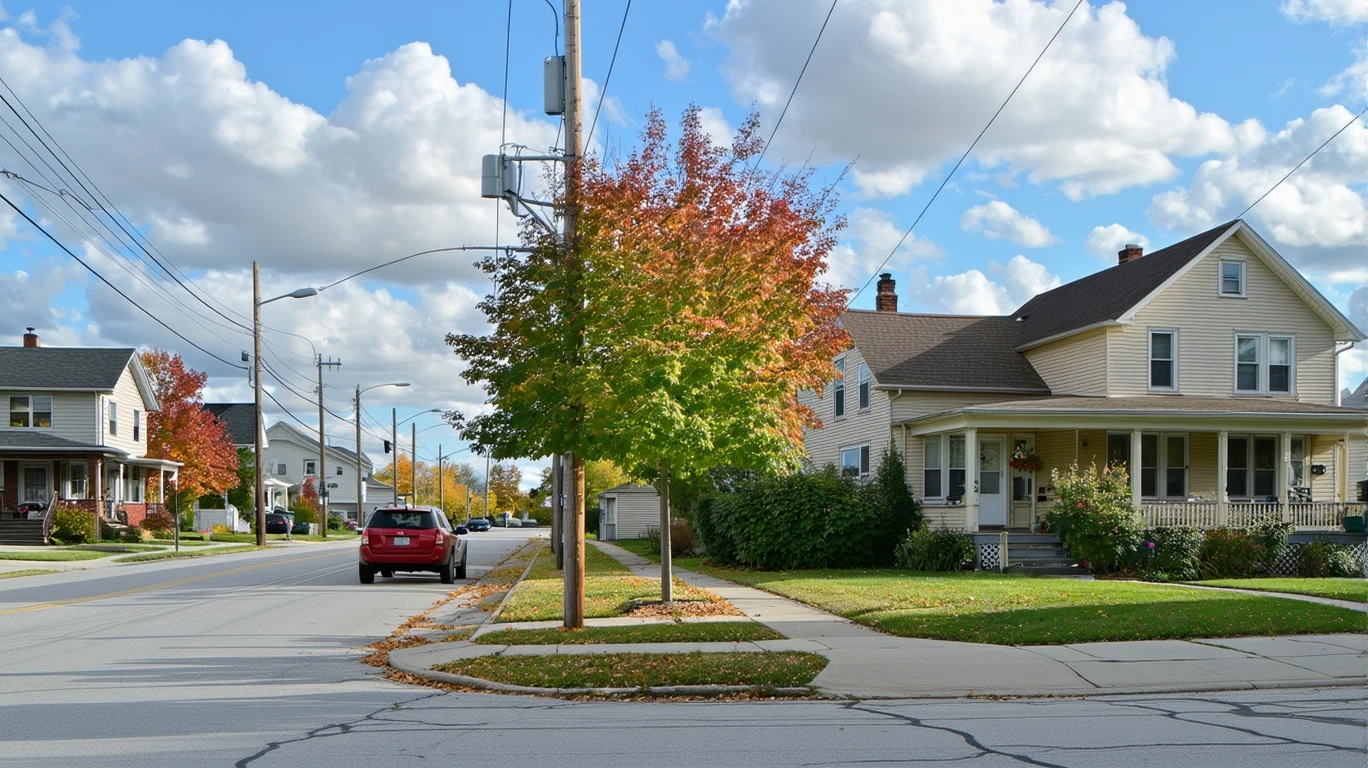
The Housing Market in Loveland Today
Loveland’s housing market operates as a family-oriented suburb within the Cincinnati metro, where ownership is the norm and rental options cluster in specific corridors rather than spreading evenly across the city. The $273,900 median home value positions Loveland below higher-cost inner suburbs but above rural fringe communities, creating a market where buyers trade urban intensity for green space, school access, and residential stability. This isn’t a market shaped by rapid turnover or speculative flipping—it’s built around households planning to stay.
What newcomers often misunderstand is that Loveland’s suburban form doesn’t mean uniformity. The city’s walkable pockets—areas where pedestrian infrastructure density exceeds typical suburban norms—create micro-markets where daily life feels less car-dependent. These zones command different buyer interest than car-oriented corridors, even within the same ZIP code. For renters, this variability matters even more, as rental stock tends to concentrate along commercial corridors where errands are accessible but pedestrian texture thins.
Loveland’s integrated park density and strong family infrastructure (schools and playgrounds meeting density thresholds) drive housing demand among families, but they also create cost pressure in neighborhoods closest to those amenities. Buyers seeking proximity to parks or top-rated schools face competition that pushes values higher within specific pockets, even as the citywide median remains moderate. Renters looking for similar access often find limited inventory, as single-family ownership dominates the housing stock.
The city’s position within the Cincinnati metro also shapes cost structure expectations. Loveland offers lower regional pricing (RPP 94) on goods and services, but housing itself reflects demand for suburban stability and family amenities. This creates a market where the home price feels reasonable relative to space and infrastructure, but ongoing ownership costs—utilities, maintenance, transportation—add exposure that renters avoid. For those commuting into Cincinnati, housing costs must be weighed against time and fuel, as Loveland’s car-dependent corridors make transit a non-option for most.
Renting in Loveland
Renting in Loveland means navigating a market where single-family homes and low-rise structures dominate, and apartment inventory remains limited compared to denser metro suburbs. The median gross rent of $1,125 per month reflects a middle-tier position within the Cincinnati rental market, but availability and location matter as much as price. Renters seeking walkable access to errands will find options concentrated along commercial corridors, where food and grocery density reaches moderate levels but doesn’t spread evenly across residential zones.
The rental experience in Loveland varies sharply by location. Corridor-clustered errands accessibility means renters in certain areas can walk to groceries and services, while those in car-oriented pockets must drive for every need. This creates a tradeoff: renters who prioritize walkability pay for proximity to mixed-use corridors, while those willing to drive gain access to quieter residential streets with integrated parks and green space. The city’s high park density and water features provide outdoor access regardless of housing type, but reaching them on foot depends on where you rent.
Loveland’s rental market also reflects the city’s family-oriented infrastructure. Strong school and playground density attracts families, but rental stock skews toward single-family homes rather than large apartment complexes. This limits options for renters seeking multi-bedroom units without committing to ownership, and it pushes some toward nearby communities with denser apartment supply. For those who do find rentals in Loveland, the tradeoff often involves accepting a longer lease term or limited turnover, as landlords in this market favor stability over frequent tenant changes.
Renters in Loveland also face car dependency as the default, even in walkable pockets. While pedestrian infrastructure exists at higher-than-typical suburban levels, the city lacks rail transit, and bus service doesn’t cover all residential areas. This means renters must budget for vehicle ownership, insurance, and fuel—costs that compound the $1,125 median rent. For those commuting into Cincinnati or other metro employment centers, transportation becomes a second rent, and the decision to rent in Loveland hinges on whether suburban stability and green space justify the added logistics.
Owning a Home in Loveland
Owning a home in Loveland means committing to a market where the $273,900 median value buys access to family infrastructure, integrated parks, and suburban stability, but it also locks in exposure to property taxes, maintenance, and utility volatility that renters avoid. Ownership here isn’t just about the purchase price—it’s about managing ongoing costs tied to climate, housing age, and the infrastructure that defines suburban life. Loveland’s mixed building height profile and residential land use create neighborhoods where upkeep demands vary, and buyers must evaluate not just the home, but the block-level conditions that drive long-term expenses.
Property taxes in Loveland, while not specified in available data, function as a recurring cost that rises with assessed value and local levy changes. Buyers should expect tax exposure to grow over time, particularly in neighborhoods where home values appreciate due to proximity to parks, schools, or walkable corridors. Unlike rent, which resets at lease renewal, property taxes compound annually, and owners have no ability to relocate without selling. This makes ownership a bet on Loveland’s long-term fiscal stability and infrastructure investment, not just current affordability.
Maintenance exposure in Loveland reflects the city’s climate and housing stock. Homes here face heating and cooling seasons that drive utility costs, and older structures may require HVAC upgrades, insulation improvements, or roof replacements that renters never budget for. The city’s integrated green space and water features create aesthetic value, but they also mean yards, landscaping, and stormwater management become the owner’s responsibility. For buyers accustomed to apartment living, the shift to managing outdoor space, seasonal upkeep, and long-term capital improvements represents a cost structure change, not just a payment increase.
Homeownership in Loveland also means navigating governance and regulation at the neighborhood level. While HOA prevalence isn’t specified in available data, buyers should verify whether their target property falls under association rules, as fees, restrictions, and special assessments can add hundreds of dollars per month to ownership costs. Even without HOAs, local zoning, building codes, and permit requirements shape what owners can modify or expand, creating friction that renters avoid entirely. Ownership here grants control, but it also assigns responsibility for costs and decisions that compound over time.
For households weighing monthly expenses, ownership in Loveland shifts the cost profile from predictable rent to variable exposure. Buyers gain equity and stability, but they also absorb risk tied to market changes, tax increases, and deferred maintenance. The decision to own here makes sense for families planning to stay long enough to justify transaction costs and for those who value control over housing conditions, school access, and neighborhood character. For others, renting preserves flexibility and limits exposure to the volatility that ownership in a suburban market inevitably brings.
Apartment vs House in Loveland — Cost Behavior Comparison
| Expense Category | Apartment | House |
|---|---|---|
| Heating & Cooling | Lower exposure due to shared walls and smaller square footage; landlord may control system efficiency | Higher exposure due to standalone structure and larger space; owner responsible for HVAC efficiency and seasonal spikes |
| Outdoor Maintenance | None; landlord or property management handles landscaping, snow removal, stormwater | Full responsibility for yard care, seasonal landscaping, stormwater management in a city with integrated green space and water features |
| Walkability to Errands | Often located along commercial corridors where food and grocery density is moderate; walkability higher in these zones | Often located in residential pockets where car dependency dominates; walkability depends on proximity to mixed-use corridors |
| Property Tax Exposure | None; landlord absorbs tax increases but may pass through via rent renewal | Direct and recurring; rises with assessed value and local levies; no ability to avoid without selling |
| Structural Repairs | Landlord responsibility; tenant avoids capital expenses like roof, foundation, or major systems | Owner responsibility; deferred maintenance compounds and can require large, unpredictable outlays |
Methodology note: This comparison isolates cost behaviors that differ meaningfully in Loveland due to climate (heating and cooling seasons), infrastructure (corridor-clustered errands vs residential pockets), and housing stock (low-rise apartments vs single-family homes). Categories like utilities or insurance are excluded because their variation depends more on unit size and provider choice than on housing type in this market. The table reflects structural cost exposure, not monthly totals or affordability thresholds.
Utilities & Upkeep Differences
Utility exposure in Loveland varies sharply between apartments and houses, driven by structure type, square footage, and who controls system efficiency. Apartments benefit from shared walls that reduce heating and cooling loss, and landlords often manage HVAC systems, limiting tenant control but also capping extreme seasonal spikes. Houses, by contrast, expose owners to the full cost of heating and cooling a standalone structure, and efficiency depends entirely on the owner’s willingness to invest in insulation, modern HVAC, or programmable thermostats. Loveland’s climate drives both heating and cooling seasons, meaning houses face year-round utility volatility that apartments partially buffer.
Electricity in Loveland costs 17.31¢ per kWh, and natural gas runs $11.25 per MCF. For illustrative context, a typical house using 1,000 kWh per month for cooling, lighting, and appliances would face roughly $173 in electricity costs before fees, while a household using 1 MCF of natural gas during heating months would see around $11 in gas charges before distribution fees and taxes. Apartments, with smaller footprints and shared infrastructure, typically use less of both, though tenant control over thermostats and appliance efficiency varies by landlord. These figures illustrate exposure, not guaranteed bills, and actual costs depend on usage, system age, and seasonal intensity.
Upkeep differences extend beyond utilities to outdoor maintenance and structural responsibility. Houses in Loveland come with yards, landscaping, and stormwater management obligations that apartments avoid entirely. The city’s integrated park density and water features create neighborhoods where outdoor aesthetics matter, and homeowners must budget for lawn care, seasonal planting, snow removal, and drainage maintenance. Apartments shift all of this to property management, leaving tenants free from equipment costs, seasonal labor, and the time burden of maintaining outdoor space.
Structural repairs represent another upkeep divide. Apartment tenants call the landlord when the furnace fails or the roof leaks; homeowners absorb the full cost of replacement and must manage contractor relationships, permitting, and financing. In Loveland’s mixed building stock, older homes may require more frequent HVAC, plumbing, or electrical work, and deferred maintenance compounds into larger, less predictable expenses. Apartments insulate tenants from this volatility, though landlords may pass some capital costs through rent increases over time. For households evaluating housing types, the question isn’t just what utilities cost today—it’s who bears the risk when systems fail or efficiency degrades.
Rent vs Buy: Long-Term Exposure in Loveland
Renting in Loveland preserves flexibility and limits exposure to the volatility that ownership brings, but it also means absorbing rent increases at lease renewal without building equity or controlling housing conditions. Renters avoid property tax hikes, special assessments, and the unpredictable cost of replacing a roof or HVAC system, but they also surrender the ability to lock in a fixed housing payment or modify their living space. Over time, rent in Loveland will shift with landlord costs, market demand, and the limited supply of rental inventory in a market dominated by single-family ownership.
Ownership in Loveland shifts the cost structure from predictable monthly rent to variable exposure across taxes, maintenance, utilities, and capital improvements. Buyers who secure fixed-rate financing lock in their principal and interest payment, but property taxes, insurance, and upkeep costs rise over time, often faster than income. In a market where family infrastructure and park access drive demand, homes near top-rated schools or walkable corridors may appreciate, building equity that renters never capture. But appreciation also triggers higher tax assessments, and owners cannot relocate without selling, paying transaction costs, and accepting market conditions at the time of sale.
The long-term tradeoff in Loveland hinges on how households value control versus flexibility. Owners gain the ability to renovate, landscape, and shape their environment, and they benefit if home values rise. But they also absorb the risk of market downturns, deferred maintenance, and the compounding cost of aging systems. Renters avoid all of this, but they remain subject to landlord decisions, lease terms, and the possibility of displacement if the property sells or converts. In a city where rental stock is limited and ownership dominates, renters may face fewer options over time, while owners gain stability at the cost of liquidity.
For families planning to stay in Loveland long-term, ownership makes sense if they can manage the upfront transaction costs and ongoing exposure to taxes, maintenance, and utilities. For those uncertain about their timeline, career trajectory, or willingness to manage a property, renting preserves the ability to relocate without selling, to avoid capital expenses, and to shift housing costs with life changes. Neither path is universally cheaper—each assigns different risks, and the right choice depends on how much volatility a household can tolerate and how much control they need over their living environment.
FAQs About Housing Costs in Loveland
What does the $273,900 median home value in Loveland actually buy?
The median home value in Loveland buys access to a suburban community with integrated parks, strong family infrastructure, and pockets of walkable streets, but it also locks in exposure to property taxes, maintenance, and car dependency outside specific corridors. Buyers at this price point typically get single-family homes with yards, proximity to schools and playgrounds, and a residential environment shaped by low-rise structures and mixed building heights. The value reflects demand for family-oriented stability, not urban density or transit access.
Is renting in Loveland cheaper than owning over time?
Renting in Loveland avoids property taxes, maintenance, and capital expenses, but it also means absorbing rent increases without building equity or locking in a fixed payment. Ownership shifts costs to taxes, upkeep, and utilities, but it allows households to benefit from appreciation and control housing conditions. Over time, the cheaper path depends on how long you stay, how much home values and taxes rise, and whether you can manage the volatility that ownership brings. Neither is universally cheaper—each assigns different risks.
How do utilities differ between apartments and houses in Loveland?
Apartments in Loveland typically use less electricity and gas due to smaller square footage and shared walls, and landlords often control HVAC efficiency, limiting tenant exposure to extreme seasonal spikes. Houses expose owners to the full cost of heating and cooling a standalone structure, and efficiency depends on the owner’s investment in insulation, modern systems, and thermostats. Loveland’s climate drives both heating and cooling seasons, meaning houses face year-round utility volatility that apartments partially buffer.
Does Loveland’s walkability reduce housing costs?
Loveland’s walkable pockets reduce car dependency for daily errands in specific corridors, but they don’t eliminate transportation costs citywide. Households in these zones may drive less frequently, lowering fuel and vehicle wear, but most of Loveland remains car-oriented, and renters or buyers outside walkable areas must budget for full vehicle ownership. Walkability affects convenience and lifestyle more than it reduces housing costs, though proximity to mixed-use corridors may command higher rent or home values due to demand.
What housing costs in Loveland rise the fastest over time?
Property taxes and maintenance costs typically rise faster than rent or fixed mortgage payments in Loveland, as tax assessments follow home values and infrastructure levies, while aging homes require more frequent repairs and system replacements. Renters avoid direct tax exposure but may see landlords pass increases through at lease renewal. Owners face compounding exposure to taxes, insurance, and deferred maintenance, all of which grow over time and cannot be avoided without selling. Utility costs also shift with seasonal intensity and rate changes, but their volatility is more cyclical than cumulative.
Making Housing Choices in Loveland
Housing costs in Loveland reflect a suburban market where ownership dominates, family infrastructure drives demand, and cost exposure varies sharply by location and housing type. The $273,900 median home value and $1,125 median rent position Loveland as a middle-tier option within the Cincinnati metro, but the real cost of living here depends on whether you own or rent, where you locate within the city, and how much car dependency you’re willing to accept. Buyers gain access to parks, schools, and residential stability, but they also absorb property taxes, maintenance, and utility volatility that renters avoid. Renters preserve flexibility and limit exposure to capital expenses, but they face limited inventory and must navigate a market where single-family homes outnumber apartments.
Families seeking long-term stability, proximity to schools and playgrounds, and control over their living environment will find Loveland’s ownership market well-suited to their needs, provided they can manage the ongoing costs that compound over time. Dual-income households valuing suburban structure with walkable pockets will benefit from the city’s mixed infrastructure, though they must choose locations carefully to balance errands accessibility with residential quiet. Renters seeking access to the Cincinnati metro without downtown density will find Loveland viable, but they should expect to drive for most errands and to compete for limited rental stock in walkable corridors.
Transit-dependent households, those requiring hospital-level healthcare locally, and buyers seeking urban mixed-use intensity will struggle in Loveland’s car-oriented, clinic-level, low-rise environment. The city’s strengths—integrated parks, strong family amenities, and below-regional pricing—come with tradeoffs in transit access, healthcare depth, and housing density. For those who fit Loveland’s suburban profile, the housing market offers value and stability. For those who don’t, nearby metro alternatives may better match their cost tolerance and lifestyle needs.
Understanding where money goes in Loveland requires evaluating not just rent or mortgage, but the full structure of transportation, utilities, and upkeep that suburban life imposes. Housing costs here behave differently than in denser metro cores, and the right choice depends on how much control, flexibility, and long-term exposure a household can manage. For those planning a move, reviewing logistics and cost tradeoffs early can clarify whether Loveland’s housing market aligns with their financial and lifestyle priorities.